
Ananda Marga

Personal practices · On your own

Sixteen Points

“The sixteen points are a set of physical, mental and spiritual practices that enable one to develop oneself in all spheres, resulting in one becoming a well-balanced, self-actuating individual with true love and concern for one's fellow humanity.”16 Points for Individual and Social Development

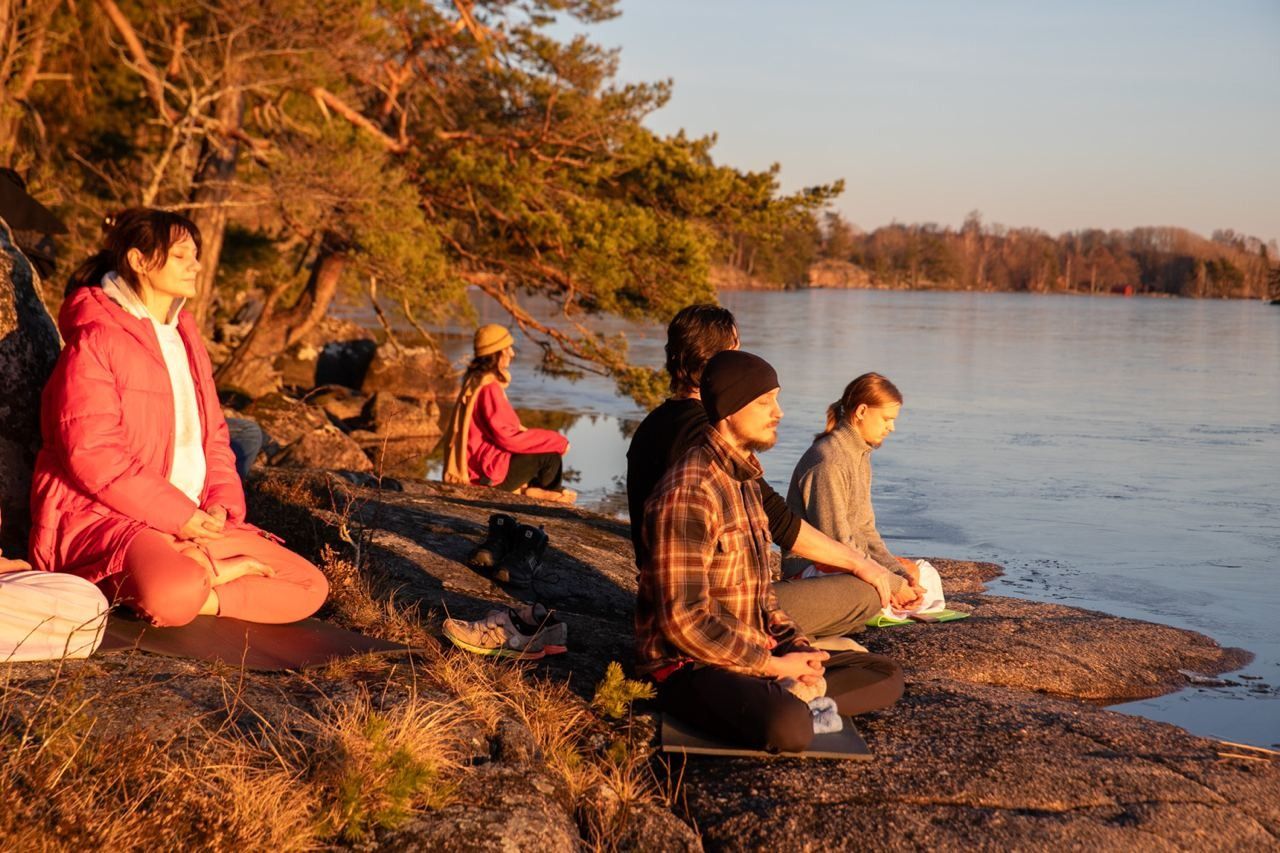
People meditating on the rocks by a lake at sunset

Why we do it

The aim of yoga is Supreme Consciousness

  1. 1

    The aim is Supreme Consciousness. The goal of yoga is far off, like a distant star system.

  2. 2

    The instrument to reach that goal is the mind. It is the subtlest part of us, so it is the only part fine enough to reach the aim.

  3. 3

    The method is meditation. Seeing a star takes a telescope pointed at it; reaching Supreme Consciousness takes the mind pointed at it. That is meditation.

  4. 4

    The preparation and care. A telescope has to be looked after, cleaned and set right to see the stars. The mind is the same. Every practice does this for the mind, directly or through the body, because the mind is connected with the body.

    See how it leads to the goal ↓

Reaching the goal through Sixteen Points

The Sixteen Points bring us to the goal by putting the whole of a person in order. A human being has three flows, of the body, the mind and the spirit, and on the way to the Supreme they have to run parallel; the Sixteen Points purify the flow of the body, strengthen the mind, and are kept together. Meditation then brings the mind into line with the spirit, and the points, followed as His will, become devotion; by devotion one attains the Supreme Stance. That is the goal of yoga.

  1. 01

    Every sphere

    In the Sixteen Points are the seeds of welfare in every sphere of life: physical, mental, moral, social and spiritual.

    “The complete seeds of welfare in all the spheres – physical, mental, moral, social and spiritual – are embedded in the sixteen points.”
    Ánanda Váńii Saḿgraha, Ánanda Váńii 45
  2. 02

    Three flows

    A human being has a body, a mind and a spirit. Moving toward the Supreme, the three flows have to run parallel.

    “There must be parallelism between spiritual flow and the psychic, and there must be parallelism between psychic wave and the entitative wave.”
    Bábá in Taiwan, “Man and His Ideological Desideratum”
  3. 03

    The body's flow purified

    A pure, neat and clean life, strict in the Sixteen Points, purifies the flow of the body and brings it into line with the mind.

    “Follow a strict code of morality. Live a pure life, a neat and clean life. Be strict in 16 Points. What will happen? Your entitative flow will get purified and will be in parallelism with your psychic wave.”
    Bábá in Taiwan, “Man and His Ideological Desideratum”
  4. 04

    Strength of mind

    And the more strictly they are kept, the stronger the mind becomes.

    “So you must endeavour to develop your psychic strength – this is your bounden duty. The more rigidly you follow the 16 Points, the more psychic strength you will acquire. It will not take you long.”
    Ánanda Vacanámrtam 7, “An Exemplary Life”
  5. 05

    Kept together

    They are kept together: everyone keeps watch on everyone else, and no one is exempted.

    “Similarly, I gave a directive to all that they should keep watch on one another. No one will exempt anyone else regarding the Sixteen Points.”
    Ánanda Vacanámrtam 23, “Silent Action”
  6. 06

    The mind in line with the spirit

    Meditation and the company of good people purify the mind, and the mind comes into line with the flow of the spirit.

    “These incantative auto-suggestions and outer-suggestions will purify your mind, and the mind will be in the position to maintain proper parallelism with your spiritual flow.”
    Bábá in Taiwan, “Man and His Ideological Desideratum”
  7. 07

    His will

    For a devotee, the Sixteen Points are ápta vákya: the will of Parama Puruśa, known through love for Him. Kept that way, they are devotion.

    “When the devotee is able to hear, feel, realize and understand the will of Parama Puruśa through having developed a relationship of love with Him, it is called ápta vákya. As devotees, you should follow only ápta vákya. You should remember that the Sixteen Points are your ápta vákya.”
    Ánanda Vacanámrtam 2, “The Excellence of a Bhakta”
  8. 08

    The Supreme Stance

    By devotion one attains the Supreme Stance: one gets Parama Puruśa. This is the goal.

    “By dint of oneʼs devotion, one can attain the Supreme Stance. One gets the Parama Puruśa.”
    Bábá in Taiwan, “Man and His Ideological Desideratum”

What it is

The Sixteen Points are a set of physical, mental and spiritual practices that Shrii Shrii Ánandamúrti brought together. They are one discipline for all three planes of existence, so that a person develops in every sphere and completes life’s goal in the shortest possible time.

The power of the Sixteen Points

“What is the best way to strengthen the mind? The best and proper way is to strictly observe the 16 Points [physical, mental and spiritual exercises for the all-round development of the individual]. The more rigidly you follow the 16 Points, the more your mental strength will increase. It will increase so much that it will be more powerful than the collective mental strength of 100,000 people. In a psychic clash they will have to concede victory to you.”Ánanda Vacanámrtam 7, “An Exemplary Life”

“A person who is physically strong can fight against eight, ten or twenty people at most, but no more than that. A psychically developed person, however, is able to fight against many more people.”Ánanda Vacanámrtam 7, “An Exemplary Life”

“In order to march ahead on the road of human welfare, we will have to strengthen ourselves in all the arena of life. The complete seeds of welfare in all the spheres – physical, mental, moral, social and spiritual – are embedded in the sixteen points. Hence be firm on the sixteen points.”Ánanda Váńii 45, Ánanda Púrńimá 1976

The sixteen points

  1. 1

    Use of Water

    “After urination, wash the urinary organ with water.”
    Shrii Shrii Ánandamúrti, Caryácarya Part 2, “Sixteen Points” (c. 1975)

    Wash with water after urination, and after passing stool as well.

    Read in detail
    “Water should be used on the genitals after urination. Pouring cold water over the genital organ serves to cool the organ causing the urinary duct and bladder to totally empty of residual urine, thereby helping to prevent the formation of stones. Water should also be used after passing stool for cleanliness reasons.”
    Ánanda Márga Spiritual Practices — 16 Points, compiled by Ác. Abhiik Kumara Brc. from lectures by Ác. Pranavánanda Avadhúta (Ananda Marga Sydney, 1974)
    “This is a very good habit to cultivate, not only for the sake of personal cleanliness and hygiene, but because pouring cool water on the urinary organ after passing urine helps to eliminate the last few drops of urine from the tract, helping prevent the formation of kidney stones and stones in the urinary tract formed by the crystalization of uric acid from the remaining urine.”
    16 Points for Individual and Social Development
    “The proper way to use water is to pour cool water on the urinary organ after passing urine. This will cause the bladder to contract and expel more urine, so water should again be used for cleanliness, and may be repeated until all the urine is expelled and the urinary organ is clean.”
    16 Points for Individual and Social Development
    “It is not always possible to find a ready source of cool water when travelling, so this difficulty can be easily overcome by carrying a small bottle of water in a convenient place such as one's pocket or a handbag. This is commonly called a “shaoca mainjuśá”.”
    16 Points for Individual and Social Development
    “By pouring water on genitals after urination one washes away the residue of urine as well as the secretions and prevents a number of illnesses.”
    Dr. Jitendra Singh and Ác. Bhaskaránanda Avt., Biopsychology of Spiritual Practices: Science behind the Sixteen Points (Gurukula Publications, 2000)
    “The genital irrigation several times a day cools the lower cakras and glands. The energy that it conserves is diverted to psycho-spiritual pursuits. Mental composure returns and sádhaná improves. Therefore, the effects of this simple practice are far-reaching. It can very well be called a physico-psycho-spiritual practice.”
    Dr. Jitendra Singh and Ác. Bhaskaránanda Avt., Biopsychology of Spiritual Practices: Science behind the Sixteen Points (Gurukula Publications, 2000)
    On this site: Daily hygiene →
  2. 2

    Care of Foreskin

    “Males should either be circumcised or keep the foreskin pulled back at all times.”
    Shrii Shrii Ánandamúrti, Caryácarya Part 2, “Sixteen Points” (c. 1975)
    Read in detail
    “Males should either be circumcised, or maintain the foreskin in a pulled-back position. This is very beneficial for several reasons. From the point of view of health and hygiene, it is beneficial because dirt and bacteria can easily accumulate under the foreskin if it is not done, causing irritation and even disease.”
    16 Points for Individual and Social Development
    “These first two points, and point number 4 (laungot́á), help very much to control the mind and keep it free from lustful thoughts. While the sexual instinct is quite natural, uncontrolled pursuit of sexual desires is harmful for both the individual and society. These points help to control the mind.”
    16 Points for Individual and Social Development
    “In conclusion, circumcision is a personal choice according to one's perspective of life. This choice should be made with the full knowledge of its effect on the physical and mental health of the individual as well as on his spiritual growth. If it is decided to be left intact one should be educated in its care that includes retraction, irrigation after urination (item-1) and use of laungot́á (item-4).”
    Dr. Jitendra Singh and Ác. Bhaskaránanda Avt., Biopsychology of Spiritual Practices: Science behind the Sixteen Points (Gurukula Publications, 2000)
    “A note of caution must be given here. In children the foreskin is not fully retractile, sometimes until they are adolescents. Care should be taken in retracting their foreskin. Forcing it may do more damage. As they grow it becomes more retractile and they should be taught its care.”
    Dr. Jitendra Singh and Ác. Bhaskaránanda Avt., Biopsychology of Spiritual Practices: Science behind the Sixteen Points (Gurukula Publications, 2000)
    On this site: For men →
  3. 3

    Care of Joint Hairs

    “Never cut the hair of the joints of the body.”
    Shrii Shrii Ánandamúrti, Caryácarya Part 2, “Sixteen Points” (c. 1975)

    Never cut the hair of the joints of the body; after the bath, comb it and rub it with oil (preferably coconut oil, which cools).

    Read in detail
    “The body hair is also an important factor in controlling the body heat, particularly in the joint areas (armpits and groin), and for this reason should not be removed. It is also advisable not to remove the hair on the arms and legs for the same reason.”
    16 Points for Individual and Social Development
    “For cleanliness the joint hairs should be washed daily with soap, and may be oiled afterwards with any suitable light oil such as coconut oil, baby oil, sesame oil, etc. The use of oil helps to preserve the vitality of the hair by preventing it from drying out due to the loss of natural oils from the use of soap.”
    16 Points for Individual and Social Development
    “Body hair plays a very important role in the regulation of temperature. It insulates the body from fluctuations in the external temperatures as well as regulates the heat loss. When the body temperature falls below normal and heat needs to be conserved the hairs become erect increasing their insulation value. If the cold exposure is prolonged the hair coat thickens. Hair tufts are thicker in certain joints such as armpits and pubic areas that have an important effect on heat regulating mechanism of the body. Shaving these areas will interfere with this mechanism.”
    Dr. Jitendra Singh and Ác. Bhaskaránanda Avt., Biopsychology of Spiritual Practices: Science behind the Sixteen Points (Gurukula Publications, 2000)
    “However, in spiritual science hairs in general and joint hairs in particular have a great role to play. Their role in heat regulation and their insulating effect is borne out by modern science as well.”
    Dr. Jitendra Singh and Ác. Bhaskaránanda Avt., Biopsychology of Spiritual Practices: Science behind the Sixteen Points (Gurukula Publications, 2000)
    “Therefore, preserving joint hair controls sexual urge and strengthen the mental resolve to follow spiritual path. Their proper care is mandatory.”
    Dr. Jitendra Singh and Ác. Bhaskaránanda Avt., Biopsychology of Spiritual Practices: Science behind the Sixteen Points (Gurukula Publications, 2000)
    On this site: Body hair →
  4. 4

    Laungot́á / Underwear

    “Males should always use kaopiina (laungot́á).”
    Shrii Shrii Ánandamúrti, Caryácarya Part 2, “Sixteen Points” (c. 1975)
    Read in detail
    “Men should wear a laungot́á. The laungot́á protects against injury and reduces sexual desire when worn properly.”
    Ánanda Márga Spiritual Practices — 16 Points, compiled by Ác. Abhiik Kumara Brc. from lectures by Ác. Pranavánanda Avadhúta (Ananda Marga Sydney, 1974)
    “The procreative system in men and women is very sensitive and very easily stimulated and easily damaged. The delicate parts need to be kept secure to avoid injury. It is hence recommended that males should wear a special type of tight-fitting underwear called a 'laungot́á'.”
    16 Points for Individual and Social Development
    “The firm support also has an important psychological effect of giving mental firmness and confidence as well. Thus the laungot́á is far superior to the normal forms of underwear. It is essential to wear it at the time of doing táńd́ava (a vigorous Yogic dance), and while doing ásanas. However, it is recommended that it should be worn at all times, in preference to the normal forms of underwear.”
    16 Points for Individual and Social Development
    “For women, the use of a bra is necessary to give support to the breasts, and prevent strain on the ligaments that hold the breasts in place. Underpants should also be worn for the sake of cleanliness. For the sake of cleanliness and hygiene, the underwear should be washed daily.”
    16 Points for Individual and Social Development
    “A proper pelvic outfit for males is a laungot́á whose rectangular central piece envelops the pelvis and its two cords wrap around the waist stabilising the lower spine.”
    Dr. Jitendra Singh and Ác. Bhaskaránanda Avt., Biopsychology of Spiritual Practices: Science behind the Sixteen Points (Gurukula Publications, 2000)
    On this site: For men →
  5. 5

    Half Bath

    “Do vyápaka shaoca as directed.”
    Shrii Shrii Ánandamúrti, Caryácarya Part 2, “Sixteen Points” (c. 1975)
    Read in detail
    “Method of doing vyápaka shaoca: At first wash your genital organs; then hands up to elbows and legs up to knees; then, taking a mouthful of water, splash water on the eyes and face at least twelve times. Finally wash the ears and the neck.”
    Shrii Shrii Ánandamúrti, Caryácarya 2, “The Body”
    “Half bath is a system of partial bathing which cools the joint areas and sensory and motor organs of the body, leaving one feeling physically refreshed, and mentally calm and alert. Hence it is a perfect preparation for meditation, ásanas, and any other activity requiring mental calm and concentration.”
    16 Points for Individual and Social Development
    “First pour cool water over the genitals, then on the legs from the knees down to the feet, and then from the elbows to the hands. Then, keeping cool water in the mouth, splash cool water in the open eyes at least twelve times, and then spit out that water. Then clean the nasal passages by drawing water through both nostrils three times and spit it out through the mouth. Next clean the throat by inserting the middle finger of the right hand into the throat, causing one to cough out accumulated mucus; and then apply cool water behind the ears, to the back of the neck, and to the rest of the face. All this is done with cool water, and soap is not necessary. After one becomes accustomed to this practice it takes only a few minutes.”
    16 Points for Individual and Social Development
    “Hence half-bath should always be done before meditation, ásanas, eating and sleeping (unless a full bath has just been taken), and it is very beneficial to do it before any action requiring mental calm, or whenever the body is hot.”
    16 Points for Individual and Social Development
    “Half-bath is performed by washing the elbows and forearms, knees and lower legs, genitals, back of the neck, top of the head and behind the ears with cool water. Water is also splashed in the face with the eyes open 12 times. The purpose of the half-bath is to cool the body and give the feeling of freshness and cleanliness before starting meditation, meals, ásanas, and sleep.”
    Ánanda Márga Spiritual Practices — 16 Points, compiled by Ác. Abhiik Kumara Brc. from lectures by Ác. Pranavánanda Avadhúta (Ananda Marga Sydney, 1974)
    “It is mandatory that the temperature of the water used should be lower than the body temperature.”
    Dr. Jitendra Singh and Ác. Bhaskaránanda Avt., Biopsychology of Spiritual Practices: Science behind the Sixteen Points (Gurukula Publications, 2000)
    “The freshness that results by this practice invigorates the entire body by cooling all five sensory and five motor organs. The revitalised body releases the mind from the grips of pains and pleasures of daily routine. Such a mind is easier to control and concentrate. It also relaxes the mind from daily stresses and strains. Therefore, half bath is very beneficial before sádhaná, before meals and before sleep.”
    Dr. Jitendra Singh and Ác. Bhaskaránanda Avt., Biopsychology of Spiritual Practices: Science behind the Sixteen Points (Gurukula Publications, 2000)
    On this site: Vyápaka shaoca, the half bath →
  6. 6

    Full Bath

    “Bathe according to the prescribed system.”
    Shrii Shrii Ánandamúrti, Caryácarya Part 2, “Sixteen Points” (c. 1975)
    Read in detail
    “A full bath or shower should be taken at least once a day. Begin by pouring cold water or directing the shower spray on the navel and then onto the back at the point opposite the navel. After this let water run down the top of the head over the spine (or from neck down if you do not want to get your hair wet).”
    Ánanda Márga Spiritual Practices — 16 Points, compiled by Ác. Abhiik Kumara Brc. from lectures by Ác. Pranavánanda Avadhúta (Ananda Marga Sydney, 1974)
    “According to Yoga, the navel region is the heat controlling centre of the body. This is why you will find in hot countries people often walk with their navel region exposed-the saris and blouse of the Indian ladies, for example, is designed in this way - it helps the body to adjust with the heat. Hence when taking a bath the cool water should first be poured on the navel area so that the body can easily adjust to the water temperature, and then at the back opposite the navel, and then from the top of the head down the spine. Then the whole body may be wetted.”
    16 Points for Individual and Social Development
    “The temperature of water that one uses for bath is of crucial importance. This should be less than the core body temperature. In humans the core body temperature is around thirty-seven degrees Celsius. Ideally, the water temperature below thirty degrees is beneficial. However, in cold climates lukewarm water below thirty-five degrees is appropriate.”
    Dr. Jitendra Singh and Ác. Bhaskaránanda Avt., Biopsychology of Spiritual Practices: Science behind the Sixteen Points (Gurukula Publications, 2000)
    “Bathing may also be transformed from a fairly mundane activity into one inspiring humility, spiritual ideation and sense of purpose in life through the use of a beautiful "bath mantra". This is recited while facing a light source, preferably the sun, while the skin is still wet, with an accompanying hand mudra, which reinforces the ideation behind the mantra as it is spoken.”
    16 Points for Individual and Social Development
    “Therefore, in this system of bath lower cakras are cooled first to control the static and mutative forces in our body. This is followed by cooling of upper cakras and finally invigorating these sentient cakras by bath mudra and mantra. The external physical cleanliness that results adds glaze to the body as well as purity and composure to mind.”
    Dr. Jitendra Singh and Ác. Bhaskaránanda Avt., Biopsychology of Spiritual Practices: Science behind the Sixteen Points (Gurukula Publications, 2000)
    “These practices are spiritual practices to elevate and expand our minds, not ritual practices, which they may become if done routinely without knowledge of the purpose or proper ideation.”
    16 Points for Individual and Social Development
    On this site: Bath →
  7. 7

    Food and Diet

    “Take only sáttvika (sentient) food.”
    Shrii Shrii Ánandamúrti, Caryácarya Part 2, “Sixteen Points” (c. 1975)
    Read in detail
    “Sentient food is good for the mind and body. Mutative food is good or indifferent for the body but may or may not be good for the mind. Static food is bad for the mind and may or may not be bad for the body. Sentient foods are pure and produce a subtler body and nervous system better able to receive higher spiritual vibrations.”
    Ánanda Márga Spiritual Practices — 16 Points, compiled by Ác. Abhiik Kumara Brc. from lectures by Ác. Pranavánanda Avadhúta (Ananda Marga Sydney, 1974)
    “Clearly for the best state of health of body and mind we should prefer to select our foods mainly from the sentient variety, to a lesser extent from the mutative, and not at all from the static kind.”
    16 Points for Individual and Social Development
    “Sentient: Milk, milk products, soya beans and soya products, all types of beans, nuts and grains, nearly all vegetables and fruits, herbal teas, sweets made without any mutative or static ingredients, mild spices, seaweed (except kelp), seeds, vinegar. Mutative: Tea, coffee, chocolate, cocoa, hot spices used in moderation, soya sauce, prescribed allopathic medicines, kelp. Static: Meat, poultry, fish, eggs, onions, garlic, mushrooms and other funguses including brewers yeast, horse radish very hot spices, tobacco, alcohol, drugs and non-medically prescribed medicines, fermented, mouldy, stale, old and burnt foods, strong cheeses.”
    16 Points for Individual and Social Development
    “It is preferable to take food prepared by loving sentient persons. Avoid food cooked by mean minded persons or by yourself when mentally upset. Always try to eat with others and keep a joyous atmosphere.”
    Ánanda Márga Spiritual Practices — 16 Points, compiled by Ác. Abhiik Kumara Brc. from lectures by Ác. Pranavánanda Avadhúta (Ananda Marga Sydney, 1974)
    “Most grains and lentils, fruits and dairy products are examples of sentient foods. These foods contain the vital energy that can be easily converted into the psychic energy.”
    Dr. Jitendra Singh and Ác. Bhaskaránanda Avt., Biopsychology of Spiritual Practices: Science behind the Sixteen Points (Gurukula Publications, 2000)
    “The beginners of meditation however, should be cautioned against sudden conversion from heavy meat eating to no meat eating. The transmutation of biological processes is slow and gradual.”
    Dr. Jitendra Singh and Ác. Bhaskaránanda Avt., Biopsychology of Spiritual Practices: Science behind the Sixteen Points (Gurukula Publications, 2000)
    On this site: Food →
  8. 8

    Fasting (Upavása)

    “Observe fast as prescribed.”
    Shrii Shrii Ánandamúrti, Caryácarya Part 2, “Sixteen Points” (c. 1975)
    Read in detail
    “Margiis should fast without food or water on ekádashii, usually the eleventh day after the new or full moon. Fasting begins on sunrise on ekádashii and continues through sunrise of the next day. Under special circumstances one may fast a day before or after ekádashii. If sick, one may take lemon water with a little salt or skip fasting that fortnight.”
    Ánanda Márga Spiritual Practices — 16 Points, compiled by Ác. Abhiik Kumara Brc. from lectures by Ác. Pranavánanda Avadhúta (Ananda Marga Sydney, 1974)
    “Fasting gives a much needed rest to the stomach and intestines, and gives the body a chance to eliminate the accumulated wastes built up as a by-product of the digestive process, and from too much of the wrong type of food.”
    16 Points for Individual and Social Development
    “Fasting is not necessary for children up to the age of adolescence, or for people who are ill (they can take fluids). If anyone feels unusual weakness or difficulties in fasting, then a liquid diet or fruits can be taken.”
    16 Points for Individual and Social Development
    “A one-day fast is a complete fast without even water from sunrise of the fasting day to sunrise of the next day (of course, in far northern climates it can be done according to the time from 6 am to 6 am, rather than by the sun). On breaking the fast it is best to first take some lemon water with salt, to neutralize the acidic stomach juices. The first food that should be taken is a ripe banana.”
    16 Points for Individual and Social Development
    “In sanskrit the word used for fasting is "upavása", which actually means, "remaining near the Lord". During fasting it is better to avoid strenuous physical labour, if possible, and devote more time to spiritual practices.”
    16 Points for Individual and Social Development
    “However, this practice is more than mere fasting. Upavása means to remain in the proximity of the Parama Puruśa (Infinite Entity) which requires transcending the mundane needs of the body.”
    Dr. Jitendra Singh and Ác. Bhaskaránanda Avt., Biopsychology of Spiritual Practices: Science behind the Sixteen Points (Gurukula Publications, 2000)
    On this site: Fasting →
  9. 9

    Sádhaná (Spiritual Meditation)

    “Do sádhana regularly.”
    Shrii Shrii Ánandamúrti, Caryácarya Part 2, “Sixteen Points” (c. 1975)
    Read in detail
    “Meditation (sádhaná) must be performed at least twice a day by every Ananda Margii. Whole-time workers are to practice four times a day. All lessons are to be performed at these times.”
    Ánanda Márga Spiritual Practices — 16 Points, compiled by Ác. Abhiik Kumara Brc. from lectures by Ác. Pranavánanda Avadhúta (Ananda Marga Sydney, 1974)
    “The sanskrit word for meditation is 'sádhaná'. The word sádhaná is derived from the sanskrit root 'sadh' which means, 'to complete'. Truly speaking, sádhaná is the effort at completion, the effort to fulfill our purpose in being. So the word sádhaná actually means far more than just the act of meditation itself - it is really all of our spiritual practices together, which form an integral system for our all-round development and most rapid progress to that Supreme Desideratum.”
    16 Points for Individual and Social Development
    “Sádhaná literally means an endless endeavour to achieve one's goal in life. The purpose of human life is to free oneself of all limitations of relative factors such as time, place and person.”
    Dr. Jitendra Singh and Ác. Bhaskaránanda Avt., Biopsychology of Spiritual Practices: Science behind the Sixteen Points (Gurukula Publications, 2000)
    “To attain the beneficial effects of meditation, however, it must be performed regularly, every day. Meditation should be performed twice a day, and you should try to do at least half-an-hour each time.”
    16 Points for Individual and Social Development
    “Since Yama and Niyama are the foundation for meditation one must also follow the principles of Yama and Niyama in order to succeed in meditation.”
    Ánanda Márga Spiritual Practices — 16 Points, compiled by Ác. Abhiik Kumara Brc. from lectures by Ác. Pranavánanda Avadhúta (Ananda Marga Sydney, 1974)
    “Meditation provides us with the energy and inspiration to work with others to build a better human society, and at the same time, by keeping our minds fixed firmly on a spiritual ideal, ensures that whatever power, position, wealth or influence we have will be used for the benefit of others.”
    16 Points for Individual and Social Development
    On this site: Meditation →
  10. 10

    Focus on Goal (Iśt́a)

    “Observe uncompromising strictness and faith regarding the sanctity of the Iśt́a (Goal).”
    Shrii Shrii Ánandamúrti, Caryácarya Part 2, “Sixteen Points” (c. 1975)
    Read in detail
    “Iśt́a is the goal towards which we are moving, the personalized aspect of the Absolute best suited to us, i.e. Parama Puruśa, God, etc. This goal must never be lost sight of or sacrificed for any reason since our Iśt́a is the most sacred thing to us. Ananda Margiis should defend their chosen ideal against any sort of attack and must not attack anyone else’s Iśt́a.”
    Ánanda Márga Spiritual Practices — 16 Points, compiled by Ác. Abhiik Kumara Brc. from lectures by Ác. Pranavánanda Avadhúta (Ananda Marga Sydney, 1974)
    “In order to do anything in this life we need a goal. Most goals that people try to attain are limited things and so, ultimately all their energy cannot get totally absorbed in them and they begin to falter. Only a spiritual goal is one that can completely absorb all our energies, one that is permanent: for the spiritual goal is the Supreme Consciousness, the Infinite Entity.”
    16 Points for Individual and Social Development
    “Iśt́a signifies that the spiritual aspirant has a personal relationship with the Guru and the Guru for him represents his ultimate goal of life, his link with the Infinite.”
    16 Points for Individual and Social Development
  11. 11

    Ideology (Ádarsha)

    “Observe uncompromising strictness and faith regarding the sanctity of the Ádarsha (Ideology).”
    Shrii Shrii Ánandamúrti, Caryácarya Part 2, “Sixteen Points” (c. 1975)
    Read in detail
    “The path by which we move towards our chosen ideal is Ádarsha.”
    Ánanda Márga Spiritual Practices — 16 Points, compiled by Ác. Abhiik Kumara Brc. from lectures by Ác. Pranavánanda Avadhúta (Ananda Marga Sydney, 1974)
    “Ideology is our psychic conception of our spiritual goal. It does not mean theories or certain materialistic principles which today go by the name of ideology. The entire life of man and the entire history of humanity is nothing but an ideological flow. It is the movement from crudity to subtlety: from materialism to spiritualism. In Ananda Marga the essence of our ideology is expressed in the phrase: Átma mokśártham jagat hitáya ca - self-realization and service to humanity.”
    16 Points for Individual and Social Development
    “Our approach towards the Supreme Subjectivity (Parama Puruśa or God) is with objective adjustment, i.e. we practice meditation along with service to humanity. This ideology and our spiritual practices have come from an intelligence far beyond our own and comprise the means by which we hope to attain our goal in life; therefore, to the best of our ability we should not alter or compromise these things, nor allow others to ridicule them without making an effort to properly and logically explain our position.”
    Ánanda Márga Spiritual Practices — 16 Points, compiled by Ác. Abhiik Kumara Brc. from lectures by Ác. Pranavánanda Avadhúta (Ananda Marga Sydney, 1974)
    “To do anything in this world you need system and speed. Our speed is generated by our devotion and love for Iśt́a and our system is our ideology. It should be remembered that speed without system is dangerous and system without speed is useless.”
    16 Points for Individual and Social Development
    “In order to follow Ádarsha, one needs moral courage and effort.”
    16 Points for Individual and Social Development
  12. 12

    Supreme Command

    “Observe uncompromising strictness and faith regarding the sanctity of the Supreme Command.”
    Shrii Shrii Ánandamúrti, Caryácarya Part 2, “Sixteen Points” (c. 1975)
    Read in detail
    “The Supreme Command is the fundamental guidepost for all Margiis to follow. It is the most important point, and therefore every Margii should be familiar with it and follow its precepts to the best of his or her ability. Moreover one must never compromise it in front of others, taking it lightly or allowing others to make fun of it.”
    Ánanda Márga Spiritual Practices — 16 Points, compiled by Ác. Abhiik Kumara Brc. from lectures by Ác. Pranavánanda Avadhúta (Ananda Marga Sydney, 1974)
    “In the Supreme Command, Shrii Shrii Ánandamúrti states that those who perform sádhaná twice a day regularly and follow the moral principles (Yama and Niyama) will certainly attain mukti-merger with the Supreme Consciousness. He has also said that to help others along the spiritual path is a necessary 'part and parcel' of sádhaná, and so it is the responsibility of every Ananda Margii to endeavour for the welfare and upliftment of the entire human race.”
    16 Points for Individual and Social Development
    “The Supreme Command is a reminder of the fundamental duties of a spiritual aspirant. There are minimum requirements for all human achievements that must be met before one is considered worthy of it. The Supreme Command reminds us, at least once a week, of our goal and the means to achieve it. The minimum requirement for spiritual growth is to perform sádhaná twice a day and adhere to the principles of yama and niyama. It also requires to lead others along the path of righteousness. In a world full of delusions and confusions, where it has become increasingly difficult to discriminate between right and wrong, these guidelines are the polestar in the darkest sky.”
    Dr. Jitendra Singh and Ác. Bhaskaránanda Avt., Biopsychology of Spiritual Practices: Science behind the Sixteen Points (Gurukula Publications, 2000)
    “In addition to guiding the aspirant, the Supreme Command also offers great hope and optimism. Irrespective of one's constitutional and social traits, it guarantees one the final emancipation, the liberation from all bondages and limitations of human life.”
    Dr. Jitendra Singh and Ác. Bhaskaránanda Avt., Biopsychology of Spiritual Practices: Science behind the Sixteen Points (Gurukula Publications, 2000)
    On this site: Supreme Command →
  13. 13

    Code of Conduct

    “Observe uncompromising strictness and faith regarding the sanctity of the Conduct Rules.”
    Shrii Shrii Ánandamúrti, Caryácarya Part 2, “Sixteen Points” (c. 1975)
    Read in detail
    “The Conduct Rules help us in our sádhaná by keeping us on the path and in a proper ideation. They should be kept sacred and defended to others if need be, but never compromised.”
    Ánanda Márga Spiritual Practices — 16 Points, compiled by Ác. Abhiik Kumara Brc. from lectures by Ác. Pranavánanda Avadhúta (Ananda Marga Sydney, 1974)
    “Shrii Shrii Ánandamúrti has given many guidelines for workers and followers of Ananda Marga, to help them to develop physically, mentally and spiritually, and to be better able to serve others. If we really want to develop ourselves and improve society, we should really try to follow these various guidelines to the best of our ability and not compromise on them. The conduct 'rules' are not 'rules' to unnecessarily bind and restrict freedom of action, they are scientific practices and principles that will build character, bring physical health, mental purity and spiritual elevation, and help us to become a positive force to bring about a better society.”
    16 Points for Individual and Social Development
    “For General Margiis, the conduct rules are the sixteen points, Yama and Niyama, 15 Shiilas, the Social Norms, and the social code of Ananda Marga as explained in Caryácarya parts I, II and III.”
    16 Points for Individual and Social Development
    “Shrii Shrii Ánandamúrti said, " hitártham shásanam ityarthe anushásanam " that is, discipline for the all round welfare of people constitutes code of conduct. The welfare should be in all realms of human existence; physical, psychic and spiritual.”
    Dr. Jitendra Singh and Ác. Bhaskaránanda Avt., Biopsychology of Spiritual Practices: Science behind the Sixteen Points (Gurukula Publications, 2000)
    “A disciplined conduct is essential for all human endeavours. It renders control over one's external and internal impulses and conserves energy.”
    Dr. Jitendra Singh and Ác. Bhaskaránanda Avt., Biopsychology of Spiritual Practices: Science behind the Sixteen Points (Gurukula Publications, 2000)
    “It is the duty of spiritual aspirants to manifest their internal equipoise that they have achieved through spiritual practices in their social conduct. The forty points of social norms and fifteen shiilas are compiled to set examples of highest value in the society and establish social harmony.”
    Dr. Jitendra Singh and Ác. Bhaskaránanda Avt., Biopsychology of Spiritual Practices: Science behind the Sixteen Points (Gurukula Publications, 2000)
    On this site: Yama and Niyama →
  14. 14

    Oath

    “Always remember the content of your oaths.”
    Shrii Shrii Ánandamúrti, Caryácarya Part 2, “Sixteen Points” (c. 1975)
    Read in detail
    “Margiis should remember each morning and should follow the oaths taken from the ácárya at the time of initiation, and any other oaths taken at a later time.”
    Ánanda Márga Spiritual Practices — 16 Points, compiled by Ác. Abhiik Kumara Brc. from lectures by Ác. Pranavánanda Avadhúta (Ananda Marga Sydney, 1974)
    “Every morning you should repeat these promises to yourself, to remind you of them and to renew your sense of personal commitment to the ideal each day.”
    16 Points for Individual and Social Development
    “Spiritual path requires unflinching attention and unwavering endeavour. It demands internal as well as external dynamism. Oath engenders this dynamism.”
    Dr. Jitendra Singh and Ác. Bhaskaránanda Avt., Biopsychology of Spiritual Practices: Science behind the Sixteen Points (Gurukula Publications, 2000)
    “In addition, the oath reminds us of our goal and guards our actions from degeneration. A well-kept oath conserves energy and channels it in positive thinking. Daily remembrance of oath purifies the feelings that is indispensable for generating blessedness regarding environment.”
    Dr. Jitendra Singh and Ác. Bhaskaránanda Avt., Biopsychology of Spiritual Practices: Science behind the Sixteen Points (Gurukula Publications, 2000)
  15. 15

    Dharmacakra (Collective Meditation)

    “Regular participation in the weekly dharmacakra at the local jágrti should be considered mandatory.”
    Shrii Shrii Ánandamúrti, Caryácarya Part 2, “Sixteen Points” (c. 1975)
    Read in detail
    “Weekly collective meditation is very important for Margiis. One should skip a meal if one misses Dharmacakra (pregnant and nursing mothers exempt) to emphasize in the mind its importance.”
    Ánanda Márga Spiritual Practices — 16 Points, compiled by Ác. Abhiik Kumara Brc. from lectures by Ác. Pranavánanda Avadhúta (Ananda Marga Sydney, 1974)
    “It is very important for the meditator to surround him/herself with positive influences which will help, and not hinder, his/her progress on the spiritual path. This is particularly so in the beginning stages of meditation. Collective meditation, or dharmacakra, creates this spiritual environment.”
    16 Points for Individual and Social Development
    “When we meditate together in a group, all our individual vibrations reinforce each other, and make a very powerful collective vibration that helps us all to concentrate better. All thoughts resonate in one powerful flow. Many people have experienced that it is much easier for them to meditate with a group of people than it is to meditate alone. This is because of the group mental energy created by many minds concentrating together on the same idea.”
    16 Points for Individual and Social Development
    “Regular attendance at these weekly group meditations is strongly recommended for all initiates. There the new meditator comes into contact with more experienced sádhakas who can clear up his/her confusions and encourage him/her on the spiritual path.”
    16 Points for Individual and Social Development
    “Collective meditation aids one in overcoming obstacles or difficulties encountered in sádhaná, and allows one to take full part in the Marga decision-making and in service activities.”
    Ánanda Márga Spiritual Practices — 16 Points, compiled by Ác. Abhiik Kumara Brc. from lectures by Ác. Pranavánanda Avadhúta (Ananda Marga Sydney, 1974)
    “Collective meditation helps those who are weak in sádhaná and find it difficult to concentrate in solitude. Moreover, a collective resolve quickens the pace of progress.”
    Dr. Jitendra Singh and Ác. Bhaskaránanda Avt., Biopsychology of Spiritual Practices: Science behind the Sixteen Points (Gurukula Publications, 2000)
    On this site: Dharmacakra →
  16. 16

    C.S.D.K.

    “Observe C.S.D.K. (Conduct Rules, Seminar, Duty, Kiirtana).”
    Shrii Shrii Ánandamúrti, Caryácarya Part 2, “Sixteen Points” (c. 1975)

    Keep the conduct rules, attend seminars, do your duty, and do kiirtan, which includes the dances: lalita mármika, kaośikii and táńd́ava.

    Read in detail
    “S. Seminars: Attend seminars and retreats etc. In order to understand better the philosophy of Ananda Marga and to go deeper into one’s sádhaná. D. Duty: Perform the duty you assume or are given by your ácárya. K. Kiirtan: Kiirtan is a positive aid to meditation and to the arousal of devotional sentiment; sing kiirtan before collective meditations and at every spare moment.”
    Ánanda Márga Spiritual Practices — 16 Points, compiled by Ác. Abhiik Kumara Brc. from lectures by Ác. Pranavánanda Avadhúta (Ananda Marga Sydney, 1974)
    “They should be followed in such a way that one can be an example for both Margiis and others. One should see that by one's conduct, people are being attracted to lead a moral and spiritual life, and inspired to follow it with more sincerity.”
    16 Points for Individual and Social Development
    “In order to help progress on the spiritual path, and to help one to give others a conception of the spiritual ideology, it is necessary to have an intellectual grasp of the spiritual and social philosophy that form our ideology. The best way to do this is to attend the special retreats and seminars that are conducted as often as possible, as there it is possible to experience the ideology in theory and in practice.”
    16 Points for Individual and Social Development
    “To harmonise thoughts and actions appropriate duties have to be taken. High philosophy has to be grounded into responsible actions.”
    Dr. Jitendra Singh and Ác. Bhaskaránanda Avt., Biopsychology of Spiritual Practices: Science behind the Sixteen Points (Gurukula Publications, 2000)
    “Kiirtan is chanting the name of the Lord, and is often combined with a form of spiritual dancing as well, so that it has the most powerful effect on the body and mind.”
    16 Points for Individual and Social Development
    “Kiirtan is best when sung with others in a group. Then the powerful collective spiritual vibration generated elevates all minds and hearts to vibrate in unison with a true sense of brother-sisterhood and a feeling of oneness with the Supreme.”
    16 Points for Individual and Social Development
    “You know lalita mármika dance used during kiirtana is a purely spiritual dance, and kaośikii is a psycho-spiritual dance – it starts on the psychic level and culminates on the spiritual level. And táńd́ava is physico-psycho-spiritual.”
    Shrii Shrii Ánandamúrti, Bábá in Fiesch, “A Purely Personal Entity”
    “If the lalita mármika dance [the dance which touches the core of the heart] is performed along with kiirtana, then benefits in the three spheres, physical, mental and spiritual, are obtained.”
    Shrii Shrii Ánandamúrti, “Benefits of Kiirtana”
    On this site: Seminars and retreats →

Stories

  • RDS in Patna

    Our regular bi-monthly RDS took place in Patna during the second week of December. I arrived one day late, and when I reached there I noticed that the atmosphere was very serious. … Seeing the seriousness in everyone’s demeanor, I asked one senior dádá what the matter was. He laughed and said, “You will find out tomorrow.” The next morning I discovered that Bábá had started reviewing the sixteen points of the workers. He was asking whoever came in front of him whether they were following this rule or that rule, and that was very embarrassing for the workers, especially since it didn’t matter to Bábá if márgiis were present or not in those meetings. I should point out here that up until then the sixteen points as a system didn’t exist. The rules existed—we knew that we should meditate four times a day, take half bath before sádhaná, meals, and sleep, and fast on ekadashi—but it hadn’t been systematized, nor had Bábá placed so much emphasis on the rules as he was doing now in this RDS. We used to fast, for example, but we weren’t so strict about it. Sometimes we would take a lassi on fasting days, or fruits, and sometimes we wouldn’t bother to fast at all. And Bábá never enforced it. But now everything had changed. He had decided to systematize all the rules and give them a fixed form. He still hadn’t settled on the final format when I arrived, and he wouldn’t for several days more. Sometimes it was fifteen points, sometimes seventeen. Only after some deliberation did he settle on the final division into sixteen points. But in the meantime he was checking each of the workers, to see if they were following the various rules that he had given over the years. …Read the story

    — An ácárya, Patna, Ácárya Nityashuddhánanda Avadhúta, “Samarpan: At the Feet of the Master”, “Bábá is Arrested”
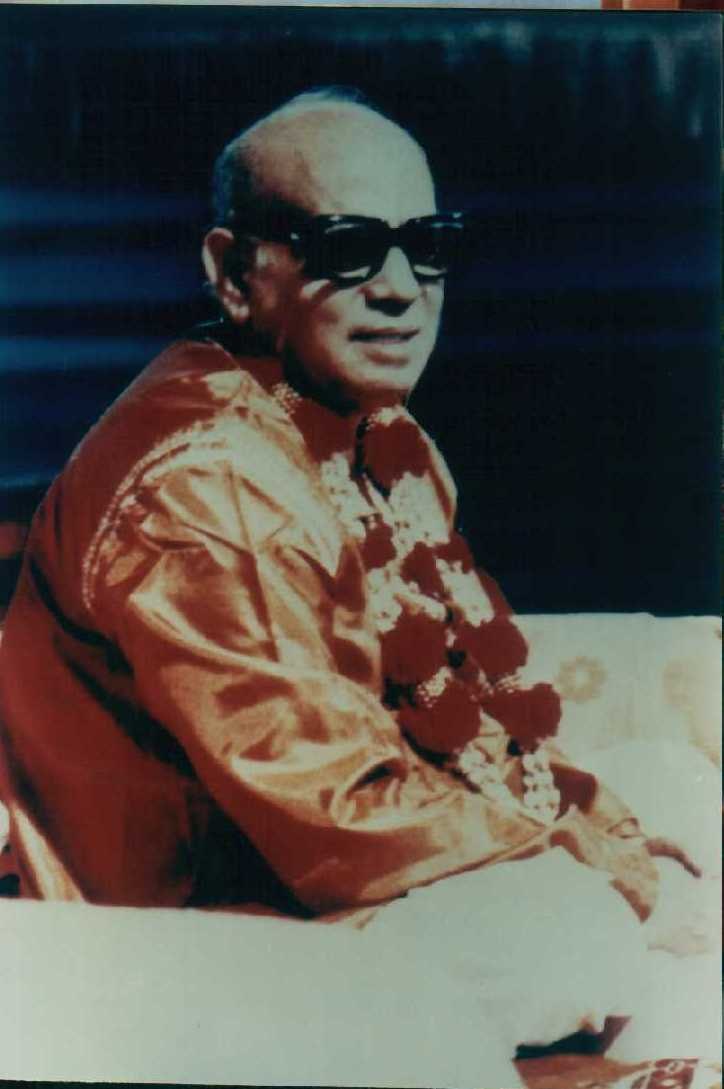
  • The first point

    … The first meeting I attended that morning consisted only of workers. The first point he reviewed was the use of water after urination, which by then had already been designated as the first of what would officially become the sixteen points. He asked, “What is the first point?” and someone answered, “use of water.” Then Bábá started asking the workers if they were using water after urination. Those who said yes he asked to stand in a line on the right, and those who said no were asked to stand in a line on the left. When my turn came, I said yes and went to the right. After a few minutes Bábá again came to me and asked the same question. I again said yes and remained where I was. Then a little while later he came back to me and once again asked the same question. I thought, I must have done something; otherwise Bábá wouldn’t have asked me again. So this time I said, “Bábá, I don’t remember,” and he sent me to stand on the left. When I came out of the room I was still wondering what I had done. Then I remembered. The previous night after urination I had turned on the tap and found that there was no water. I opened the tank but it was empty and I had already urinated in the bowl, so I had no choice but to go without. The next morning Bábá was reviewing fasting, asking each person if they were performing regular fasting as per the prescribed system. When my turn came, a similar thing happened. I said yes but the next time around Bábá asked me the same question and this time I wasn’t sure. I went to the other line and then I remembered that recently I had been riding the train and at one station I got down to wash my mouth at one of the faucets on the platform and I inadvertently swallowed some water. I hadn’t remembered the incident but Bábá had. …Read the story

    — An ácárya, Patna, Ácárya Nityashuddhánanda Avadhúta, “Samarpan: At the Feet of the Master”, “Bábá is Arrested”

  • A window in Buxar jail

    … The CBI brought Bábá to Buxar jail, and after one or two days, I and three or four other dádás went to Buxar to see Bábá. The jail authorities allowed him to go near a window and we saw him standing there, firm and tranquil, a picture of strength. I believe the room was some kind of office, and we were able to go right up to the window and talk with him. He had only one message for us: Don’t worry. Follow the sixteen points and keep fighting against the immoral forces. When you work for the cause of a great ideology such struggle is inevitable. That meeting lasted only a couple of minutes but it filled us with determination. This was the battle of dharma, and as Bábá had told us time and again, dharma always wins in the end, so we knew what the final outcome would be. …Read the story

    — An ácárya, Buxar, Ácárya Nityashuddhánanda Avadhúta, “Samarpan: At the Feet of the Master”, “Bábá is Arrested”

  • What were their comments?

    … It was December 1971. Events were leading up to the eventual arrest and subsequent imprisonment of Márga Guru. He had been residing at Pataliputra Colony in Patna. I was living at Ánandanagar and visited Patna only once in a while. On the tenth, Márga Guru gave the Sixteen Points for spiritual practices and made them mandatory for all spiritual aspirants. At Ánandanagar, the General Secretary explained the Sixteen Points to everybody. … That night, I boarded a train to Patna and arrived the next morning. I was standing at the gate of the jágrti about 11 a.m. when Márga Guru stopped his car nearby and said, "Come along! Let us go for a walk outside." I sat next to Márga Guru in the back of the car and we drove off. He asked after my well-being, When did I reach Patna? How is everyone there? Did everyone in Ánandanagar hear about the 16 Points? What were their comments? and so on. I answered all those questions in brief. I said, "Yesterday, everybody heard about the 16 Points. Everybody is happy that rules of conduct are now included as a fixed part of spiritual practices. They have started following them sincerely." Then he said, "The 16 Points have been invented after scrutinising all the aspects of psycho-spiritual life. I believe that if a spiritual aspirant follows them sincerely, he or she is sure to be benefited. The yatis (sannayasins) and the vratiis (missionaries) are sure to be benefited. I have determined that those who observe these rules with sincerity and devotion will certainly make spiritual progress. They can be cent percent confident about their spiritual progress." …Read the story

    — An ácárya, Patna, Ac. Vijayánanda, “Ánandamúrti As I Knew Him”, “6. I Am an Incorrigible Optimist”

  • The Sixteen Points chart

    It was July 1977. Bábá had introduced the Sixteen Points in September or October 1971. He made it mandatory for every Márgii to follow the Sixteen Points strictly, particularly regarding sádhaná, ásanas and fasting. During reporting, Bábá was very particular about checking whether the Sixteen Points were being followed properly. After the Emergency, I went, along with two other workers, to see Bábá. After inquiring if we had any news, and so on, Bábá said, "Although every sádhaka has been trying to follow Sixteen Points sincerely, I now want them to be more strict and sincere. So, prepare a Sixteen Points chart. Every sádhaka will fill it up every day, so that they themselves will be able to know where they are faltering. You [structural workers] should check the charts from time to time." He gave us one day to prepare the chart. By His grace and inspiration the chart was prepared within twenty-four hours. Bábá was pleased to see it and gave permission to print it.Read the story

    — A worker, Patna, Ácárya Keshavánanda Avadhúta, “Reminiscences of Bábá: Memoirs”, “3.23. THE SIXTEEN POINTS CHART”

  • An impenetrable shield

    On 29 December 1971, the CBI arrested Bábá. For His devotees it came as a total surprise. But for Bábá it was not unexpected. … Advance preparations sometimes had to be made. Bábá would forewarn us about what was going to happen and prepare us with necessary instructions. Unbelievable as it seems, it is true. The mission was His child, He guided it with steady steps towards its bright future. Every act of the mission bore the stamp of Bábá's omniscience. He knew when there would be arrests, and that they would be followed by long imprisonment. He foresaw a period of terrible trial and tribulation for His followers. He gave the Sixteen Points just before His arrest perhaps because He knew of the ordeals to come and that the points would galvanize and inspire His devotees for the mission's work in His physical absence. Bábá's long imprisonment and an organized anti-Márga campaign naturally lowered the morale of the devotees. The Sixteen Points acted as an impenetrable shield and kept the devotees active and strong.Read the story

    — Ác. Sarveshvaránanda Avadhúta, Ác. Sarveshvaránanda Avadhúta, “My Days With Bábá”, “1.1. Advance Preparations”

  • Reporting at Lake Gardens

    … A new worker was posted in western India. He had come for reporting. Most of the workers had come from schools, colleges or universities, and had not much experience regarding cleanliness, as in that period of their educational life they depend upon their parents for everything. So a worker came to Lake Gardens, Calcutta. Bábá was living there when Tiljala was not yet built. During the reporting, every department head, the area-level workers of all trades, the circle-level workers of all trades, and all the DSs of the ERAWS section were present there. Bábá also called them in front of Him by name. A worker came in front of Bábá. Bábá used to teach the junior workers by questioning the seniors. "Are you following the sixteen points properly?" "Yes, Bábá, I am following them properly." "Are you fasting regularly without water?" "Yes, Bábá." Then Bábá named a particular month and date, which was a púrńimá. In Ananda Marga the workers, the monks and nuns, fast four days in a month. The worker said that he had been fasting without water. Bábá asked him whether there was a river near his school, and the worker agreed. Bábá further asked him if he took a bath in the river every evening. He agreed, and said that he bathed there every day, even on fasting days. Bábá said, "On that particular day of the púrńimá, when you took a bath in the water, you started drinking." Bábá told him a saying: while sinking into the water you were drinking, thinking that Bábá was not looking. The worker accepted his mistake. …Read the story

    — An ácárya, Calcutta, Ácárya Krpánanda Avadhúta, “About Bábá and Ananda Marga”, “A divine Guru”

  • Sixteen Points Review

    … After I reassured the central didi that I was well she said, “Following Bábá’s birthday celebration, be ready. You might get called by Bábá to review your Sixteen Points. This is a new program Bábá has started. During the review, Bábá can reveal wrong things you have done in your life. He will give punishment for any wrong actions. This program will lighten and free you of the burden of requital that you owe.” I learned that this new program was called “Sixteen Points Review.” Only central dádás and didis thus far had undergone it. There was a strong possibility Bábá would extend it on this occasion to overseas dádás and didis. I was informed that during it I would stand alone in front of Bábá. He likely would tell various improper actions or thoughts I had committed and give retribution. … After the birthday celebration concluded, two overseas didis and I were called into a small room to stand in front of Bábá for our Sixteen Points Review. Bábá sat on a wooden couch covered with a folded blanket. We bowed to Bábá and then sat on the floor in front of Him. Didi Ananda Karuńá and general secretary dádá were present as our supervisors. Firstly I was called to stand in front of Bábá. While I stood I internally prayed to Bábá, Do not shame me in front of others. The thought of any such exposure mortified me even though I could not remember any real grievous action. I knew about my pettiness and some other bad habits. Bábá looked intently at me for several seconds. Then He spoke in Bengali to Didi Ananda Karuńá. She turned to me and said, “Bábá says you are following Sixteen Points so you can sit down.” When I heard what Bábá said, I felt relieved. I thought, That was not too difficult. I know my Sixteen Points need improvement. …Read the story

    — An overseas didi, Kolkata, Nancy “Niiti” Gannon, “Meetings with My Master: A Woman’s Experience”, “The Master Gives Dharma Samiksa”

  • Completely blank

    In 1979 Bábá came to Europe. He visited many places, the first place being Switzerland where He gave many darshans and one Dharma Maha Cakra. At the time, I was a young boy of maybe 19 years, and I got the opportunity to have PC with Bábá. It was very interesting what happened there. I entered the room and I did sastaung prańám. Bábá called. I went in front of Him, but I made a small mistake. Instead of sitting in lotus posture, I went in front of Him sitting on my knees. Maybe I should first tell something about my state of mind in those days. I was as self-important as a 19 year old boy can be, thinking, "Oh, I'm great, and I'm an LFT, and I'm oh such a good boy, so Bábá will be just wonderful for me and..." So I was in this state of mind. What happened actually was that, because I was sitting on my knees, Bábá immediately said in a little bit harsh voice, "Sit properly." And I thought, "Oh, I've sunk on my knees," and I didn't even seriously reflect on my posture. I just switched and sat down in half-lotus. He asked my name, and other different small things. He asked where I came from and what I did. I told Him that I came from Holland and that I was working as an LFT. He said, "Oh, very nice." Then He asked me, "Do you know the 16 points, my little boy?" And I thought, "I've been filling out the chart every day, so of course I know the 16 points." I was thinking like this. So then He said, "Can you please tell all the 16 points to me?" I thought OK, the 16 points, but I was really completely blank. I couldn't even remember the first one. So He was insisting and asking again, "Do you know the 16 points?" I said, "Yes, Bábá, I know the 16 points, but uh..." Like this I replied to Him. …Read the story

    — An LFT, the Netherlands, Vidyananda, in “Divine Love: European Experiences with Shrii Shrii Anandamurti”, ed. Ác. Subuddhyananda Avt., “Do You Know The 16 Points?”

  • Use of Water

    … One of my duties was to sign the gate pass for every worker, LFT, and Bhukti Pradhán who had come to see Bábá. I listened to many stories from them. They were getting Personal Contact (PC), but I had never gotten PC. This created a strong desire to get my own PC. After some time, Bábá declared that all Wholetimers who did not have PC yet should come for that purpose. As I was already there, I was assigned to be in the first batch of five Wholetimers. We waited in the hall of Lake Gardens. The first dádá went in, but ran out after only a few seconds. He said that Bábá had asked him to recite the 16 Points, but he could not remember them. So we all reviewed a little. Then the second dádá went inside, but he ran out even faster because Bábá had asked him to show his shaoca mainjusa (small water bottle), and he didn't have one. I realized that this is very important. Then it was my turn. Bábá asked me to recite the Sixteen Points. First I said, "Using water," but Bábá said this was grammatically wrong, it should be "Use of Water." He gave a long grammatical explanation of why this was so. I recited the next several points, and then Bábá gave me PC. …Read the story

    — A Wholetimer, Kolkata, Vaekuntha Duhaylungsod, in “Garland of Devotion — A Compilation of Blissful Memories”, compiled by Ác. Bhaktapráńánanda Avt., “27. Fulfilled Desires”

  • Twenty-four hours a day

    One day, while I was massaging Bábá, He asked, "Shamitananda, are you strictly following the Sixteen Points?" "Yes, Bábá. I try my best." "Do you always keep your pratiik over your heart cakra?" "Yes, Bábá." "No, you don't. When you take your bath, why do you take it off?" "Bábá, I remove it to prevent the cotton string from becoming wet. Then, after my bath, I put it back on. I prefer using a cotton string over a metal one," I said. No one knew about this except me. Bábá caught me. "The pratiik should be on your heart cakra twenty-four hours a day. It will protect you from any problems. So don't take it off even for a minute." I apologized to Bábá and swore I would follow his guideline strictly.Read the story

    — Ác. Shamitánanda Avadhúta, Ác. Shamitánanda Avadhúta, “Bábá Unparalleled: 102 Stories”, no. 87

  • Bábá in Haifa

    As I was the Girls' Volunteer Secretary for the Middle East, it was my duty during Bábá's stay in Haifa to arrange for the sisters' personal contact with Him. We all sat in His room, and He would talk to them and ask questions. Some Ácáryas/ás were supposed to come from Turkey to attend Dharma Mahácakra (spiritual gathering with Bábá's presence). So in the meantime we were only a few: the Didi accompanying Him in His tour, myself and a few Dádás. We had the chance to participate in reporting meetings with Bábá. One time He became very upset that the Wholetimers from Turkey had not arrived so far. I stood up and said that they thought that since DMC was also to be held in Turkey, they did not need to come to Israel. He became very upset at this mistake that He ordered for everyone to come to Haifa at once, and surely, they soon came. Bábá visited Istanbul, Turkey, but the official DMC was in Haifa. After writing down a list of Márgiis who would get P. C. with Bábá, the question arose whether they deserved it if they did not follow the 16 points (disciplinary rules). Then Bábá said that everybody should have the opportunity, since He was not to come to Israel in the near future. So all the Márgiis got P. C., even those who had been away from Ananda Marga for a long time and had come for His first visit. …Read the story

    — The Girls' Volunteer Secretary for the Middle East, Haifa, Avadhútiká Ánanda Harimayá Ácáryá, “This Life With My Adorable Beloved”, “Bábá in Haifa”

  • She is trying her best

    Sister Aruna from northern Sweden stood before Bábá. After going through the formalities of her name, duty, and so on, the General Secretary began asking her about Sixteen Points. Bábá interrupted, saying, “There’s no need to question her about her conduct. She is trying her best.” We were all astonished. This was the first case of any Márgii being declared uncriticizable. I looked at Aruna’s face. Instead of noticing the expansion of ego that such a comment would have caused in almost anyone else, she looked unselfconscious—her eyes glistened with tears. She was lost in the ecstasy of being with her Bábá. The flow of dharma samiksha had been different from Personal Contact. I saw many reactions to Personal Contact. My own Personal Contact was a case in point. But every dharma samiksha, without exception, resulted in unparalleled inspiration. Bábá’s remarks were so individualized, both in rebuke and in praise, that each Márgii was fully satisfied. The majority of us could confirm that He knew our most closely kept secrets, and knew every wave of our mind and body. I am sure that each and every Márgii thought something like, “He cares for me. He loves me.” In the closing weeks, Bábá gradually became sick. On August 24, the strain of altering our mental and physical condition reached the limit. He announced that the dharma samiksha program was finished.Read the story

    — Dada Dharmavedananda, Dada Dharmavedananda, “Travels with the Mystic Master: A Modern Yogi Reveals the Secret World of Tantra”, “Beyond criticism”

  • Perfumed soap

    One Dádá arrived at a family house after a long travel. For the last few days he had not had a proper bath. He had no bath soap either. He asked the márgii brother to buy some soap for him. When he went to take a shower he found out that it was perfumed soap, which whole time workers don't use. He did not want to ask that brother to go and buy another piece of soap for him, so he thought, "Let me use this, for tomorrow I can get some other kind of soap." After this incident he was always thinking, "Why did I use that perfumed soap?" He came to another town, and there he got a message that he had to get to Calcutta within twenty-four hours, otherwise he would lose his workership. He had no money. One márgii brother arranged for his ticket and he left for Calcutta. In Calcutta, while reporting was going on, Bábá enquired about him and said, "There is very little time left to complete twenty-four hours notice, if he does not arrive he will lose his workership." He reached there within a few minutes of the dead line, Bábá told him to come in the front and asked him, "Are you following sixteen points?" He replied, "Yes Bábá." Again Bábá asked, "Everything perfectly?" He again said, "Yes Bábá." Then Bábá said, "Two days ago why did you use perfumed soap? You asked one brother to bring you some soap, he brought perfumed soap and you used it, why?" He had nothing to say. Bábá said, "You know, you may be away from here but Bábá is always with you and watching you all the time."Read the story

    — Ac. Dhyaneshananda, Ac. Dhyaneshananda, “Stories of Bábá”, no. 138

What Shrii Shrii Ánandamúrti said

  • “Many people have asked me how they can increase their power of memory. Personally, I know quite a few secrets in this regard, as well as a number of physical exercises which increase the power of memory. In our 16 Points there are a number of psychic exercises which also help.”
    Ánanda Vacanámrtam 7, “An Exemplary Life” (2 January 1979, Patna)
  • “Be firm on sixteen points. Unite all the righteous forces. All the tall talks of the evil forces will be silenced.”
    Ánanda Váńii Saḿgraha, Ánanda Váńii no. 44 (1 January 1976)
  • “You have not come on this earth for thousands of years. Few are the people who even live for a hundred years. Of course, if you follow Sixteen Points, your longevity will be greater, but you will not live for a thousand or two thousand years. The most a person can live is a hundred or a hundred and twenty-five years.”
    Ánanda Vacanámrtam 5, “Devotion and the Realm of Intellectuality” (24 November 1978 morning, Bombay)
  • “A very popular name is “Hari”. In Saḿskrta the root verb “Har” means “to steal”, and “Hari” means “the stealing agent”. It is fundamentally against Sixteen Points and Yama and Niyama, so how can Parama Puruśa steal?”
    Ánanda Vacanámrtam 12, “The Supreme Witness and the Great Thief” (10 May 1979 evening, Fiesch, Switzerland)
  • “Strictly adhering to the code of 16 Points.”
    Caryácarya 2, “Conduct Rules for Sádhakas”, rule 4 (c. 1975, Patna)
  • “Secrets for a long life: 1. Proper physical labour. 2. Eating as soon as one feels hungry. 3. Going to sleep as soon as one feels sleepy. 4. Regularity in spiritual practices. 5. Fasting at intervals. 6. Performing vyápaka shaoca before sádhaná, sleep and meals. 7. Curd (yogurt) [[and/or]] raw foods. 8. Getting out of bed in the Bráhma muhúrtta. 9. Sixteen points.”
    Caryácarya 3, Appendix, “Secrets for a long life” (no year given for the appendix)

Videos

  • Sixteen points 1. Practices strengthening the mindOpen on YouTube ↗

    Sixteen points 1. Practices strengthening the mind

  • Sixteen points 2. Maintaining HygieneOpen on YouTube ↗

    Sixteen points 2. Maintaining Hygiene

  • Sixteen points 3. Joint hairOpen on YouTube ↗

    Sixteen points 3. Joint hair

  • Sixteen points 4. Simple way to cultivate manlinessOpen on YouTube ↗

    Sixteen points 4. Simple way to cultivate manliness

  • Sixteen points 5. Thorough cleanlinessOpen on YouTube ↗

    Sixteen points 5. Thorough cleanliness

  • Sixteen points 6. How to take bath properlyOpen on YouTube ↗

    Sixteen points 6. How to take bath properly

  • Sixteen points 7. As you eat so you becomeOpen on YouTube ↗

    Sixteen points 7. As you eat so you become

  • Sixteen points 8. Upavasa - be near GodOpen on YouTube ↗

    Sixteen points 8. Upavasa - be near God

  • Sixteen points 9. Completing oneselfOpen on YouTube ↗

    Sixteen points 9. Completing oneself

  • Sixteen points 10. Dedication to an embodiment of truthOpen on YouTube ↗

    Sixteen points 10. Dedication to an embodiment of truth

  • Sixteen points 11. An ideology for a true human beingOpen on YouTube ↗

    Sixteen points 11. An ideology for a true human being

  • Sixteen Points 12. The Three Core Components of Spiritual PathOpen on YouTube ↗

    Sixteen Points 12. The Three Core Components of Spiritual Path

  • Sixteen points 13. True source of spiritual powerOpen on YouTube ↗

    Sixteen points 13. True source of spiritual power

  • Sixteen points 14. Power of the Lifelong VowsOpen on YouTube ↗

    Sixteen points 14. Power of the Lifelong Vows

  • Sixteen points 15. The Importance of Collective MeditationOpen on YouTube ↗

    Sixteen points 15. The Importance of Collective Meditation

  • Sixteen points 16. The Final PointOpen on YouTube ↗

    Sixteen points 16. The Final Point

  • The Forgotten Practice That Unlocks Your Energy | #1 of 16 PointsOpen on YouTube ↗

    The Forgotten Practice That Unlocks Your Energy | #1 of 16 Points

Questions

Ask a question →