




On the way
- Concentration
- Intuition
- A calm mind, and anxiety fades
- Peace, and happiness
- Relief from attachment, from a loss of meaning, from a lack of energy, from loneliness
All of this comes on the way. It is not the goal.
In person, from a teacher who walks the path, anywhere in the world.
1,000,000+ people have learned meditation with us
What is meditation?
Some of these are useful. None of them is real meditation.
What it is
Meditation (dhyána) is the unbroken flow of the mind towards the supreme goal.
“So dhyána is meditation on the Supreme Entity so that there is an incessant upward movement of the mind towards Parama Puruśa.”
“When the unit consciousness and the Supreme Consciousness are fused into one, that is real yoga. This takes place when the spiritual aspirant establishes a relationship of sweet love with Parama Puruśa.”
More than a cure
On the way
All of this comes on the way. It is not the goal.
The goal
What every living being has been moving towards from the very beginning. On the way to it, and when we reach it, it gives infinite happiness.
Moving towards it, we realize our full potential and our purpose.
Meditation is the key to it: the key to the infinite within you.
“The goal of sádhaná is the all-round elevation of human beings. Spiritual practices do not teach renunciation of the world, they teach only the proper utilization of the subtle and crude potentialities.”
Is it for me?
Anyone can practise it. You do not have to be a monk or a nun, to leave your home, your work or your family, or to believe anything.
“Intuitional practice, sádhaná, is the fundamental duty of everyone.”
are caught in attachment
feel your life has lost its meaning
have no energy
feel lonely
cannot concentrate
feel anxious
are burnt out
want to heal inside
cannot control your emotions
overthink everything
feel empty
are tired all the time
want to be happy
want inner peace
want to know yourself
want to let go of negative habits
are looking for something more.
Learn basic meditation
Shiva
Bangalore, India
“My eagerness day by day increased … For the first 15 days, it was so difficult for me to bear the pain of not able to take meditation.”

Vasudeva Tandero
Norway
“I found that maybe I should try the transcendental meditations, so I started with that, and actually it helped me. And then in '72 Dada Karunananda came to Oslo, he became my acharya, he initiated me, and I felt it was a very powerful experience.”

Yana Chalikova
Coach
“There was a period when everything in my life that I had considered unshakable and stable changed very abruptly. The mental strain was so strong then that I had panic attacks. I was looking for ways to calm down and relax. That is how I began trying different kinds of meditation.”
Didi Anandashubhashisha
Italy
“How one can connect with it through a daily practice, the practice of yogic meditation. So when I heard this I felt like a thunderstruck. Somehow it really totally captured my heart.”
Dada Citkrsnananda
Ácárya · India
“This meditation, this process is something unique, something very organized, very systematic, which I didn't find in any other spiritual groups with whom I was involved. Then I started practicing regularly, it was getting more and more interesting.”

Anton Katsiyaev
Rostov-on-Don, Russia
“In the very first video Dada answered almost all the questions I had accumulated. … Since then I have been meditating twice a day for seven years now. In that time a great deal in my life has changed.”
Dada Tattvavedananda
Ácárya · India
“We should do meditation. Meditation doesn't mean just to close the eyes, to feel the love always. We should feel the love of the cosmic entity …”

Didi Ananda Devapriya
Ácáryá
“I felt, looking back on it, that I was really a ripe fruit, because when I found it, immediately I started to dive in.”
Konstantin Boychenko
Moscow, Russia
“Hello, I am 42. I work in sales in Moscow and I am always under stress. My working day has no set hours, my eating has no set hours. I went to the gym but still put on weight. I was growing decrepit and fat. In November 2018 a friend recommended meditation. He recommended your channel. It all clicked at once. I switched to vegetarian food, I meditate twice a day. I lost 9 kg. I stopped overtiring myself. Stress is under control. But that is not what matters. I found humility and joy. I stopped being part of the consumers and buy things only when necessary. I love life and everyone around me. Thank you so much! You returned me to the Universe! A deep bow for your project.”
Dada Viitaragananda
Ácárya · USA
“While he was teaching the meditation process my eyes were closed, but I could see a ball of light in front of me, and it was like rotating, and there were like lightning flashes and things inside … it looked so fantastic.”
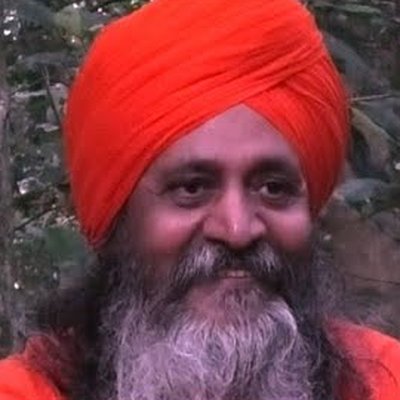
Dada Hariishananda
Ácárya
“When I got this initiation I was really thrilled of this meditation system. This is something different, it's not like ritual things.”

Denis Petrov
Former lawyer
“I didn't experience any special effects in meditation, but I calmed my mind and my nervous system. … Yoga and meditation changed me, and I clearly realized that I want not to take but to give.”
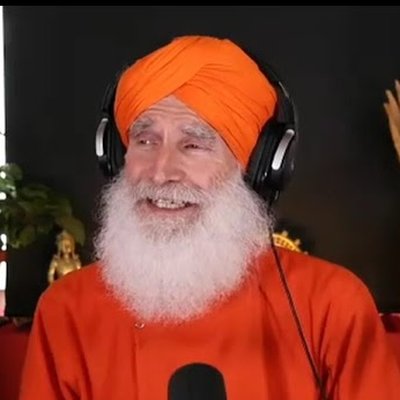
Dada Krsnasevananda
Ácárya
“I always had some kind of spiritual urge or meditative urge from the time that I was a kid. That became stronger and stronger as I got older.”
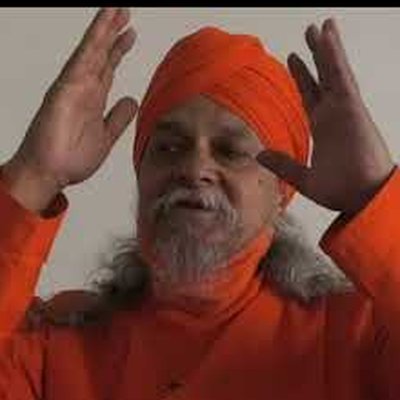
Dada Vimalananda
Ácárya
“When I was meditating it was going so deep that I had almost lost the sense of time. And then my mother … became worried that the son is wasting time in meditation, and then my father was okay, because he taught me.”
Natalia Vysotskaya
“Ánanda Márga is a divine project, thanks to which the perception of the world changes radically. Irritability, anger, rage and all other negative emotions go away. … Now the rhythm of life has not changed, only everything is perceived calmly, kindly, consciously and with a smile on my face. The colours have become brighter, people more beautiful, I even want to hug strangers.”
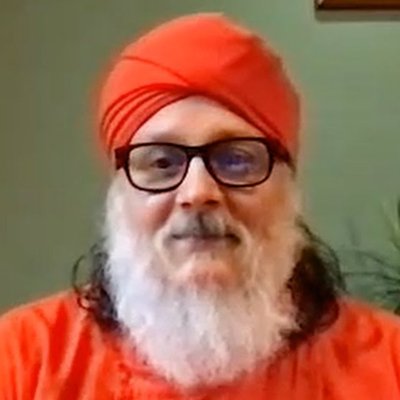
Dada Yogananda
Ácárya
“My meditation totally transformed … I started to have very intense experiences in meditation, and it is that time that really my complexes disappeared.”
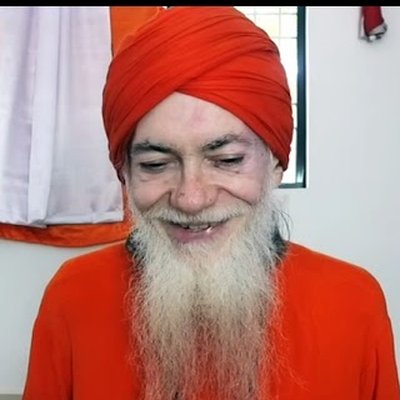
Dada Jyotiprakashananda
Ácárya
“I was regularly practicing meditation twice a day, and this is how I started enjoying.”
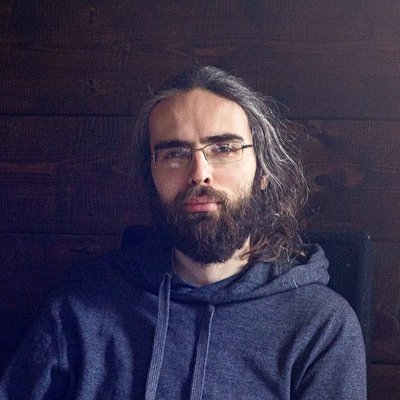
Vladimir Semenikhin (Vishvashanti)
Programmer and musician
“Another benefit of meditation is energy and inspiration. You enter the atmosphere like a comet and you burn, shine and rejoice. And I see how the practice radically changes people and their system of values.”
Dada Viitaragananda
Ácárya · USA
“I decided to stop and go back to my Buddhist meditation, but then I couldn't concentrate in the Buddhist meditation anymore, so I was like stuck somewhere.”

Finn
“I have searched Youtube for spiritual inspiration and fortunately (one year ago) found a basic course in meditation. I had only attended 2 Hatha yoga courses before and the practice of meditation was still very new to me. But the basic course boosted my experience big time. I learned the interconnections between physical postures (aka asanas), sound (mantra recitation) and focus. It perfectly laid the foundation for my future practice. Even today when I return to some of the basic course videos I catch a new nuance which improves my experience overall. Definitely a worthwhile investment of time and energy!”

Heather Howard
“This happened to cross my path. I have been watching it all day, so much useful information. I've been researching things throughout the last 4 years and this is by far one of my favorite things I have found.”

Jaswant Singh
“Been looking for a long time for a good meditation course and videos. Love this site. Learnt so much and so much yet to learn. I keep listening to it again and again every few months and feel my understanding deepen. Thank you.”

Lida Svintsova
“This is a high-quality educational project. It is not just a study of meditation, but a comprehensive development in different areas of life. I am grateful to the project team for the inspiration that they give me and many thousands of others. I recommend.”
Maxim Pogulyaev
“I'm still a "baby" in meditation yoga, but I'm already noticing amazing things that are happening to me. Previously I had to resort to external sources to maintain a positive attitude: listen to music, watch a movie, talk to interesting people, read a book, tidy up around me, etc. In other words, I had to attract positive microvitas into my life. Nowadays, my own abilities are enough. I heard it so many times that there is a huge potential within every person, and that it is possible to help yourself in any situation. But I had no idea how to reach this potential… Thank you for the lessons! Independence from external factors is awesome!”

Tatyana Lotyreva
“Previously I worked on myself with the help of a psychologist for two and a half years, attended different trainings and one-on-one's. I now understand that I can do all of that myself with the help of meditation and yoga. I've made very noticeable progress during the first year, changed a lot within, started looking at things deeper, got rid of many fears and complexes, became more self-confident and also more kind. I am now almost constantly in a good mood, and even if there is a disbalance, I recover quickly. I now control my anger and other negative emotions. Meditating regularly, for the first time in my life, I felt a loving atmosphere, and it started to transform my psyche in a very positive way. I stopped being greedy, became more generous and I started feeling very good when helping someone. Thank you to the project.”

Mikhail Trufanov
“Everything began with my birthday. To be exact, two weeks prior to it I found Dada's video on Youtube, an introduction to meditation. I watched it and felt how harmonious and calm he was. I also wanted to be more harmonious. So I started watching more of his videos, signed up for the mailing list. I became a vegetarian a week later. I've stopped eating pork a long time ago, but there was something missing to stop consuming animals. Also, after my first attempts, I felt such bliss! Indescribable. I am practicing to this day, and it's been over a year now.”
Their way
Our way
The system
A complete practice is not one technique. It starts with a basic meditation you learn online, and then come six lessons, each with its own purpose. You learn the lessons one at a time from an ácárya. Here is what each one is for. How it is done is taught in person.
Online, before the six lessons
Taught online, before your first lesson
Lesson 1 of 6
Shelter in the Supreme
Lesson 2 of 6
Universal Outlook, also called Madhu Vidya: “honey knowledge”
Lesson 3 of 6
Elemental Control
Lesson 4 of 6
Control of Prana
Lesson 5 of 6
Purification of Cakras
Lesson 6 of 6
Absorption
“The more the mind gets concentrated, the more the mind goes deep, the more bliss a person will experience. Ultimately, they will become one with the Supreme Mind.”
The lessons are given personally and are not published. This is only an overview.
Learn basic meditationWe also teach
Seeing a distant star takes a telescope that is clean and set right. Reaching the Supreme Consciousness takes a mind that is kept ready in the same way, and the mind is joined to the body. So we look after both: we train the body and the mind, and set the whole system of the body to bear a higher state.
That is why, along with the lessons, we teach other practices. Each of them prepares the mind, directly or through the body. And they are free too.
Philosophy and ideology
Meditation shows you how to go. A philosophy tells you where, and why. A real philosophy answers five questions:
It must give you answers you can check. Here the way to check is the practice itself.
I and other people make up a society. To move toward the goal, I and the others need the right conditions in society. But society has its own problems:
Social philosophy shows how to solve them and how to build a society where no one is in want, no one is exploited, love reaches every living being, and everyone moves together toward one goal, like one big family.
We give this too.
That is why our ideology has two halves: self-realization and service.
Átmamokśárthaḿ jagaddhitáya ca ‘For self-realization and the welfare of the universe’ is said to be the ideal of a sádhaka’s life. … If one is not doing service to humanity and has no concern for them and is engaged only in sádhaná for self-realization, then he or she deserves to be called self-seeking despite his or her spiritual longing.”
Who stands behind it
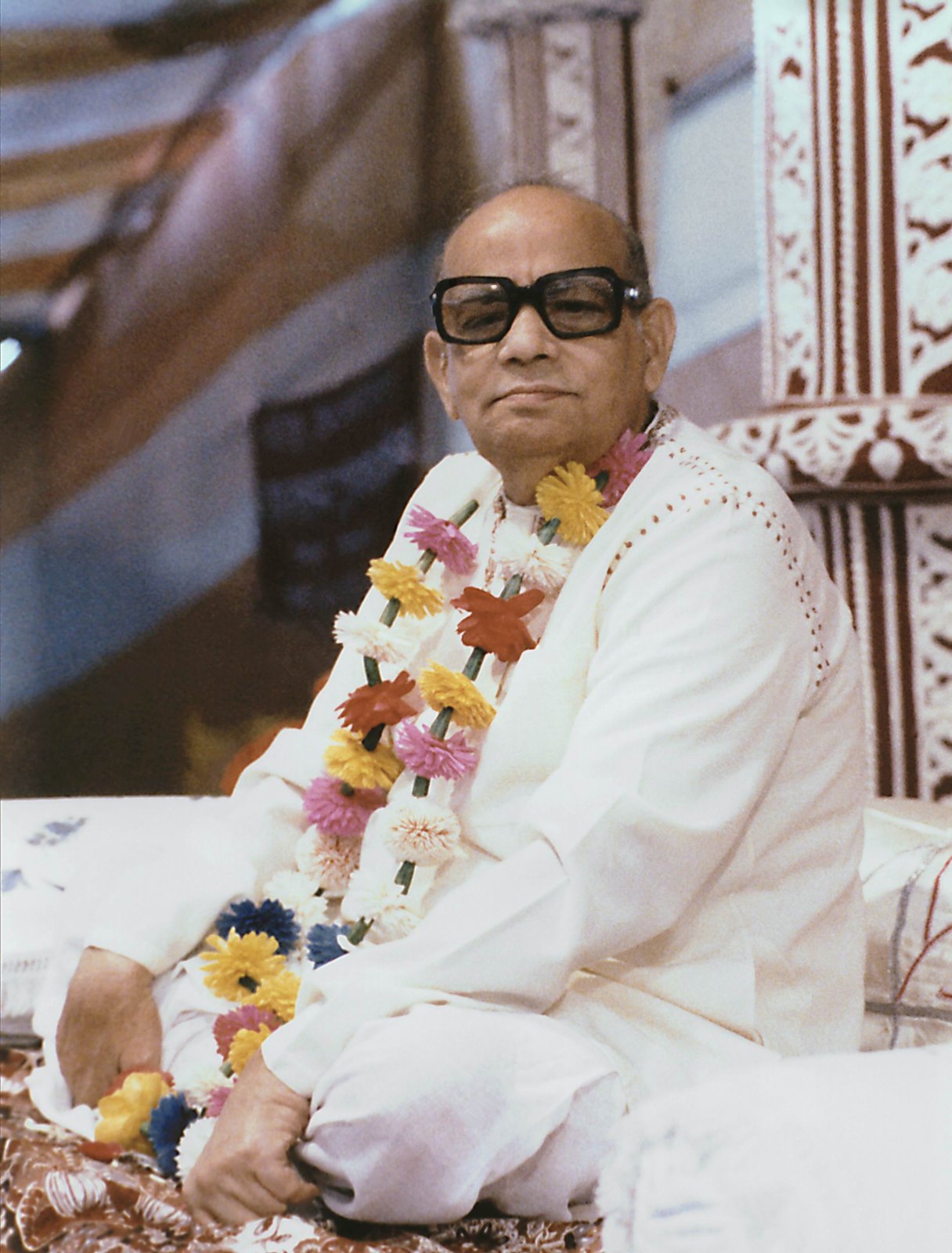
Prabhat Ranjan Sarkar (Shrii Shrii Ánandamúrti, 1921–1990) set out to end exploitation in every form: of the poor by the rich, of women by men, of one caste, race or nation by another. To each person, a spiritual practice; to society, a plan to rebuild it.
Prabhat Ranjan Sarkar worked as a railway accountant in Jamalpur, Bihar, gave the first initiation in 1939 and founded Ananda Marga in 1955. Over 100 books followed, on spirituality, philosophy, economics, history and language, and 5,018 songs. Shrii Shrii Ánandamúrti left the body in Calcutta on 21 October 1990.
Read about Shrii Shrii Ánandamúrti’s lifeShrii Shrii Ánandamúrti gave the practice. Ácáryas teach it to you.
Your teachers
An ácárya is a spiritual teacher qualified to teach all the lessons of meditation. Ácáryas are monks and nuns of Ananda Marga, an order Shrii Shrii Ánandamúrti created in 1960. They teach in person, one lesson at a time, and never charge for it.
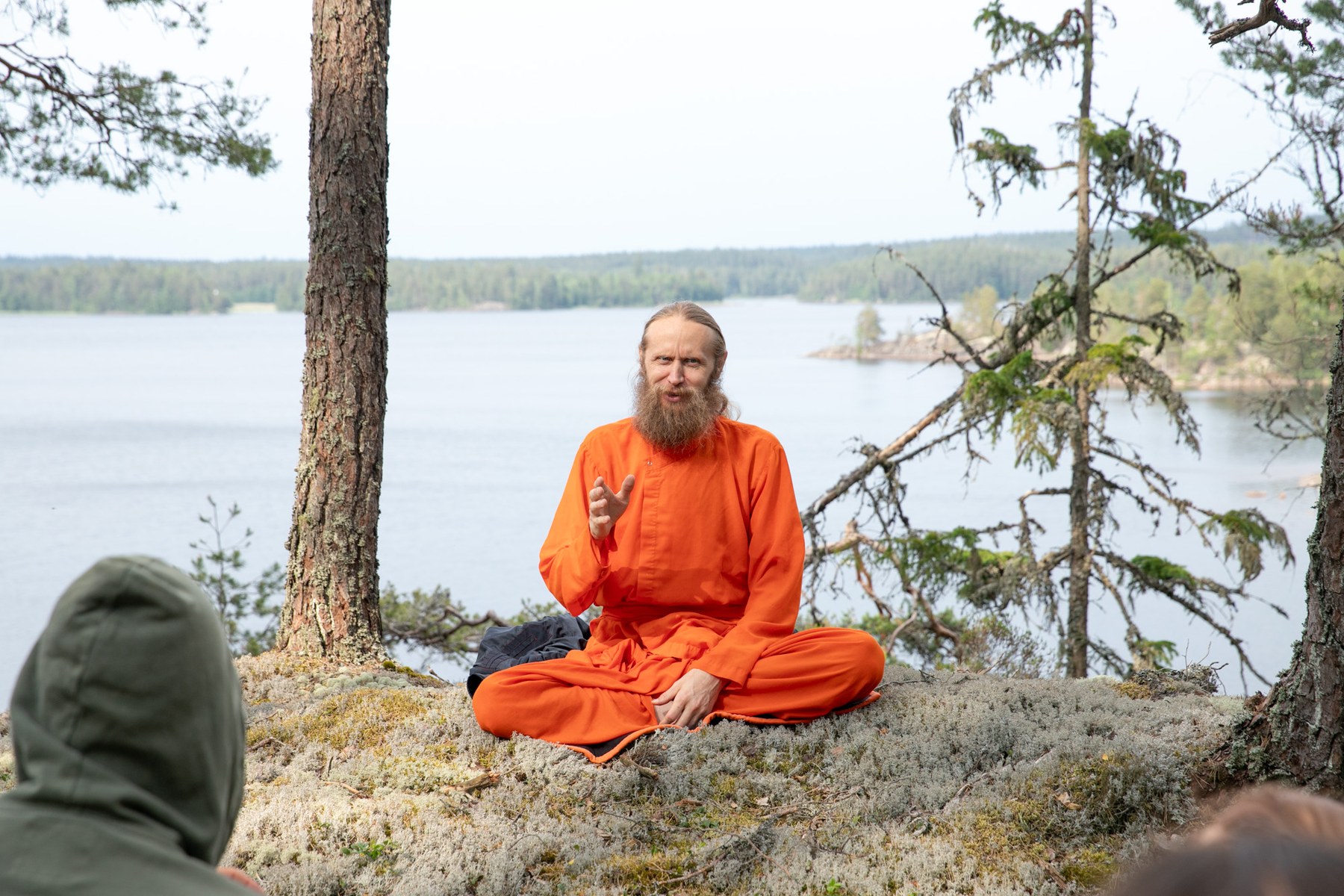
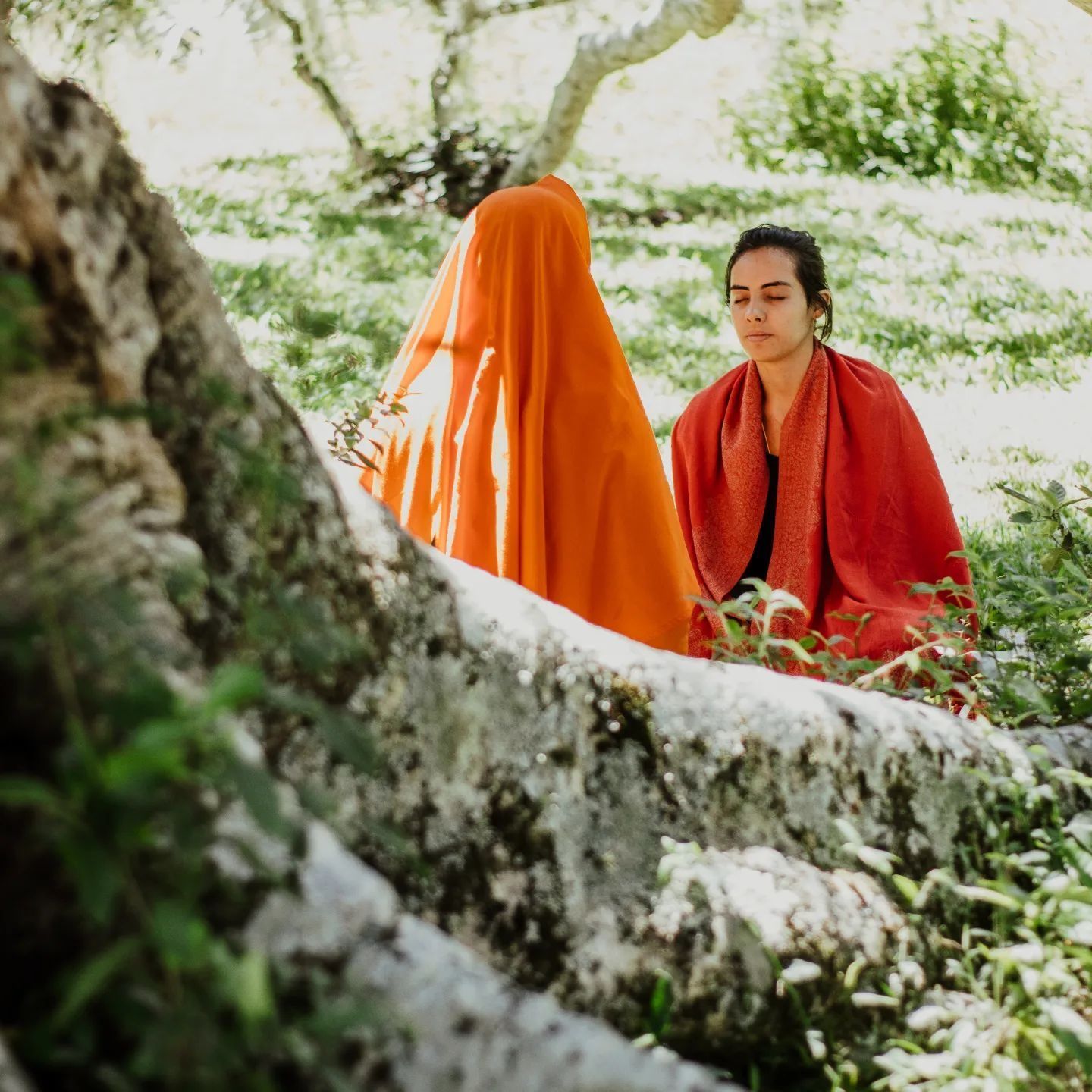
Who are the people in orange?Why is it free?
Ácáryas never take money for a lesson. Those who learn from them look after the ácáryas’ needs, so that teaching never turns into a trade.
If this were sold for money, it would be called a business. We are not in business. We serve, and we help other people.
Your price
Your only price is dedication, sincerity and willingness to follow rules and practice regularly.
How to begin
Basic Meditation with Universal Mantra: you meditate and receive the universal mantra.
Make meditation a habit. Then send your request.
Tell us roughly where you are and when you are usually free. An ácárya will contact you to arrange a meeting. There is no charge.
You meet an ácárya in person and receive your first lesson.
How a lesson goes
You have been walking toward a door. Initiation is the step through it.
An ácárya gives you an advanced meditation technique: your first lesson. With it come personal instructions for your own practice.
The ácárya also initiates you. In Sanskrit, initiation is díkśá: a new beginning on the path. Two things come with it. The light of knowledge: you see clearly what the goal of life is and how to walk toward it. And the fog left by your past actions begins to clear, so your mind sees more and you change faster. It is a spark; your practice keeps the fire alive. Like every lesson, it is free.
Later you can receive the other five lessons from the same ácárya, one at a time, as you progress with the ones you already have.
Before you begin
Sádhaná means practical effort. An effort to what? An endless effort to move towards Puruśottama, the Nucleus of the Cosmic Cycle.
A trained teacher, an ácárya, teaches you in person, step by step. It costs nothing. Write to us or find a center near you, and we will put you in touch.
“But before launching an all-out attack against Máyá the sádhaka will first have to master the proper technique of sádhaná from a competent Guru.”
— Shrii Shrii Ánandamúrti, Tattva Kaomudii Part 2, “The Influence of Máyá on the Human Mind” (1969)
Yes. Any age, any background, no experience needed. Your teacher fits the practice to you.
“Intuitional practice, sádhaná, is the fundamental duty of everyone.”
— Shrii Shrii Ánandamúrti, Ananda Marga: Elementary Philosophy, “Why Are People Afraid of Intuitional Practice?” (1955)
You can begin after a personal meeting with an ácárya, who gives you the first lesson and explains it. Learning it is quick. What takes time is the habit: sitting morning and evening, day after day. The other lessons come one at a time, each when the one before has become steady, so the pace depends on your own practice rather than on a timetable.
“Human life is short. It is wise to get all the instructions regarding sádhaná as soon as possible.”
— Shrii Shrii Ánandamúrti, Ananda Marga Caryácarya Part 2, “Sádhaná (Intuitional Practice)” (1956)
The nature of the object or idea you choose to concentrate on in meditation will dictate the outcome. Meditation can be done for spiritual growth, or for relaxation and stress reduction, or even for some other reason, such as success in a sport or a career. The distinguishing feature of all spiritual meditation techniques, as taught in the great spiritual traditions, is that the technique has at its heart the idea of Infinite Consciousness – it is the contemplation of the infinite.
In Tantric meditation the practitioner learns a personal technique through a process of initiation and is taught a mantra which is repeated mentally. He or she is taught how to withdraw the mind from the external world and how to concentrate internally. The primary goal of Tantric meditation is to merge the individual consciousness into Infinite Consciousness. This is the type of meditation taught in the modern Tantric school of Ananda Marga.
“Tantra is a practical science. Hence in Tantra the importance of book knowledge is secondary.”
— Shrii Shrii Ánandamúrti, Subháśita Saḿgraha Part 8, “Tantra and Sádhaná” (1960)
Because the mind changes through habit. Most of the day it is scattered, and one long sitting now and then does not change that; a steady return every morning and every evening does. The morning sitting, before breakfast while the stomach is light, sets the mind for the day, and the evening one, before supper, gathers it again after the day has scattered it. Like food and sleep, meditation works through regularity, so it is kept up in sickness too, lying down if need be. If twice a day is hard at first, talk to your teacher, but keep up the practice every day.
“Most of the time the human mind is totally scattered. … The restless mind which begins the process of sádhaná can be calmed down through regular practice.”
— Shrii Shrii Ánandamúrti, Subháśita Saḿgraha Part 8, “Cognitive Force and Psychic Practice” (1959)
No. Ananda Marga is a path, not a religion. You test the practice for yourself, and the philosophy behind it is rational and logical.
“Ananda Marga is the first movement aimed at liberating spirituality from the unwholesome influences from dogma.”
— Shrii Shrii Ánandamúrti, Prout in a Nutshell Part 18, “Various Forms of Exploitation” (1980)
Yes, always. Ácáryas do not take money for teaching. Those who learn from them look after the ácáryas’ needs, so that teaching never becomes a trade.
“The ácárya/ás or purodhás will not take any remuneration from their initiates for initiation.”
— Shrii Shrii Ánandamúrti, Ananda Marga Caryácarya Part 1, “The Process of Initiation” (1956)
An ácárya: a spiritual teacher qualified to teach all the lessons of meditation. Ácáryas are monks and nuns of Ananda Marga. They teach in person, one lesson at a time.
“Emancipation can be achieved by intuitional practice (sádhaná), and so there must be a special technique for it. This can only be taught by one who knows the technique.”
— Shrii Shrii Ánandamúrti, Ananda Marga: Elementary Philosophy, “Intuitional Practice and Its Necessity” (1955)
Yes. The basic meditation is taught online, from anywhere. The personal lessons are given in person: send your request and tell us roughly where you are.
Real meditation is taught only in person. You need a living contact with the one who gives you the lesson and passes the practice on to you, and the energy of the guru has to be present in it. If you read an instruction somewhere and start doing it, it will not work, because that presence is missing.
“As the practical aspect is the most important factor in Tantra, the greatest emphasis is placed on the preceptor-disciple relationship.”
— Shrii Shrii Ánandamúrti, Subháśita Saḿgraha Part 8, “Tantra and Sádhaná” (1960)
An ácárya writes to you to arrange a meeting. You meet in person and you receive your first lesson.
Yes, at any time. A lesson commits you to nothing.
A mantra is a sacred sound that frees the mind. You repeat it again and again, silently, in your mind. You receive it personally from your teacher.
“Hence that thing or that consecrated word which, by repeating it internally again and again, will bring about one’s permanent liberation, is termed a mantra.”
— Shrii Shrii Ánandamúrti, Subháśita Saḿgraha Part 24, “Incantation and Human Progress” (1979)
No. In Tantra, the spiritual practice, you are not asked to believe in anything beforehand. You do not need to believe in God. Through the practice you come to know it for yourself.