
Ananda Marga

Personal practices · On your own · At least once a day, never around midnight

Bath

Snána

“Bathe according to the prescribed system.”Caryácarya 2, “Sixteen Points”

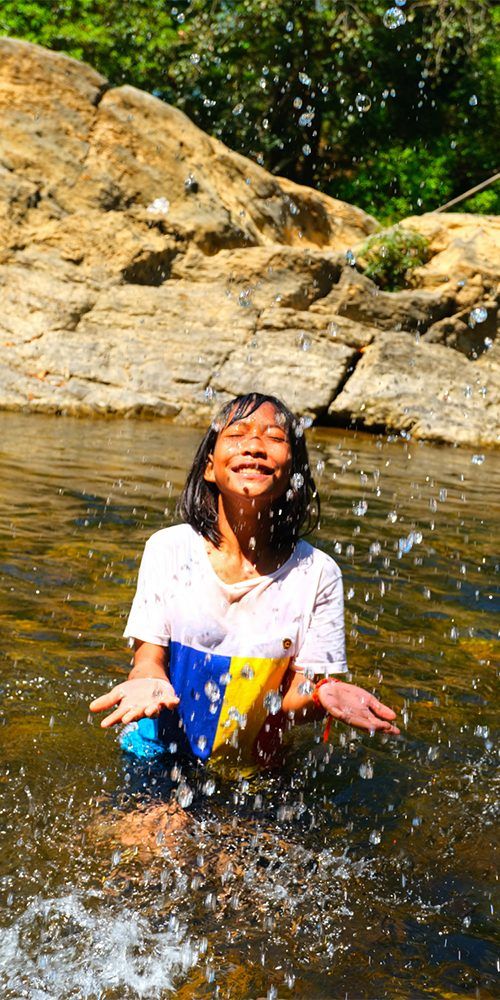
A smiling girl bathing in a clear river, splashing water over herself

Why we do it

The aim of yoga is Supreme Consciousness

  1. 1

    The aim is Supreme Consciousness. The goal of yoga is far off, like a distant star system.

  2. 2

    The instrument to reach that goal is the mind. It is the subtlest part of us, so it is the only part fine enough to reach the aim.

  3. 3

    The method is meditation. Seeing a star takes a telescope pointed at it; reaching Supreme Consciousness takes the mind pointed at it. That is meditation.

  4. 4

    The preparation and care. A telescope has to be looked after, cleaned and set right to see the stars. The mind is the same. Every practice does this for the mind, directly or through the body, because the mind is connected with the body.

    See how it leads to the goal ↓

Reaching the goal through Bath

The bath brings us to the goal through the body. The mind is tied to the body: a body that overheats or goes slack drags the mind down, and meditation suffers. Cool water, poured in the set way before every sádhaná, keeps the body cool and alert and the nerves strong. Such a body lets the mind stay with the Supreme in meditation, and the mind that stays with Him reaches Him. That is the goal of yoga.

  1. 01

    Mind and body are one

    Our mind is closely tied to the body.

    “The relation between the physical body and the mind is very close.”
    Caryácarya 3, “Ásanas”
  2. 02

    When the body goes wrong, the mind suffers

    If the body overheats, or does not behave as it should, the mind suffers with it.

    “The body will break down; and in consequence the mind also will be harmfully affected.”
    Ánanda Vacanámrtam 20, “Prańipátena Pariprashnena Sevayá – 2”
  3. 03

    Then meditation suffers

    And with the mind, meditation suffers, so it cannot bring us to our goal. This is why the body is looked after.

    “for sádhaná the body is necessary – so in order to maintain the body, you will have to be vigilant about everything in the world.”
    Caryácarya 2, “Sádhaná (Intuitional Practice)”
  4. 04

    Cool water wakes, hot water tires

    A hot bath tires the body and makes it slack, and the mind does not become alert. We need to keep the body constantly alert, and a cold shower invigorates spirit and mind. So the water is always cooler than the body.

    “The water temperature should always be less than body temperature.”
    Caryácarya 3, “Bathing Procedure and Pitr Yajiṋa”
  5. 05

    Dopamine

    A cold shower also adds dopamine, which has a positive effect on our general state.

  6. 06

    A cool body, a strong nervous system

    A good sádhaná needs a cool body, and a hot shower does the opposite. The nervous system has to live through the high states of meditation; with a cold shower you strengthen it too.

    “Due to excessive feelings of joy the nerve cells and the nerve fibres become ineffective.”
    Tattva Kaomudii 2, “Anindyánanda Rasa Samádhi”
  7. 07

    On to the destination

    With the body cool and alert and the nerves strong, the mind can stay with the Supreme in meditation. Ideating on Him, a sádhaka passes through the stages of realization, aware of them or not, like a passenger on a train with the shutters closed who still arrives. The destination is Him: this is the goal.

    “In the spiritual world also, the sádhaka, while ideating on the Supreme, will certainly pass through the different stages of realization without necessarily being aware of it.”
    Tattva Kaomudii 2, “Anindyánanda Rasa Samádhi”

What it is

To bathe according to the prescribed system is one of the Sixteen Points. The system says when to bathe, how warm the water is, in what order it is poured and in what position, and what is done at the end of the bath: pitr yajiṋa, the remembrance of the ancestors and the rśis.

In the sources

“Everyone must bathe in any one of the other three sandhyás. Taking into consideration one’s health and the climatic conditions, one may also bathe in one or both of the remaining two sandhyás.”Caryácarya 3, “Bathing Procedure and Pitr Yajiṋa”

“Before morning and evening sádhaná, either do vyápaka shaoca or take full bath.”Caryácarya 3, “General Health Rules”

“When taking a bath, all parts of the body, in particular the armpits and groin, should be cleaned properly. Soap, oil, and comb should be used every day.”Caryácarya 3, “General Health Rules”

“Do not take a bath or shower, or drink water, from a standing position.”Caryácarya 2, “Social Norms”

“The water temperature should always be less than body temperature.”Caryácarya 3, “Bathing Procedure and Pitr Yajiṋa”

When to bathe

At least once a day, in one of the sandhyás, the junctions of the day: at dawn, at noon or in the evening, never in the midnight sandhyá. Taking health and climate into account, one may bathe in one or two more of them.

Before the morning and the evening sádhaná, a full bath or a half bath.

The four sandhyás

“The period from forty-five minutes before to forty-five minutes after sunrise is called “dawn”, and dawn is the first sandhyá.”Caryácarya 3, “Bathing Procedure and Pitr Yajiṋa”

“The period from 9 A.M. to 12 noon is called the noon sandhyá.”Caryácarya 3, “Bathing Procedure and Pitr Yajiṋa”

“The period from forty-five minutes before to forty-five minutes after sunset is called the evening sandhyá.”Caryácarya 3, “Bathing Procedure and Pitr Yajiṋa”

“The period from forty-five minutes before to forty-five minutes after 12 midnight is called the midnight sandhyá (11:15 P.M. to 12:45 A.M.).”Caryácarya 3, “Bathing Procedure and Pitr Yajiṋa”

How to bathe

  1. 1

    SittingCaryácarya 3, “Bathing Procedure and Pitr Yajiṋa”

    “If you are not taking a dip bath you should bathe in a sitting position; it is desirable not to bathe standing.”

  2. 2

    The waterCaryácarya 3, “Bathing Procedure and Pitr Yajiṋa”

    “The water temperature should always be less than body temperature.”

  3. 3

    The navelCaryácarya 3, “Bathing Procedure and Pitr Yajiṋa”

    “First pour water on the navel.”

  4. 4

    Below the navelCaryácarya 3, “Bathing Procedure and Pitr Yajiṋa”

    “Then wet the region below the navel by splashing water from the front. Then pour water from behind.”

  5. 5

    The crown of the headCaryácarya 3, “Bathing Procedure and Pitr Yajiṋa”

    “Thereafter pour water on the crown of the head in such a way that it trickles down over the backbone.”

  6. 6

    All overCaryácarya 3, “Bathing Procedure and Pitr Yajiṋa”

    “Then bathe all over.”

  7. 7

    A dip bathCaryácarya 3, “Bathing Procedure and Pitr Yajiṋa”

    “If you want to take a dip bath, first pour water over the waist, on the navel region, and below, in the above-mentioned way, and then take the dip.”

  8. 8

    Before drying your bodyCaryácarya 3, “Bathing Procedure and Pitr Yajiṋa”

    “After finishing your bath, before drying your body, recite the following mantra while performing the prescribed mudrá and looking at any luminous object:”

  9. 9

    Three timesCaryácarya 3, “Bathing Procedure and Pitr Yajiṋa”

    “Repeat the mantra together with the mudrá three times.”

  10. 10

    Soap, oil and combCaryácarya 3, “General Health Rules”

    “When taking a bath, all parts of the body, in particular the armpits and groin, should be cleaned properly. Soap, oil, and comb should be used every day.”

    In practice: After the bath the hair of the armpits and the groin is combed and oiled. Coconut oil is the usual choice; other oils can be used as well.

Take care

  • “Sick persons who are sensitive to cold should take their bath in warm water and in an enclosed and covered place. Sun-warmed water is also good.”Caryácarya 3, “Bathing Procedure and Pitr Yajiṋa”
  • “In extremely cold climatic conditions warm water should be used.”Caryácarya 3, “Bathing Procedure and Pitr Yajiṋa”
  • “There is no objection to bathing during the menstrual period, but bathing in very cold water is to be avoided. On the first day of menstruation one may bathe in normally-cool water unless it is uncomfortable.”Yogic Treatments and Natural Remedies, “Female Diseases”

Done within it

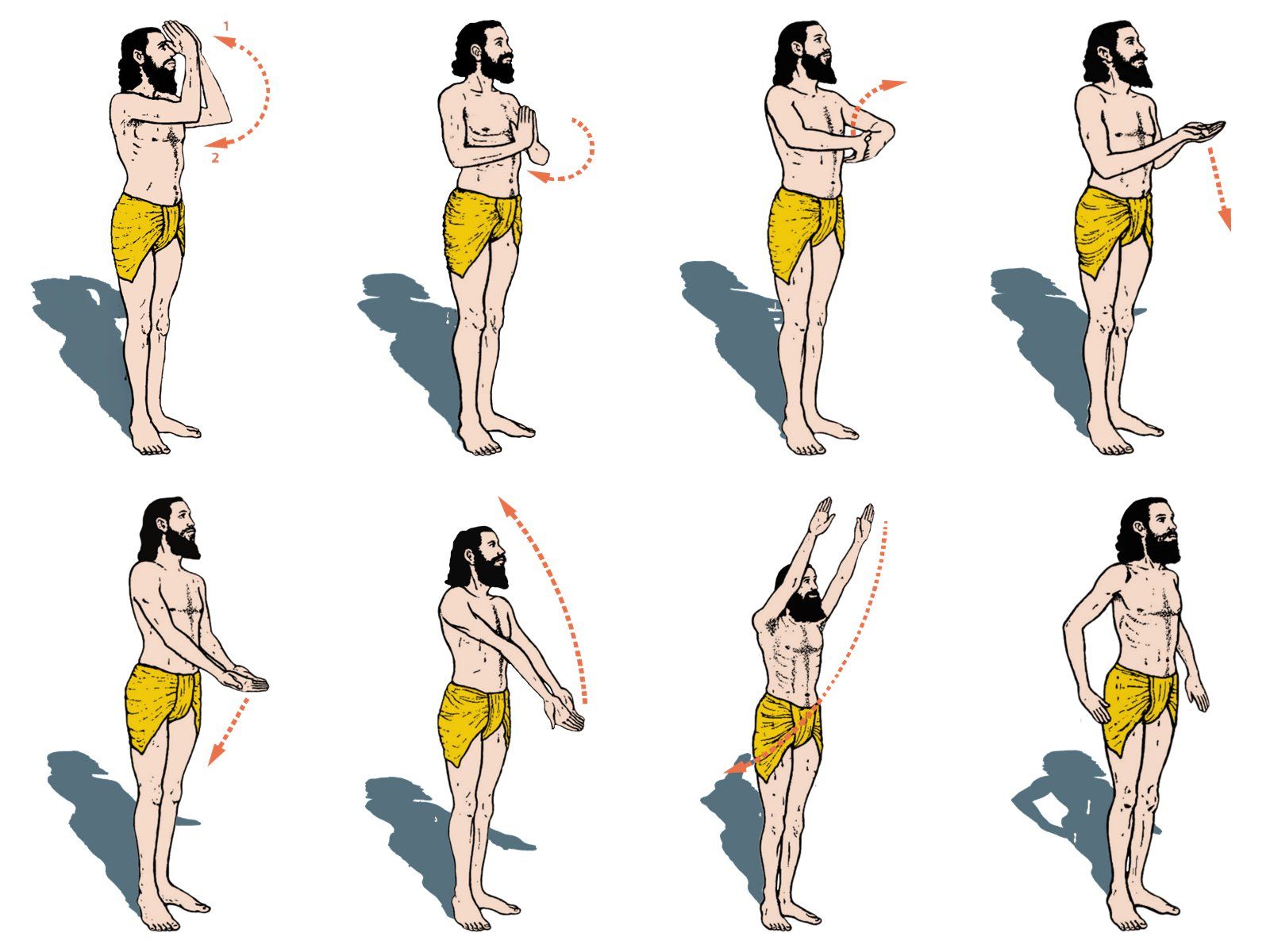
The eight gestures of pitr yajiṋa, drawn one after another

Pitr yajiṋa

“After finishing your bath, before drying your body, recite the following mantra while performing the prescribed mudrá and looking at any luminous object.” (Caryácarya Part 3)

How to do it, step by step →

The text

Pitr puruśebhyo namah rśi devebhyo namah. Brahmárpanaḿ Brahmahavir Brahmágnao Brahmańáhutam. Brahmaeva tena gantavyaḿ Brahmakarma samádhiná.

Translation

Salutations to the ancestors, salutations to the god-like rśis. The act of offering is Brahma; that which is offered is Brahma; the One to whom the offering is made is Brahma; and the person making the offering is Brahma. One will merge in Brahma after completing the duty assigned to him/her by Brahma.

Word by word

Pitr puruśebhyo
to the ancestors, all who came into this world before us
namah
salutations
rśi devebhyo
to the god-like rśis, the great people who invented so many things
Brahmárpanaḿ
the act of offering (arpańa) is Brahma
Brahmahavir
what is offered is Brahma
Brahmágnao
the one who receives the offering is Brahma
Brahmańáhutam
the one who offers is Brahma
Brahmaeva tena gantavyaḿ
Brahma alone is the goal of the one who offers
Brahmakarma samádhiná
on completing the work allotted by Brahma

Caryácarya Part 3, “Bathing Procedure and Pitr Yajiṋa”, 1956; word by word: Ánanda Vacanámrtam Part 30, “Ascribe Brahma-hood to All” (1971)

Download PDF

Why the water goes this way

The navel region is the body’s center of heat control. When cool water is poured there first, then on the back opposite the navel, then from the top of the head down the spine, the body adjusts easily to the temperature of the water.

Why sitting: when a person stands, the inner organs are stretched, and cold water poured over the body is then a strong shock. Sitting, the organs are relaxed; they take the cold water better, and the shock is less.

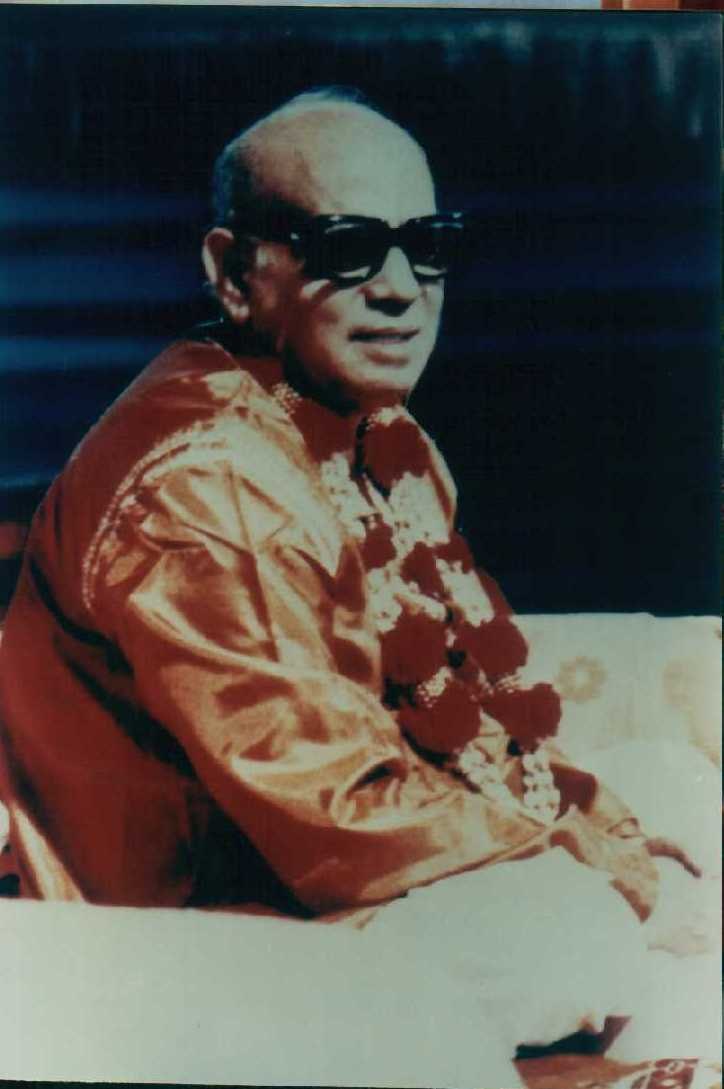
Shrii Shrii Ánandamúrti
“If people who do not take a dip bath (i.e., who splash water or shower without fully immersing themselves) also bathe in a standing position, the lower abdomen and back may remain completely dry. This dryness may irritate the nervous system and invite an attack of hydrocele.”
Shrii Shrii Ánandamúrti, Yogic Treatments and Natural Remedies, “Hydrocele”

What studies of cold water found

Stories

  • The fly

    Some days Bábá was not feeling well and so we went to His house for reporting. One day a fly entered His room and was making a lot of noise. Bábá said, "Somebody surely didn't take a bath today. Who is it?" Everyone was silent. "My room is very clean; flies don't enter here. Who didn't bathe today?" Finally one dádá came forward and said, "Bábá, I didn't bathe today because there was no water at the office." Bábá was annoyed. "Then where did everyone else bathe? Very bad, very bad. You go and take a bath right now." Dádá left and the fly went with him. Bábá often uses these small opportunities to teach us all.Read the story

    — Ác. Shamitánanda Avt., at reporting in Bábá’s house, Ác. Shamitánanda Avt., “101 Bábá Stories”, no. 75

  • The leaking pipes

    While in the hospital, Bábá wanted to take three baths each day. This is because Bábá's body tends to get very hot due to the powerful spiritual vibrations being focused in him. The hospital policy allowed only one bath a day. When the time for his afternoon and evening bath would come, Bábá would pretend to need to use the toilet and would proceed to take his extra baths anyway. When asked by the janitorial staff why so much water was on the floor during the day, Bábá replied, "Maybe it's because the pipes are leaking?"Read the story

    — An unsigned account in “Bábá Stories (Excerpts)” of Bábá’s stay in hospital, “Bábá Stories (Excerpts)”, “Bábá’s Bath”

  • Pitr yajiṋa in chorus

    … Until now He had already given us the bath Mantra and Vidhi of Pitra Yajiṋa [the process of remembering ancestors whose good properties we benefit from after every shower]. … … Later on, Bábá made each one of us sings the Saḿgacchadhvaḿ Mantra. He Himself taught us how to pronounce it correctly. While explaining the inner importance of Pitra Yajiṋa Mantra he also told us of its significance. … I asked, “What about reciting the Pitr Yajiṋa Mantra in chorus, after taking a collective bath on the coming January 1st at Varanasi, as a prelude to the DMC?” Gurudeva said, “It is a fantastic idea and you should lead them.” The DMC was scheduled for January 1st in Varanasi. …Read the story

    — A monk at the Patna office, December 1971, Ácárya Rudránanda Avadhúta, “Sharanágati”, “Chapter 19. The Beginning of 16 Sútras”

  • Body soap

    DMC was happening at Ananda Nagar. We were all bathing in the small river close to Bábá's house. Dádá Y forgot to bring body soap, so he thought it would be okay to use laundry soap just once. We went to give reports. Bábá looked at another dádá and asked, "While taking a bath, what soap should you use?" "Body soap, Bábá." "Should you use laundry soap for your body? Is it good for your health?" Bábá asked. "No, Bábá." Dádá Y understood and was grateful for Bábá's indirect attention.Read the story

    — A monk at a Dharma Mahá Cakra, Ánandanagar, Ác. Shamitánanda Avt., “101 Bábá Stories”, no. 81

  • Eating, bath and sleep on time

    I was very sick for nearly fifteen days. After a while when I became a little better, Bábá called me to His room. When we were alone, He enquired about my health. He said, "Don't worry you will be alright soon. You have to remember one thing, always be punctual about your eating, bath and sleep. If you maintain this, then your health will always be good."Read the story

    — A worker recovering from illness, Ac. Dhyaneshananda, “Stories of Bábá”, no. 19

  • Even with a fever

    Bábá was very particular about physical cleanliness. He laid down the rules of bathing for all spiritual aspirants. I got a lesson on this that I will never forget. During one of the WRDS meetings I was suffering from a high fever. I therefore decided not to attend the meeting until I recovered. Bábá noticed my absence and asked the others why I was absent. They informed Him that I was ill and could not be present. Bábá expressed His displeasure at my absence to the General Secretary, who promptly informed me about it. The next day, I decided to attend the meeting, although my fever was still running high. As we were standing in rows to present our reports, Bábá asked who among those present had yet to take a bath. I raised my hand in acknowledgement. When Bábá asked why I had not taken a bath, I responded that I was suffering from high fever. Bábá was unhappy with the response and reprimanded me for my negligence. He informed all the workers that bathing was not optional for a spiritual aspirant and that one must bathe even when suffering from fever. Amazingly, immediately after the chastisement, my fever and body ache mysteriously subsided, and I felt well again.Read the story

    — Ácárya Parameshvaránanda Avadhúta, at a WRDS meeting, Ácárya Parameshvaránanda Avadhúta, “Divine Experiences: An Autobiography”, “The Magic of Bathing”

Videos

  • Sixteen points 6. How to take bath properlyOpen on YouTube ↗

    Sixteen points 6. How to take bath properly

  • Cold Showers & Yogic Hacks: Triple Your Motivation & JoyOpen on YouTube ↗

    Cold Showers & Yogic Hacks: Triple Your Motivation & Joy

  • Sixteen points 1. Practices strengthening the mindOpen on YouTube ↗

    Sixteen points 1. Practices strengthening the mind

Questions

Ask a question →