

Ananda Marga

Personal practices · On your own · At every meal

Sentient food

Sáttvika Áhára

“All foods that are beneficial to both body and mind are considered sáttvika.”Caryácarya 3, “Procedure for Eating”

Two women preparing vegetables together in a home kitchen

Why we do it

The aim of yoga is Supreme Consciousness

  1. 1

    The aim is Supreme Consciousness. The goal of yoga is far off, like a distant star system.

  2. 2

    The instrument to reach that goal is the mind. It is the subtlest part of us, so it is the only part fine enough to reach the aim.

  3. 3

    The method is meditation. Seeing a star takes a telescope pointed at it; reaching Supreme Consciousness takes the mind pointed at it. That is meditation.

  4. 4

    The preparation and care. A telescope has to be looked after, cleaned and set right to see the stars. The mind is the same. Every practice does this for the mind, directly or through the body, because the mind is connected with the body.

    See how it leads to the goal ↓

Reaching the goal through Sentient food

Sentient food brings us to the goal through the body. The cells of the body are made from what we eat, and the nature of the cells passes into the mind: static food makes the mind dull and restless with desire, sentient food makes it clear. A clear mind can hold the unbroken concentration that meditation needs, and in meditation the mind becomes one with the Supreme. That is the goal of yoga.

  1. 01

    The mind is tied to the body

    The mind is directly connected with the body. So the wrong food affects not only the body but also the mind.

    “If cells are affected by food and water, and if the nature of the cells affects the nature of the human mind, obviously human beings should eat the correct diet, because food and mind are closely related to each other.”
    Tattva Kaomudii 2, “Food, Cells, Physical and Mental Development”
  2. 02

    Three kinds of food

    There are three kinds of food. Sentient food is good for the body and for the mind. Mutative food is good for the body and may or may not be good for the mind, but it does not harm it. Static food is harmful for the mind, and for the body it may or may not be good: not in every case, but for the mind, surely.

    “Food which is harmful for the mind and may or may not be good for the body is static.”
    Tattva Kaomudii 2, “Food, Cells, Physical and Mental Development”
  3. 03

    The body renews its cells all the time

    The body keeps renewing its cells: about every twenty-one days the old ones die and new ones grow. They grow out of light, air, water and the food we eat.

    “Generally a cell lives about twenty-one days and then dies, being replaced by new cells.”
    Tattva Kaomudii 2, “Food, Cells, Physical and Mental Development”
  4. 04

    Static food grows static cells

    If we feed on static food, we grow static cells. Static cells give the mind inertia and dullness.

    “Suppose a person takes támasika [static] food. The result will be that after a certain period, static cells will grow and exercise a static influence on the aspirantʼs mind.”
    Tattva Kaomudii 2, “Food, Cells, Physical and Mental Development”
  5. 05

    Inertia does not allow strong concentration

    Inertia and dullness do not let us concentrate well. And meditation needs a super-strong concentration. It is not the concentration with which we get a job done: it is a super-strong concentration, a flow of the mind that does not break.

    “Dhyána is the unbroken flow of the mind-stuff, or citta, in one continuous stream, like the flow of oil, where all the propensities of the mind are fixed on the goal.”
    Caryácarya 1, “Sádhaná”
  6. 06

    Static food also heats the body

    Static food heats the body. The lymph, the raw material from which the glands make hormones, is turned into hormones, semen for example, and a surplus builds up in the body. The body wants to get rid of it, and thoughts of a sexual nature arise.

    “If hot static food or excessive animal protein is eaten by males, the quantity of lymph will decrease and the conversion of lymph into semen will increase.”
    Yoga Psychology, “Bio-Psychology”
  7. 07

    So the right food prepares the mind

    That is why the right food is so important: it keeps the mind set right and prepared.

    “In order to have a balanced mind and to progress spiritually, human beings will have to pay attention to the qualities of the food they eat.”
    Tattva Kaomudii 2, “Food, Cells, Physical and Mental Development”
  8. 08

    Sentient cells, love for sádhaná

    Sentient food grows sentient cells, and sentient cells bring a love for spiritual practice and a mind in balance.

    “This will lead to the birth of sentient cells, which in turn will produce a love for spiritual practice and help in attaining psychic equilibrium and equipoise, leading to immense spiritual elevation.”
    Tattva Kaomudii 2, “Food, Cells, Physical and Mental Development”
  9. 09

    One with Him

    A mind that is clear and prepared can hold the idea of the Supreme in meditation, and as the mind thinks, so it becomes: in the end it becomes one with Him. This is the goal.

    “In the course of sádhaná, the unit mind takes the ideation of Parama Puruśa. According to the very nature of the mind, it will one day become converted into Parama Puruśa.”
    Ánanda Vacanámrtam 33, “Savikalpa and Nirvikalpa Samádhi”

What it is

Sentient food, sáttvika áhára, is food that is beneficial to both body and mind. The rule is to try always to take sentient food, to take mutative food only on rare occasions, and never to take static food.

In the sources

“In every object of the universe, one of three attributes – sattva, rajah and tamah – will always be predominant. So food is also divided into three categories according to the dominancy of the attributes.”Caryácarya 3, “Procedure for Eating”

“Cells generally grow out of light, air, water and the food we eat. The nature of food and drink has its effect upon the cells, and consequently also influences the human mind. Obviously each and every sádhaka, or spiritual aspirant, should be very cautious in selecting food.”Tattva Kaomudii 2, “Food, Cells, Physical and Mental Development”

“Suppose a person takes támasika, or static, food. The result will be that after a certain period, static cells will grow and exercise a static influence on the aspirant’s mind. Human beings must select sáttvika, or sentient, or rájasika, or mutative, food according to time, place and person. This will lead to the birth of sentient cells, which in turn will produce a love for spiritual practice and help in attaining psychic equilibrium and equipoise, leading to immense spiritual elevation.”Tattva Kaomudii 2, “Food, Cells, Physical and Mental Development”

“So while taking food, you should be very careful. You should always try to take sentient food, and on rare occasions you may take mutative food. You should never take static food.”Ánanda Vacanámrtam 14, “Seven Secrets”

Sentient food: sáttvika áhára

“All the staple food-grains such as rice, wheat, barley, etc.; all the pulses except masúr [an orange-coloured lentil] and khesári; all fruits and roots; all kinds of vegetables except violet-coloured carrots, white brinjals [white eggplants], onions, garlic and mushrooms; milk and milk products; all green and leafy vegetables except red puni and mustard.”Caryácarya 3, “Procedure for Eating”

“Food which produces sentient cells and is thus conducive to physical and mental well-being is sentient. Examples of sentient food are rice, wheat, barley, all kinds of pulses, fruit, milk and milk products.”Tattva Kaomudii 2, “Food, Cells, Physical and Mental Development”

Mutative food: rájasika áhára

“Any food that is beneficial to the body but is neutral to the mind, or vice versa, is called rájasika. Foods that do not fall into the sáttvika or támasika categories are of rájasika nature.”Caryácarya 3, “Procedure for Eating”

“Small amounts of tea, cocoa and similar drinks which do not excite a person to the point of losing his/her senses are in the rájasika category.”Caryácarya 3, “Procedure for Eating”

“Food which is good for the body and may or may not be good for the mind, but certainly not harmful for the mind, is mutative.”Tattva Kaomudii 2, “Food, Cells, Physical and Mental Development”

Static food: támasika áhára

“All kinds of foods which are harmful to either the body or mind and may or may not be harmful to the other are called támasika.”Caryácarya 3, “Procedure for Eating”

“Stale and rotten food, the flesh of large animals such as cows and buffaloes, and all types of intoxicants, are categorized as támasika.”Caryácarya 3, “Procedure for Eating”

“Food which is harmful for the mind and may or may not be good for the body is static. Onion, garlic, wine, stale and rotten food, meat of large animals such as cows and buffaloes, fish, eggs, etc., are static.”Tattva Kaomudii 2, “Food, Cells, Physical and Mental Development”

Intoxicants

“People practise meditation to make their intellect and intuition sharper and to achieve greater expansion. The use of liquor destroys these faculties and is detrimental to the all-round development of human beings.”Prout in a Nutshell 21, “Intoxicants”

“As a result of taking liquor, twenty percent of the latent potentialities in a student is destroyed. Extreme intoxication leads to inertness.”Prout in a Nutshell 21, “Intoxicants”

The least harm

Life depends on other life: even rice is a living grain, killed to keep the body. This is not hiḿsá, harm, because there is no intention to hurt anyone. But two things are kept in mind when choosing food.

“First, as far as possible, articles of food must be selected from among those items in which development of consciousness is comparatively little; i.e., if vegetables are available, animals should not be slaughtered. Secondly, under all circumstances before killing any animal having developed or under-developed consciousness, it must be considered whether it is possible to live in a healthy body without taking such lives.”A Guide to Human Conduct, “Ahiḿsá”

When to eat

Breakfast after the morning meditation, the evening meal after the evening meditation.

Only when hungry: eating when one is not hungry, or only half-hungry, is very harmful to the health; so is running off to work without rest after the meal.

How to eat

  1. 1

    Before eatingCaryácarya 3, “Procedure for Eating”

    “Before eating do vyápaka shaoca properly with cold water. In an extremely cold climate use lukewarm water.”

  2. 2

    Before sitting down for a mealCaryácarya 3, “Procedure for Eating”

    “Before sitting down for a meal, invite whatever persons are present around you and share your food with them. If they do not want to share, enquire whether they have enough food with them or not.”

  3. 3

    At the time of eatingCaryácarya 3, “Procedure for Eating”

    “At the time of eating find a comfortable sitting position. It is better to eat in company than to eat alone. Do not sit down to eat if you are in an angry mood or in a debased frame of mind.”

  4. 4

    For proper digestionCaryácarya 3, “Procedure for Eating”

    “For proper digestion, fill the stomach halfway with food, one quarter with water, and leave one quarter full of air.”

  5. 5

    After finishing the evening mealCaryácarya 3, “Procedure for Eating”

    “After finishing the evening meal take a short walk. This is very beneficial to health.”

Take care

  • “Rájasika food-eaters should gradually try to change over to sáttvika food and támasika food-eaters should try to give up such food as early as possible.”Caryácarya 3, “Procedure for Eating”

What studies found

Food and mood

  • In a small randomized pilot trial with 39 meat eaters, those who avoided meat, fish and poultry for two weeks reported better mood on several measures, while the other groups did not change.

    Beezhold BL, Johnston CS, 2012, Nutrition Journal

  • In a 12-week randomized trial with 67 adults with moderate to severe depression, those helped by a dietitian to change to a healthier, Mediterranean-style diet improved far more than those given social support only: 32% of them reached remission, against 8%.

    Jacka FN et al., 2017, BMC Medicine

Stories

  • Just try to see

    … After initiation, I asked Bábá whether it was necessary to be a vegetarian for this sádhaná — I told him that I could not live without non-vegetarian food. Bábá smiled and said, "Yet it is good to be vegetarian." He also added that onions and garlic have even more támasika properties than meat and therefore, they should also be given up. I asked helplessly, "But how will it be possible for me to give up eating meat? I just cannot do it!" His reply was marvellous. Smiling, He said, "So far you have only given thought as to how meat can be eaten in the best form possible. You have perhaps, never given thought that it can also be given up. Just try to see whether you can give it up that way." … As I was descending the stairs the thought came to my mind, "Bábá has told me just to think whether I can give up non-vegetarian food. If it can be given up just by thinking then I'll start thinking right now that I will no longer take any non-vegetarian food." And it is Bábá's grace that from that day onwards I have been a vegetarian. …Read the story

    — A new disciple at his initiation, Jamalpur, November 1953, Ácárya Nagina (translated from Hindi by Mangal Behari), “Ananda Katha”, “My First Meeting with Bábá and Initiation”
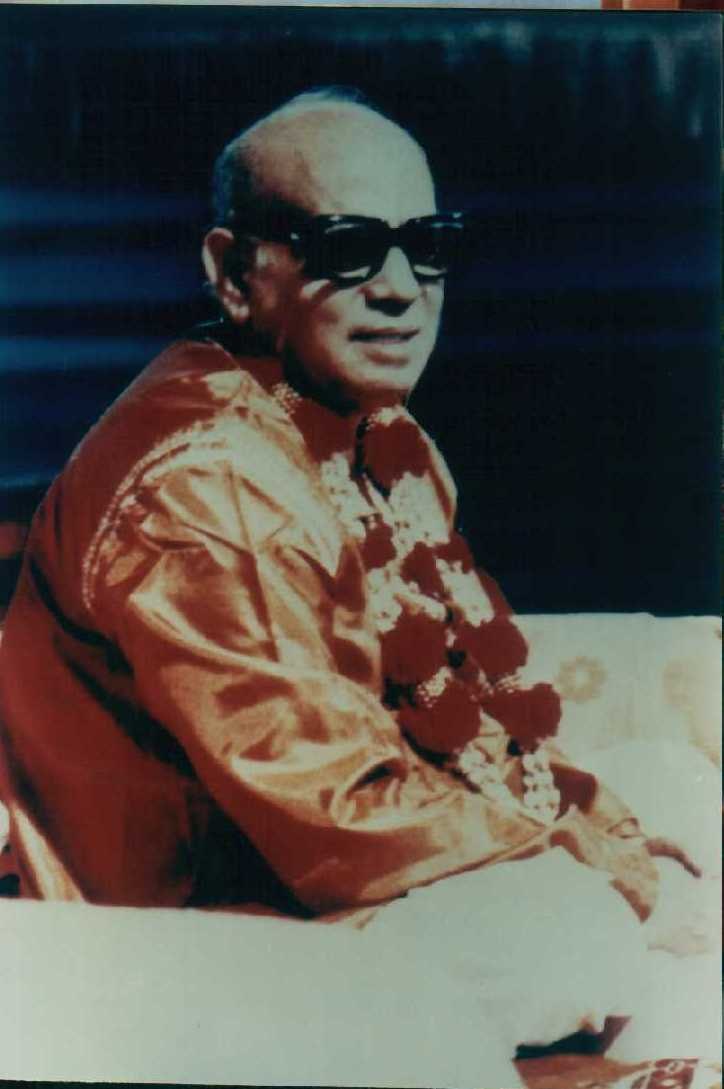
  • Too many chickens

    A new Márgii came to Bábá's house in Lake Gardens. He was not in the habit of taking sentient food yet. Bábá looked at him, smilingly, and asked, "I think you have a question to ask me. Do you not, my boy?" "OK, go ahead," Bábá said. The new Márgii loved to eat chicken. He said, "Bábá if we do not eat chicken, the whole planet will be filled up with chickens, and—" We all started laughing. "No laughing!" Bábá said. The Márgii finished his sentence, "There will be no place for the humans to stand." Bábá rebuked him, "You are stupid. No one eats earthworms here. Do you think the planet will be filled with earthworms, and humans won't be able to stand here? This is the system of Creation — creatures are born and then die. There is a balance Prakrti maintains." Bábá asked, "So, you love eating chickens?" "Yes, Bábá," the Márgii said. However, something changed inside him after that day, and he never ate chicken anymore. Instead, he became a strict vegetarian, eating a one-hundred percent sentient diet. Later, I asked that Márgii, "What happened with you?" He responded, "I don't know, but after meeting Bábá, I didn't want to eat chicken, only vegetarian food. Bábá really changed my life." This Márgii brother is now a great devotee.Read the story

    — Ác. Shamitánanda Avadhúta, of a new Márgii at Bábá’s house in Lake Gardens, Ác. Shamitánanda Avadhúta, “Bábá Unparalleled: 102 Stories”, no. 46

  • Sit down and share

    Bábá said one day, "Calati means to simply walk. Carati means to walk and eat at the same time. And vrajati means to walk with joy." Then He pointed to one senior dádá in the room and said, "He is doing carati like cows and goats. Cows and goats eat grass while walking." Bábá continued, "Do you know what he does? As he walks, Dádá eats nuts and believes himself to be clever. He carries peanuts in his right pocket and cashews in his left pocket, but when someone asks him to share the nuts, he only offers peanuts from his right pocket, not the cashews." Bábá and all of us started laughing. "Is it not true?" Bábá asked him. "Yes, Bábá, sorry," "From now on, when dádás ask you to share, you must give them cashew nuts and eat them while sitting. You must sit to eat and drink, understand?" Bábá said. Then Bábá finished His explanation, "Vrajati refers to a state of mind in which one is always happy and absorbed in thoughts of Krishna or the divine. So it is not just physical movement, but a constant state of bliss and devotion." …Read the story

    — A monk in Bábá’s room, Ác. Shamitánanda Avadhúta, “Bábá Unparalleled: 102 Stories”, no. 27

  • Not for the sake of eating

    … One day I got the chance to ask Bábá about this. The conversation I had with Bábá on the subject I set down below: I said: "Bábá, when we accept hospitality in some house around Ánandanagar, they often give us to eat something about which a doubt remains in the mind. Whether to eat it or not — I suffer from indecision." Bábá said: "Tell me what it is they give you to eat." "Sometimes they give us bamboo shoots as a vegetable," I said. "In the local Bengali it is called bamboo karil." "Remember this," said Bábá: "the food value of the bamboo karil is the food value of the cabbage. Regard it as a sáttvika food and take it without concern." … … Immediately after the Emergency a Dharma Mahá Cakra was held at Midnapore. In His discourse there Bábá spoke of food in passing. He said one sentence only: is a man a goat or a camel, that he will eat whatever he gets? In this way Bábá kept us conscious about taking food. … … Another fellow-passenger heard him and said to Bábá: Bábá, see what this man fond of his food is saying. Bábá laughed and said: tell him the verse has two lines more, and they are — Dekhe shune tabe khái, khábár janya ási nái. I eat having looked and having listened; I have not come for the sake of eating. …Read the story

    — A monk working in the villages around Ánandanagar, Ácárya Kiirtánánanda Avadhúta, “Remembering Bábá”, “Food habits”

  • The dark cloud dispelled

    … Although he made repeated attempts to overcome his weakness, try as he would, all attempts to conquer his desire for non-vegetarian food ended in failure. Each time he made a new resolution to stop, after a few days of self-control the urge to eat meat and fish would overcome his better judgment. Accepting defeat, he constantly prayed to Bábá for help. … … When the waiter arrived, he reluctantly ordered fried chicken. By then, he was consumed by intense guilt and an acute moral conflict was raging in his mind. … A short while later the waiter walked in and placed the meal he ordered on the table. Bhuvaneshvari could not look at it. Even the smell of the fried chicken made him feel nauseous. Wiping his tears, he asked the waiter to take it back and to give it to any hungry person outside. The odor in the hotel created a feeling of revulsion in him. After paying the bill, he rushed out of the place. The air outside was refreshing. After that profound experience, Bhuvaneshvari could no longer tolerate even the smell of non-vegetarian food. He was finally freed from the burden of guilt that he had carried for so long. … A month later Bhuvaneshvari was in the "B" group of Márgiis accompanying Bábá to the Tiger's Grave. After talking to some of the others, Bábá turned to him with a sweet smile and said, "So, Bhuvaneshvari, I think the dark cloud that was hovering over you has finally been dispelled." "Yes, Bábá, it has happened only by your grace." …Read the story

    — An ácárya who could not give up meat, Gaya, 1959, Ác. Pranavátmakánanda Avadhúta, “Advent of a Mystery”, “42.4. Strange Cure for a Serious Addiction”

What Shrii Shrii Ánandamúrti said

  • “That is, the food that helps you in your spiritual and mental development and which is also good for your physical body is called pramitáhára. It must be sáttvika food, because sáttvika food will help you in your spiritual development and in your mental development.”
    Ánanda Vacanámrtam 30, “Hara’s Seven Secrets”
  • “All intoxicants are támasika and are to be discarded like poison.”
    Caryácarya 3, “General Health Rules”
  • “It is not proper for one to eat whatever one gets. You should eat only that sort of food which will have a beneficial influence on your body, mind and spirit.”
    Subháśita Saḿgraha 18, “The Cult of Spirituality – the Cult of Pinnacled Order”

Videos

  • Sixteen points 7. As you eat so you becomeOpen on YouTube ↗

    Sixteen points 7. As you eat so you become

  • The Food Secrets That Fuel Happiness and Spiritual GrowthOpen on YouTube ↗

    The Food Secrets That Fuel Happiness and Spiritual Growth

  • The Sentient Yoga DietOpen on YouTube ↗

    The Sentient Yoga Diet

  • Dada Shiilabhadrananda on Diet for Higher ConsciousnessOpen on YouTube ↗

    Dada Shiilabhadrananda on Diet for Higher Consciousness

  • How to Transition to a Plant-Based​ DietOpen on YouTube ↗

    How to Transition to a Plant-Based​ Diet

  • Is Vegetarianism Dangerous?Open on YouTube ↗

    Is Vegetarianism Dangerous?

  • A Plant-Based Diet for a Love-Based SocietyOpen on YouTube ↗

    A Plant-Based Diet for a Love-Based Society

  • Different kinds of vegetariansOpen on YouTube ↗

    Different kinds of vegetarians

  • Food for Higher Consciousness. // Tanmay Chaturvedi // Ananda Marga Food style // Sentient foodOpen on YouTube ↗

    Food for Higher Consciousness. // Tanmay Chaturvedi // Ananda Marga Food style // Sentient food

  • Unknown power of food. Secrets of Success 6 & 7Open on YouTube ↗

    Unknown power of food. Secrets of Success 6 & 7

  • Beyond alcohol & drugs: The true high that beats addictionOpen on YouTube ↗

    Beyond alcohol & drugs: The true high that beats addiction

Questions

Ask a question →