

Ananda Marga

Personal practices · On your own · Under all circumstances

Yama and Niyama

Yama, Niyama

“In fact, the principles of Yama and Niyama perfectly illustrate how one should deal with the surrounding world.”Caryácarya 1, “Sádhaná”

An older woman in an orange shirt stands smiling beside a schoolgirl holding a bouquet, both facing the camera in a garden

Why we do it

The aim of yoga is Supreme Consciousness

  1. 1

    The aim is Supreme Consciousness. The goal of yoga is far off, like a distant star system.

  2. 2

    The instrument to reach that goal is the mind. It is the subtlest part of us, so it is the only part fine enough to reach the aim.

  3. 3

    The method is meditation. Seeing a star takes a telescope pointed at it; reaching Supreme Consciousness takes the mind pointed at it. That is meditation.

  4. 4

    The preparation and care. A telescope has to be looked after, cleaned and set right to see the stars. The mind is the same. Every practice does this for the mind, directly or through the body, because the mind is connected with the body.

    See how it leads to the goal ↓

Reaching the goal through Yama and Niyama

Yama and Niyama bring us to the goal by setting the mind at peace. Harm, theft, lies and dirt leave anxiety in the mind, and an anxious mind cannot concentrate: without these principles there is no meditation. Kept, they bring order to life around us and free the mind from its fetters; every one of them is a part of the sádhaná of Brahma, and kept perfectly they leave the mind absorbed in Brahma. That is the goal of yoga.

  1. 01

    Meditation needs morality first

    Meditation is the practice for reaching the aim of Supreme Consciousness. But meditation, or sádhaná, is not possible if we do not follow moral principles. Why?

    “It must, therefore, be emphasized that even before beginning Sádhaná, one must follow moral principles strictly.”
    A Guide to Human Conduct, “Introduction”
  2. 02

    Meditation needs a prepared mind

    Meditation is important so that the mind is prepared and concentrated, and lives without any obstacle in it.

    “Sádhaná, in its very start, requires mental equilibrium. This sort of mental harmony may also be termed as morality.”
    A Guide to Human Conduct, “Introduction”
  3. 03

    Harm, theft, lies and dirt unsettle the mind

    If we do not follow moral principles such as yama and niyama, if we harm other people, if we steal, if we deceive, if we do not keep clean the space around us and our own body, then anxiety arises in the mind.

    “Sádhaná devoid of morality will divert people again towards material enjoyments and at any moment they may use their mental power, acquired with much hardship, to quench their thirst for meagre physical objects.”
    A Guide to Human Conduct, “Introduction”
  4. 04

    An unsettled mind cannot concentrate

    A wavering arises in the mind, and it does not let us concentrate. If we break these principles, the mind simply cannot concentrate.

    “Therefore worldly acts and meditation on Brahma cannot be done simultaneously. It is impossible that on one side humans will remain bound up with passion, anger, avarice etc. and on the other, will worship Brahma. The mind must be sanctified for the worship of Brahma.”
    Subháśita Saḿgraha 1, “The Form of Sádhaná”
  5. 05

    So without yama and niyama there is no meditation

    That is why it is said that without yama and niyama meditation is impossible: if we break these principles, the mind is not able to concentrate.

    “Morality is the foundation of Sádhaná (spiritual practice).”
    A Guide to Human Conduct, “Introduction”
  6. 06

    The second benefit: life around us falls into place

    There is a second thing. When we keep these principles, our relations with the people around us fall into order, and we become happier.

    “The potentiality of an ideal humanity is inherent in Yama and Niyama.”
    Caryácarya 1, “Sádhaná”
  7. 07

    The fetters fall

    Kept day after day, these principles loosen what binds the mind: established in yama and niyama, the mind is freed from the eight fetters.

    “When one is established in Yama and Niyama, aśt́a pásha (the eight fetters) fall from the mind.”
    Caryácarya 2, “Sádhaná (Intuitional Practice)”
  8. 08

    The mind absorbed in Brahma

    Every principle of yama and niyama is a part of Brahma sádhaná done through worldly deeds, so no attachment to worldly objects grows. Kept perfectly, they leave the mind absorbed in Brahma. This is the goal.

    “No attachment to worldly objects will be developed if we observe Yama and Niyama, since every item of Yama-Niyama is part of Brahma Sádhaná through worldly deeds. Hence when you are able to perfectly observe the spiritual practice of Yama-Niyama, your mind becomes absorbed in Brahma – the ultimate goal of this spiritual practice.”
    Subháśita Saḿgraha 1, “The Form of Sádhaná”

What it is

Yama and Niyama are the ten principles of conduct: they show how one should deal with the surrounding world. Yama has five principles: ahiḿsá, satya, asteya, brahmacarya and aparigraha. Niyama has five: shaoca, santośa, tapah, svádhyáya and Iishvara prańidhána.

Brahmacarya stands highest in yama and Iishvara prańidhána in niyama; the other eight are parts of these two. The principles are to be observed under all circumstances, and their special instructions are learned from an ácárya.

In the sources

“The first lesson of human conduct is Yama Sádhaná. We shall discuss all the aspects of Yama Sádhaná. You know that Yama consists of five principles – Ahiḿsá, Satya, Asteya, Brahmacarya and Aparigraha.”A Guide to Human Conduct, “Yama Sádhaná”

“Niyama has five parts – (i) shaoca, (ii) santośa, (iii) tapah, (iv) svádhyáya, (v) Iishvara prańidhána.”Caryácarya 2, “Sádhaná (Intuitional Practice)”

“The practice of Brahmacarya is held in higher esteem than the other four items of Yama. Similarly, in Niyama, the most important item is Iishvara prańidhána. To be more clear and concrete we may say that out of the ten principles of Yama and Niyama the remaining eight are subordinated parts of the two items, Brahmacarya and Iishvara Prańidhána. While dealing with their specialties, we may say that Yama Sádhaná is the practice of the physical and psychic strata while the Niyama Sádhaná carries equal weight in mundane, supramundane and spiritual strata.”A Guide to Human Conduct, “Niyama Sádhaná”

“In the Sádhaná of Ananda Marga, moral education is imparted with this ideal of oneness with Brahma, because Sádhaná is not possible without such a moral ideation. Sádhaná devoid of morality will divert people again towards material enjoyments and at any moment they may use their mental power, acquired with much hardship, to quench their thirst for meagre physical objects.”A Guide to Human Conduct, “Introduction”

“The establishment of an ideal society depends on the mutual help of the members and their cooperative behaviour. This cooperative behaviour depends on the practice of the principles of Yama and Niyama; so, spiritual practices, especially the practice of Yama and Niyama, are the sound foundation of an ideal society.”A Guide to Human Conduct, “How to Live in the Society”

The ten principles

Yama and Niyama are the universal moral foundations of yoga — governing not just physical actions, but thoughts and intentions as well. Yama (“to regulate”) trains self-control in relation to others; Niyama (“observances”) deepens inner discipline and spiritual growth. A person who violates these principles cannot progress in meditation, no matter how long they sit. They are not restrictions — they are the conditions for a free and elevated mind.

Yama

  1. 1Ahimsa — Non-harming

    Not inflicting pain or harm on anyone by thought, word, or action. This goes beyond physical violence — so long as the mind holds any intention to harm, spiritual development is blocked. The sadhaka minimizes the pain he causes to all living beings. A vegetarian diet is strongly recommended: more highly developed life forms should not be killed when vegetables are available.

    Example: You feel irritated at a colleague and think of a cutting remark. Ahimsa means catching that thought before it becomes a word.

  2. 2Satya — Benevolent Truthfulness

    Guiding all thought, speech and action with the spirit of welfare. Satya is not blind truthfulness — stating a harsh truth with no regard for the other person’s wellbeing is also a violation. A sadhaka speaks the truth as far as possible, always taking the welfare of others into account. Lying out of selfish intent must be shunned.

    Example: A doctor softens a difficult diagnosis with compassion — this is Satya. Gossiping a true but harmful fact about someone is not.

  3. 3Asteya — Non-stealing

    Not taking possession of what belongs to others, physically or mentally, and not depriving others of their due. The thought of stealing is as reprehensible as the act itself. Asteya includes indirect theft — driving through a toll without paying, or taking credit for another’s work. The tendency must be removed from the mind entirely.

    Example: Using a colleague’s idea in a meeting without crediting them is a violation of Asteya, even if nothing was physically taken.

  4. 4Brahmacarya — Attachment to Brahma

    Remaining attached to Brahma (Supreme Consciousness) and seeing all things one encounters as expressions of Brahma, not as crude material forms. This is the keystone of all Yama principles — one truly established in Brahmacarya will have no tendency to harm, lie, steal or over-indulge. It is the most difficult Yama but can be achieved through sincere spiritual practice.

    Example: Instead of seeing an annoying person as an obstacle, you consciously recognize them as an expression of the same Cosmic Consciousness — this shifts the entire interaction.

  5. 5Aparigraha — Non-possessiveness

    Non-indulgence in amenities and comforts superfluous to the preservation of life; minimizing resource consumption. Excessive comfort creates torpidity in the mind and dulls spiritual intuition. What one hoards for oneself is deprived from others who might need it for survival. Aparigraha is also an ecological principle.

    Example: Buying a second car for convenience when public transport is available, or hoarding wealth while neighbors live in poverty — both violate Aparigraha.

Niyama

  1. 1Shaoca — Purity

    Purity and cleanliness, both physical and mental. As long as the mind engages in crude thoughts, selfish motives or worldly passions, it cannot reach lofty spiritual heights. The mind is continually affected by bodily and surrounding environments — hence regular bathing, clean dress and clean surroundings are part of Shaoca. But inner purity is primary.

    Example: Practicing half-bath before meditation is Shaoca of the body. Letting go of a grudge before sitting to meditate is Shaoca of the mind. Mental pollution also includes consuming content that does not elevate the mind: scrolling social media, watching low-quality films and shows — all pull the mind downward.

  2. 2Santosa — Contentment

    A lasting state of mental ease and contentment. True contentment comes only when the mind is freed from external, mundane allurements. A stormy, craving mind will always be bound to lower strata. Santosa is not passivity — it is the balanced equilibrium needed to realize the infinite, unperturbed nature of Supreme Consciousness.

    Example: Instead of feeling frustrated that you don’t have a better phone, you cultivate gratitude for what you have — and find your mind becomes quieter in meditation.

  3. 3Tapah — Selfless Service

    Practicing penance through selfless service to those less fortunate than oneself. Mind influenced by individual ego cares only for its own benefit. The sadhaka overcomes this pettiness by serving others — the weaker, poorer, less educated. The one who is served is the Brahma; service rendered is the sadhaka’s sadhana. Through Tapah, one selflessly develops devotion and love for the Supreme Consciousness.

    Example: Volunteering to teach underprivileged children, or giving up personal comfort to help a sick neighbor — not for recognition, but as an offering to the Supreme Consciousness.

  4. 4Svadhyaya — Self-study

    Clear understanding of the underlying meaning of spiritual scripture and discourse through personal study and reflection. Without spiritual insight it is very difficult to comprehend what scriptures actually mean. The sadhaka must go beyond dogmatic or ritualistic interpretations. One should not accept blindly the words of others, however illumined, without personally penetrating deep into their meaning.

    Example: Reading a passage from Ananda Sutram and sitting with it — asking “what does this actually mean?” — rather than memorizing it mechanically.

  5. 5Iishvara Pranidhana — Surrender to the Supreme

    Accepting Brahma as the sole shelter and goal of life, and moving toward that Supreme shelter with accelerating speed through meditation. This is the most important and entirely internal principle of Niyama. It consists in detaching the mind from worldly preoccupations and moving ever deeper within — culminating in the merging of the mind with Supreme Consciousness, where the feeling of I-ness is lost in the Infinite Ocean of Consciousness, absorbed in limitless, eternal, all-pervasive ecstasy — Ananda.

    Practice: Meditate at least twice a day — in the morning and in the evening.

Download the sheet (PDF)

How to keep them

  1. 1

    Auto-suggestionA Guide to Human Conduct, “Asteya”

    “The easiest way of practising asteya, as in the case of all other principles of Yama and Niyama, is auto-suggestion. If people, right from the childhood, remember these codes and remind themselves what is correct, they will not go astray when they grow up – even in the midst of temptations – and they will be able to maintain the high standard of thoughts and character.”

  2. 2

    Thoughts just oppositeA Guide to Human Conduct, “Santośa”

    “If anyone always tries to think thoughts just opposite to the mean tendencies which occupied the mind, a change in one’s nature is bound to occur. This is auto-suggestion.”

  3. 3

    Self-Analysis · the reportCaryácarya 1, “Self-Analysis”

    “Whether one’s conduct has been defective or not, a statement regarding how far the principles of Yama and Niyama have been followed has to be submitted to the ácárya/á (here ácárya/á means any ácárya/á). In this connection, the date of the previous report should be kept in mind.”

  4. 4

    Self-Analysis · a faultCaryácarya 1, “Self-Analysis”

    “If an Ananda Margii violates the principles of Yama and Niyama, he/she will confess his/her fault to any ácárya/á and ask for punishment, on that day or on the day of the next dharmacakra.”

A few points of the principles

“Any thought or action with the intention of causing harm to someone else amounts to hiḿsá.”A Guide to Human Conduct, “Ahiḿsá”

“If any person or a nation wants to occupy all or part of another country, the use of physical force against such invading forces is not against the principle of ahiḿsá.”A Guide to Human Conduct, “Ahiḿsá”

“Before censuring anyone for some fault, make sure that you do not have the same defect.”Caryácarya 2, “Sádhaná (Intuitional Practice)”

“Henceforth I direct every Ananda Margii to keep strict vigilance on other Ananda Margii to make them practise the principles of Yama and Niyama and also to accept calmly directions of other Margiis in this connection.”A Guide to Human Conduct, “How to Live in the Society”

What studies found

Studies of related qualities

Stories

  • The true meaning of ahiḿsá

    … My boss began to fabricate fresh charges against me everyday, and began to adopt more and more evil ways to harass me. … The principle of ahiḿsá (non-violence) … seemed the greatest obstacle in my way to protecting myself for I felt it would be in violation of this principle if I retaliated. Thus disabled, I was destroyed by these attacks and so I again sought Bábá's shelter. … Then I told Bábá I was following ahiḿsá and said that my boss was attacking me fatally and I was bearing it all silently. Bábá said, "This means that you have not understood the true meaning of ahiḿsá. Suppose you are going through the jungle on a zigzag path full of shrubs. On both the sides, there are shrubs. Your enemy is sitting somewhere by the side of your path, and will attack you as soon as you reach near. What should you do in such a situation?" I said, "Bábá, either I would return or bear the blow silently." Bábá replied, "No my instruction regarding ahiḿsá does not mean this. In such a situation it would be your duty to pick up a long and strong bamboo and beat the bushes on both sides of your path as you proceed along. If due to this action, the hidden aggressor gets his head broken or even dies, you will still remain a follower of ahiḿsá. Ahiḿsá does not mean that you will do nothing to protect yourself. This interpretation of ahiḿsá renewed my inner strength. My mind felt deep peace. …Read the story

    — Ácárya Nagina, soon after his initiation, Ácárya Nagina, “Ananda Katha”, “The True Meaning of Ahimsa”
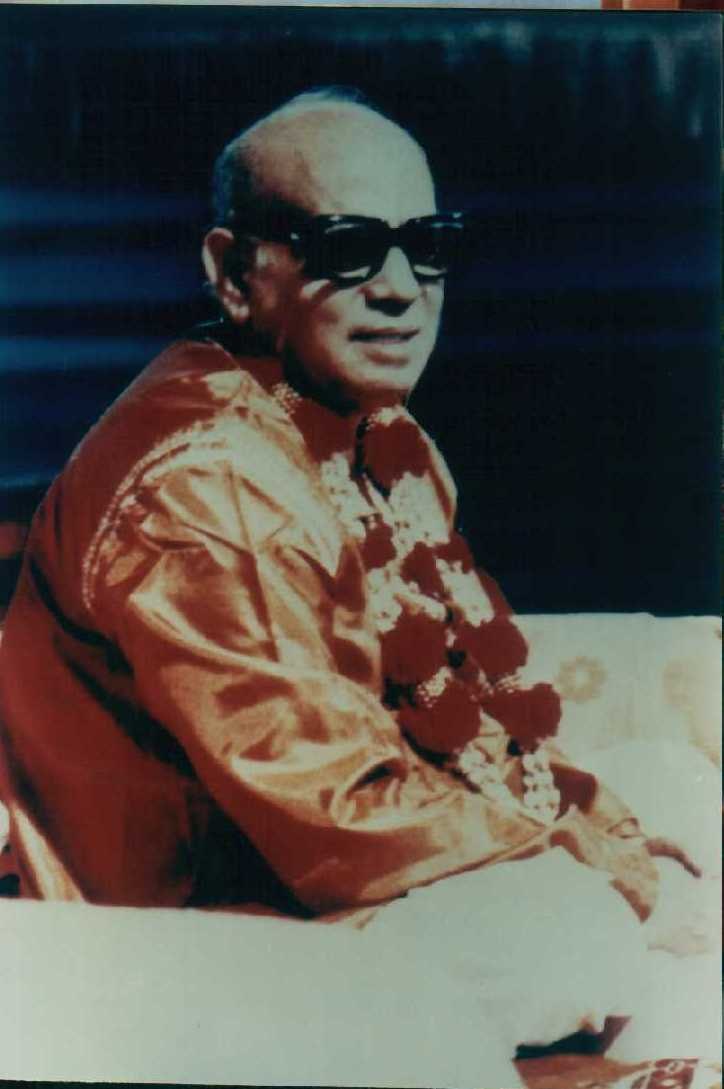
  • A bribe of six annas

    One Sunday evening in the winter of 1962 I was with Bábá during his evening walk. … Suddenly, Bábá stopped and turned to me saying, "Harindar, so you have also started to accept bribes nowadays?" I was stunned to hear that from Bábá, and in a state of shock I said I didn't remember ever consciously taking a bribe from anyone. Then Bábá smiled. "The person who rejected Rs 200 accepted six annas as a bribe." I was surprised and puzzled by Bábá's words. As I wondered what he was alluding to, Bábá clarified his point, "Two chumchum sweets are four annas and a cup of tea is 2 annas. So a total value of six annas bribe was offered to you, and you accepted it." Immediately my mind went back to an incident that had happened not long before. There was a big hosiery manufacturer in Deogarh, where I was posted at that time, and the owner applied for a fifty horsepower connection for his newly constructed rice mill. He offered me a bribe of Rs. 200 to bypass the usual procedures and speed up the sanctioning of the electricity connection. I scolded him severely for trying to bribe me. One Sunday a few months later, I was walking past his newly opened rice mill while returning from my lunch. … As I was leaving, his mother came with a plate full of sweets, and, addressing me as son, requested me to accept the sweets. Although I resisted at first, she forced two sweets into my hand saying that I should accept them and treat her as my mother. Not wanting to disappoint her, I accepted them. Just then a cup of tea also arrived and I accepted that too. … When Bábá referred to this as a bribe, I was very shocked as I had not considered it to be a bribe. Clarifying further, Bábá said, "He should have fed it to the poor beggars in the street who had no shoes and whose feet had painful cracks due to the cold. Instead of offering the sweets to such needy people, he offered them to you, even though he knew that you had just eaten a big meal a short while before. While you were eating his sweets and sipping his tea, do you know what that businessman was thinking? This man, who refused my two hundred rupees, has accepted the sweets and tea that I offered him through my mother. After this he will be favorably disposed towards me and if I need any further help from the electricity office, he will not be able to turn me away like before." … That evening's experience was a big lesson for me, and that day I realized the high standard of morality that Bábá expected from us. From then on I became extremely cautious about accepting anyone's hospitality, particularly if he was a businessman or had any work with our office. …Read the story

    — A section head in the electricity department, Jamalpur, winter 1962, Ác. Pranavátmakánanda Avadhúta, “Advent of a Mystery”, “40.14. Raising the Standard of Morality”

  • Without a ticket

    … The Márgii came from Varanasi. Once, he had started off for Jamálpur by train without a ticket. He had no money but he had a strong desire for Bábá's Darshana. He was caught travelling without a ticket by the ticket inspector, who asked him, "Why were you travelling without a ticket?" He frankly replied, "I am going for my Guru's Darshana in Jamálpur." At this, the ticket inspector let him go free. When he reached Jamálpur, Bábá angrily asked him, "Why did you come here without a ticket?" Bábá scolded and punished him. He also warned him not to commit the same mistake in future. Obviously Bábá does not want any laxity in Yama and Niyamá. Given a little relaxation, our minds become habituated to this. We should not allow any slackness and our conduct should be according to the principles of Yama and Niyamá. …Read the story

    — A Márgii from Varanasi, Jamalpur, Ácárya Keshavánanda Avadhúta, “Reminiscences of Bábá”, “1.15. Be Strict in Yama and Niyama”

  • Apples for the Guru

    Once a devotee from Kashmir went to Calcutta to see Bábá. He carried apples in two or three boxes. In between, at some station, one beggar came and asked that devotee to give him at least two apples. The devotee refused to part with two apples as all the apples were being carried for Bábá, his Guru, only. That poor beggar asked thrice for two apples saying that the Guru would not get annoyed for giving him two apples as he was hungry since last two days. Thus the beggar gave three chances to the devotee to give him two apples. Every later chance was much more demanding and forceful, logical and pathetic in degree as compared to the former ones, but all in vain. Later on, when that devoted reached Calcutta and those apples were given to Bábá. He refused to accept them saying that when He was actually hungry and demanded them thrice but those apples were not given to Him and so He would not accept those apples anymore. From this incident, we readily conclude that we should see God, Brahma, and Bábá in all the entities, animate or inanimate, humans or animals and should serve those entities accordingly.Read the story

    — A devotee from Kashmir, on the way to Calcutta, Kamal Kumar, “My Experiences with Bábá”, “6.5 Apples for Bábá”

  • Not the hotel

    After arriving in Lyon, France, Bábá was taken to a hotel for HIS stay. Bábá did not enter the hotel. HE wanted to stay in jagriti with devotees, Dádás, Didis and Márgiis. It was told to Bábá that there was no attached toilet. Bábá insisted that HE would like the company of spiritualists more than the hotel with all luxuries and comforts. … In spite of the poor living conditions compared to a hotel, Bábá enjoyed staying in jagriti and spent last three memorable days with us before leaving to India. … Bábá said, "In Europe people, have comforts, facilities and lead luxurious life, yet most of them feel lonely and suffer from mental problems. The only way to overcome all these troubles is by surrendering to the Supreme, by taking shelter in HIM; by cultivating HIS Company, mental problems are solved." …Read the story

    — Ácárya Savitánanda Avadhúta, Lyon, France, Ácárya Savitánanda Avadhúta, “Bábá Ánandamúrtijii: The Lord of Lords”, no. 53

  • A man-making mission

    … "There is one more obstacle to our prachar work. Many people are eager to learn meditation, but are put off by their inability to follow yama-niyama. Can the requirement of strict adherence to yama-niyama be relaxed so that more people can become Márgiis?" … "Vishvanáth, I want Ananda Marga to be a man-making mission and not a disciple-making mission. No good can come to society from people who do not follow the principles of morality. Those who think they can practice spirituality without following yama-niyama do not understand that sádhaná is impossible for those who do not follow it. People who do not follow the principles of morality cannot steady their minds sufficiently to do the sádhaná of the Supreme Consciousness. So morality is a fundamental prerequisite for spirituality, and those who don't follow yama-niyama will eventually stop doing their sádhaná anyway. …Read the story

    — An early ácárya on an evening walk, Jamalpur, Ác. Pranavátmakánanda Avadhúta, “Advent of a Mystery”, “40.1. Yama - Niyamá Is a Constant Endeavour”

What Shrii Shrii Ánandamúrti said

  • “It cannot be said that the ultimate aim of human life is not to commit theft; what is desirable is that the tendency to commit theft should be eliminated.”
    A Guide to Human Conduct, “Introduction”
  • “That which one thinks or says with a view to harming others may be a fact or a factual statement, but it is not satya.”
    Ánanda Vacanámrtam 4, “The Ten Characteristics of a Dhármika”
  • “Bear in mind that you have a duty towards – indeed, you owe a debt to – every creature of this universe, but towards you, no one has any duty; from others, nothing is due.”
    Caryácarya 2, “Sádhaná (Intuitional Practice)”
  • “The word Saḿyama in Saḿskrta means “regulated conduct”. It should be clearly understood that Saḿyama does not imply destroying something or somebody.”
    A Guide to Human Conduct, “Yama Sádhaná”

Videos

  • The Most Important Principles of Life - Yama & NiyamaOpen on YouTube ↗

    The Most Important Principles of Life - Yama & Niyama

  • Yama Sadhana - The first step of Ashtanga Yoga. A complete system for the development.Open on YouTube ↗

    Yama Sadhana - The first step of Ashtanga Yoga. A complete system for the development.

  • Niyama Sadhana - The Second Step of Ashtanga Yoga: fundamental principles to liberate the mindOpen on YouTube ↗

    Niyama Sadhana - The Second Step of Ashtanga Yoga: fundamental principles to liberate the mind

  • Gentle Fearlessness. AhimsaOpen on YouTube ↗

    Gentle Fearlessness. Ahimsa

  • Strengthening the Heart. Sadhana of SatyaOpen on YouTube ↗

    Strengthening the Heart. Sadhana of Satya

  • Satya and Nonviolent Communication: The Key to Overcoming Conflict in RelationshipOpen on YouTube ↗

    Satya and Nonviolent Communication: The Key to Overcoming Conflict in Relationship

  • Asteya. A simple way to feel secure about material needs.Open on YouTube ↗

    Asteya. A simple way to feel secure about material needs.

  • How to always be high? The practice of Brahmacarya!Open on YouTube ↗

    How to always be high? The practice of Brahmacarya!

  • Aparigraha. The power of self-restraint.Open on YouTube ↗

    Aparigraha. The power of self-restraint.

  • Self Purification Practice Sadhana of ShaocaOpen on YouTube ↗

    Self Purification Practice Sadhana of Shaoca

  • The art of Happiness, Sadhana of SantoshaOpen on YouTube ↗

    The art of Happiness, Sadhana of Santosha

  • Sadhana of Tapah Kindling the fire withinOpen on YouTube ↗

    Sadhana of Tapah Kindling the fire within

  • Svadhyaya. The sadhana of WisdomOpen on YouTube ↗

    Svadhyaya. The sadhana of Wisdom

Questions

Ask a question →