
Ananda Marga

Personal practices · On your own · On ekádashii (eleventh day after full moon and new moon)

Fasting

Upavása

“It is imperative to fast without water on ekádashii (eleventh day after full moon and new moon).”Caryácarya 2, “The Body”

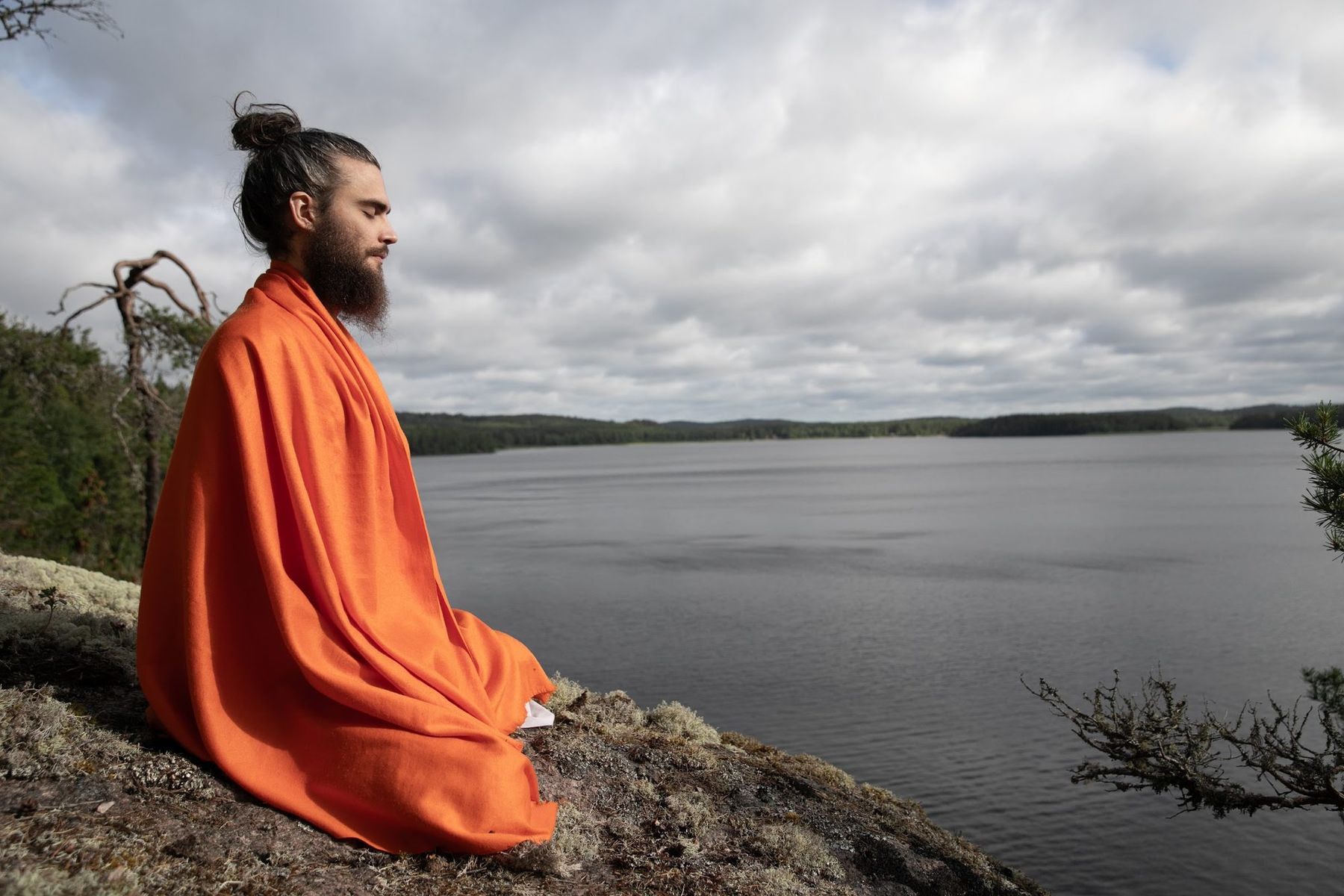
A monk in an orange shawl sitting quietly on a rock above a lake, eyes lowered

Why we do it

The aim of yoga is Supreme Consciousness

  1. 1

    The aim is Supreme Consciousness. The goal of yoga is far off, like a distant star system.

  2. 2

    The instrument to reach that goal is the mind. It is the subtlest part of us, so it is the only part fine enough to reach the aim.

  3. 3

    The method is meditation. Seeing a star takes a telescope pointed at it; reaching Supreme Consciousness takes the mind pointed at it. That is meditation.

  4. 4

    The preparation and care. A telescope has to be looked after, cleaned and set right to see the stars. The mind is the same. Every practice does this for the mind, directly or through the body, because the mind is connected with the body.

    See how it leads to the goal ↓

Reaching the goal through Fasting

Fasting brings us to the goal through the body and through the day itself. The food we eat becomes the stuff of the mind; on a fast day there is no excess to pull the mind down, the body rests and is cleaned, and the energy freed goes to sádhaná. So the day is lived near the Supreme, and a mind that stays near Him comes nearer and nearer, until it is one with Him. That is the goal of yoga.

  1. 01

    Food becomes the mind

    What we eat is transformed, step by step, into its final essence, shukra, the food of the brain. From it the subtle particles of the mind are made.

    “The food that we take is converted, through transformation, into its final essence, called shukra. Shukra is the food of the brain. From it, the ectoplasmic particles of the unit mind are produced.”
    Caryácarya 3, “Procedure for Fasting”
  2. 02

    No excess to pull the mind down

    Too much shukra excites the lower propensities of the mind, the vrttis that pull it down. A fast by the system leaves no excess, and the mind is led toward the higher ones.

    “If one fasts according to the system, no excess shukra will excite the lower vrttis of the mind, and the mind will be led toward the higher vrttis.”
    Caryácarya 3, “Procedure for Fasting”
  3. 03

    The body rests and is cleaned

    On a fast day the digestive organs rest, and the poisonous and unnecessary waste of the body is destroyed and expelled.

    “Fasting is also included in the scope of pramitáhára because it gives rest to the digestive organs and frees the body from so many ailments.”
    Ánanda Vacanámrtam 14, “Seven Secrets”
  4. 04

    The energy goes to sádhaná

    The energy that would have gone into digesting food is free, and the day is given to spiritual practice.

    “Moreover, the energy that is not expended in digesting food can be utilized for other purposes. Therefore, a fast day is an excellent time for sádhaná.”
    Caryácarya 3, “Procedure for Fasting”
  5. 05

    A mind fit for sádhaná

    With its impurities removed, the mind becomes ground in which sádhaná can grow.

    “In fact, fasting keeps the body free from disease, pure and dynamic, and makes the mind a fertile field for sádhaná by removing its impurities”
    Namah Shiváya Shántáya, “Shiva’s Teachings – 2 (continued)”
  6. 06

    Living near Him

    So the fast day is lived near the Supreme: the mind is kept on Him through the whole day.

    “And not merely moving towards Paramátmá, but remaining perfectly close to Him, is what is called upavása.”
    Ánanda Vacanámrtam 29, “Even the Greatest Sinners”
  7. 07

    One with Him

    Every being moves around the Supreme as around a hub. A mind that keeps Him as its goal comes nearer and nearer; when the distance is gone, it is one with Him. This is the goal.

    “The length of the radius will go on decreasing and decreasing, and when it becomes zero, the moving entity will become one with the nucleus.”
    Subháśita Saḿgraha 19, “The Path of Salvation”

What it is

Upavása is voluntary fasting on certain days. Upa means proximity and vása means to live: the word means to live near the Lord, to keep the mind absorbed in the thought of Iishvara. Going without food has another name in Sanskrit, anashana. A day of upavása is a day on which one stays closer to the Lord than to one’s worldly duties.

Fasting itself does not give liberation: it is observed, but observing it in order to be liberated is only adding fuel to the fire. And a long fast only invites physical trouble; the fast is kept to its days.

In the sources

“Those who have received initiation into Ananda Marga Iishvara Prańidhána must observe fasting compulsorily on all ekádashii days (the eleventh day after the new or full moon). Sannyásiis and renunciates must also fast on all púrńimá and amávasyá days.”Caryácarya 3, “Procedure for Fasting”

“In addition, if desired, a fast can be observed on two more days of the month, namely púrńimá (full moon) and amávasyá (new moon). For a sannyásii (renunciant) it is imperative to fast invariably on both ekádashiis, púrńimá and amávasyá.”Caryácarya 2, “The Body”

“The food that we take is converted, through transformation, into its final essence, called shukra. Shukra is the food of the brain. From it, the ectoplasmic particles of the unit mind are produced. If one fasts according to the system, no excess shukra will excite the lower vrttis of the mind, and the mind will be led toward the higher vrttis.”Caryácarya 3, “Procedure for Fasting”

Upavása

““Upavása” – on these days of fasting, what are all spiritual aspirants to do? Mentally they should live near their Lord. On all other days they are to remain balanced between objective adjustment and subjective approach. On these days of fasting, however, on these days of upavása, one remains in closer proximity to the Lord than to one’s mundane duties. That is why these days are known as “upavása”.”Ánanda Vacanámrtam 6, “Upavása”

“The word “fasting” does not represent the proper sense or proper spirit. The Saḿskrta term for going without food is “anashana” – “ana” means not, “ashana” means eating – not “upavása”. But these ekádashii, amavasya and púrńimá days are days of upavása.”Ánanda Vacanámrtam 6, “Upavása”

The fast days

On every ekádashii, the eleventh day after the new moon and after the full moon: no food and no water from sunrise until sunrise of the next day. Sannyásiis fast on the full moon (púrńimá) and the new moon (amávasyá) as well; others may add these two days if they wish.

Why these days: on and around the new and the full moon, the gaseous and watery factors of the body rise into the head and chest and cause discomfort. When no food is taken then, they are drawn down again and the discomfort eases.

When to fast

The rules of the fast

  1. 1

    On a fast dayCaryácarya 3, “Procedure for Fasting”

    “On a fast day no food is to be eaten from sunrise until sunrise of the next day. Drinking water is also forbidden on fast days.”

  2. 2

    Unable to fast on the prescribed dayCaryácarya 3, “Procedure for Fasting”

    “If, due to unavoidable circumstances, a person is unable to fast on the prescribed day, then he or she must fast on either the preceding or the following day.”

  3. 3

    During sicknessCaryácarya 3, “Procedure for Fasting”

    “During sickness, fasting is not required, but in such cases written permission will have to be obtained from the Dharma Pracára Secretary of the Saḿgha.”

  4. 4

    When you fast for mental purificationCaryácarya 2, “Sádhaná (Intuitional Practice)”

    “When you fast for mental purification, you should give your food to a needy passerby, and use the drinking water to water the plants.”

Take care

  • “Only persons in very good health and with good energy should fast without water. Persons suffering from gall or kidney-stones should never undertake a waterless fast. Sick persons and people in mediocre health should observe fasting taking plenty of lemon juice and water. Persons who are very weak may take a small quantity of fruit and milk.”Yogic Treatments and Natural Remedies, “Appendix F: Fasting”
  • “Persons who, for whatever reason, do not fast on Ekádashii, Púrńimá and Amávasyá should at least abstain from taking rice, fried vegetables, pulses and non-vegetarian food on those days.”Yogic Treatments and Natural Remedies, “Appendix F: Fasting”

How to spend the day

Upavása means to live near the Lord, and the day is meant to be lived that way. Keep the body light, reduce the day’s work and give most of the time to sádhaná; strenuous physical labor is better avoided, if possible.

Feeling tired and slow on a fast day has a cause. With no food coming in, the body turns to its stores of fat and protein, and these give energy more slowly. The tongue gets a white coating, so the mouth needs extra care that day: rinsing, brushing and scraping the tongue more often.

Sixteen points 8. Upavasa - be near GodOpen on YouTube ↗
Sixteen points 8. Upavasa - be near God

Breaking the fast

The fast ends at sunrise the next day; morning meditation comes before breakfast, as on every day. The fast is broken with lemon water with salt, in plenty. The water flushes out the wastes, and the salt and the lemon neutralize the acid that the fast leaves in the stomach.

The first food is a ripe banana. It is easy to digest, it wakes the stomach in a mild way and coats it. After that, yogurt is good: it too is easy to digest and helps digestion. A normal diet can be resumed some hours later.

It is usual to feel tired for a while even after eating. The body first refills its stores, and only then does the food begin to give energy.

How to Make Fasting Enjoyable. How to Do the Detox. About Benefits of FastingOpen on YouTube ↗
How to Make Fasting Enjoyable. How to Do the Detox. About Benefits of Fasting

What research found

Fasting and the body’s clean-up

  • A review in the New England Journal of Medicine describes how periods without food switch the body from glucose to fat-derived ketones and set off cellular responses: repair and autophagy, the cells’ own clean-up of their damaged parts, along with better glucose regulation, more resistance to stress and less inflammation. Most of the human evidence comes from short-term studies of intermittent fasting.

    de Cabo R, Mattson MP, 2019, New England Journal of Medicine

Stories

  • There is a science behind it

    … Among the newly introduced Sixteen Points, the matter of dry fasting was difficult for us to adjust to. Whole Time workers (Wis) were required to fast four days a month, on the full moon (Púrńimá), the new moon (Amávasyá) and the eleventh days after the new and full moon (Ekádashi) Just three days after Ekadashi come Púrńimá of Amávasyá, and the workers had to fast on all these four specific days. In the meeting, we workers were discussing how to manage this. How could we fast, then fast again just after three days, especially as we were to fast without water! We finally came to a consensus that if we have to fast four days a month, why not to do it on four Sundays or four Mondays, or any other day of the week? We reported out suggestion to the General Secretary (GS) and requested him to place the proposal before Bábá. GS dádá met Bábá and explained the problem to Him. Bábá summoned all of us, and we gathered in His small room. Most affectionately, Bábá said. "Do you think I am your enemy, that I prescribed those four fasting days in the Sixteen Points just to harass you or inflict trouble on you? No, no, not at all. There is a science behind fasting on Ekádashi, Amávasyá and Púrńimá days. You will have to fast on those days only." Then and there, Bábá explained in detail about the scientific reasons behind fasting on Ekadashi, Amávasy and Púrńimá. After this, we assured Bábá — "We will fast only on those prescribed days, and will follow the rules strictly."Read the story

    — A worker at a workers’ meeting, Patna, November 1971, Ácárya Keshavánanda Avadhúta, “Reminiscences of Bábá: Memoirs”, “3.24. The Benefits of Fasting”

  • A glass of lemon water

    … In the early days the Sádhakas of Ananda Marga were allowed to take dairy products like milk, yogurt and sweet as well as fruits. Somehow I still preferred to fast without taking anything even without drinking water. Fasting without water is called Nirjala Fasting. Till then Nirjala Fasting was not introduced by Bábá to Ánanda Márgiis yet. Once I was in Jamálpur during summer. Summer in Jamálpur was very hot. That day was Ekadasi and I was doing Nirjala fasting. Fortunately for me on that day PA Dádá asked me to go to Bábá's office and bring Bábá back to his quarters after His office hours. I went early and waited outside the gate till Bábá came out. I called a rickshaw for Bábá but Bábá said He would not take the rickshaw up to the railway station. Therefore we both walked. When we crossed the overhead bridge, Bábá asked, "Today is Ekadasi, are you fasting?" I replied, "Yes, Bábá. I'm fasting." Bábá added, "Nirjala too?" I said, "Yes, Bábá." Bábá continued, "I have not given Nirjala Ekadsi. Now your throat is dry and you're feeling difficulties. Look, I'm also fasting but I take lemon water." Then Bábá took me to a juice stall on the roadside and ordered one glass of lemon water (sikanji). He told the stall man to give the lemon water to me. I took the glass in my hand and looked at Bábá. He ordered me to sit on the bench and drink. I was feeling shy but as He ordered, so I sat and drank the water. Then we continued to walk. … After few years Bábá introduced dry fasting and made it compulsory except for those who are advised medically not to do dry fast. …Read the story

    — A young worker walking with Bábá, Jamalpur, Ac. Cidananda Avadhúta, “Unforgettable Memories”, “56. Nirjala Ekadsi”

  • A sacred vow

    It was May or June 1972. Bábá was in a small cell of Bankipur jail. … At dawn fasting started. We agonized over His ordeal of a twenty-four-hour fast without water in the furnace of that cell. What made it worse was that His diabetes was aggravated as a result of imprisonment. … Bábá used to take a tumbler of water long before sunrise on the fasting day. The ruthless sun traversed the sky, pouring down its scorching rays, but on no account would He drink water though we brought tumblers of water before Him. Every time we requested Him to sip a little He would say, "I'm not thirsty yet." Once I continued to urge Him, "It is long past noon and surely you must be feeling out of sorts, particularly when your health is in such deplorable condition. Why not take just a little water?" With a smile on His lips, He replied, "Whether I feel uncomfortable or not doesn't matter. Fasting is a sacred vow, the observance of which must entail a little trouble. And it will help one achieve good results." Barun Kumar humbly reminded Him, "But the doctor has forbidden you to fast without water." Bábá firmly said, "Let the doctor say so. Fasting is a vow, isn't it? I shall, of course, follow the instruction of the doctor, but only when I'm in dire need of water. I'll drink when my physical condition demands it." …Read the story

    — A disciple who shared Bábá’s imprisonment, Bankipur jail, Patna, 1972, Ác. Sarveshvaránanda Avadhúta, “My Days With Bábá”, “1.4. Fasting Is a Sacred Vow”

  • The morning after a fast

    After making arrangements for His bath and laying down a blanket for His spiritual practices, we used to return to our own cells, and Bábá would hang a curtain over the door. He did everything from bath to spiritual practices in that tiny cell. On the mornings after fasting, before we left His cell, we said to Him, "You have been without food since the night before last, so please do your sádhaná quickly so that you may eat breakfast before it gets too late." He pulled the curtain down, smiled and agreed, "Let me see to it." We learned that it was only to please us that He replied in that manner. What we saw was that on those mornings He would do sádhaná for a longer time than on other days. Bringing in His breakfast, I said, "Why did you do sádhaná for so long?" "Don't you know that mind easily gets concentrated on the mornings after fasting?" Bábá said, "So how can I cut my sádhaná short?" …Read the story

    — Ác. Sarveshvaránanda Avadhúta, who attended Bábá in His cell, Ác. Sarveshvaránanda Avadhúta, “My Days With Bábá”, “1.5. Sincerity in Spiritual Practice”

  • Will we see the sun?

    … On that day He introduced new rules to be followed for fasting and using the Laungot́á [a traditional piece of Vedic clothing worn like underwear for men]. While stating rules on these two matters, Bábá said, “When I see our monks eating on the day of Ekádashii [is the eleventh lunar day (Tithii) of each of the two lunar phases which occur in a Hindu calendar month] which occurs twice in a lunar month, on the 11th day of the bright and dark fortnight respectively I feel very uncomfortable. But I have been waiting for the right moment to come; because when any change is introduced it takes time for it to become acceptable.” Eventually the directive came to us that fasting without water had been made obligatory for ascetics and nuns on the bi-monthly day of Ekádashii. … On the day of Ekádashii, all of us were staying in one large hall. Since it was the very first time that we kept very rigorous fast we somehow managed to survive the day but passing the night became extremely arduous. Some of us made light of our precarious condition by pointing out the discomfort. This fast was quite rigorous, the weather was hot and the humidity made it even more oppressive. We joked about half of us not be able to see the sun the next morning, perhaps some would even die! Everyone, with half-closed eyes, was surveying the others to check whether the one lying beside him was alive or not. But the next morning, everyone was alive! It became clear that our fears were baseless. Since the fast was kept from sunrise to sunrise after the following sunrise a few people scrambled on to a rickshaw to go for breakfast after drinking the prescribed amount of water. Fasting so became an integral part of our regular discipline and conduct. We have experienced over the years, that our body even on the fast days remains as agile and active as on other regular days for doing our work. Whenever Gurudeva gave any new set of rules to follow He blessed us with sufficient strength to observe these new rules. …Read the story

    — A monk, Patna, 1971, Ácárya Rudránanda Avadhúta, “Sharanágati”, “Chapter 19. The Beginning of 16 Sútras”

  • So that my children need not suffer

    … Later, Brother Sandiip brought the car to the side of the road for Bábá. Just before He got into the car, Bábá said to us, "Did you know that I fasted five years, four months and two days in the prison? It was very painful. I wish that my children will not have to suffer the same pain that I did. So you WTs only have to fast four days a month and the family people two days a month." Bábá's compassionate message will never be forgotten.Read the story

    — A márgii on a late-night walk with Bábá, Taipei, 1979, Avadhutika Ánanda Lalita Ác., “A Garland of Lights: Bábá’s Love for Taiwan”, “6.1. Sanjaya”

  • My children are fasting today

    Bábá's niece is a sweet little girl. When I got the opportunity I would ask her many things about Him. One day she said to Bábá, "Uncle, you should not fast today. You are not well." "But it is fasting day," Bábá replied. "My children all over the world are fasting today, so I should fast also." I went to her and said, "Can you tell Bábá that I love Him very much?" She agreed, but I thought surely she would forget. She didn't. "Uncle," she told Bábá, "Dádá S says that he loves you very much." "Really?" Bábá said, smiling. "Tell him that I love him very much too!" She came and told me, and I jumped for joy. Bábá's niece enjoyed a lot of sweets that day.Read the story

    — A worker close to Bábá’s household, Ác. Shamitánanda Avt., “101 Bábá Stories”, no. 66

Videos

  • Sixteen points 8. Upavasa - be near GodOpen on YouTube ↗

    Sixteen points 8. Upavasa - be near God

  • Unlock higher awareness. Awaken your mind with the power of fasting!Open on YouTube ↗

    Unlock higher awareness. Awaken your mind with the power of fasting!

  • How to Make Fasting Enjoyable. How to Do the Detox. About Benefits of FastingOpen on YouTube ↗

    How to Make Fasting Enjoyable. How to Do the Detox. About Benefits of Fasting

  • Fasting for Health and Well BeingOpen on YouTube ↗

    Fasting for Health and Well Being

  • The Mental Component of FastingOpen on YouTube ↗

    The Mental Component of Fasting

  • Fast and Be Healthy ForeverOpen on YouTube ↗

    Fast and Be Healthy Forever

Questions

Ask a question →