
Ananda Marga

Personal practices · On your own · Several times a day: before each meditation, before meals and before sleep

Vyápaka shaoca

Vyápaka shaoca

“Twice daily before your regular meditation, and before any other time of meditation, bath or vyápaka shaoca (thorough cleanliness, half bath) must be done.”Caryácarya 2, “The Body”

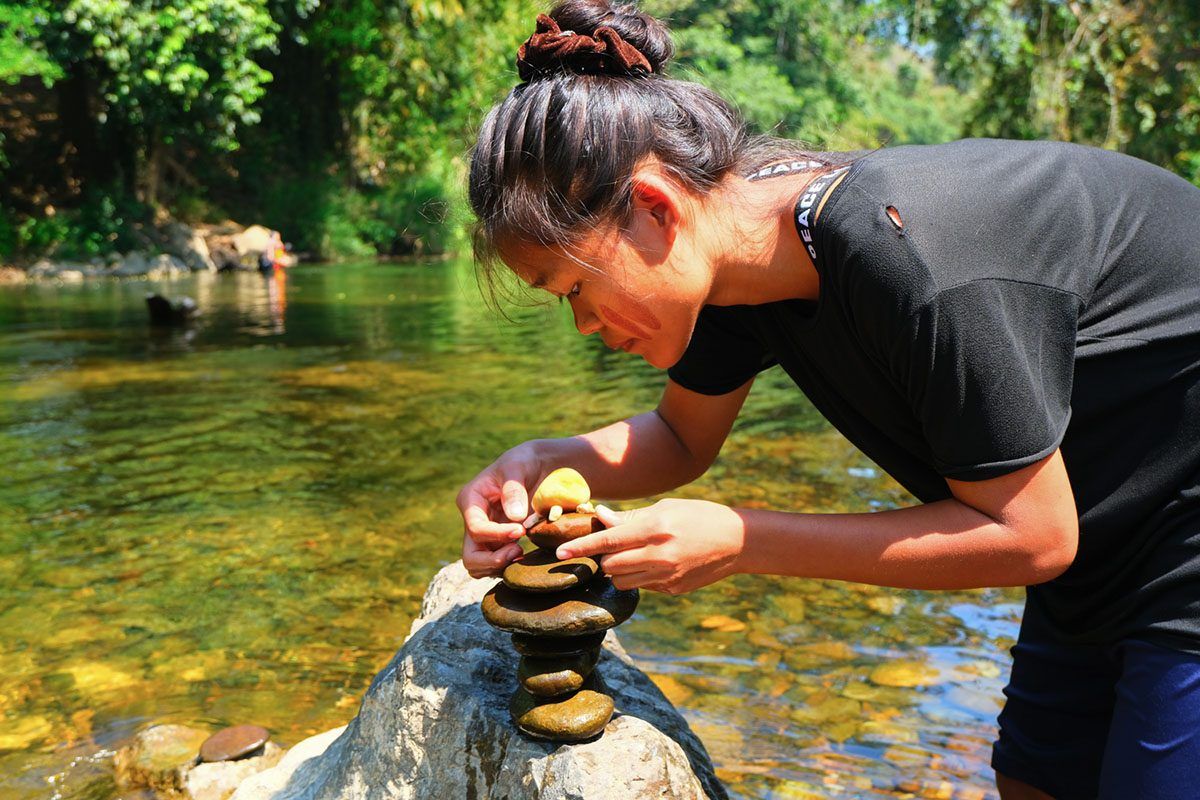
A man by a stream, bending over the water among the stones

Why we do it

The aim of yoga is Supreme Consciousness

  1. 1

    The aim is Supreme Consciousness. The goal of yoga is far off, like a distant star system.

  2. 2

    The instrument to reach that goal is the mind. It is the subtlest part of us, so it is the only part fine enough to reach the aim.

  3. 3

    The method is meditation. Seeing a star takes a telescope pointed at it; reaching Supreme Consciousness takes the mind pointed at it. That is meditation.

  4. 4

    The preparation and care. A telescope has to be looked after, cleaned and set right to see the stars. The mind is the same. Every practice does this for the mind, directly or through the body, because the mind is connected with the body.

    See how it leads to the goal ↓

Reaching the goal through Vyápaka shaoca

The half bath brings us to the goal through the organs that tie the mind to the world. Through the day they work and grow heated, and they keep the mind turned outward; cool water cools them, and the mind is let go, calm and alert. So the body is clean and the mind is pure before every meditation, and a pure mind, turned inward, comes to the truth within. That is the goal of yoga.

  1. 01

    The organs tie the mind to the world

    Through the five organs of action and the five organs of the senses the mind goes out to the world all day long. The half bath washes just these: the genitals, the hands, the legs, the eyes, the face, the ears and the neck.

    “The five motor organs keep the mind and body engaged in the action of externalization.”
    Subháśita Saḿgraha 6, “The Supreme Question – 1”
  2. 02

    The body is cooled

    Through the day these organs work and grow heated. Cool water on the arms and legs cools the nerves, and the effect is felt over the whole body.

  3. 03

    The mind is released

    A refreshed body lets go of the mind: the pains, pleasures and strains of the day loosen their hold, and the mind becomes calm and alert, easier to control and to concentrate.

  4. 04

    A clean body, a pure mind

    Vyápaka shaoca is part of shaoca, purity, which has two sides: the body kept clean, and the mind kept pure. The washing is the outer side, and it serves the inner one.

    “The spirit of shaoca is to keep the mind pure and the body clean.”
    Ánanda Vacanámrtam 4, “The Ten Characteristics of a Dhármika”
  5. 05

    The truth within

    A mind kept pure, sitting after sitting, turns inward and takes its light from the soul; in the end the truth within reveals itself. This is the goal.

    “Enlighten your mind with the effulgence of the soul. The absolute truth in you will automatically reveal itself.”
    Subháśita Saḿgraha 1, “Spiritual Practice and the Cosmic Science”

What it is

Vyápaka shaoca means thorough cleanliness; in English it is called the half bath. It is a wash with cold water; in cold weather the water may be lukewarm. It is the fifth of the Sixteen Points.

In the sources

“Do vyápaka shaoca as directed.”Caryácarya 2, “Sixteen Points”

“Before taking food and before going to sleep, do vyápaka shaoca with cold water, or in cold weather, with lukewarm water.”Caryácarya 2, “The Body”

“Before morning and evening sádhaná, either do vyápaka shaoca or take full bath.”Caryácarya 3, “General Health Rules”

“Before and after meals, and before sleep, do vyápaka shaoca with cold water. If it is very cold, use lukewarm water.”Caryácarya 3, “General Health Rules”

“Before eating do vyápaka shaoca properly with cold water. In an extremely cold climate use lukewarm water. The system is: Wash the arms, the face, the legs, the neck and the genital organs. Then, keeping the eyes wide open, hold a mouthful of water and gently splash the eyes a minimum of twelve times.”Caryácarya 3, “Procedure for Eating”

When to do it

Before each meditation; before the morning and the evening meditation a full bath can take its place.

Before and after meals, and before sleep.

When meditation and ásanas, or eating, follow one another, it is not done again in between.

How to do it

  1. 1

    Method of doing vyápaka shaocaCaryácarya 2, “The Body”

    “At first wash your genital organs; then hands up to elbows and legs up to knees; then, taking a mouthful of water, splash water on the eyes and face at least twelve times.”

    In practice: Cold water; in cold weather, lukewarm. The water should be cooler than the body. For the eyes: hold a mouthful of water, keep the eyes wide open and splash them gently, then spit the water out. Soap is not necessary, and once one is used to it the whole half bath takes only a few minutes.

  2. 2

    The ears and the neckCaryácarya 2, “The Body”

    “Finally wash the ears and the neck.”

    In practice: Cool water behind the ears and on the back of the neck.

  3. 3

    NásápánaCaryácarya 2, “The Body”

    “Do násápána (flushing the nostrils with water) also (only if your stomach is empty).”

    In practice: Water is drawn through both nostrils three times and let out through the mouth.

  4. 4

    Clean waterCaryácarya 3, “Different Yoga Practices”

    “Draw in clean water through the nostrils and pass it out through the mouth. This water may be swallowed, but it is better to spit it out.”

What a study found

Cold water on the face

  • A meta-analysis of 17 studies found that cooling or immersing the face raises cardiac vagal activity, a marker of the body’s rest-and-digest state, for as long as the cold lasts; afterwards the effect was no longer significant.

    Ackermann SP et al., 2023, Psychophysiology

Stories

  • A few more than twelve

    … Vyápak shaoca is one of the points. It should be done before doing spiritual practices, eating and going to bed. One should wash the face by splashing one's open eyes twelve times with the mouth simultaneously full of water. As the instructions are to splash the eyes twelve times, most of us do so twelve times and not more. Gurudeva did vyápak shaoca regularly. On chilly nights, He did vyápak shaoca using cold water. He kept this habit strictly. One night before bed, I watched Him splashing His eyes. I counted fifteen or sixteen splashes. "Curious," I thought. I said aloud to Him, "I thought according to the instructions, one has to splash the eyes twelve times. Why have you done three or four times more?" "Well, you see," Bábá said, with a smile on His lips, "I instructed that it should be done at least twelve times, but what's the harm in doing more? It should not be fewer than twelve times. Besides, everything should be a few degrees beyond the prescribed code because if for some unavoidable reason one slips a little, he or she will never go beneath the minimum degree." Vyápak shaoca (pervasive cleanliness), also called "half-bath", is to pour water over the urinary organ, arms and hands, legs and feet, and splash it on the face. It cools the senses and organs, and helps the body function more efficiently.Read the story

    — Ác. Sarveshvaránanda Avadhúta, in jail with Bábá, Ác. Sarveshvaránanda Avadhúta, “My Days With Bábá”, “1.3. Strict Adherence to Sixteen Points”
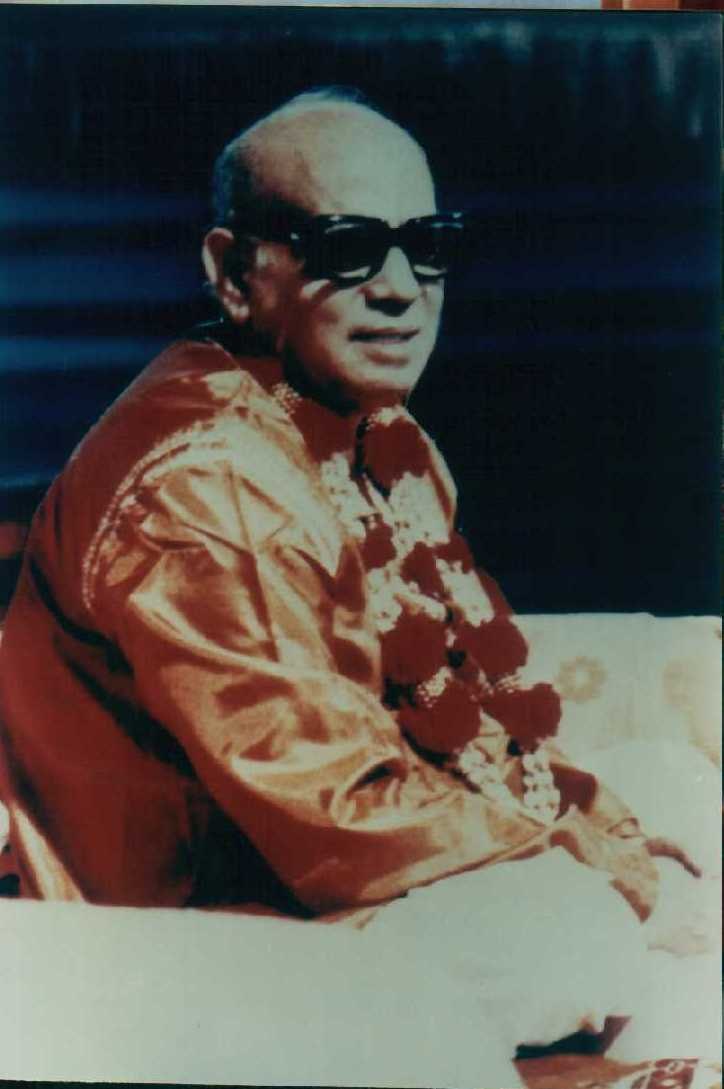
  • A half bath in intensive care

    … Around five in the evening, Bábá told me, "I will take a bath and do sádhaná." When I informed the nursing staff, they were astonished-how could an ICU patient take a bath! Besides, there was no bathroom facility in the ICU. However, on my request the nursing staff managed two big tubs and some warm water. But I was advised only to clean His body with a towel and warm water. Things were arranged accordingly. Bábá took half bath. I noticed that first, Bábá splashed water on His face sixteen times. Then I cleaned His body with warm water and a towel. The next morning Bábá also splashed water sixteen times, when only twelve times have been prescribed in our Sixteen Points. When I asked Bábá about this, He said, "Look, one should splash water more times than the prescribed number according to the rule. If you have miscounted, in this way it would be compensated for, and you would not be guilty of violating the rule." Bábá used to say great things in a simple way. …Read the story

    — Ácárya Keshavánanda Avadhúta, Woodland Nursing Home, 19 December 1989, Ácárya Keshavánanda Avadhúta, “Reminiscences of Bábá: Memoirs”, “7.1. Bábá Falls Sick”

  • Why twelve?

    … While massaging Bábá's feet one day, I asked, "Bábá, why did you put in the Sixteen Points that we need to splash water in our eyes twelve times while taking a half bath. Why twelve? Why not more or less?" Bábá replied, "The human mind is lethargic. If I don't give you all a goal, you will splash water fewer and fewer times until you do not do it at all. This is why I say a minimum of twelve times is good. Get a mouthful of cold water and splash cold water into your eyes twelve times. You can splash more if you wish but do at least twelve. It cures many eye problems."Read the story

    — Ác. Shamitánanda Avadhúta, while massaging Bábá’s feet, Ác. Shamitánanda Avadhúta, “Bábá Unparalleled: 102 Stories”, no. 18

What Shrii Shrii Ánandamúrti said

  • “The physical body is likened to a chariot (and is sometimes also compared to a temple). A chariot has to be kept neat and clean and fit to move.”
    Namámi Krśńasundaram, “Vraja Krśńa and Párthasárathi Krśńa – 1”
  • “The human body has to be kept neat and clean. Cleanliness is a fundamental principle of every sádhaka [spiritual aspirant].”
    Namámi Krśńasundaram, “Vraja Krśńa and Párthasárathi Krśńa – 1”
  • “The proper use of soap, water or other cleansers to keep the body, clothes or surroundings clean is external cleanliness. By this cleanliness the physical objects with which people are directly associated are cleaned and made fit for use.”
    A Guide to Human Conduct, “Shaoca”
  • “Just as one’s clothes and houses get dirty very quickly in a dust storm, so also the mind becomes much more polluted by the storm of even insignificant passion in much less time.”
    A Guide to Human Conduct, “Shaoca”
  • “Shaoca is of two kinds – purity of the body and of the mind. The methods for mental purity are kindliness towards all creatures, charity, working for the welfare of others and being dutiful.”
    Caryácarya 2, “Sádhaná (Intuitional Practice)”
  • “Therefore, it is a necessity to maintain the cleanliness of body, dress and house, but the need to keep the mind clean is still greater.”
    A Guide to Human Conduct, “Shaoca”

Videos

  • Sixteen points 5. Thorough cleanlinessOpen on YouTube ↗

    Sixteen points 5. Thorough cleanliness

  • Step 4. Cool down and concentrate! 50% Improvement of Meditation!Open on YouTube ↗

    Step 4. Cool down and concentrate! 50% Improvement of Meditation!

  • Step 4. Diver's ReflexOpen on YouTube ↗

    Step 4. Diver's Reflex

  • Self Purification Practice Sadhana of ShaocaOpen on YouTube ↗

    Self Purification Practice Sadhana of Shaoca

  • How to remove suffering? Sadhana of ShaocaOpen on YouTube ↗

    How to remove suffering? Sadhana of Shaoca

Questions

Ask a question →