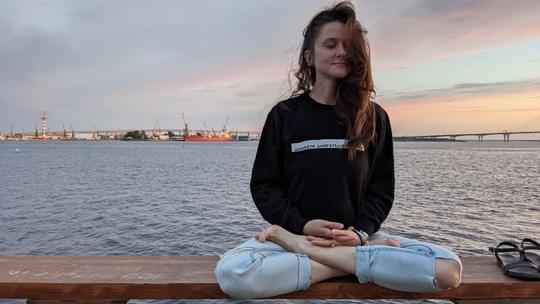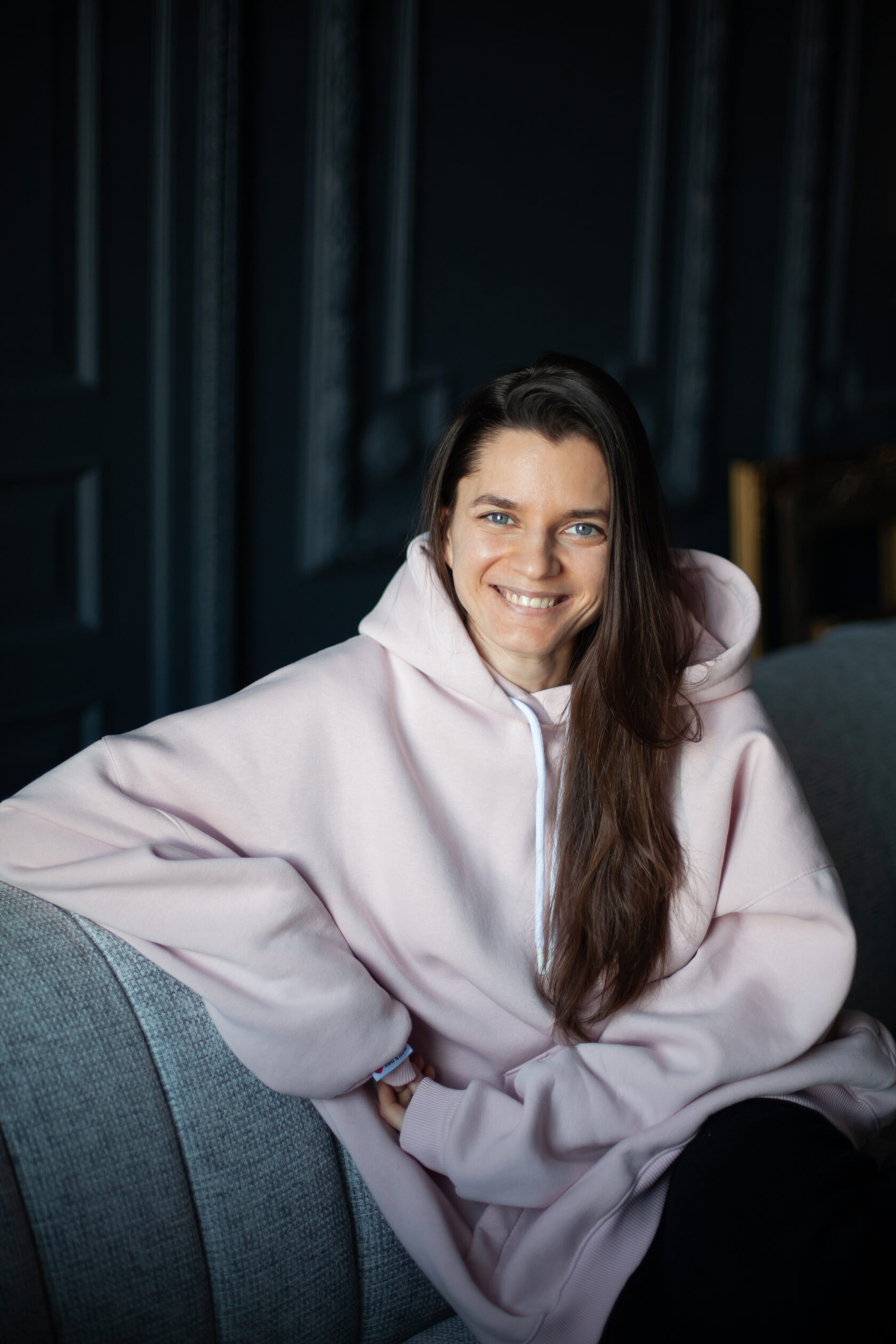
Yana Chalikova, a coach and creator of the Urokimeditatsii gratitude marathon, talks about how meditation helped her through life's hardships, and about how coaching works and how it changes people's lives.
Our guest today is Yana Chalikova, creator of the new gratitude marathon and a coach who has given more than 4,000 hours of sessions. We talked about how meditation helped Yana get through life's hardships, and discussed whether coaching really works and how it changes people's lives.
— The Urokimeditatsii (Meditation Lessons) project brings together people who strive for self-development and self-knowledge. Each of us came to the thought that the practice of yoga is necessary by our own unique path. How was it in your case?
— There was a period when everything in my life that I had considered unshakable and stable changed very abruptly. The mental strain was so strong then that I had panic attacks. I was looking for ways to calm down and relax. That is how I began trying different kinds of meditation.
Once, in meditation, I felt that right at that moment I was in some kind of close, trusting contact with something great and bright that is hard to put into words. I wanted this contact to be in my life always.
— What advice would you give to those who are just starting to practice yoga and meditation?
— I think it is important to treat with respect and gratitude all of one's own experiences and expressions, the events that happen in life, and the reactions of the people around us. As we go deeper into knowing ourselves, our emotions and feelings, the world throws trials at us. And this is exactly where it is especially important to keep the focus on respect and gratitude. That is my advice.
— Is that exactly why you created the gratitude marathon?
— Yes, together with the Urokimeditatsii team we are launching a marathon in the form of a game. For two weeks we will keep our attention on gratitude, develop this skill, and strengthen the habit of being grateful, so as to increase our satisfaction with life and to treat it as a great gift.
— I've heard that you work as a coach. How did your experience help you create the marathon?
— Every coaching session is a structured process. On top of that, coaching contains a lot of teaching fundamentals. This helps me when I lead webinars, hold individual or group sessions, and create educational projects.
— Which coaching techniques did you use in the gratitude marathon, and how do they work there?
— The main coaching technique is the open, forward-moving question. A well-phrased question can by itself already transform. It works like this: I ask a question, after which the person reflects, dives into their own depths in search of an answer, and surfaces from there quite different. Besides that, in the marathon we rely on the coaching principles that each of us is already okay and that at any moment we make the best choice available.
— How did you come to want to be a coach?
— Nine years ago I lived in St. Petersburg. I had a small business and an active, colorful social life. But inside there was a constant feeling that I wasn't quite in my place, that I should be doing something else. What exactly, I had no idea, but this inner restlessness kept me searching for where I could apply myself.
I realized that I want to help people live their best, happy, relaxed, free, vibrant life. For a long time I studied modern approaches to working with people in psychotherapy and psychology. In the course of this research I came across coaching, about which very little was known in Russia back then. And everything about this method resonated with me deeply, from its values to the way it works.
I don't impose my picture of the world on the person I'm talking with; I don't teach them or explain how everything works. I ask open, forward-moving questions. In answering these questions, a person gets to know themselves, their values, beliefs, and ideas, and learns to make decisions based on what truly makes them happy.
To put it briefly and simply, the approach I work in is this: my task is to create an atmosphere of complete acceptance for a person, in which it will be easy for them to be themselves.
— Do you need a university degree to become a coach, or can you also work self-taught?
— As far as I know, coaching is not taught in Russian universities. I trained at the Russian branch of Erickson International University (Canada). Among other things, it prepares coaches for international certification with the International Coaching Federation (ICF). The university has branches in 36 countries.
Nowadays people without the competence also call themselves coaches, but it is nevertheless a helping profession recognized all over the world. When choosing a coach, I would look at their experience and competence.
— Can one say that coaching is based on a scientific method? Is there evidence of its effectiveness?
— Coaching is based on modern research into neuroplasticity, the property of the brain thanks to which neural connections can change under the influence of new experience.
That is, some neural connections formed over years can disappear, while others, on the contrary, can appear and grow stronger. And a person can direct all of this themselves. Coaching works a great deal with the neocortex, the prefrontal cortex of the brain, where, among other things, imagination is born.
In the course of the work in sessions we create that very new experience which forms new neural connections. Then the person strengthens them. What I like about coaching is that it transforms thinking and sets in motion the evolution of a person's consciousness.
I have not studied the evidence base; I can rely on my own experience of working with people (it is approaching 4,000 hours): people change their lives — they move, start businesses, land their dream jobs, reach the goals they set, become happier. Some changes can be measured objectively; others will, of course, be a subjective assessment.
— Why is it important for you to help people, and your clients in particular? Usually people are motivated by money or other material values.
— It really lights me up when a person comes to me tired, confused, frightened, and leaves with a clear head and a bright look. This is magic the person has worked themselves; I simply accompanied them on this path. Watching this miracle is fascinating every time.
I keep thinking that I myself receive no less value from the sessions than the people I work with. During the pandemic I held more than 200 pay-what-you-can sessions for people who were lost and depressed by the situation. I often work with people in transitional periods, when they are living through the loss of their usual way of life, of loved ones, a job, a marriage.
— How does your knowledge help you in everyday life?
— If we're talking about knowledge in the field of coaching and human development, then it isn't about knowledge at all, but about practice. I myself greatly transformed my life and my sense of the world, partly thanks to working with a coach.
At 26 I quit a large company with a stable salary and started a business from scratch. At 30 I closed the business and immersed myself fully in coaching. At 32, after 18 years of living in St. Petersburg, I left on a long journey, and then moved for good to a small village.
But all of this came from an inner knowing of what would be good for me. Such close acquaintance with myself became possible, among other things, thanks to my encounter with Ericksonian coaching. Today I feel much more confident, calmer, and happier than ten years ago. I trust myself and the world.
— What is the secret of happiness?
— To breathe with pleasure, filling every breath with love. For me it is about the inner state. And that means the secret is to keep your attention on your inner state and take care that it is as it should be.