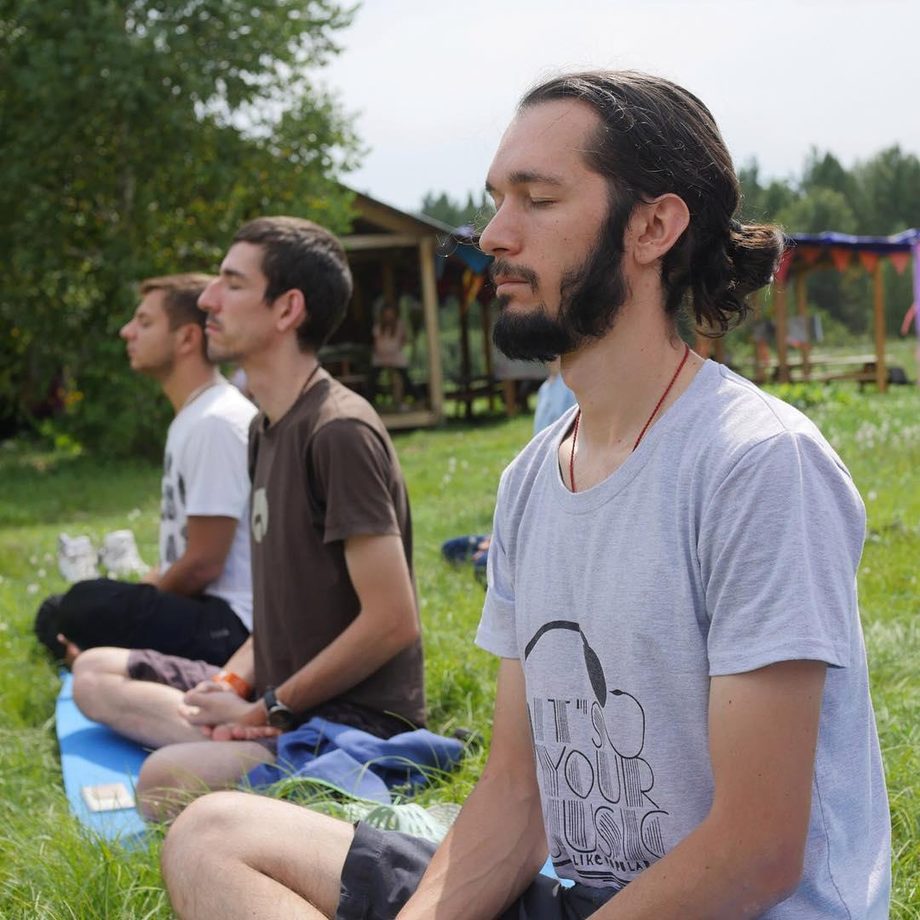
Some difficulties that come up in meditation – scattered attention, fear, "I feel nothing," a dry spell after a good one – and ways to overcome them.
Some difficulties that come up in meditation, and ways to overcome them.
1) "I can't concentrate"
Concentration is one of the most important skills to develop for effective meditation. Don't rush to move on to static meditation. Preparatory practices such as singing a A sound or set of sounds that, repeated with its meaning in mind, carries the mind toward the Infinite., the half-bath and full yogic breathing will help calm the mind and improve concentration. If you do them carefully before meditation, you will feel the result immediately.
There are a number of other practices that, done regularly, have a cumulative effect. Over time they make it possible to raise your level of concentration considerably. They include a sattvic diet, fasting, A yoga posture held steadily and comfortably; it balances the glands and quiets body and mind for meditation. and following the principles of a harmonious life. All of these are described in detail in our basic meditation course.
Remember that concentration is a skill that has to be trained. If you make the effort, you will certainly succeed.
2) "I feel fear or negativity in meditation"
Meditation is not an escape from reality and not an escape from oneself. It is work on oneself. The motto "I came, I saw, I conquered" might sound, in the case of meditation, like "I sat, I became aware, I transformed."
What helps transform negative thoughts and emotions here is the mantra, which is the quintessence of positivity. The idea of the mantra replaces all the negativity in your mind. To stop identifying yourself with these negative feelings, you can also use the practice of varńárghyadána.
It should be stressed that all of the above applies only to the meditation we recommend in our course. If such negative sensations arise when you practice meditation of other traditions, we advise you to pause your practice for a while and consult an experienced teacher of that tradition.
3) "And what if I feel nothing at all?"
We are all used to positive reinforcement, from the grading system at school to bonuses at work. A pleasant outcome has become the sign that we are doing everything right. But the "carrot in front" trick does not always work with meditation. In meditation it is sometimes quite the opposite: you close your eyes and, instead of the bliss and joy you expected, you run into a heap of your own thoughts (and where did they all come from?). But the carrot is there all the same. It just lies a liiittle (or a looot) farther away than you expected. In time, as the mind is purified, you will be able to perceive subtler vibrations of joy and bliss and to enjoy your meditation.
Some tips that may help with this are described below.
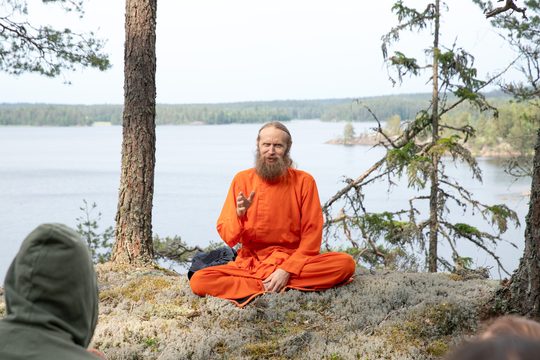
4) "Meditation used to be wonderful, but now I feel nothing. What am I doing wrong?"
Even with the same style and way of life (that is, if you have not suddenly started eating meat or staying up at night), the experience in meditation can vary. Only yesterday, as soon as you closed your eyes and concentrated, everything trembled with delight, and today your heart is like a desert. Why is that?
It is known that every process develops according to the law of cycles. Having purified the mind to a certain degree, we begin to feel deep joy and calm, but we have to go further, because a new portion of unexpressed reactions rises to the surface, and once again we have something to work with. Remember that it is precisely at such moments that the work matters most. A navigator hones their skill in a storm, not in a calm.
But even for such difficult periods in meditation there are some recommendations:
- Singing a mantra. This is a universal method that helps with practically any problem in meditation. It is especially effective in this case to sing the mantra with a mudrá – with the arms raised. This is the "mudrá of joy"; it opens the anáhata A center of psychic energy in the body; seven major ones lie along the spine. and lets you feel Love. Perhaps you will not feel anything right away, but persistence is what matters here. Do this practice for 10, 20, 30 minutes and you will see the result.
- During meditation and while singing the mantra, ask yourself: "What is it – Love? What would I feel if this feeling lived in me?" Try to feel this state from different sides, starting with how you love ice cream and how you love a child, and ending with the attraction to the Infinite. Our mind reacts to reality and to imagination in the same way, so if you simply begin to imagine love and joy inside, these feelings will soon appear in your mind.