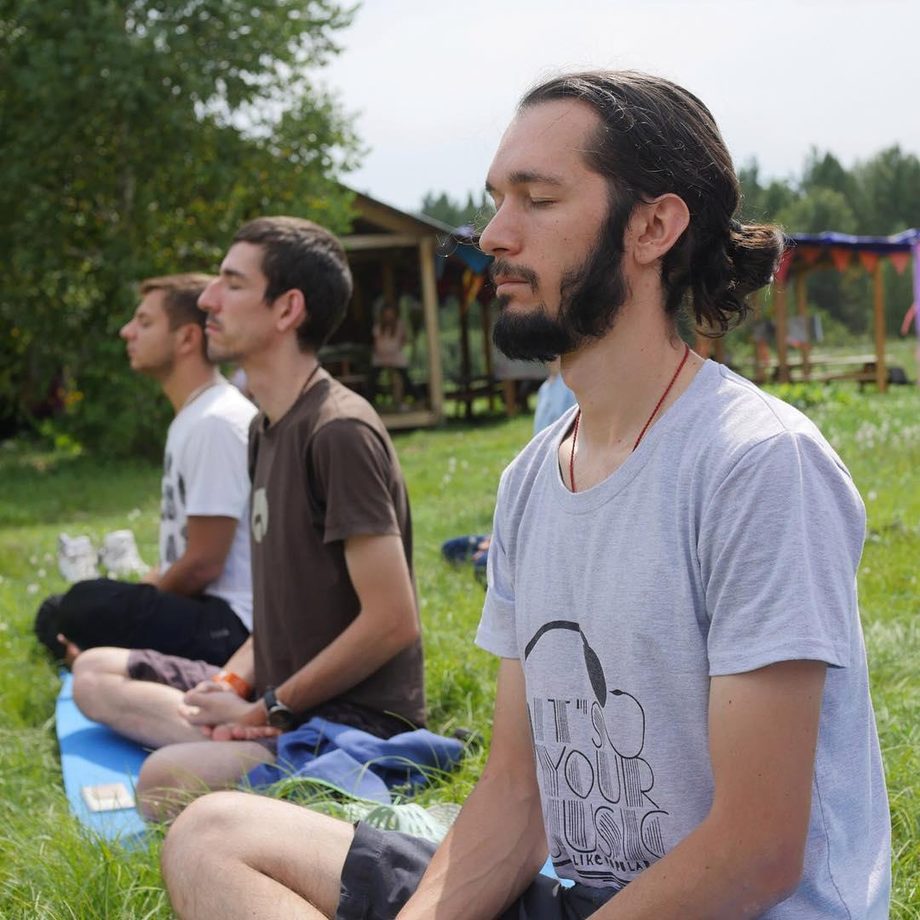
How should we begin the day? With early meditation: why the morning is a special time for practice, and how to find the inspiration to get up early.
To the question of why one should get up early in the morning, before sunrise, we will say this: the early morning is meant for spiritual practice. Why do you think anglers love to go fishing? Because, in fact, they love to meditate.
When they go fishing, they always get up early, before sunrise, because they believe the fish bite better in the morning. Waking early, they have a mystical experience of the wonderful sweetness of being.
This can be felt only when everyone is asleep and a person is alone with the magic of this universe.
Sometimes meditation really will be like fishing, when, half asleep, you start "nodding off." But then you will wake up, overcome the drowsiness with willpower, and continue the meditation with even greater zeal.
A person sets off fishing without realizing that they want to meditate. For most anglers the catch matters less than the process they enjoy, the state reached through concentration, the state of "here and now." The peak of concentration is the bite, when the mind gathers into one point and the person is focused on the moment of the bite.
But why go fishing once a month, spending time on the road, just to meditate on a float? It is far better to meditate every day at home, in the morning, and, having felt the joy of waking early, to touch the magic of spiritual practice.
When should you wake up to do spiritual practice? The ideal time for meditation is from 4 to 6 in the morning. On average a person needs 6 to 8 hours of healthy sleep.
It is better to go to bed before midnight. When darkness falls, the body releases the hormone melatonin, which is called the hormone of youth and longevity. If a person is asleep during the peak of melatonin production, their sleep is deep and gives a feeling of rest. If a person is awake at this time, the desire to sleep goes away and insomnia sets in. Even if the person does fall asleep, the sleep will be shallow, not deep. On waking they will feel worn out and sluggish. That is why keeping a regular sleep schedule is absolutely necessary.
When one does good dhyána (a higher lesson of meditation), less time is needed for sleep. Besides, the mind becomes calmer, which also reduces the need for sleep.
A practitioner who meditates systematically needs less sleep. This is because the sahasrára A center of psychic energy in the body; seven major ones lie along the spine. grows stronger, that is, the connection with the supreme Consciousness becomes stronger.
During sleep a person is always under the sway of static energy, tamoguńa. But the energy that comes to the Earth in the morning hours is benevolent, or sentient (sattvic). Subtle and crude energies do not combine with each other at all. For this reason a person who is asleep cannot absorb the subtle energy of sattvaguńa. Waking up late, they lose this benevolent energy and cannot make up for the loss during the day.
But if a person does spiritual practice early in the morning, they bring their mind into a subtle state. This state resonates with the universal energy of goodness, which has a good effect on all their actions during the day. The mind will keep its elevated state, and all plans will be carried out effectively and successfully.
Not for nothing does the proverb say: "The early bird catches the worm" (literally, "God gives to the one who rises early"). That is why it is extremely important to meditate early in the morning, so as to fill ourselves with divine energy and spend it for the good of ourselves and others throughout the rest of the day.