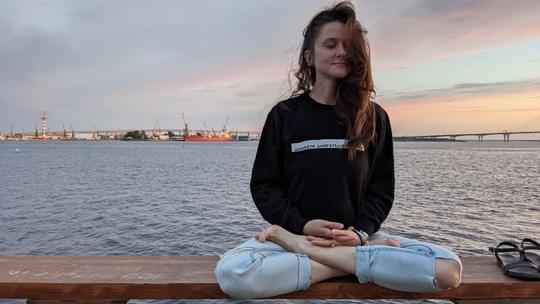
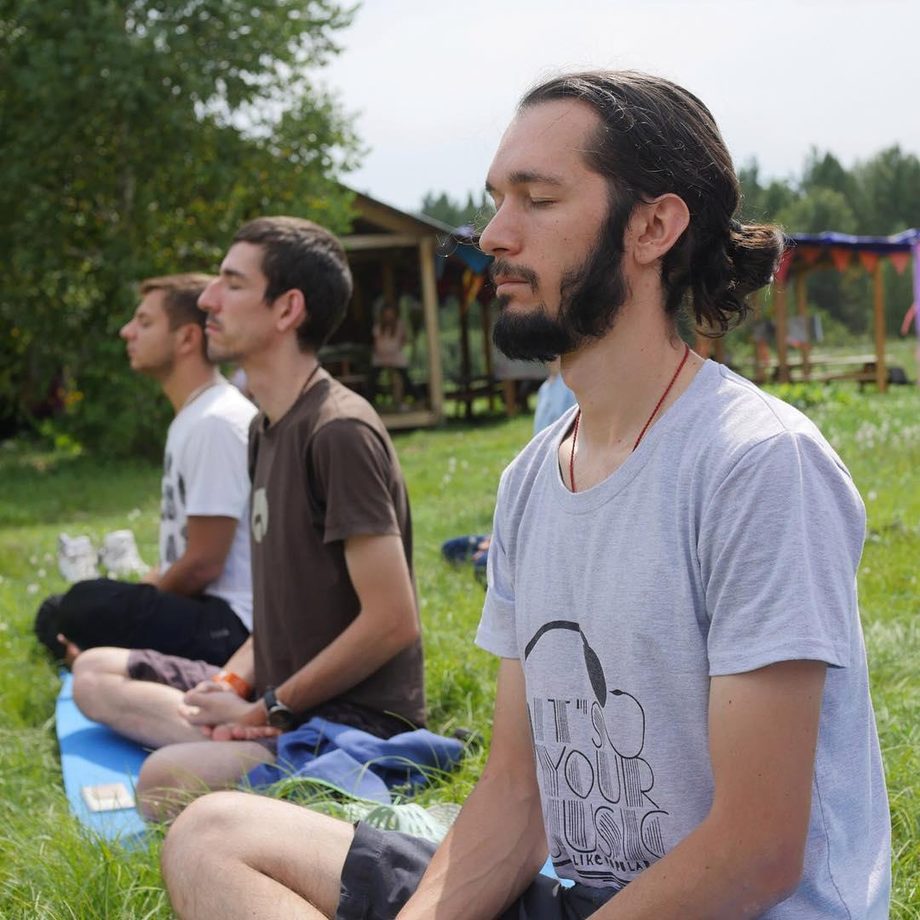
Why drugs lead away from the spiritual path rather than along it, what spiritual intoxication — madya sádhaná — is, and how meditation opens the inner "wine" of bliss.
Human beings have always had a thirst for the unknown. In every culture, from ancient India to the relatively recent American culture, people have found substances that let them enter altered states of consciousness and have experiences beyond the physical world. This longing is especially strong in those in whom the higher layers of the mind have already awakened: artists, musicians, poets, writers, creative people. A person begins to feel cramped within the bounds of the physical world, understands that their home is not here, senses that there is something greater, and starts looking for the way home.
There is an opinion that drugs help a person move along the spiritual path. This is very far from the truth. Narcotic substances and other stimulants, such as alcohol, tobacco, and intoxicants, at the very least slow down the process of spiritual growth considerably, and often turn a person in the completely opposite direction, so that they begin to degenerate.
Drugs and meditation are two opposites. The aim of spiritual practice is to become better: to gain control over one's attention and emotions, to become master of one's own mind. Through constant work on oneself, a person gains spiritual experience, comes to know true values, and changes for the better. Drugs allow one to have new experiences and give various sensations, but they do not make a person better or more perfect.
Madya sádhaná — spiritual intoxication
In spiritual literature in general, and in Sufi poetry in particular, the motif of spiritual intoxication — madya sádhaná — appears again and again. Striving to unite with the formless, unblemished supreme Consciousness, the sádhaka sooner or later begins to experience madya sádhaná. This state inevitably arises on the spiritual path.
Cupbearer, fill againThis cup of wine.There is no better friend than you,Not in this world,Nor in the other. >Rumi
The cupbearer is an epithet for God, the supreme Consciousness; only He fills this cup. Wine is a metaphor for love: I love the Supreme, and from this love I become intoxicated.
Only take care of me, O Sultan.Order wine to be brought to me.…..Bring the wine that will make the heartLike a mirror.Do not take the wine away until Saturday,Or even until Thursday. >*Rumi*
The ancient masters said that the human body secretes a hormone of joy — amrta — and that one should drink only the wine that flows from the highest lotus; everything else is drugs, substances too crude for a human being. One should be intoxicated only by one's own amrta.
The hormone of joy is secreted in all people. But when crude ideas dominate the mind, when a person is stressed or anxious, an aggressive hormonal environment destroys the hormone of bliss. In moments of stress even a person's sweat takes on an unpleasant smell, while, on the contrary, in an elevated, joyful state the body begins to smell pleasant. This is how the hormonal system works. But if a person abides in an elevated state and thinks only of the Supreme, the hormone of bliss switches on the other glands one after another, and a state of euphoria is experienced. The person feels the heart literally opening and blossoming. They may see a light that first appears within and then fills the surrounding space. And… everything "explodes": the person becomes light and feels a love that is impossible to describe. This is a very high spiritual experience; this is the very wine that intoxicates. The feeling of bliss can last for several days. Each of us is capable of experiencing such a state. But our nervous system is a very delicate structure, and through the practice of yoga and meditation we try to tune it perfectly. Drugs and other substances, by contrast, are crude matter that we throw into the body like a grenade.
Those who take spiritual practice seriously are very careful about what enters their body, since any chemical substance affects body and mind. One can have an unusual experience by taking intoxicants, but that experience will not make a person better; it will only destroy the precious nervous system. Every organ of the body matters — the brain, the endocrine system, and so on. The purer and more efficient they are, the stronger our capacity to produce this inner wine.
I do not drink wine,I partake of sudhárasa,Crying out, "Victory to the Supreme!"
There is a strong misconception about ganja, cannabis, which is supposedly smoked everywhere in India. Rumors are spread that Shiva himself smoked and preached smoking. There could be no more foolish misconception.
The intoxication that happens in meditation really does look from the outside as though the person has taken an intoxicant. But imagine the greatness and stature of Shiva's personality! Did he need anything else? He took no intoxicants; he was spiritually intoxicated. But those who have no experience other than drug intoxication invent tall tales to justify their weakness and hedonism.
If you listen to your heart and ask, "Are alcohol and drugs really what I want?", you can understand that behind all this lies a longing for something greater than drugs; within us is a thirst to know our true "I." And if you set yourself the highest goal, you can give up many things that are unnecessary on this path. If you listen to your heart, you will always know whether what you are doing is right, and whether you need it or not.
One of the best practices for spiritual intoxication is singing a A sound or set of sounds that, repeated with its meaning in mind, carries the mind toward the Infinite. and doing dhyána, the highest lesson of meditation. Many people do not do dhyána because they do not feel an immediate effect. But if you make the effort for half an hour, an hour, and persistently repeat this practice, in the end you will feel the supreme Consciousness. Strive to do high meditation. Don't look for shortcuts, don't fritter yourself away on trifles, don't waste yourself on hedonism. A yogi should neither drink nor smoke; a yogi should be intoxicated only by their own amrta. Accept the path of spirituality!