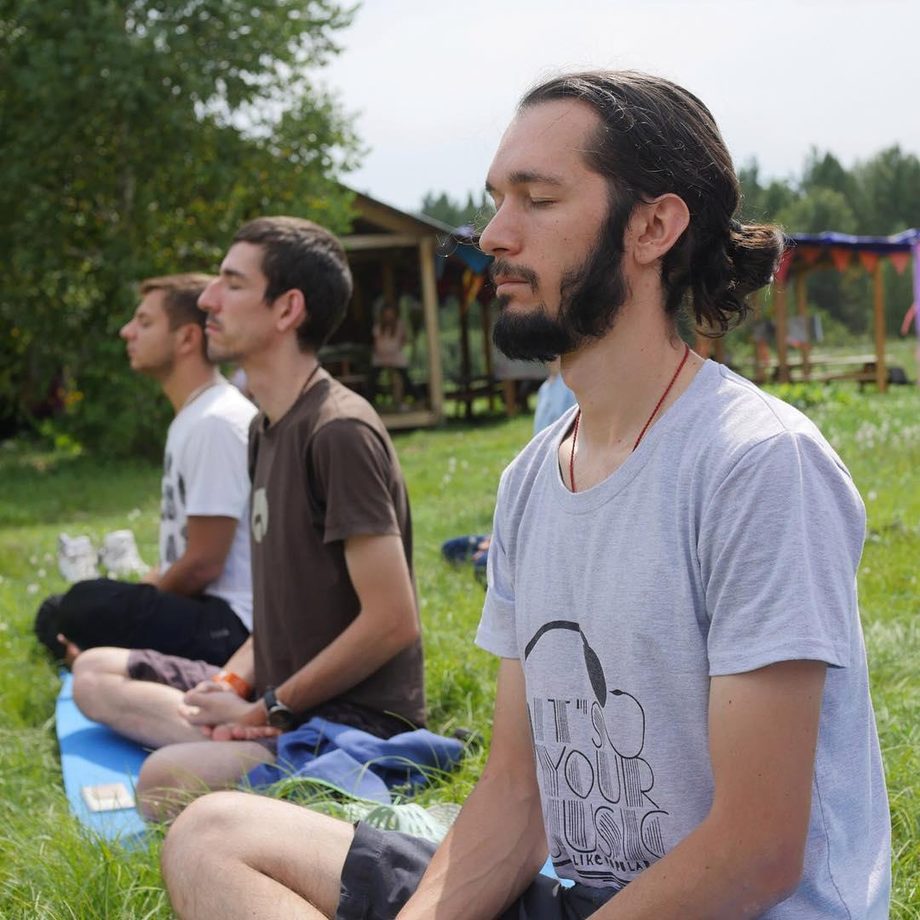
Do background music, incense and aromatic oils help meditation? Why meditation is an active state of concentration rather than relaxation, and when music is still acceptable.
People who are just beginning to practice meditation often ask whether it helps to use additional aids to calm the mind — for example, putting on background meditative music, lighting incense, or using aromatic oils, so as to create a setting that helps them switch off and enter a different state. At the beginning this really does help you relax. But relaxing is not the task of meditation. Relaxation is a passive state in which a person simply relaxes the body, muscles and nerves.
Meditation, however, is an active, intense state in which a person directs their attention, trying to engage the brain 100%.
Of course, we relax the body and the nervous system so that tension doesn't interfere with concentration. But ultimately we aim to direct our attention and reach an active state of concentration. When we listen to music we get pleasure, we enjoy it. And the mind always chases after objects of pleasure, and so we get distracted from meditation. The same can be said of using incense and the like. In meditation we try to disconnect the senses from the outside world, turn them inward, and focus all our attention on realizing consciousness.
Yes, there are extraordinary situations. For example, you are traveling on a train and put on headphones to shut out what is going on around you. In that case we choose the lesser of two evils: we put on headphones and meditate. At first the mind will be distracted by the music, but as you reach a high degree of concentration you stop hearing the music.
At the beginning of spiritual practice it is recommended to minimize distractions — switch off your phone and tell yourself that for the next 20 minutes you will try very hard to do a good meditation. But there are people who, because of high sensitivity, simply cannot concentrate, and every sound distracts them: the ticking of a clock, the sound of incoming messages, someone's footsteps. Some even use earplugs, which help them reach complete silence, but over time people become dependent on them. So it is better to work on learning to direct your attention, striving to bring it under your control. If external objects distract you, try not to cling to them. And if you get distracted, take it calmly: yes, all right, I got distracted, that is the nature of my mind. There is no need to get irritated about it; it is better simply to bring the focus of your attention back to the object of meditation. In this way you will gradually learn to meditate and practically not hear what is happening around you, keeping your attention under control. And then you can meditate anywhere.
So music is recommended only as a last resort. Try to meditate without aids. Still, it is useful to create a good atmosphere for meditation: find a permanent place, arrange it, decorate it, and air it out before meditation. All this will help you catch a special mood, which matters for beginning practitioners.