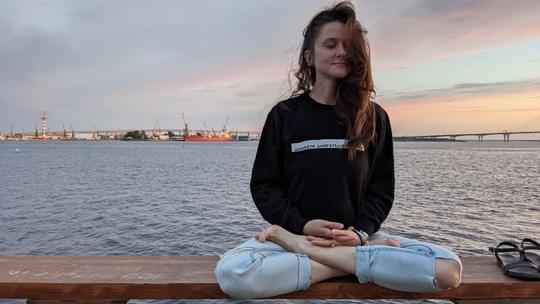
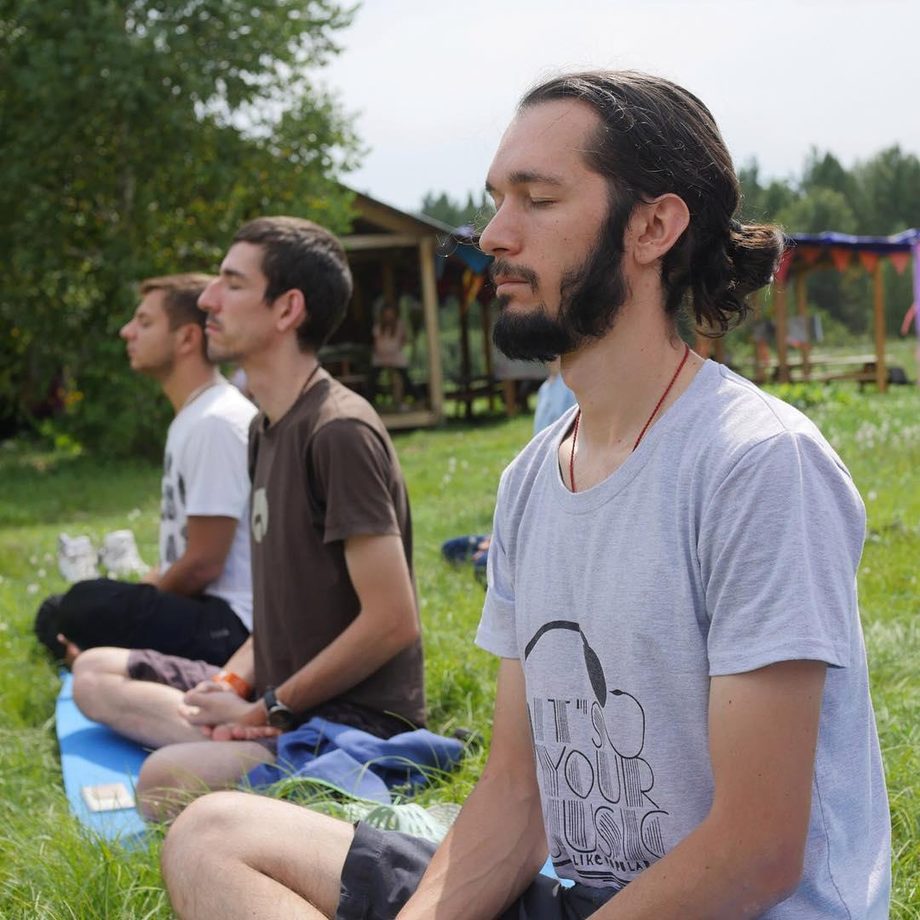
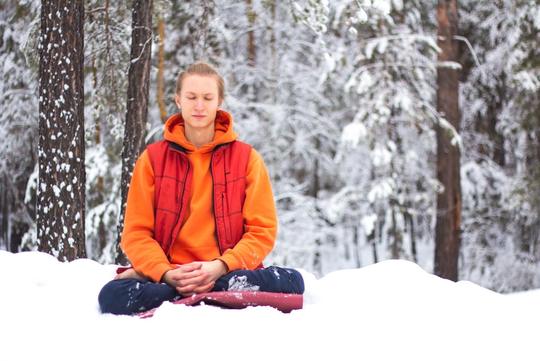
Where loneliness really comes from, how it is tied to the balance of taking and giving, and why selfless service and meditation free us from it for good.
Sometimes there is no one even to tell what you dreamed last night. And at times we feel lonely even when there is someone to talk to. Why does this feeling arise, like a well that has run dry inside? Loneliness has a real cause, and it turns out that how sociable we are has nothing to do with it.
In this article we will talk about how to overcome loneliness not for a while but for good, how this is connected with the balance of "taking and giving," and how meditation can help.
The fear of loneliness and the "painkillers"
"Nobody needs me" — when this thought keeps spinning in your head, there is so much hopeless despair in it that it sometimes seems the feeling would be enough for the whole world. It is no accident that one form of punishment is to put a person in solitary confinement, where they may lose their mind from what they go through.
Loneliness is especially frightening in old age. Sometimes this conscious or unconscious fear drives us. We start a family, have children, throw ourselves into work… Anything to have social ties, anything not to feel lonely!
A family is wonderful — but only if it is a conscious choice, not a screen behind which hides an enormous need for someone's company, for love, friendship, support. Sometimes social contacts, work, or hobbies are like a painkiller that we take regularly, and then we seem not to feel lonely. This anesthetic works especially well for those who do not strive much for a spiritual life or self-development and live more by material needs. Why meditate if you can go on vacation? But the higher one's level of development, the less such screens and painkillers help. Loneliness is like a black hole inside that no hobbies, travels, or purchases can fill.
Sometimes you think: what is wrong with me? Maybe it's a curse? Why does this oppressive feeling follow me wherever I am? A person who is developed intellectually and emotionally has high standards. If they are to have a relationship, it can only be with someone who is a kindred spirit, with whom they share a sense of humor, taste, ideas, and values. But finding such a person can be hard. And yet, let's face it, loneliness can come over us even among family, in a circle of friends, in a huge crowd. Why does this feeling follow us?
How to stop choosing loneliness without realizing it
Can we uncover the essence of loneliness as a social problem? Find out where it really comes from, and why? Perhaps that would help us "disarm" it and understand how to get rid of the sense of being unneeded for good.
The feeling of loneliness, of being abandoned, arises when we ourselves build a wall around ourselves. That is, loneliness is born of egoism. The invisible wall we ourselves create isolates us from society, and the materials for building and reinforcing such a wall are always at hand: our egoism and shame, fears and doubts, a sense of our own superiority, and the prestige we have to keep up. We hide inside all this — and suffer from loneliness.
How wonderful it would be if someone came along and loved us in spite of this barrier we have built. Saved us from loneliness, so that everything would be fine. But to step out of the fortress ourselves… To help those who are even more unhappy and lonely… No, that seems too much to manage. And yet we have only to look around — there are so many people whom our warmth would comfort.
Perhaps in the next building there lives a lonely old woman whom no one visits but a social worker? Imagine how she would feel if you visited her, looked through old photographs together, offered to go get her medicine, and on the way back picked up a little bunch of flowers.
Or perhaps there is a nursing home in your town where residents with limited mobility need volunteers' help to go out for a walk in their wheelchairs. If there is not enough staff, such people can go years without being outdoors!
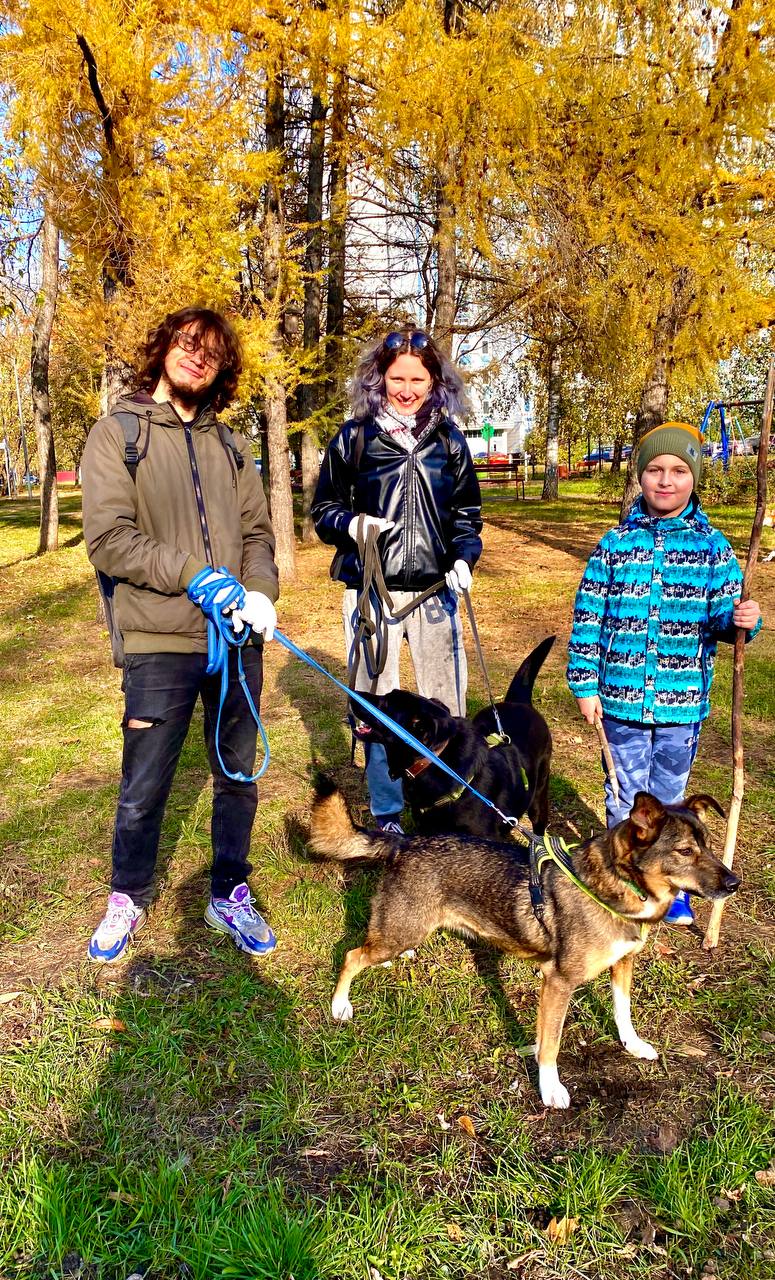
Volunteering at a shelter for homeless animals is another excellent way of fighting loneliness. You don't have to come every day. A volunteer can choose a cat or a dog and look after it remotely: make posts on social media, find a foster home or a new home for the animal. Or organize a collection of pet food among colleagues, followers, and acquaintances. And there we have helped solve a social problem, and the heaviness on our heart has eased.
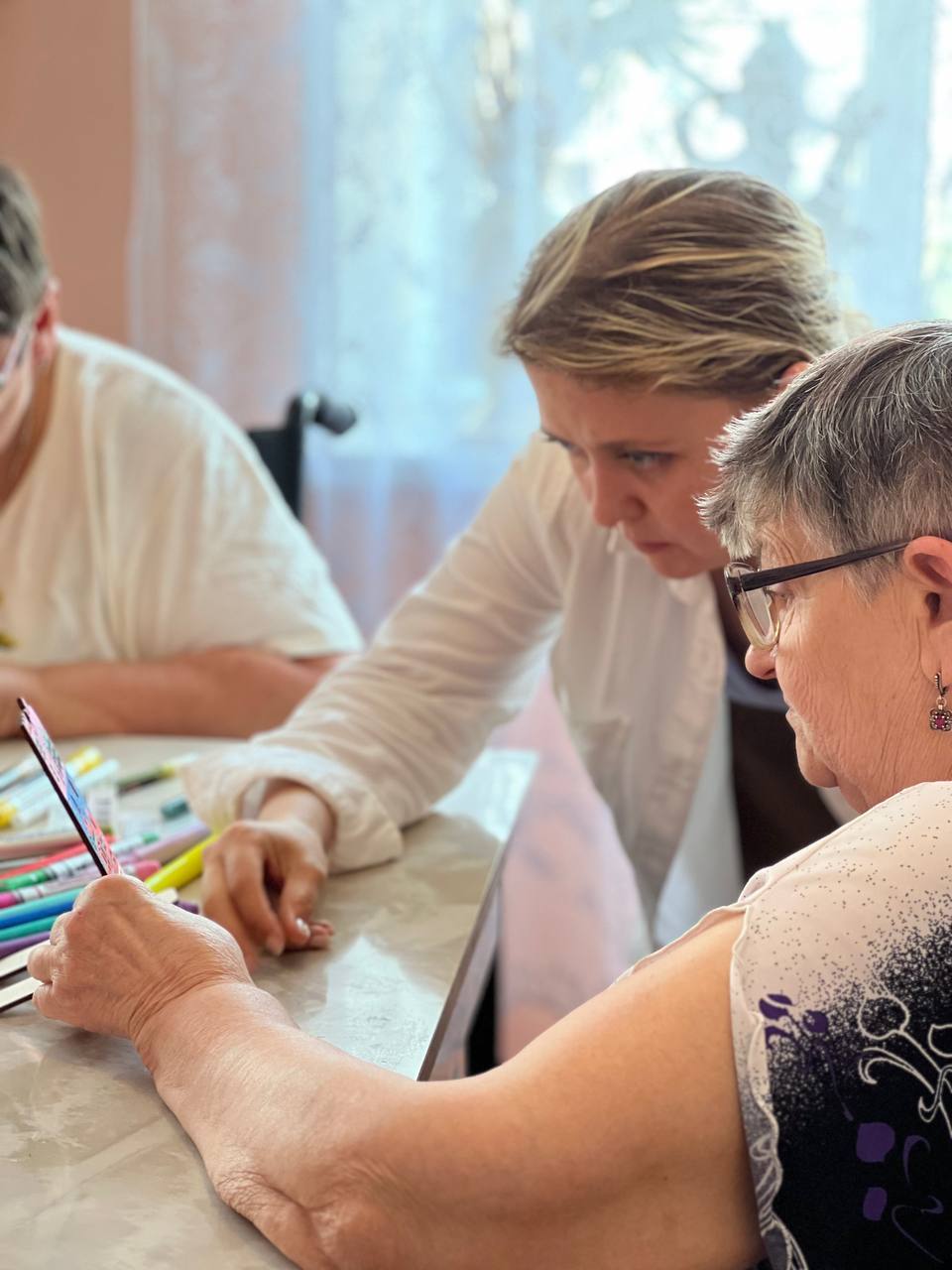
But when a person's social-recluse syndrome is at an advanced stage, it can be hard to shake off. You want to do good, but you have no strength or energy. We feel a certain complex: we don't want to go to people, get to know them, talk, build and keep up connections. We think, "Why should I impose myself? Better that someone take the first step toward me."
Such thoughts arise when we know subconsciously that we need love very much and want to take it from people, but are not ready to give just as much, let alone to give first. That is exactly why conscientious loners avoid contact. They don't want to impose on anyone. Such people may be very intelligent, interesting, and creative, but they won't join a group until they are invited, because they would feel as though they were taking something from people. They would feel self-serving and would once again choose loneliness.
In part this is true. Loneliness is the direct opposite of love. The soul needs this feeling, but we wait for someone to come and give us that love. Yet the cure for loneliness lies in the opposite. Don't wait: take your love, whatever kind and however much of it you have — even if there is very little of it inside, even if only a tiny flame is smoldering — take it, make your way through the wall, and come to people to share what you have. This is called service.
A new goal for the mind
A song says, "Whoever loves is loved; whoever is radiant is holy."
Exactly right. The law for overcoming loneliness is simple: we need to reorient our mind toward service. When we begin to give something without expecting anything in return, it creates attraction. People always feel good around someone who doesn't pull anything out of them — no response, no obligatory reciprocity, no friendship and love on the principle of "I give you this, and what do you give me?" Even if it seems to us that we do everything sincerely and mean nothing of the kind, the feeling of loneliness inside us, like an insatiable beast, keeps demanding new proof that people care about us.
And when we want to get something from people, it always shows. Every now and then a complaint slips out that we are not given enough time, that people don't listen to us as attentively as we would like… But what can we do? We want love! We want more and more of it, so that this terrible loneliness inside does not wake up again. And so we end up explaining to the other person how badly we need their sincere feelings and exactly how they should express them.
Relationships based on this kind of demandingness are unlikely to lead anywhere good. Because of excessive demands, the person next to us will begin to drift away, and we will feel lonely again. Retuning our mind to selfless service is the only way to stop being lonely and unhappy. When we no longer expect anything from people and think about how to help them, they will be drawn to us, reach out to us with love, and want to be near us. This flame of selflessness will attract people, and not a trace of loneliness will remain.
No inner resources? Meditation will help
But what if there are no resources inside? No strength, no energy — nothing to give? Imagine we are sitting at home with only a thousand rubles. Where can we go, what can we do, whom can we share it with? With a sum like that we can barely get by ourselves; charity is out of the question.
That is exactly why we need to make sure we have not a thousand rubles but, figuratively speaking, millions! We need to develop self-sufficiency in ourselves, to become happy ourselves. However trite it may sound, there is no other recipe. And meditation will help with this. It will give energy — the very energy without which we have neither the strength to take up a new healthy habit, nor the inspiration to eat well or exercise, let alone the motivation to overcome loneliness, to share something useful with those around us, to give our feelings, to help, to be a friend, to love. To warm someone, even with just a word and a smile.
When a person acts without this inner self-sufficiency, they will most likely hold something against us later. They'll say: "Oh, so that's how it is? I gave you this and that, and what do you give me? How do you treat me in return?" Such a person always needs a guaranteed return for what they have given. And if they don't get it, they may accuse us of having used them, of not really needing them. This, of course, no longer looks like service at all — rather, like manipulating feelings to make us justify ourselves and assure them of our devotion and love.
If we ask ourselves, "Where's my return?", it is not true service. It is service that comes from inner poverty, emptiness, need — from a hunger for love that we skillfully disguise. So the key question is how to remove the loneliness and emptiness within ourselves. The answer is simple: start meditating. Meditation is one of the best remedies for loneliness.
Getting rid of loneliness once and for all
Let's say we have moved to another city. All our friends and loved ones stayed where we used to live. At first we manage to keep up our ties from a distance, but gradually it turns out that they are fine without us. Contact becomes ever rarer and more formal, and loneliness ever stronger. We get the feeling that no one ever really needed us. And we come to realize that, in fact, all people are on their own.
Is that bad?
No. Our loved ones love us, but they don't need us so much that they cannot live without us. Because when we are needy, we cannot love sincerely and selflessly. And it is precisely during meditation that the feeling comes that we need nothing more in life — that here they are: self-sufficiency, fullness, calm, happiness. And the resources to share all this with people. Simply to stop the endless race in search of love, support, and approval from outside. To find them within ourselves and be at peace. And to keep meditating so as not to lose this feeling.
The moment we understand that we don't need anyone (in the consumer sense), we become capable of truly loving people. Everyone wants to be near those who have inner happiness, a deep relationship with the supreme mind, and harmony with themselves. And all the social ties we keep up once we reach this level grow stronger, because we become capable of true service. Thanks to meditation and its fruits, with such wealth we will never feel lonely again.