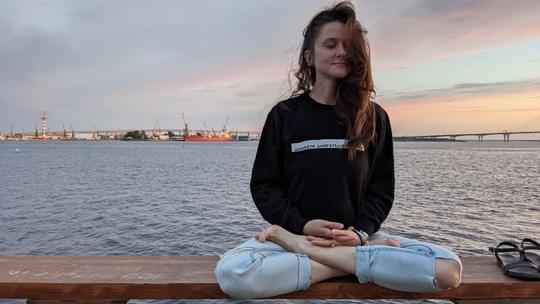
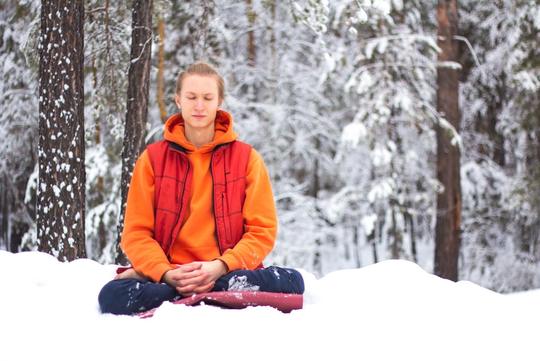
Regularity twice a day, lengthening the time gradually, meditating before meals, a complete system of practice and meditating together – five tips that help one become established on the spiritual path.
Today meditation is gaining momentum; it has become a trend. Everyone wants to meditate, and this is driven by economic, social and cultural reasons. Homo sapiens is in fact going through a very severe crisis today. That is, either we throw open the doors to an entirely new future, or we disappear as a species.
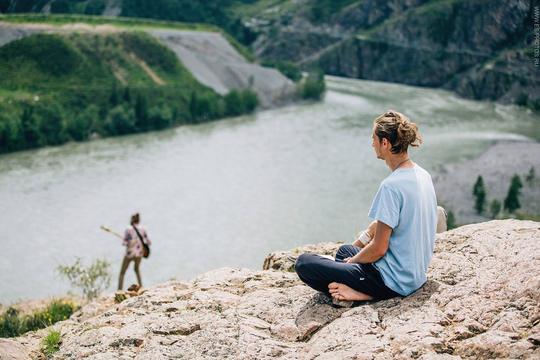
Meditation transforms a person completely. It makes life interesting, because when you change faster than the world around you, every day you look at it with new eyes. It is as if you return to childhood – you see this mountain, this lake for the first time and feel the delight of being alive. Meditation renews you, improves you, rebuilds you. And yet very few people manage to stay on the spiritual path. Many learn about meditation, fewer begin to practice it, still fewer keep practicing, and only a handful reach the higher meditations, go all the way to the end, to the great goal.
To help beginners become steady in this practice, here are five tips.
Regularity
Regularity matters more than intensity. There is something we can describe as a meditative flow. Our whole life passes in a certain state: there are angry people and kind people, loving people, calm people and restless people. Regular meditation, twice a day, brings a person into a special state. If you have meditated in the morning, your mind becomes more intuitive and you make more effective decisions. Your mood is positive and you interact better with those around you. There is more love, humanity and understanding in you. And this prevents a great many conflicts that devour enormous amounts of time and energy. That is why it is important to meditate in the morning.
The second time you meditate is in the evening. After work your meditative morning state has completely evaporated. The emotions of the day are seething in you. If you do not change this state and simply go to bed, you will spend the whole night in that restless flow, in which there is even suffering. But if you meditate right after work (or at least before sleep), you reset that flow and pass into a new, calm, peaceful state. You will spend the whole evening in this pleasant state and go to sleep in it. By practicing meditation morning and evening, you will evolve and grow, gaining control over your emotions and sinking into the layer of intuition.
So you need to set yourself a rule, and it must be very important to you: to meditate twice a day, with no compromises. "I have started and dropped many things, but I will not drop this; I will meditate twice a day."
You can move toward this gradually. For example, first promise yourself to meditate twice a day for two weeks. Perhaps after those two weeks you will promise yourself to meditate regularly for a whole month. And one day, when you are ready, tell yourself: "I will meditate twice a day for the rest of my life."
Do not try to bite off more than you can swallow
Some people get very carried away. For example, they watch a video, feel inspired and think: now I'll start meditating. And they begin meditating for long stretches. But one has to get used to meditation. Your psychic muscles of will need to form and your spiritual strength to grow firm. It is like training: if you suddenly do a lot of push-ups or squats when you have never done them before, your whole body will ache for the next three days. You won't even be able to walk, let alone squat or do push-ups.
It is the same with meditation: the muscle of will has to be trained and strengthened gradually. Give yourself this instruction: "I will meditate for five minutes." If you want to start straight away with 20 minutes, inner resistance will arise, but five minutes will not cause you to feel it. If the timer has gone off and you feel you want to meditate longer, because the most interesting part has only just begun, you can continue. Then the muscle of will is not strained and does not get tired. Begin with 5 minutes in the morning and evening, and after a week you can add a minute and do 6 minutes in the morning and 6 in the evening, and a week later 7 minutes each.
Let's say you have reached 30 minutes and you feel resistance: "Oh, I have to meditate for 30 minutes, it's hard for me." That means it is already too much, and you need to cut the time by a minute. So you begin meditating for 29 minutes, 28, 25, but then you feel that 25 minutes is not enough for you. Then start gradually increasing the time again. This is how you will find your own time for meditation.
For an advanced practitioner the minimum recommended time is 20 minutes; the average time for meditation is 30 minutes, and after 30–40 minutes you may feel a powerful meditative flow. But you have to approach this gradually, judging what you are capable of. Don't bite off too big a piece of the apple, or you'll choke; take exactly as much as you can swallow.
Training the body and the brain
There is a rule: if you haven't meditated, don't eat. Think of breakfast as a reward for your meditation. In this way meditation can become something you look forward to. Besides, eating after meditation becomes far more enjoyable, because the mind is calm and the perception of tastes, smells and so on is deeper and more vivid.
Decide on a meditation technique
I would recommend that you follow a system of meditation that will lead you to the realization of the goal of life. The eight steps of yoga were formulated about two and a half thousand years ago, and each of these steps develops particular layers of our mind. That is, a practice was created in accordance with human psychology that develops every layer: the conscious, the subconscious and the superconscious. Such a system works most harmoniously.
There are many relaxation techniques, meditations on the breath and so on. These are good techniques, but they do not bring development to completion; with them you will not reach the goal of life. Urokimeditatsii (Meditation Lessons) offers a basic course in which you will become acquainted with a meditation technique that begins a complete system of lessons which will lead you to the realization of the goal of life. The course has many good tips on how to become steady in the practice of meditation. Technique is very important. For example, when you are going to take part in the Paris–Dakar rally, you have to choose a car that can carry you to the finish without falling apart on the way, one that has all the necessary qualities for it. Choosing the right meditation technique is very important.
The support of like-minded people
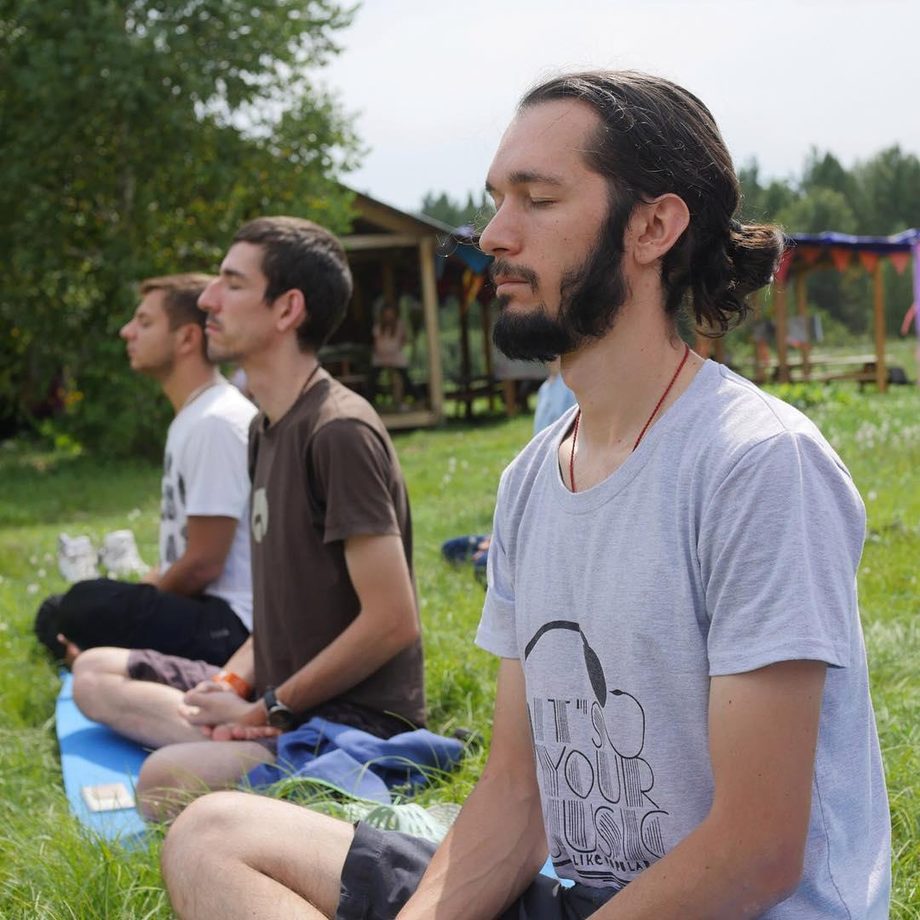
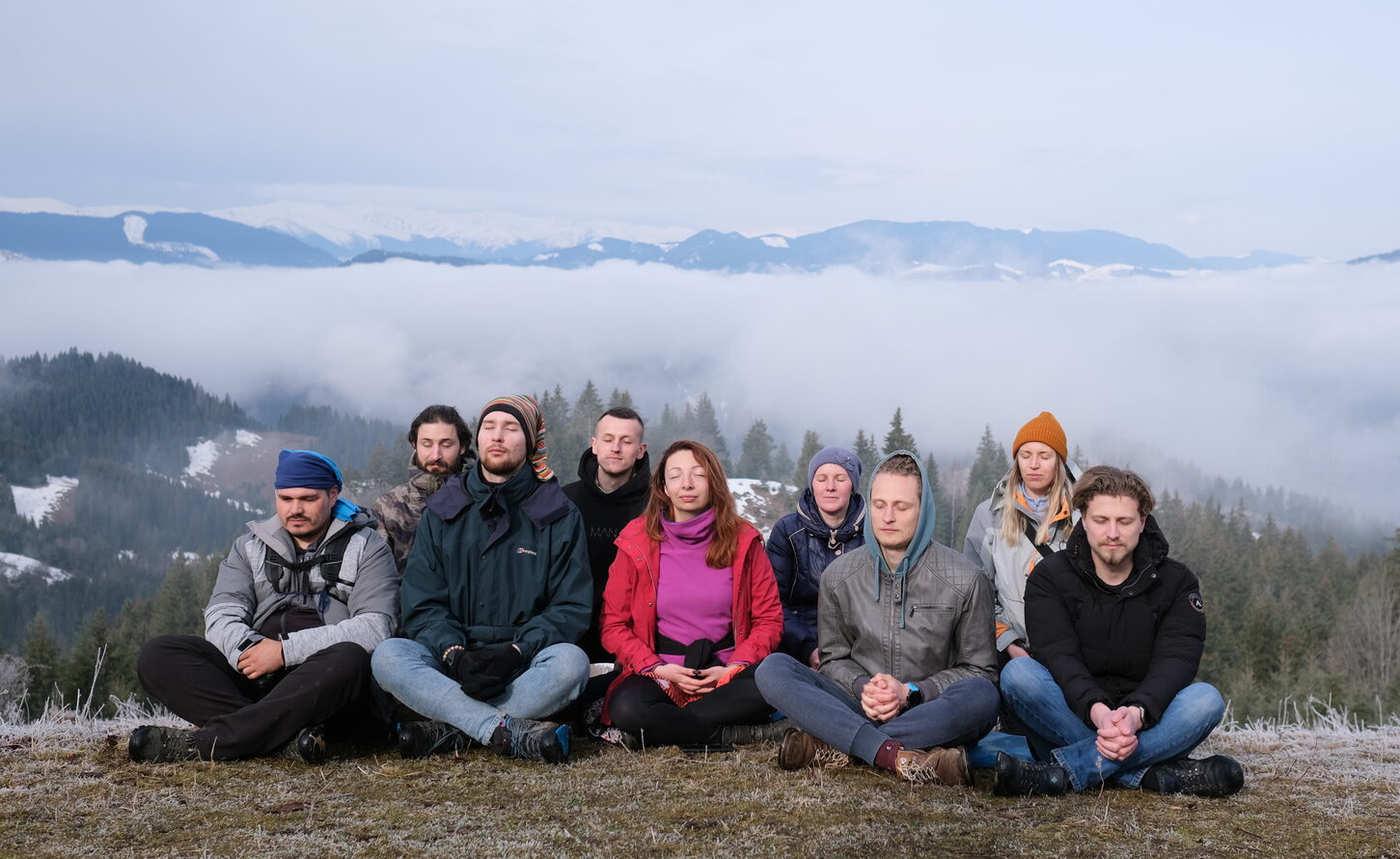
Ideally, find 4–5 people who practice the same method of meditation and meet at least once a week to meditate together, because collective meditation creates spiritual energy.
When you have a lot of physical energy, you want to run and jump. When intellectual energy is abundant, you want to create, invent, plan. And when there is spiritual energy, you want to meditate. Even if five people meditate together, a subtle atmosphere is created, a powerful spiritual flow. Through the joint effort, the resonance, the striving of each person, a great deal of spiritual energy is formed. And then throughout the week everyone has the desire to meditate. So try not to miss collective meditation.
If you can follow these five tips, you are almost guaranteed to become established on the spiritual path.