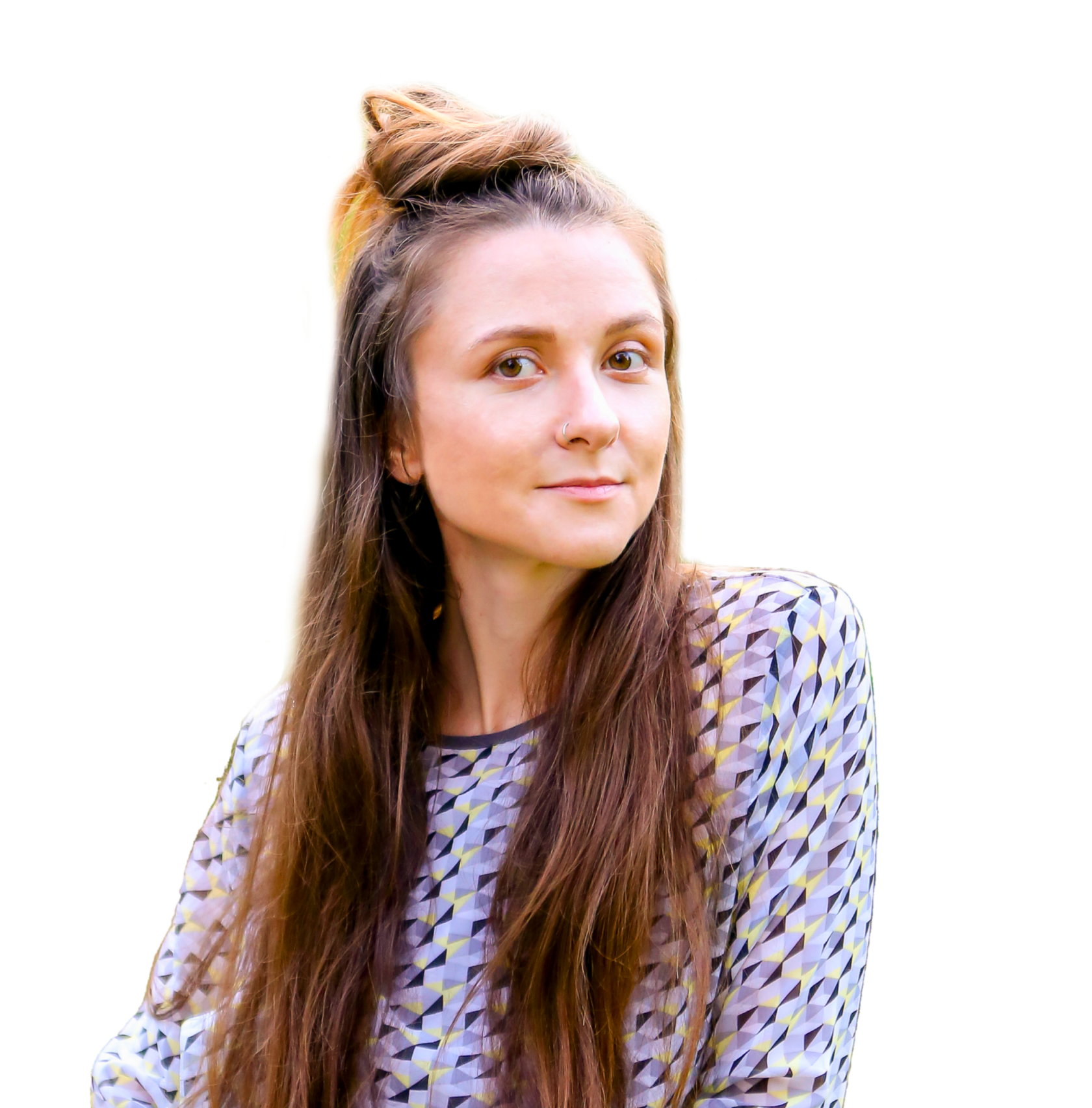
A conversation with Marina Semenikhina, one of the team leaders of Urokimeditatsii (Meditation Lessons), a yoga instructor and the author of marathons on the yogic dance Kaośikii and the basic ásanas of Rájádhirája yoga.
Today we are talking with Marina Semenikhina, one of the team leaders of the Urokimeditatsii (Meditation Lessons) project. She is also a yoga instructor and the author of two marathons: one on the yogic dance Kaośikii and one on the basic A yoga posture held steadily and comfortably; it balances the glands and quiets body and mind for meditation. of Rájádhirája yoga.
She remembers her yogic childhood and how the wish to practice meditation gradually awoke in her. She tells how Dada Sadananda recorded the first teaching videos of the Urokimeditatsii project. She reflects on how meditation and yoga will change society for the better and whether everyone will practice in the future. She shares how she copes with self-doubt and imbalance in life. And she introduces us to her beloved cat.
— While preparing for this interview, I learned that your mother practiced meditation. So you have known about this practice and about yoga since childhood. Tell us, what is a yogic childhood like?
— I often went to yoga gatherings and retreats. I really loved the atmosphere. Not only the other children, the river, the forest, the fields, but also the programs: the lectures, the practices, being in a community that was always quite relaxed and friendly.
— My mother knows English well, and when teachers came from abroad she was their interpreter. I was right there, listening and talking with them.
I was always interested in unusual people — it changed, inspired and broadened my outlook: how they live, what motivates them, what guides them in life, what their goals are.
— I suppose it was this varied company that awakened in me the wish to practice. I looked at them and thought: "That's great, I want the same feeling for the world and the same approach to life, to feel, communicate and inspire like that."
— Did your mother insist that you meditate regularly?
— No. She never pushed me and left everything up to me. I liked that independence, and perhaps that is why my love for yoga has stayed with me.
— If I had felt any pressure or compulsion, especially as a teenager, I would have rebelled. As it was, when I felt inwardly ready I practiced, and at other times I didn't.
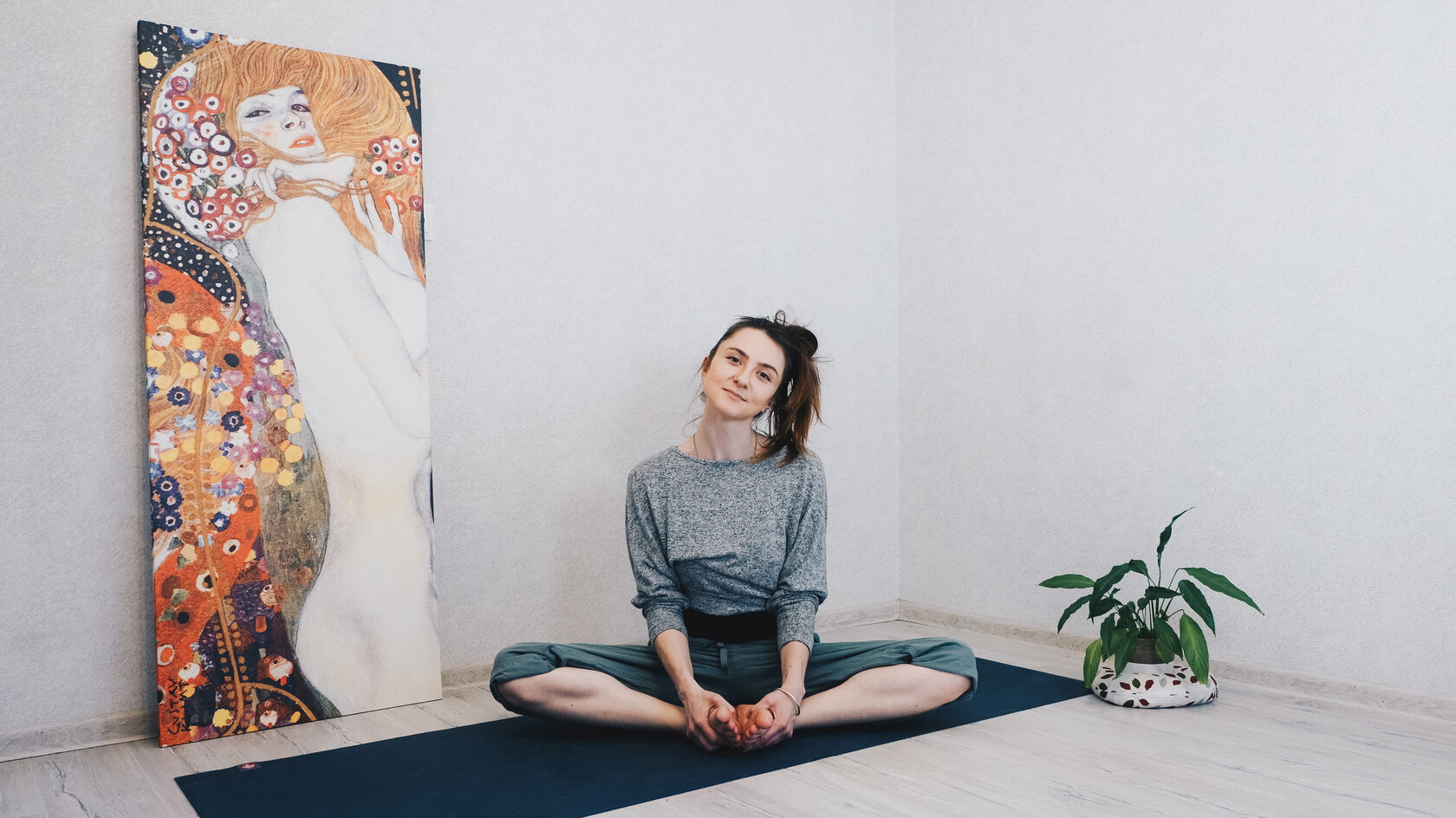
— I also learned that you were the student of a yogic nun. Tell us about that period of your life.
— I assisted Didi Kusum. She is a very inspiring person, and she had a strong influence on my practice and my attitude to life.
— She is Italian but speaks English. I was her interpreter, and I watched how she taught and how she related to people. I would look at her and think: "Wow, how much love you must have inside to share it so naturally and effortlessly. If a small human mind holds so much love, how much must there be in the source it draws from!"
— Didn't you want to follow her path and also become a nun who teaches meditation?
— Well, I realized that I wanted to live at a worldly pace. We worked together for about a year: we held programs and taught in different cities. Then I went back to my university studies, there were fewer opportunities, and I decided to stay in my hometown and start teaching yoga classes.
— You say you began teaching yoga. The Urokimeditatsii learning system includes two of your marathons.
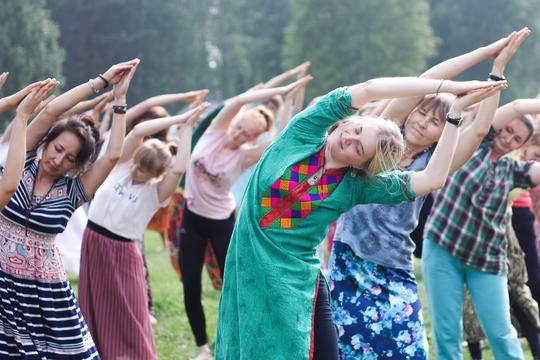
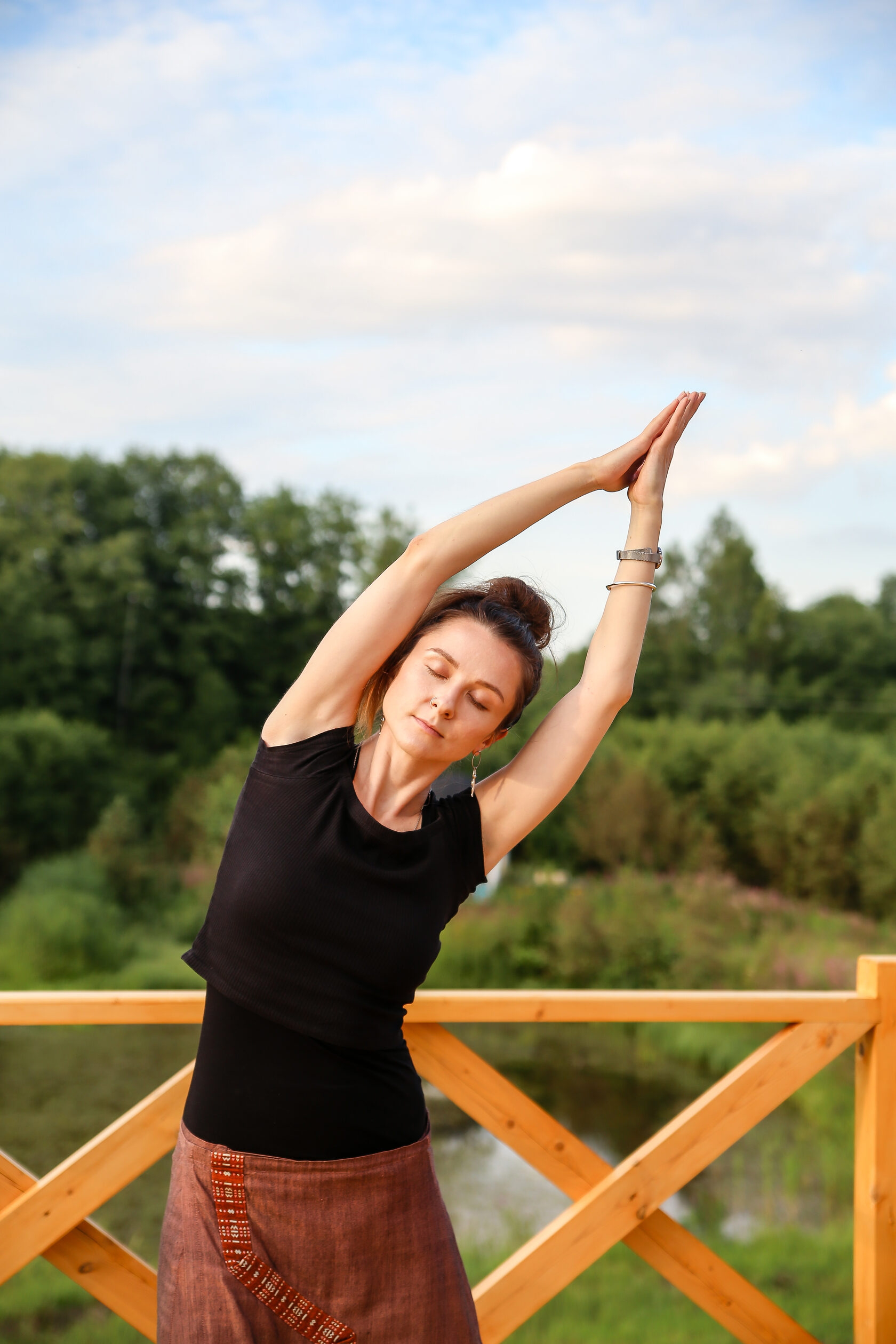
- The first teaches the yogic dance Kaośikii.
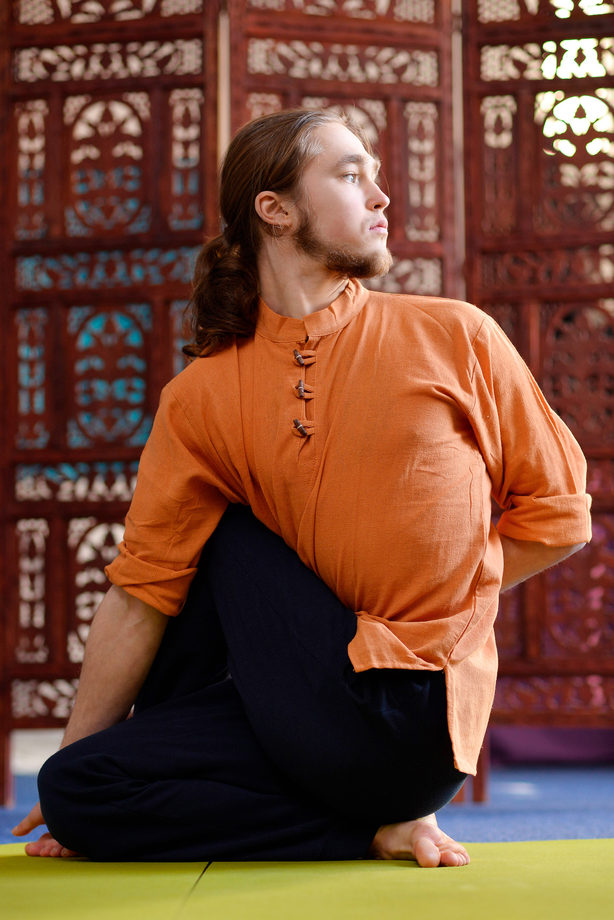
- The second teaches the basic ásanas of Rájádhirája yoga.
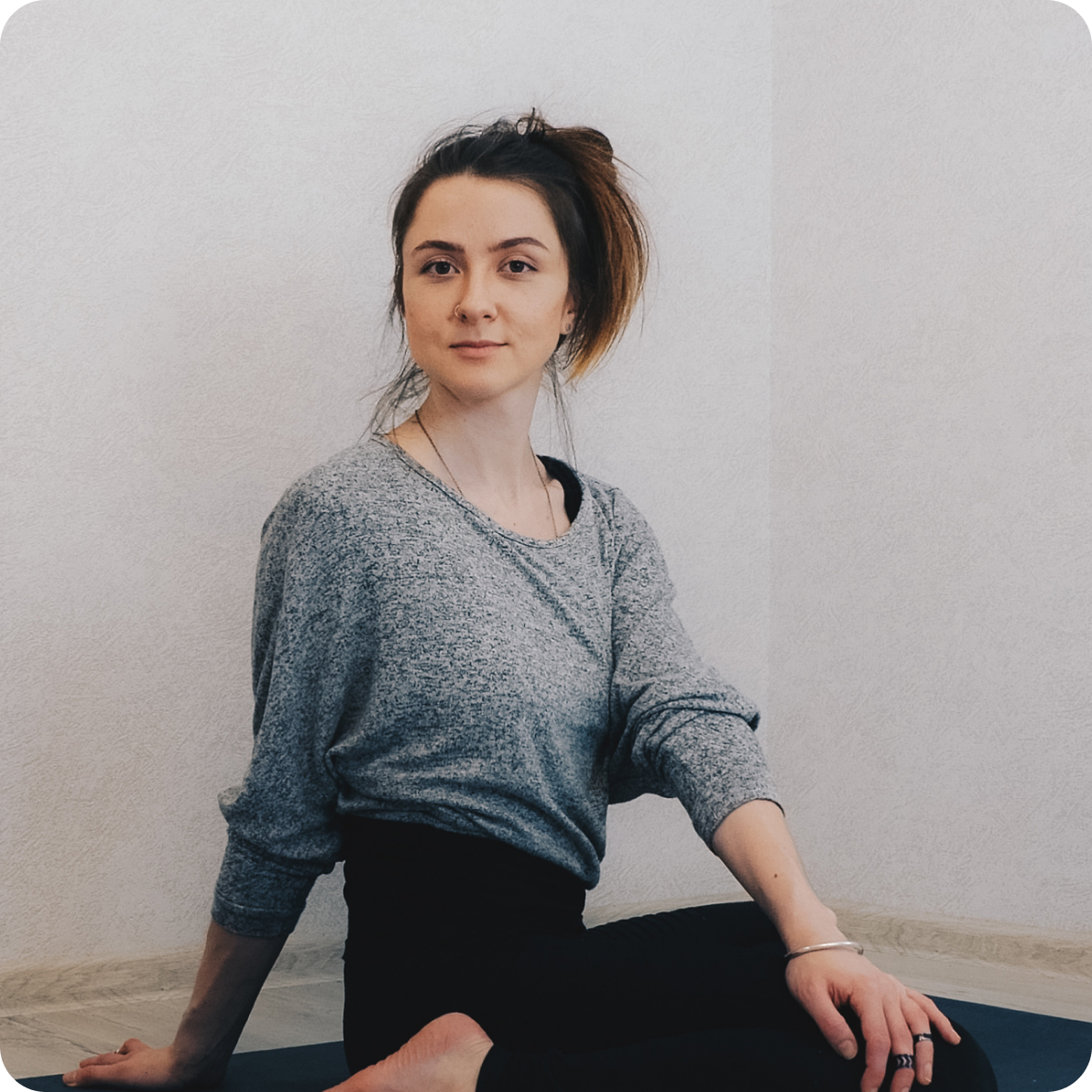
— Why did you choose this style out of all of them? You'll agree it's not the most widespread.
— It was my entry point into yoga. I grew up in a community that practices this style; it is my own and the one I know best. Few places teach it, so there is demand for it, and on top of that it helps improve meditation.
— I like the kind of effort yoga asks of the body: the slow pace, the wide range of movement in the joints, the stretching of the muscles, the control of the breath.
— What training do you have in this field?
— I studied with Dada Sadananda in a training course for yoga instructors. He explained how to perform the ásanas, the finer points of teaching and demonstrating them, and the philosophy of yoga and of yoga practices. After that I continued on my own.
— There is little information about the technique of Rájádhirája yoga, and you can't just read it in one place and learn it. So I had to dig out information on my own from different sources, look for analogies and draw parallels.
— I am also now finishing my studies in Yoga Therapy at the St. Petersburg Institute of Eastern Methods of Rehabilitation.
— Our subscribers often don't understand what the benefit of Rájádhirája yoga is: compared with hatha yoga it seems not very varied and doesn't give the workout they expect. Why is it this style that the Urokimeditatsii project recommends?
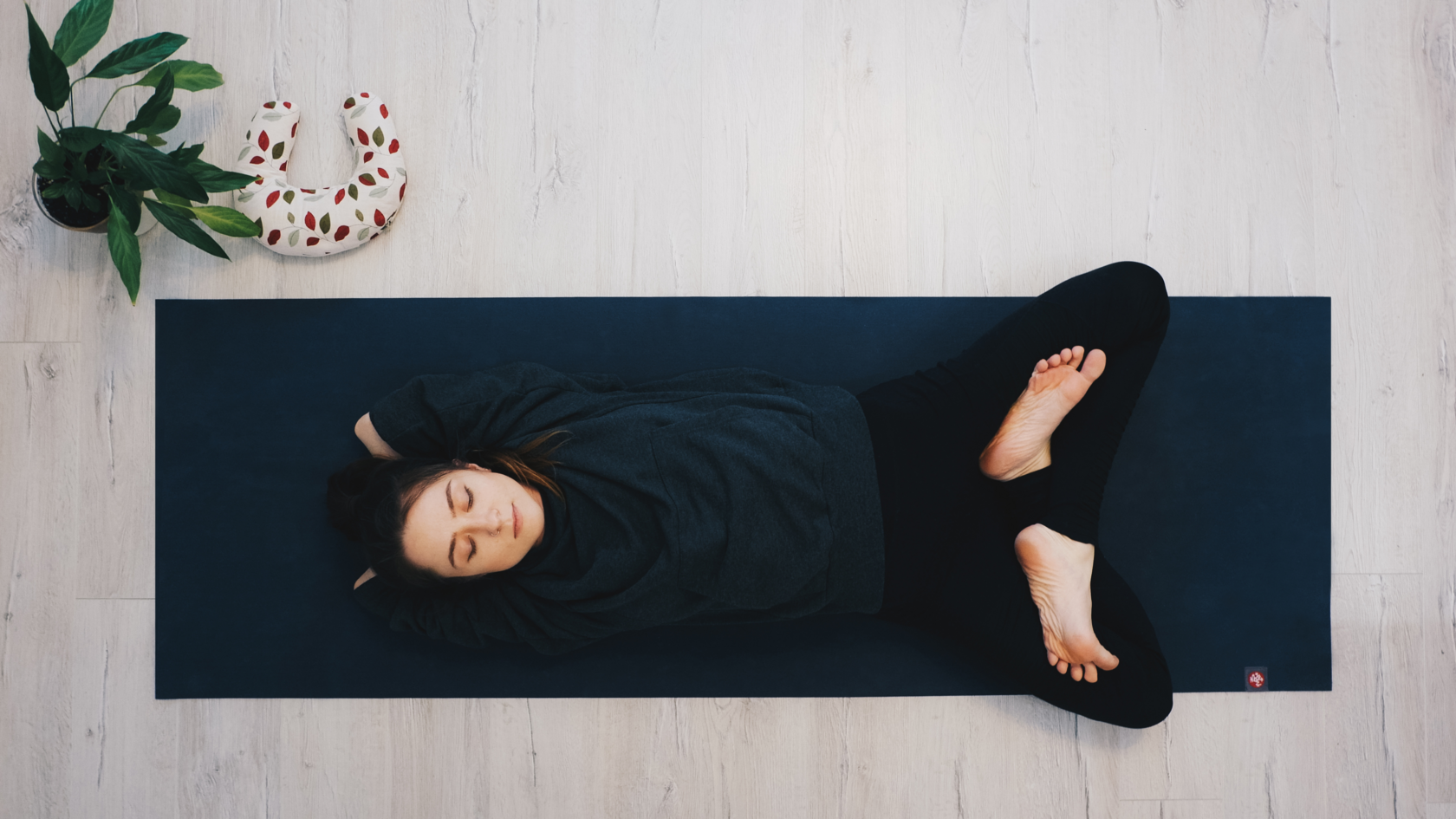
Why Rájádhirája yoga?
This style has a beneficial effect on meditation. Smooth movements and a slow breathing rhythm calm the nervous system: it becomes easier for us to let go of scattered thoughts and concentrate on the object of meditation.
– Why are breath holds used during the practice?
They have a calming effect and influence the cognitive abilities of the brain that good meditation needs. Holding the breath after inhaling, with the chest expanded, increases the outflow of venous blood and the inflow of arterial blood, which improves circulation and brain function. Holding the breath after exhaling increases the rate at which oxygen is delivered to the cells.
– What is the benefit of repeating one ásana many times, with shavasana in between?
The repetitions help you go into deeper positions and work the tissues, muscles and glands more intensively. They also give you the chance to hold the breath several times, which strengthens its effect. A short relaxation between the exercises slows the pace of the whole practice and makes it calmer.
– Is self-massage always necessary at the end?
It is pleasant and soothing, so it is up to you. Through it, signals are sent to the brain from the whole surface of the body, which increases awareness and control. Self-massage has a relaxing effect and reduces muscular and nervous tension so that it does not interfere with the rest of the practice.
— Have you mastered all the ásanas of Rájádhirája yoga yet?
— There is still room to grow 🙂
— This style has 5–6 exotic postures that require long preparation. I don't do them myself, so I don't teach them in yoga classes.
— For example, utkata kurmakasana: although the ancient yogis believed it would help one reach enlightenment, I haven't mastered it yet.
— But the vast majority of the ásanas of Rájádhirája yoga are accessible to most people.
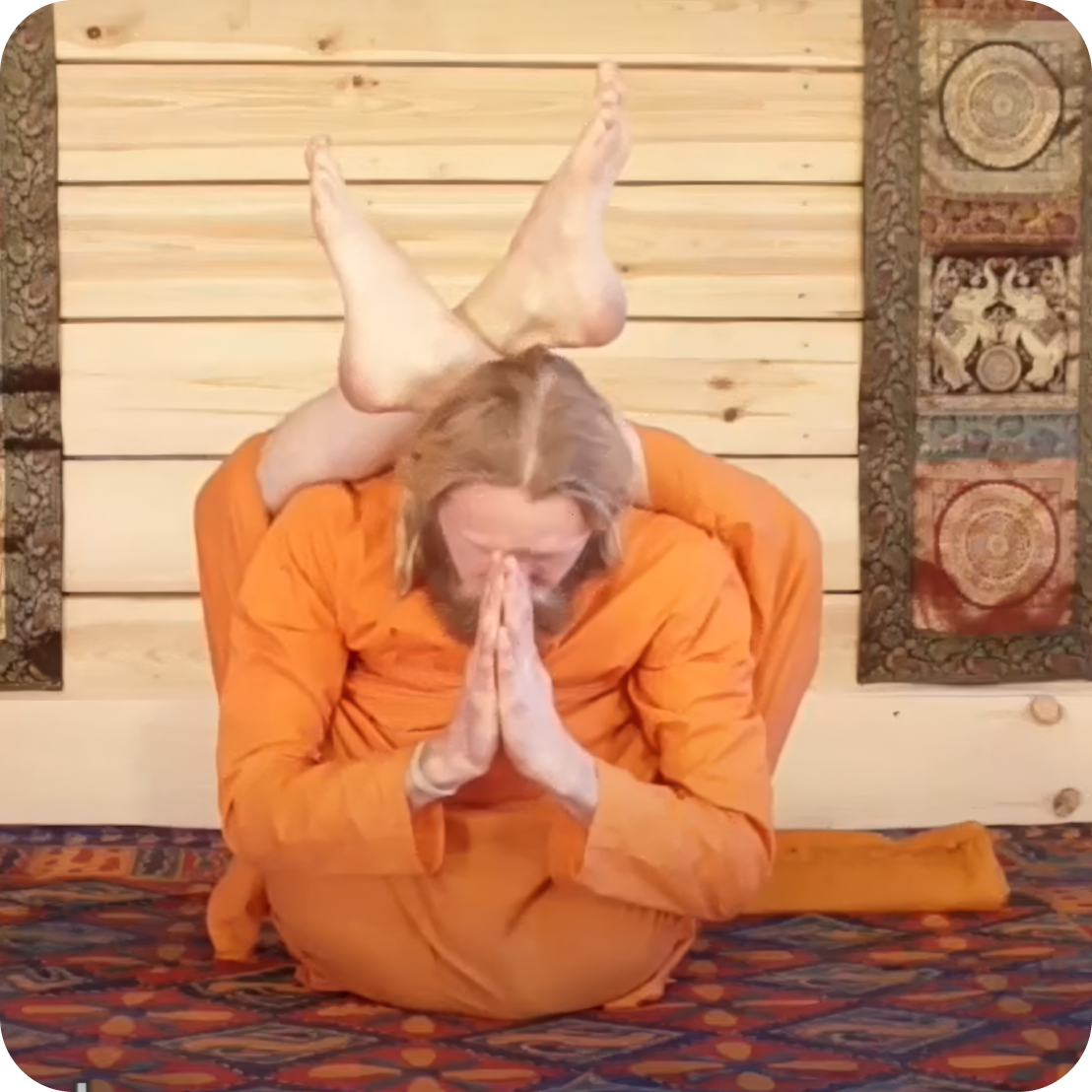
— We talked in 2020. You told me you were beside Dada Sadananda when he recorded the first videos for the YouTube channel. You also saw Dada build the Ananda Shivani yoga center in the Altai. What drew you into the project? Back then, ten years ago, it was hard to see any prospects in it.
— Back then there was nothing yet to be drawn to, because the Urokimeditatsii project didn't exist yet. The starting point was that Dada Sadananda decided to record a video course for YouTube and invited me to help prepare it.
— It went like this: he would tell me his lectures, and I would write down the outline, edit, give feedback and steer him toward new ideas. When a lesson had taken shape, he and the camera operator would go and film it.
— At that time we recorded:
- "Basic Meditation Course"
- the course "Principles of Harmonious Living"
- the course "Biopsychology of Yoga"
I wanted more people to learn about yoga and meditation through Dada's approach: in simple language, without lots of abstractions, with clear examples.
— I could see right away that the project had promise, and it still hasn't reached its limit. Now the team understands what it could be, what good it could do, how it could be even clearer, more practical and more up to date. All that remains is to carry out that vision step by step.
— For ten years your work, and indeed your life, has been bound up with a project that teaches meditation, yoga and self-regulation practices. How does that affect you personally? Do you manage to keep your balance?
— Not always 🙂 Because knowing what is right and doing what is right are very different things. I don't think I'm any different from other people; I have the same ups and downs and doubts.
I am slowly learning to hear myself and to look for the right approach to life — my own — because there is no one answer for everyone.
— Can you give an example?
— Well, for example, for a long time the people close to me advised me to focus on one project and not spread myself thin, to work without tight deadlines, at a calm pace. I resisted for a long time but decided to give it a try.
— And after a while I caught myself thinking that life had become unbearably dreary, that there was no joy and nothing good ahead.
— Little by little, with the help of different tools and therapy, I tried to honestly hear myself, and now I've gone back to focusing on many things at once. The workload has grown, but once again I felt what Dada says in a video: there is more life in my life.
And this search for an approach to oneself never stops. We think we've finally got hold of it, and then — oops — we swing to the other extreme and have to search again. There is no single answer for a whole lifetime.
— After talking with people close to you, I learned that you are often unsure of yourself. What is it like to live with that trait?
— It is my growth point. I'm working on it and figuring out why it happens and where to go from here. Today I'm more confident than I was ten years ago. But my outward successes don't affect my inner state, and at some point I realized that this situation needed attention.
— Have you turned to professionals?
— I work with a psychologist. He gives direction, and I work things out with myself.
— You can see the direction from outside, but after that it's on your own: thinking things through, exploring yourself, learning to relate to yourself, finding footholds and trusting yourself. You stop searching outside and turn your gaze inward.
This also echoes the distortions in spiritual seeking. We want answers written down by the ancient masters: "do this," "don't do that"; but in fact you discover that you have to find the understanding and the approach yourself — using spirituality as your support and direction, deciding how to act, and taking responsibility into your own hands.
— So at your marathons on the yogic dance Kaośikii and the basic ásanas of Rájádhirája yoga, you don't hand out a magic pill?
— That's right; without understanding yourself nothing will work. Participants learn the technique and for a week try to squeeze these sessions into their daily routine. After that they decide for themselves how useful it is and whether they are ready to practice regularly.
— You need a personal understanding; otherwise there's no point in changing your schedule. You can, of course, try to force yourself because it's what you're supposed to do, it's right and it's supposedly good for you.
But the best motivation for regular practice is understanding how it benefits you.
— Not because an instructor advises it, but because I tried it myself and felt that these ásanas or the Kaośikii dance made me more energetic and healthier, my body became more mobile and hurts less, it feels wonderful and great.
As life experience shows, sometimes it's important to get past a temporary reluctance, and it turns out the process is even enjoyable.
— I don't feel like meditating, but I sit down and something lets go a little: my thoughts are freed from anxiety and I feel more balanced. I don't feel like going to a workout, but afterward I feel wonderfully renewed.
— How do you cope with hard moments and situations in life?
— In different ways; it depends a lot on the circumstances. I like a change of scenery before my eyes — not necessarily travel, even just a walk around the city.
I'm a visual person by nature and by education, so I love aesthetics and beauty, and that also helps me cope with difficulties.
— Sometimes I want to be alone; at other times I need support. And if it's a long, difficult situation, it needs a comprehensive approach.
— You mentioned that you love to travel. How many countries have you visited, and what is the purpose of your travels?
— About 20 countries. Mostly for inspiration. As I said, I like observing new things.
At such moments I feel the movement of life, an expansion, and it changes my outlook. I take in the design and beauty of this world, its diversity — the culture, the houses, the streets, the people — and every time I marvel at how amazing and beautiful the world is.
— Was there a country where you wanted to stay?
— I don't feel a strong need to live in any particular place. On the contrary, I'd find it more interesting to live here for a while, then somewhere else, to take in that very diversity.
— Which country struck you the most?
— I can't single one out. In each one something struck me and delighted me: the nature, the people, the culture, the architecture. Even walking the streets of my own city, I keep discovering something new and inspiring.
— Are you easy to surprise?
— I've noticed that it depends a lot on my own effort and concentration.
— For example, the picture on a cup: if you look at it closely and appreciate the lines, images and emotions the artist put into it, you can truly be delighted.
— Sometimes I look at my cat, whom I see every day, and I'm amazed by her ways and her beauty. Or I walk through the park and think about the variety of leaves and flowers.
I love switching on "fresh eyes" mode and experiencing the newness of impressions.
— Tell us about your cat.
— Pirozhenka ("Little Cake"), or Kisyamba as I call her, came to me unplanned. Every six months the Urokimeditatsii team gets together to work side by side and immerse ourselves fully in developing the project. At one of these strategy sessions we found kittens in the grass by the road. They were terribly cute, very sociable, clean and fluffy, as if they had been dropped off from a passing car five minutes earlier. We posted notices in chats and that is how we found owners for the kittens.
— The strategy session was ending and everyone was leaving, but I stayed on to film the Kaośikii marathon. The kittens were left with me to hand over to their future owners. I spotted one little female right away and decided she would be mine.
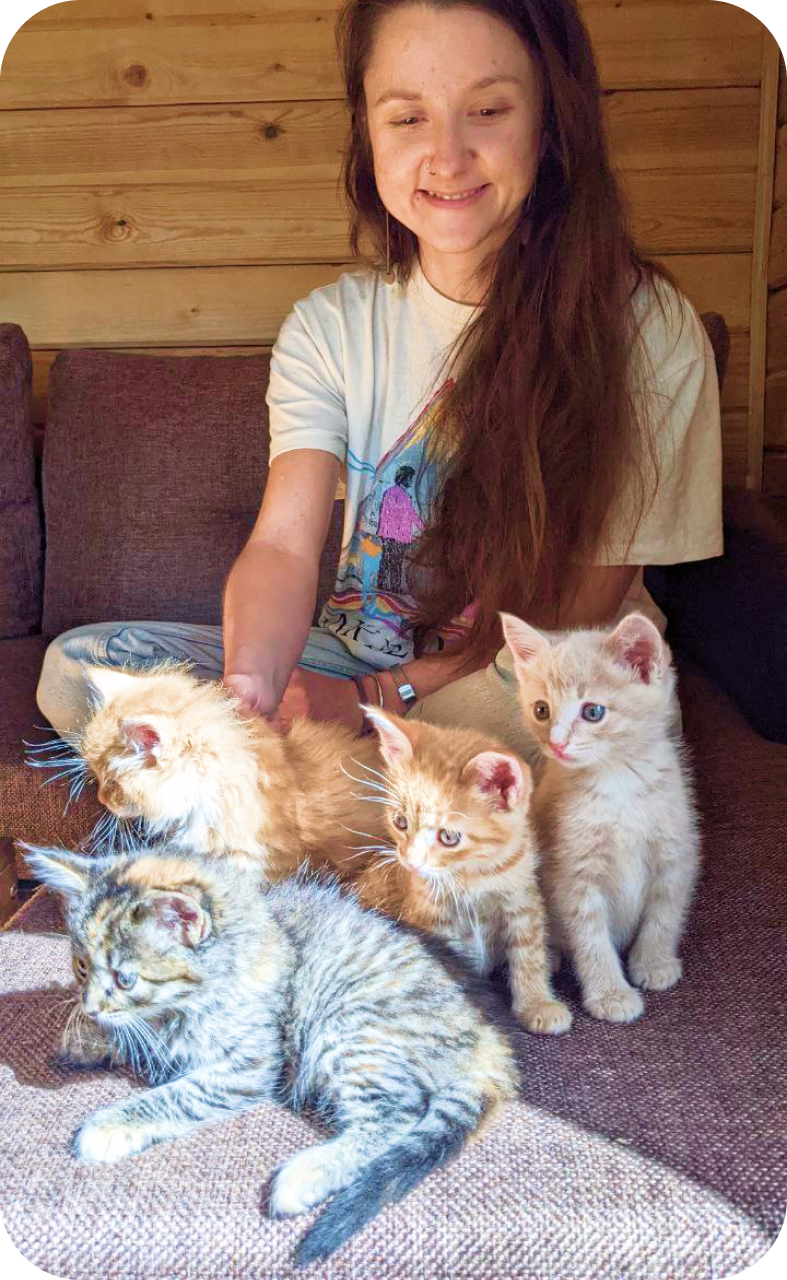
— Do you keep in touch with the owners of the other kittens?
— Yes. They think the kitties are so good, sociable and affectionate because the team put love and the blessed energy of the project into them.
— You mentioned that the kittens are so kind because they received a piece of Urokimeditatsii. One of the project's missions is to change society for the better, toward a more harmonious, joyful and happy life. Why is it meditation and yoga that can do this?
— They work with what is most within our control: our brain and our soul. We have more power to influence ourselves than external circumstances.
— Through self-regulation practices and meditation we shape how we interact with the world and with each other: in the family, at work and in a more global sense.
— When I feel pain or hear hard news, I think: "How can I influence this so that there is less of it?" And I realize that people's attitude to life needs to change. To give them some tools so that they can find peace within themselves — something eternal, universal and real — and afterward pass it on to the world around them.
The more people there are who have a constructive influence on those around them, the better.
— One person has less pain in life, then two, three, four, ten, fifteen and so on. That is the result I hope for.
— How do you see the ideal arrangement of society and human relationships?
— When a person is not in pain, they interact differently with the world around them and are more involved in the lives of others. They think not only about how to survive but also about how to reduce the pain of those around them: people, animals, nature.
— When there is less pain here ❤️, the strength to look outward is freed — that is, a mental resource that can be directed into something constructive.
— What is stopping us from getting there now?
— Everyone has their own inner conflict — a question of survival, of lost meaning, of goals knocked off course — which consciously or unconsciously gives rise to unconstructive or destructive actions. We think we are acting in the most sensible way, but it turns out we're not. Individual inner conflict gives rise to collective conflict.
— Each of us has our own sphere of influence, whether it's a family of three, a local corporation or a state.
The more balance and inner harmony a person has, the more beneficial their influence on those around them.
— Do meditation and yoga help to resolve this conflict?
— You can't say that meditation, especially at the beginning, is able to resolve all inner conflicts. In some cases it's necessary to work with a psychologist too, for example.
— Later, when a person has immersed themselves in the practice and the philosophy and meditates consciously, meditation may be enough to maintain a certain level of awareness. But at the start of the path a whole set of measures is needed to sort things out and build a good relationship with the world and with oneself.
— Meditation definitely gives both psychological effects — relaxation, calm, space for reflection — and spiritual ones: we try to understand ourselves not as a separate little biorobot in space but as a continuation of this world — at once a small individual consciousness and the great Cosmic one.
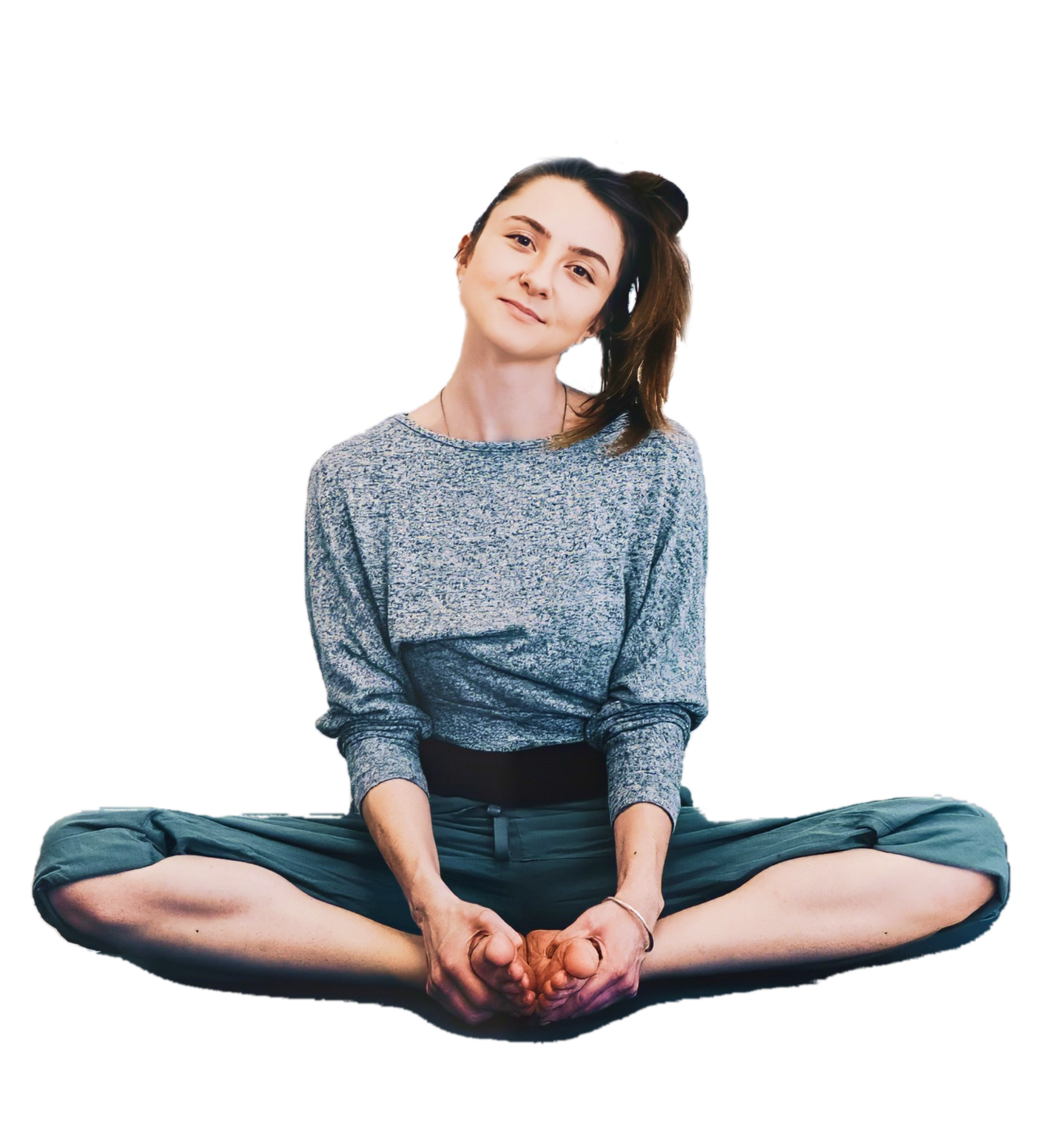
A drop can feel both small and round and at the same time be part of the world ocean. Only our cosmic ocean has no boundaries.
— Do you think everyone will meditate in the future?
— It seems to me that meditative practices will be part of the next stage of human evolution: awareness, watching one's thoughts, directing and managing attention.
— Not necessarily that everyone will sit in the lotus pose twice a day and repeat a A sound or set of sounds that, repeated with its meaning in mind, carries the mind toward the Infinite.. I think each person will have their own individual practice of working with their mind, self-awareness and attention.
Right now we are gradually transforming from a little monkey into a big brain that is constantly engaged in some activity. And we will have to learn to manage it, and also not forget who this brain really is.
I think society will find ways for meditation (whatever form it takes) to become one of our everyday activities, the way morning exercise, running, cycling and swimming have for many people now.