A conversation with the Urokimeditatsii video editor and physical education instructor: how Dada Sadananda's videos are made, vegetarianism and sport, ásanas, the posture for meditation, and why movement is an important part of the spiritual path.
Meditation helps me not to get lost and to keep my direction in life, to listen to myself better and to find my way through the flood of information >Konstantin Kurochkin
We continue to get to know the Urokimeditatsii (Meditation Lessons) team. We talked with Konstantin Kurochkin. He helps Dada Sadananda edit and upload to the YouTube channel the very videos our subscribers wait for every Thursday. Konstantin is also the author of the "Posture for Meditation" marathon and a professional physical education and sports instructor.
Today we'll talk about vegetarianism — how it affects athletic performance and how to bring children up with it; we'll find out why Kostya started meditating, what he thinks of ásana sequences, and what he asks us not to forget on the spiritual path.
— Every Thursday a new video of Dada Sadananda appears on the "Meditation Lessons" YouTube channel, and you are part of that process. Tell us, what is your job?
— On Monday Dada's assistants send me a rough cut of the video. I edit the sound: I remove extra noise and sharp jumps in the volume of the voice so that it becomes full enough and the speech is clear. A good-sounding voice is 90% of success. Next I even out the contrast and exposure, make the foliage greener and Dada's skin tone warmer, because the camera distorts colors. The picture becomes more expressive and pleasant. Then I add animation.
Copywriters write the description and the timestamps that help you jump to an interesting part of the video. Part of the team discusses the title, and designers draw the thumbnail. In the end a video full of emotion and inspiring information goes up on YouTube.
— How did you end up on the Urokimeditatsii team?
— I was a member of the "Big Team." Besides themed meetings with Dada, tasks for volunteers were posted there: do a design, write a text, take a survey or support a video.
I helped with an A yoga posture held steadily and comfortably; it balances the glands and quiets body and mind for meditation. class by the instructor Marina Semenikhina, with a humorous sketch ad for the early-rising marathon, and with a video presentation of Dada Sadananda's book "Dialogues on Meditation." We wrote the scripts together, and I directed, filmed and edited.
The organizers liked the result, and I was offered to help with videos for the main channel. Two months later the project's video editor decided to change fields, and I was invited to become part of the team.
— Great career growth. You must have professional training in this field?
— No. I'm a physical education and sports instructor.
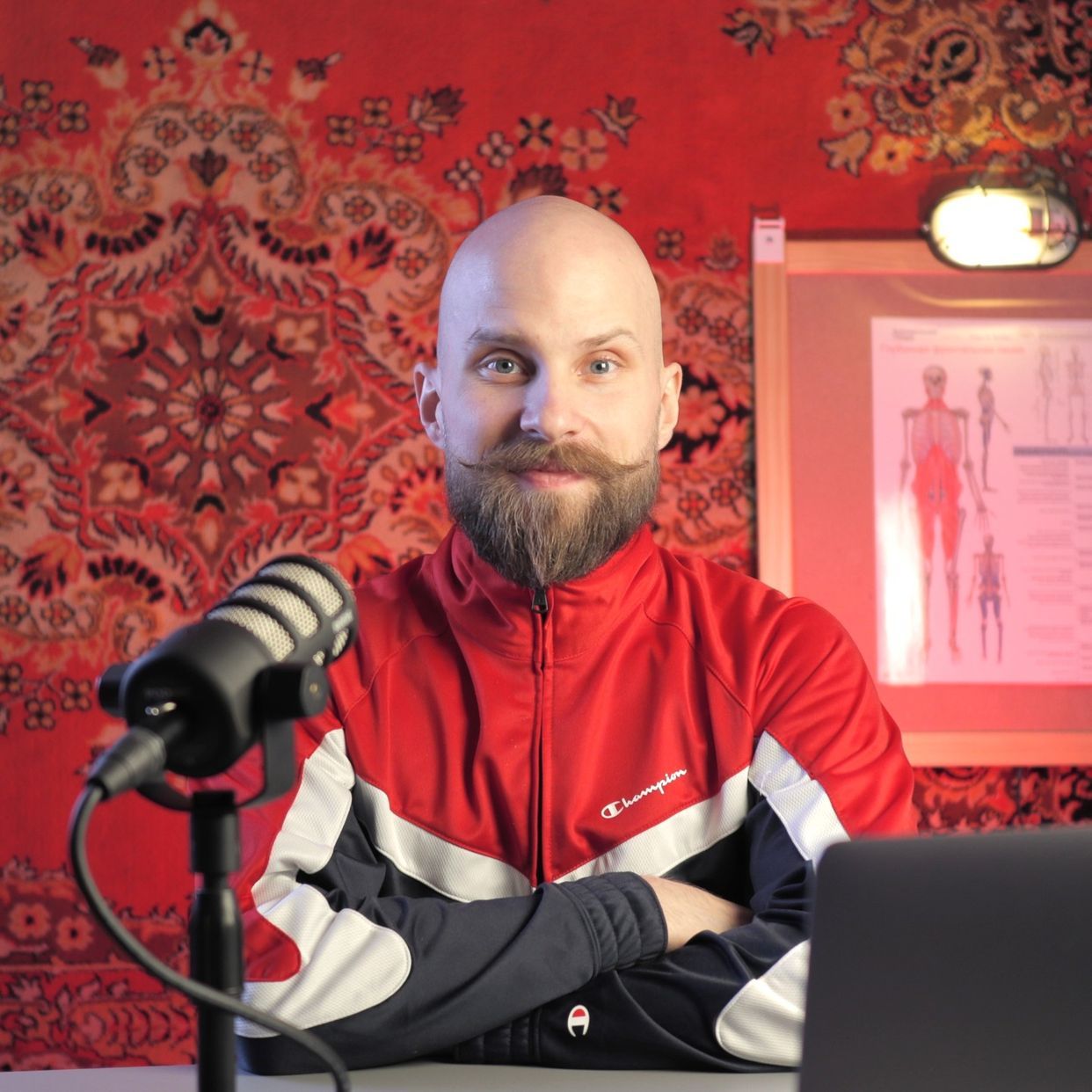
— Then explain why a professional trainer needed filming and editing skills.
— Mainly for communicating with clients.
I thought videos would draw attention to my work and widen my audience. Subscribers would get a visual idea of the exercises, techniques and training principles, and would understand and remember the material. I also like to express myself creatively, to make humorous sketches about the coaching profession and the basics of the work.
The first videos were informative but poor in sound, picture and storyline. I began studying materials on editing technique, basic sound engineering, color correction and scriptwriting, and as a result the videos became more interesting. And working in the programs built up skills that came in handy when I moved my classes online.
— Will you share why you made that move?
— Covid was behind it. A decree came out closing fitness clubs, and I was sent into self-isolation without any opportunities or guarantees for the future. I had to find a way: people were looking for a way to stay in shape, and I had the knowledge.
— The epidemic is over, but you keep training people in this format. Tell us about your motives, and why don't your clients go back to fitness clubs?
— I decided for myself that I'm more interested in improving the lives of ordinary people than in preparing athletes for competitions. Online training suits people who are tied to the house — for example, mothers with children — or those who have little time. All you need is to put on comfortable clothes, roll out a mat, and in 45 minutes you get a full workout.
— Do your loved ones also train under your guidance?
— My mom, my sister, part of my work family — the Urokimeditatsii team; the kids sometimes join in.
As a trainer, I recommend basic physical activity to everyone. It helps keep your back healthy, age more slowly, and support the work of the digestive tract and the nervous system.
— You're a vegetarian. How many years have you eaten this way, why did you decide to switch, and how did it affect your athletic performance?
— Five years now. I used to put together meal plans for vegetarian clients, I was interested in the question and understood what could replace an omnivorous diet. Then I started watching Dada and saw a video in which he explains the connection between food and meditation. I weighed everything and decided that I knew enough not to harm myself.
But even with that preparation, I needed time to adapt. I made mistakes: I sharply cut back on protein and calories, lost weight, and my strength dropped. Any diet that excludes food groups needs special attention and care.
— How did your family take your decision? Is your wife a vegetarian too? Are you raising your children on this kind of food?
— With understanding, because I have a certain reputation for acting rationally, plus I didn't force anyone around me.
My wife is not a vegetarian and isn't planning to be yet, but she's fine with my diet.
I don't impose my choice on the children. They see my example and know which foods I don't eat. They've come up with a little saying that Dad is kind even when he's angry, because he's a vegetarian.
— Do you like to cook? What's your signature dish — a plantain leaf, a carrot?
— I love to cook. I even tried making cooking videos and posting them on my YouTube channel.
My signature dish is a Chinese-style sweet-and-sour vegetable stir-fry, and I get compliments even from non-vegetarians. My meatless borscht is the talk of everyone around me, because it's a great dish in every respect. And I also treat guests to vegetarian rolls.
— How do you relax, and what do you do in your free time?
— To unwind, there's "vegging out": watching a film, reading a book, scrolling through YouTube Shorts.
As for useful things, I study things that are unknown and unclear to me. For example, I played the guitar badly and didn't understand how music is written or what notes mean. I began making basic compositions with a sequencer on the computer, and in the end my pieces were released on the Urokimeditatsii channel.
Now I've become interested in contemporary visual art, I'm trying calligraphy and I bought courses on the basics of painting.
These skills help in my work: the brain stays flexible and doesn't go stale in everyday life.
— How did meditation come into your life, and what role does it play?
— I wasn't searching for a spiritual path. I was sharing with friends who were into yoga my discoveries about useful directions, habits and rules for living. They said that a lot of it resembled the principles of moral life, Five principles for how we treat the world: not harming, truthfulness, not stealing, keeping the mind on the Supreme, not living beyond need. and Five principles for shaping oneself: cleanliness, contentment, service despite hardship, uplifting study, keeping the Supreme as life’s goal..
Half a year later I became curious to learn more. I found a series of Dada's videos, they resonated with me, and I started practicing. Meditation helps me not to get lost and to keep my direction in life, to listen to myself better and to find my way through the flood of information.
— Yama and Niyama are the first two steps of yoga. Let's move on to the third, to ásanas. What's your attitude to this practice?
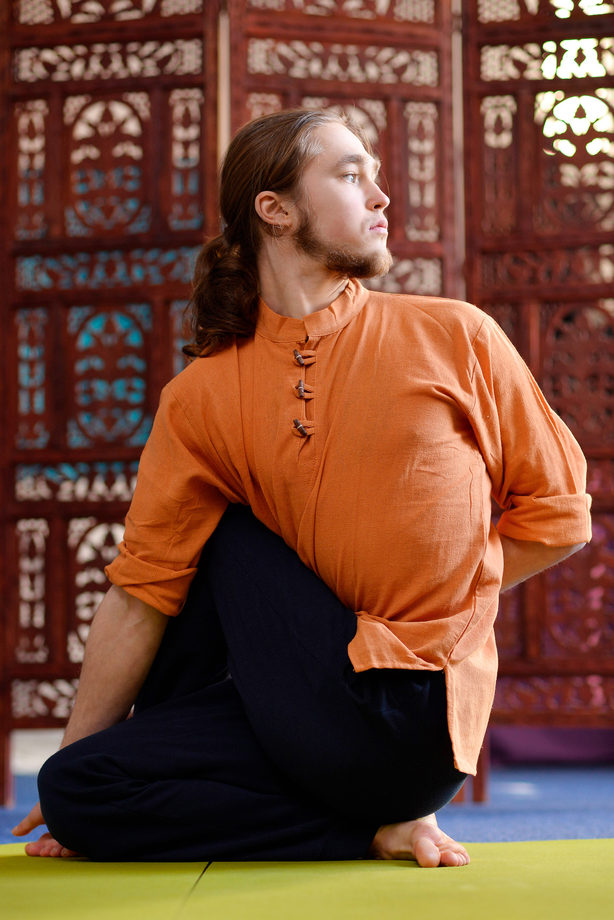
— As a trainer, I believe that ásana classes don't replace full workouts. They strengthen the muscles, improve flexibility, mobility and coordination, but they don't make the practitioner more enduring or stronger than athletes. I'm closer to the classical approach to yoga, where ásana is a stable and comfortable sitting posture that helps prepare the body for meditation and move toward self-development.
— In what positions do you meditate? Did your coaching experience help you master them?
— Most often in half lotus, sometimes I sit in full lotus.
Of course the experience helped, because I understand the anatomy and biomechanics of the body: what you need to do, tighten, loosen up to make it more comfortable. This knowledge turned out to be useful when we created the "Posture for Meditation" marathon.
— Why did you decide such a marathon would be useful? What results does it bring?
— In 2022 I ran a physical fitness marathon with Dada Sadananda. In the comments subscribers asked about exercises for sitting comfortably in meditation. We realized it was a topical subject, sat down, thought it over and made it.
Participants learn the finer points of warming up, relaxation and body anatomy, and thanks to a comfortable posture they'll increase the length and quality of their practice.
— The marathon has been moved to a Telegram bot. What are the pros and cons?
— The plus is that it's non-linear: you can join at any moment and go at your own pace. For a busy adult this is as comfortable as it gets, and we still have a chat and feedback.
The minus is that it's easy to relax. When we're in the flow with other participants, we move more confidently and with more zest, and that pushes us to finish sooner.
— And finally. What would you like to wish the subscribers of the Urokimeditatsii project?
— That in their spiritual search they don't forget that physical development is an important part of the physical-psychic-spiritual triangle. And that they understand that a great deal of spiritual and psychic practice doesn't make up for a lack of movement.