Ivan Sapegin (Virat) — musician, leader of the band Cosmic Love and creative director of the Urokimeditatsii app — on building the retreat center, kiirtan, Cosmic Love, a meditation app and the ideal day of a yogi.
"When you develop your creative abilities and a subtle perception of the world, it shows in your whole life"
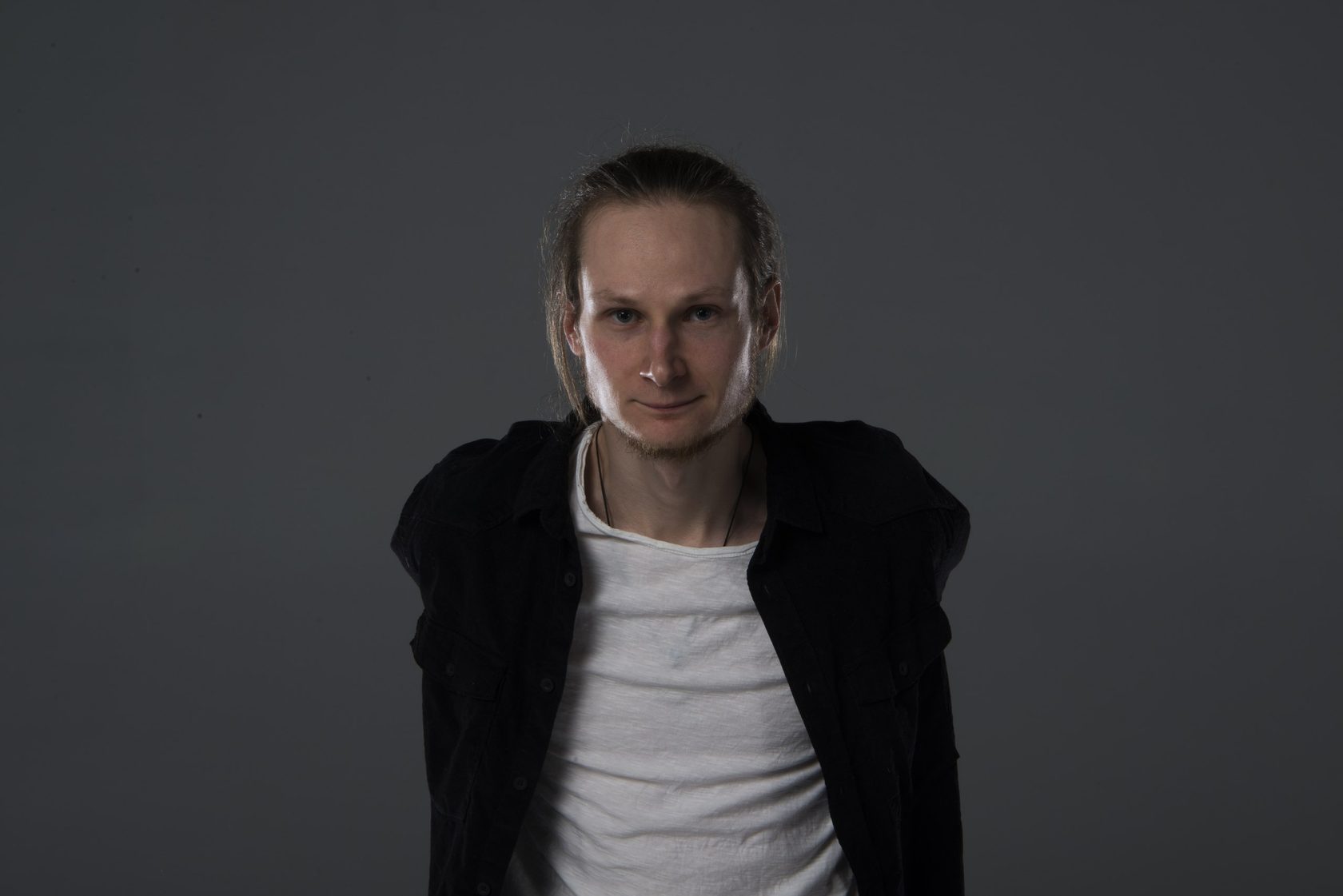
Ivan Sapegin (Virat) is a musician, the leader of the band Cosmic Love, creative director of the Urokimeditatsii (Meditation Lessons) app and head of the project's fundraising work. He is someone in whom a creative nature and a business-minded personality live side by side, and both successfully. We talked with Ivan about how Cosmic Love came about, how a smartphone can help with meditation, why Urokimeditatsii is a non-profit project, and what an ideal day of a yogi looks like.
— What is your role in the Urokimeditatsii project today?
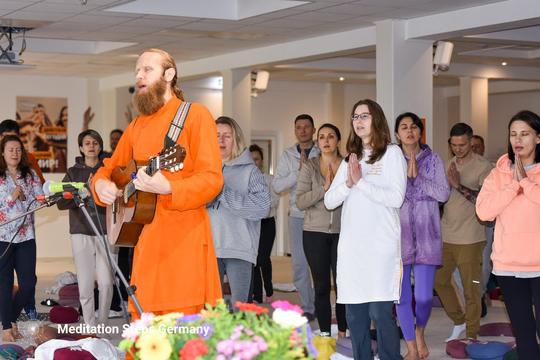
I have many different roles, but the first and the closest to me is everything to do with Singing a name of the Supreme together, often with a simple dance; in Ananda Marga the words are Bábá Nám Kevalam., including the Million Hours of Kiirtan project and the Kiirtan Marathon of A sound or set of sounds that, repeated with its meaning in mind, carries the mind toward the Infinite. singing. That is where it all started.
The second area is the Urokimeditatsii mobile app. Here I am the creative director and the designer in one person. Usually I throw out ideas and come up with design options, and then we discuss them with the development team and take everything through to the final result.
And finally, quite recently, another role appeared. I took charge of the area that handles fundraising projects: marathons, online yoga classes and the Sattva-shop online store. Fundraising is the work of attracting resources for non-profit projects, programs and goals. This area is very new; it appeared when we realized that the project was growing, new ideas and directions were emerging, the permanent team was getting bigger, and we needed to find new solutions for financial development.
— And how did you come to know the project?
I got to know Dada and meditation long before the project appeared. I had been meditating for about a year, and during that time I realized that I wanted to help Dada and be closer to him.
In fact, Urokimeditatsii was born before my eyes, while the retreat center was being built. There was such an amazing atmosphere there, a space so steeped in meditation, that all this creativity in the end poured out into three projects at once: the band Cosmic Love, the RAWA festival and Urokimeditatsii. And somehow all sorts of new, interesting people and new acquaintances started appearing right away.
— How did the idea of going to help build the retreat center come about?
It all started with a poll on Dada Sadananda's social media page. He asked: "Would you like to live one day perfectly?" When I read that, I thought: "Wow! I want to live at least one day fully by the moral life of a real yogi, do all the practices and fully feel their effect on myself." And the thought came that this might work out at the retreat center. But in the end, instead of one ideal day, it turned into several years. Maybe not entirely ideal years. But what matters is that this aspiration is still with me, and I try to make every day of mine ideal.
— But did that ideal day actually happen?
It's hard to say, because the moral principles (Five principles for how we treat the world: not harming, truthfulness, not stealing, keeping the mind on the Supreme, not living beyond need. and Five principles for shaping oneself: cleanliness, contentment, service despite hardship, uplifting study, keeping the Supreme as life’s goal.) are very deep. On the surface it may seem that the day was ideal: I didn't lie, didn't insult anyone, was honest with myself and my feelings. But that is not enough. Following the moral principles is not only about not doing something. It is also important to do something good and useful today — for example, to make breakfast for someone or to say kind words. And if you go deep into each of the principles, you can see many different aspects that need careful thought and understanding. It's an endless process.
— How long did you live at the retreat center? What did you do there?
I was there from 2012, from the very first day of construction.
I remember that at the beginning we had one tent, where we took turns being on duty. While some stayed at the center, others went back to the city. Then we built a small structure that could hold everyone, and the need to go to the city disappeared. I personally took part in building the main house: from the foundation to the heating, sewage, plumbing and everything else.
Today this center is home for me. I lived there for almost eight years, and I am there very often even now.
— Still, during those eight years you were not at the retreat center all the time; you also traveled a lot to different cities, including giving talks on yoga and meditation. Tell us about that experience.
I had always wanted very much to travel, but while the center was being built that was impossible. When it was all finished and I had three free months, I decided — it's time.
It was an incredible experience. I traveled to ten cities, and during that time a qualitative change took place in me as a person. A deep acceptance of life appeared, and an understanding of how everything really works.
At first it wasn't easy. The first talks were hard going, but with each one it got easier. As a result, when I got to Yekaterinburg, an interesting thing happened. I invited Urokimeditatsii subscribers to a talk of an hour and a half, but in the end we talked non-stop for 4 hours. There was some special charge and energy; people actively asked questions, each more interesting than the last. And when I stood up and looked at my watch, it was already eleven at night.
In general, I had long dreamed of giving talks. When you share what you've read, you understand the material much more deeply yourself. It's a skill every person who meditates should master. Just reading a book is good, but not enough. Now, if you've read it and retold it — then you've really understood something. And if you've read it, retold it, and then also started practicing what you read, you've already partly realized it. And besides, when you give a talk and a flow goes through you that is very hard to control, it's very inspiring. These things can't be put into words. They still continue to be reflected in my life.
— Let's come back to the Urokimeditatsii project. So it turns out that you now head the commercial department?
Not exactly. Urokimeditatsii is a non-profit project. We are not building capitalism, we are not striving for high salaries or big profits; our main goal is to teach the whole world to meditate. And all the funds we receive go toward these goals.
The area I now head appeared at the moment when we realized that we somehow had to earn a living. Let me explain with an example.
Vladimir Semenikhin is a programmer by profession. If he took up programming full-time, he could easily earn good money, and in parallel, in his free time, help others and change the world around him somehow. But his wish to change the world is much greater, and he wants to put his stake precisely on that, not on making money.
That's how we did things for a long time, but at some point we realized that we were giving a great deal of energy to the project and to helping others, but often not even covering our own basic material needs. And that is not right, because balance matters in all spheres, the spiritual as well as the material.
— Why was it you who took charge of this area?
It's all about aspiration. At one point I started doing music because I really wanted to learn to play kiirtan. Then I wanted to have a program on my smartphone that could help my meditation, and I took on the Urokimeditatsii app. And finally, at a time when I was "hungry" financially, I took up these projects. I started with developing the Sattva-shop online store and launching a trial marathon of early rising. But at some point we realized that one person can't do everything and that a team is needed. So I was appointed to lead it.
— What is this area like now? How does it work?
Right now it has three lines of development.
The first is support of the project by subscribers. This means donations and pay-what-you-wish for marathons, courses and so on.
The second is projects with a fixed fee, for example, online yoga classes. Here we set a constant but maximally affordable fee, so that everyone who wishes could take part in these classes at the same time, and the teachers would get a little financial support. After all, we invited several teachers at once, including some who are not from the core Urokimeditatsii team, and most often they lead these classes in their time off work.
And finally — retreats. Retreats are something that doesn't bring in much money, but brings a great deal of inspiration. When people receive benefit and inspiration, they can thank the project to whatever extent they themselves wish.
— Let's talk a bit about the Urokimeditatsii app. How did the idea of creating it come about?
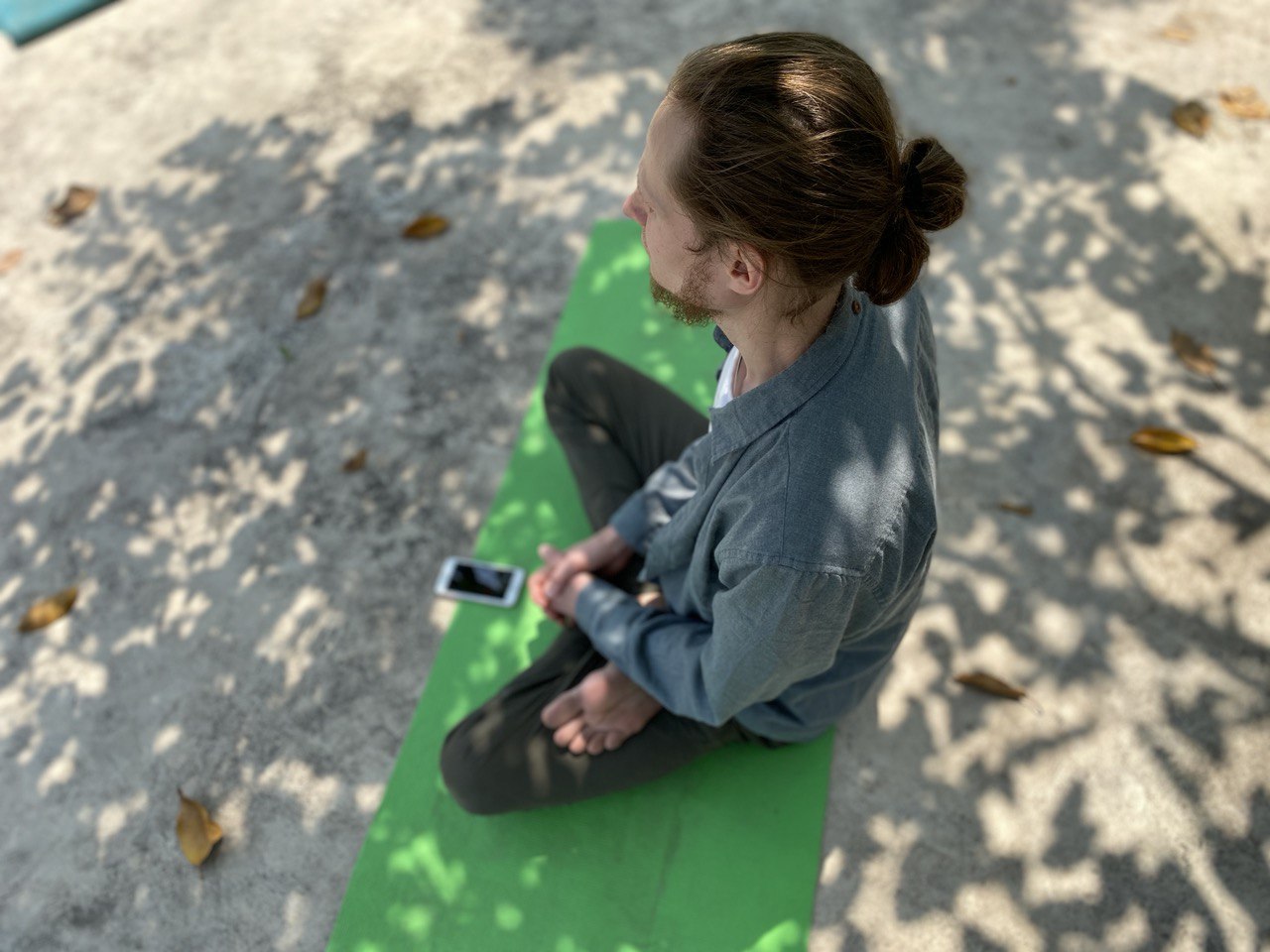
The idea of the app was not born with me. The team and I discussed it more than once. And we discussed it back when well-known meditation apps such as Headspace and Calm were not yet so popular. We saw how the world was gradually going digital and the phone was becoming a person's closest friend. And we thought: "Why shouldn't this friend help us in meditation?"
I began to think about it and to suggest some ideas. And although I had, and still have, no design education, I clearly understood that I wanted to do this. Little by little I began to sketch the look of the app on a sheet of paper. Then I learned special programs and went on drawing and structuring things. That's basically how it all began.
— Are you now responsible for the concept of the app?
Yes, and for the design too, for now. But in the future I'd like to hand that role over to someone else. That will speed up development.
— You said you have no training as a designer. Did you have any experience working as a designer before the Urokimeditatsii project?
I have always done creative things: I danced for many years, then studied music. I started meditating. And when you develop creative abilities and a subtle perception of the world in yourself, it shows in all your work and projects. The mind becomes subtler, and you begin to see the world and feel it differently. Many things become possible.
At the same time, of course, you can't forget about training. You can feel music very subtly, but if you don't know, for example, how a piano works, how harmonies combine, how chords are built, you simply won't be able to express anything with that instrument. So it's important both to refine your inner consciousness and to develop technical skills.
— Let's talk about music. You've already mentioned that you learned the guitar when you wanted to learn to play kiirtan. Did you have musical experience before that?
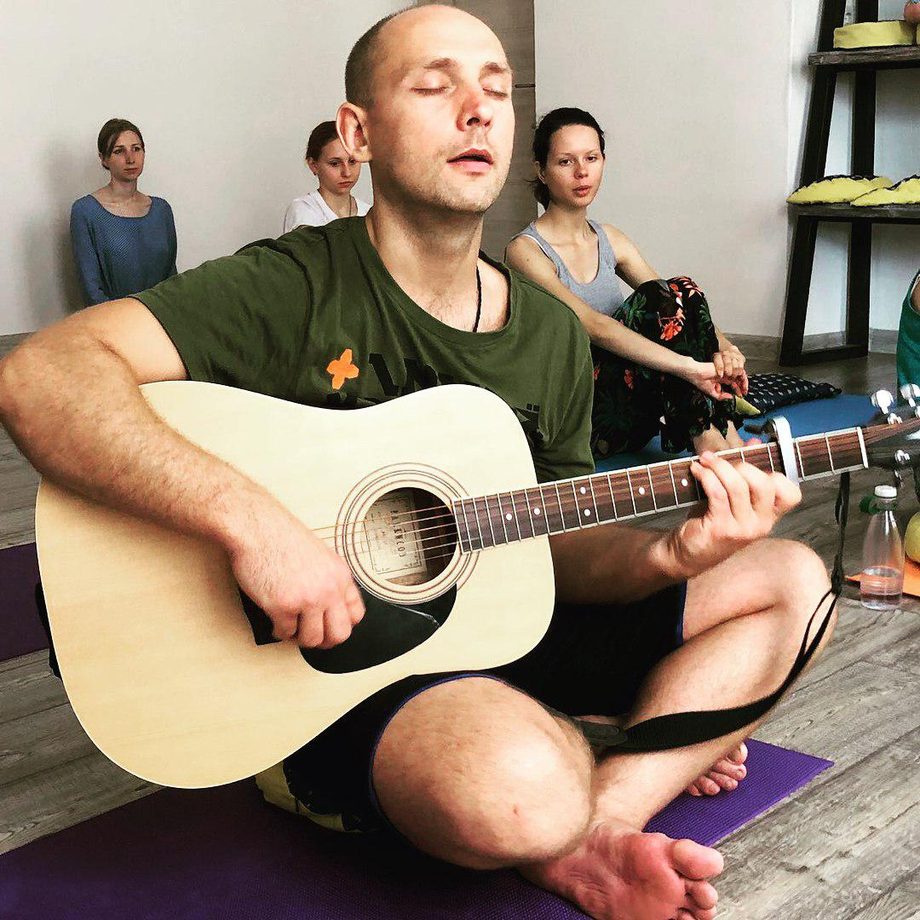
Actually, I still don't consider myself a musician (laughs). A musician is someone who understands notation, is constantly immersed in music and does it professionally. I've never done music professionally. I've just always liked playing it.
It all started with the thought: "I want to play kiirtan, I need to learn the guitar." I turned to a girl who already played kiirtan, she taught me some basic things, and off it went.
Before that I'd only had a little experience playing the balalaika back in my school years. And the funniest thing is that when I came to take guitar lessons in first grade, I was told I was too small for it and that it would be better to take up the balalaika for now (laughs). But unfortunately, things didn't work out for me with the balalaika. I hated music theory and only played a few simple tunes from memory.
— That's interesting. Because now you're one of the leaders of the band Cosmic Love. Tell us more about this project. How did it begin?
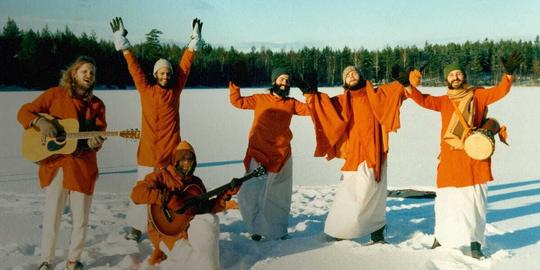
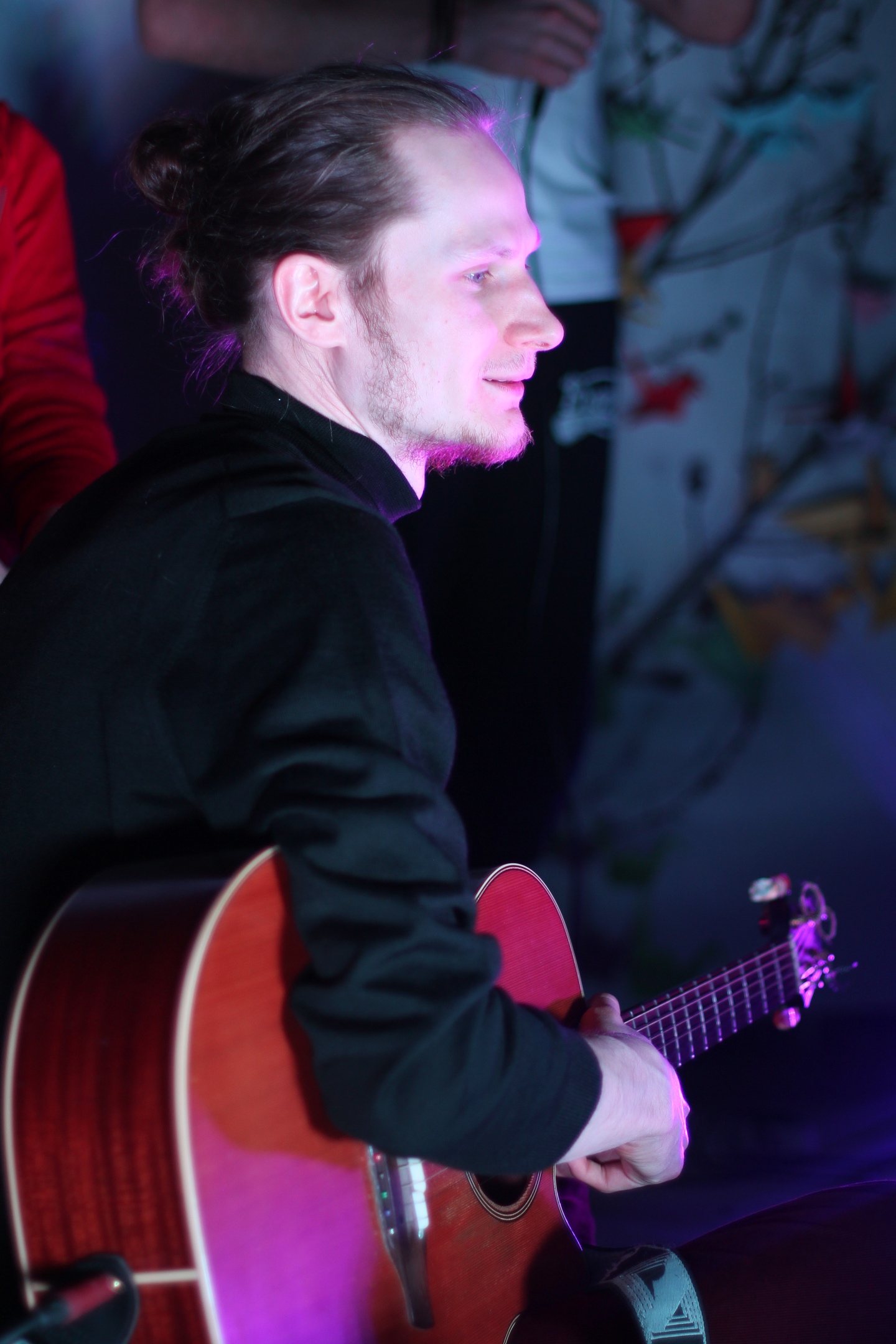
It all started with my suggestion to hold a kiirtan concert. How do we usually do kiirtan? Someone takes a guitar, someone a drum, the participants sing. Here everything was different. We planned a whole performance: arrangements prepared in advance, musicians coming in at a certain moment and finishing at a certain moment; at one point the flow grows stronger, at another it becomes softer. It was an interesting experience. We managed to create a powerful and inspiring atmosphere. So we decided to do it again, only this time as a concert in the city.
The first was Omsk. We arrived, came up with arrangements in a couple of weeks and gave a concert. The program was called Cosmic Love and drew about 80 people. It all went so well that we decided to widen the repertoire and go on tour. At the concert in Omsk we sang only mantras, and that is a rather specific thing that mostly only people familiar with meditation and yoga know about. So we decided to perform more accessible things in Russian.
Our friends — the organizers of the RAWA festival — offered to help us organize the tour. They put out great video reports about our journey, our travels, our preparation for the concerts — in a word, they warmed up the audience. It was great.
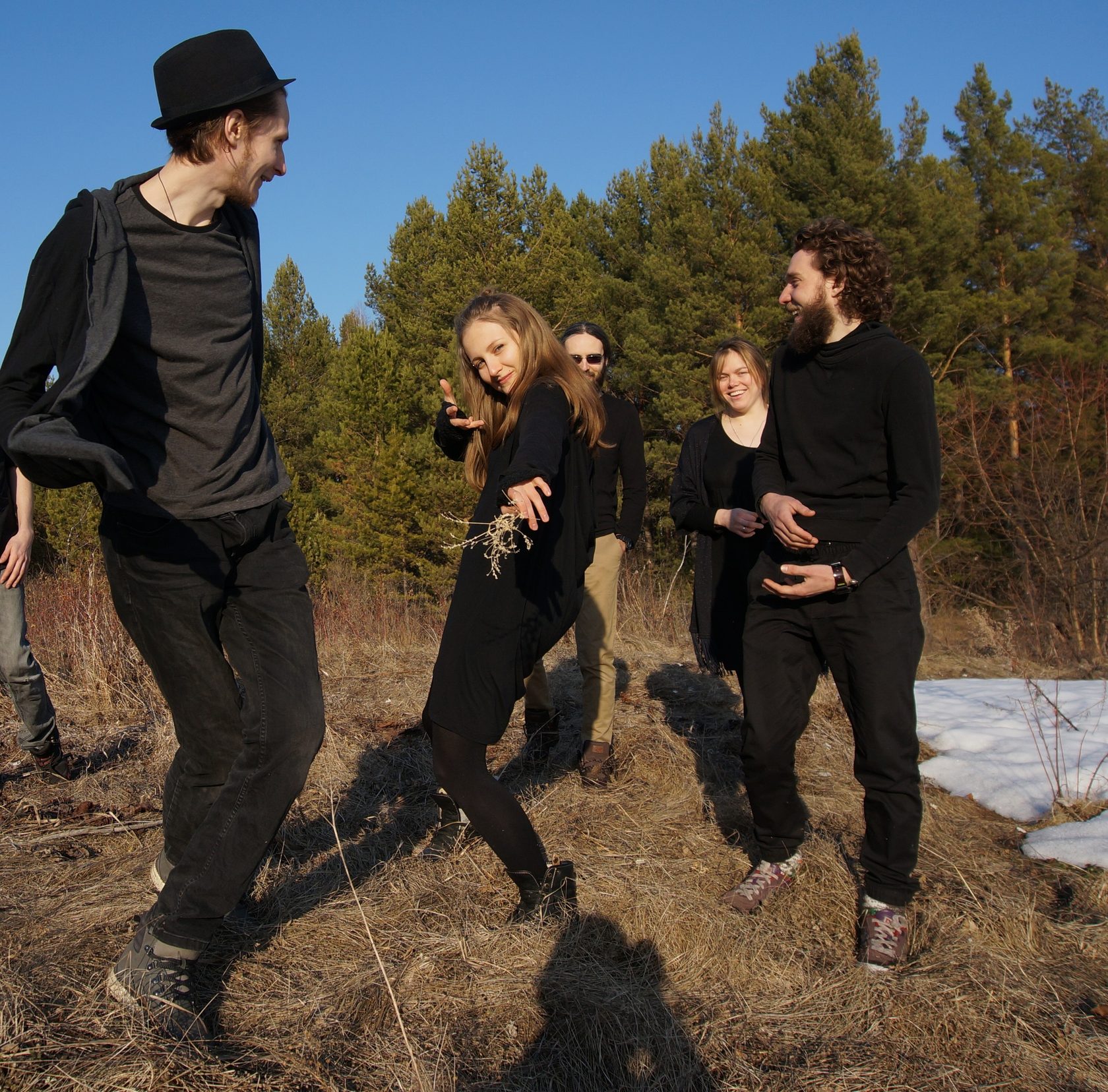
We prepared the tour program in a week. We called it the same — Cosmic Love. In time this name came to be associated with the band itself. People would say: "Oh, Cosmic Love, come to us!" And we thought: "Well, why not really call ourselves that?" In short, the name gradually stuck.
— Who writes the lyrics in Cosmic Love, and who is responsible for the music?
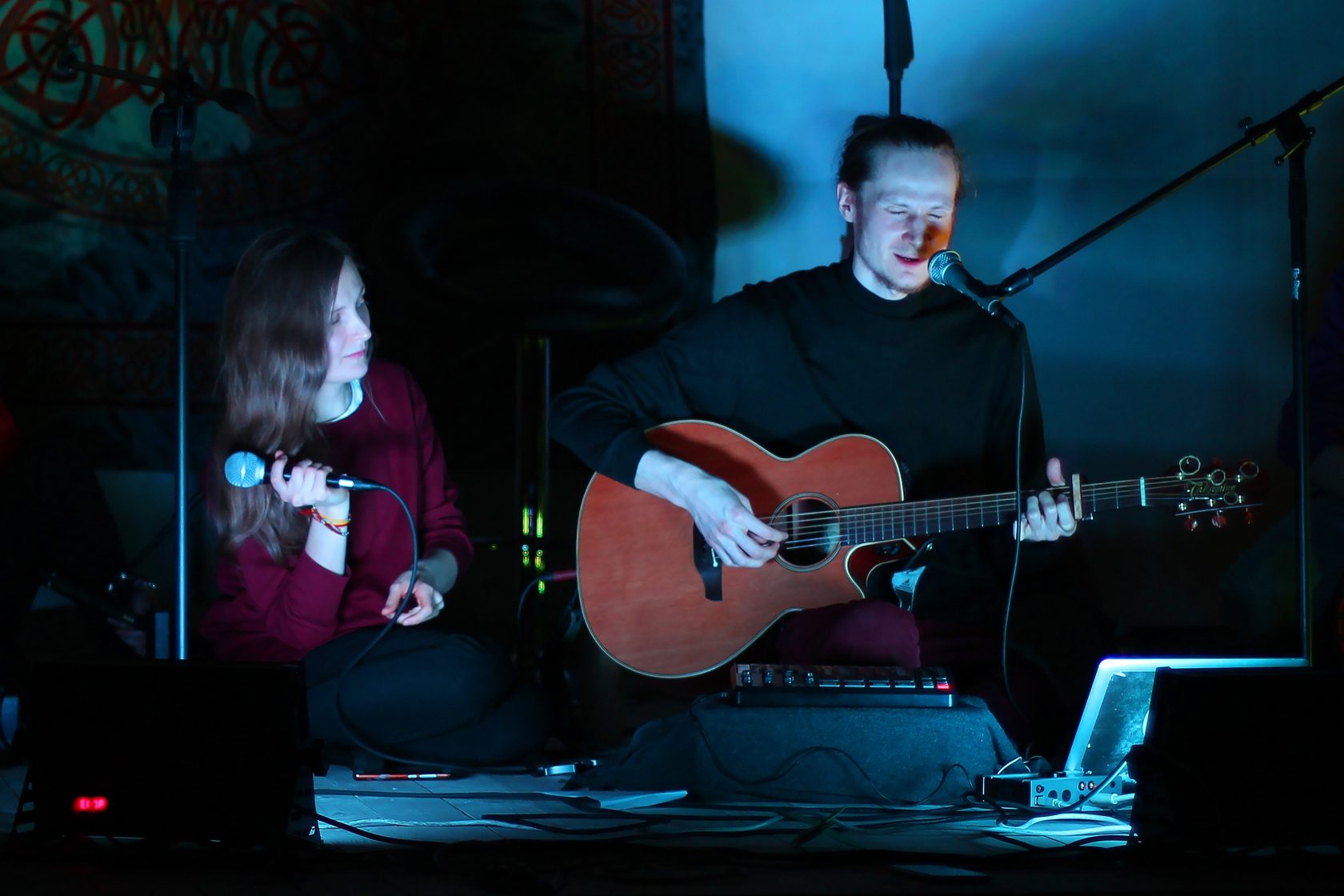
We all write the music together, and the lyrics are mostly by Jutika. She knows how not only to come up with beautiful words, but also to make the lyrics sit well on the music, so that each word is felt strongly and clearly.
When we started, we had practically no songs in Russian. In some songs we used poems by Rumi, in others we simply took English words, and we usually always ended with kiirtan. Between songs we read out beautiful words about love by Prabhát Ranjan Sarkar.
Originally we had planned a whole stage show with actors, dancers, video projection and live musicians. And we realized it only in part. But I still dream that one day we will fully realize everything we had in mind.
— Jutika is not only Cosmic Love's vocalist, she's also your wife. When the band was formed, were you already husband and wife?
No. At that time we already knew each other, but everything was just beginning. We had met earlier, while the retreat center was being built. You could say she was "on the home front": she fed us, helped, looked after us, and came out from the city from time to time to support us. Of course, that brought us very close.
— You're such a creative tandem. What is it like when there are two creative people in one family?
It varies. As, in principle, it does for everyone. Of course, there have to be things that unite you. But when a close relationship and work come together, it gets difficult. For some people such a synthesis comes easily, but for us it rarely works out. So at those moments we try to be more sensitive to each other.
And in general, of course, a lot also depends on what the creative people are doing. Disagreements do sometimes arise, but there are pluses in that too. Such situations spur you on in your aspiration to become better and to do deeper things creatively.
— Does meditation help make relationships, including working ones, more harmonious? And how in general does meditation affect your life and creativity?
For me meditation is the key thing. I can hardly imagine my life without it anymore.
How I came to meditation. I had a creative crisis, and I wanted to go beyond my usual understanding and perception. I tried many different techniques, but I settled on meditation, which Dada introduced me to. I saw that it really works and brings inner harmony and fulfillment. Besides, it essentially has no side effects; it is not destructive, unlike some other practices and substances that people try. In meditation you can go very deep inside yourself and widen your usual worldview, thereby bringing good to yourself and to others.
There are very different moments in life. At some times meditation can be very deep, and at others, especially when you put in less effort and get distracted by external things, it is more superficial. But at the moment when you really practice deeply and sincerely, your very best qualities start to show very brightly. Your eyes change, your emotions, your ways of expressing yourself, your feelings — literally everything changes. Meditation is the foundation. And I would like it always to be with me.
This, probably, is the reason for my work in the Urokimeditatsii project. Our work is satsaḿga; it is being with like-minded people and moving together toward a goal. And all this helps you stay on the wave of meditation, stay in that flow.
— How do you see the Urokimeditatsii project in 5–10 years?
Judging by how rapidly and seriously the team is developing, I think we will soon reach the level of a powerful international project. A project with an even bigger team of people who will inspire others and be of benefit to them.
— And the last question. What would you like to wish or advise Urokimeditatsii subscribers?
To listen to your heart and your conscience. People sometimes say: "Listen to your heart!" — but when these things are close to the mind, you start to confuse them. Say you think that with all your heart you want to eat one more sandwich. But most likely it's your mind that wants it. And if you listen to yourself, you'll understand that your body will only feel worse for it, and your efficiency will drop. So it's always important to remember your inner cursor. And do what you feel like doing. The main thing is that it be in line with your conscience, and then you will be successful in this life.