Society is like a river flowing along the bed of its values. To send it along a new course we must change those values — and that takes spiritual practice and people who truly burn with the new values.
Society is like a river. A river flows along its bed, and society moves along the bed of its values. What are these values? They are an understanding of the purpose of life and the ability to discern what is most important in life. In other words, values are an ideology, and you can scold the water as much as you like for flowing in the wrong direction. The problem is not the water; the problem is the riverbed — wherever the bed leads, that is where the water will flow.
In other words, on the basis of the ideology accepted in a society, all people will in one way or another follow the generally accepted values. Today the ideology of material values dominates the world, and so people behave according to that ideology. That is, if the highest value is, say, money, fame or power, then naturally people will go to any lengths to achieve it. Of course, there is a spiritual ideology in our world too, but it has gone deep underground and flows like an underground river. High values — goodness, benevolence, selflessness and so on — are still present. But they are not in the mainstream; they are somewhere down there, underground. Yet they still flow, they are passed down from generation to generation, and this is what saves the world. The underground river of spiritual ideology is very strong, so if we want to direct society along a different bed, first of all we need to change its values. And when the values change, people will live differently too.
Evolution is the movement of leaders
Our true physical needs are very, very modest: we need some comfort, and that is fairly easy to achieve. But in all people there is an infinite thirst for the Supreme, which is Infinity. And if a person is not shown the way to attain this Infinity, they will desperately try to realize this longing for Infinity in the material world. Hence the imbalance and lack of equilibrium in our society. So our great task — yours and mine — is to change the values of society.
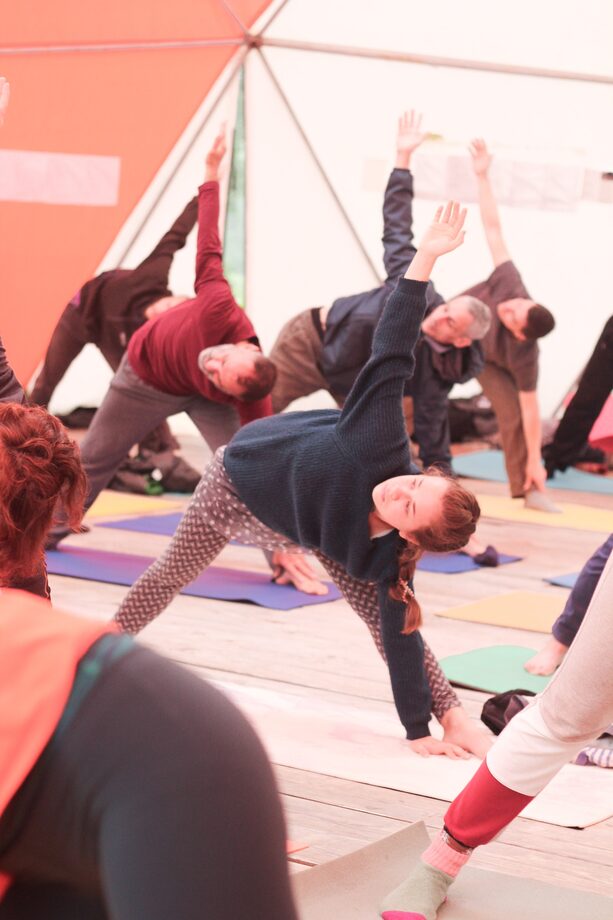
Values can be "infectious," but you need to truly burn with them and actually follow the new values yourself. And to keep the fire going, an essential element is needed: spiritual practice. Spiritual practice transforms the personality and desires and changes values, so the presence of these two important things in society is indispensable. Spiritual practice develops love for humanity in people, and they become passionate pioneers. Such individuals are capable of creating something progressive that furthers the development of everyone in culture, music and the arts, in education and economics, in production, distribution and trade. A small group of people wholeheartedly devoted to their cause can change the climate of a society within 10, 15 or 20 years. This is my dream, but I cannot convince everyone. Still, I am able to convince several hundred, several thousand people to accept new values. Any evolution, any development, is not a movement of the masses; it is a movement of passionate pioneers. For example, we did not get the automobile thanks to the masses; it appeared thanks to one or two passionate pioneers.
A spiritual ideology
Our human society badly needs new values — new core values. More and more often people ask themselves: "Who am I, where am I going, what is the highest purpose of my life, what must I do in this world?" These people are already on the verge of spiritual awakening and will soon receive answers. By asking these questions, doubting the answers, receiving answers in spiritual practice and doubting again, they gradually come to realize their true task. Finally understanding and accepting the answers will mean that the person has mastered the ideology.
A spiritual ideology has two parts. The first part: "I live for self-realization, for the liberation of consciousness. This is the highest task. I respect my body, I respect my mind, I understand and take care of my psychology and biology, but at the same time I make efforts to liberate my consciousness." The second part: "I serve this universe; with my participation the universe must take a step forward — it cannot stand still. Let at least a few people be uplifted through my efforts, and let civilization climb to a higher step of development."
One of the ancient Masters, Shrii Krśńa, singled out three components of the spiritual path: paripráshnena, prańipátena and sevayá. The path begins with paripráshnena, with the most important questions: "What is the meaning of life, where am I going, what is my highest potential?" The second component is prańipátena. A person must surrender to the Supreme, to His will. When you question yourself, you are in fact turning to your inner essence, which is God. And from the depths of the mind God answers you: "You are an immortal, divine soul, and your task is to save this world. You are the hero of the day." You may ask: "But why me? Why not someone else?" God answers: "No, it is you; you must do your duty." And here prańipátena is needed — surrendering to the will of the Supreme, trusting in Him. When this happens, you will accept your calling. The third component is sevayá. "Sevá" means "to serve" — to serve all beings selflessly.
Sometimes people experience a conflict between their inner longing and their reasoning mind. Inwardly you know how to do the right thing, but the mind says: "You know, it's not the time yet, it won't work right now, because I have a mortgage and lots of other things to do." And the person chooses to trust their reasoning more than their inner sense. The reasoning mind is a very limited, very temporary construction that arose on the basis of limited experience. But the person believes it and says to their inner longing: "No, no, my mind advises me to do otherwise."
The consciousness of a hero
When the voice of the higher Consciousness sounds within you, take a step, and a road will appear under your feet. You will walk this path, you will reach the finish, and it will be your triumphant victory. This is a very difficult stage; it is called prańipátena. You need to trust the inner call, and then, when you manage that, you will be able to do sevá — service, selflessly helping all beings.
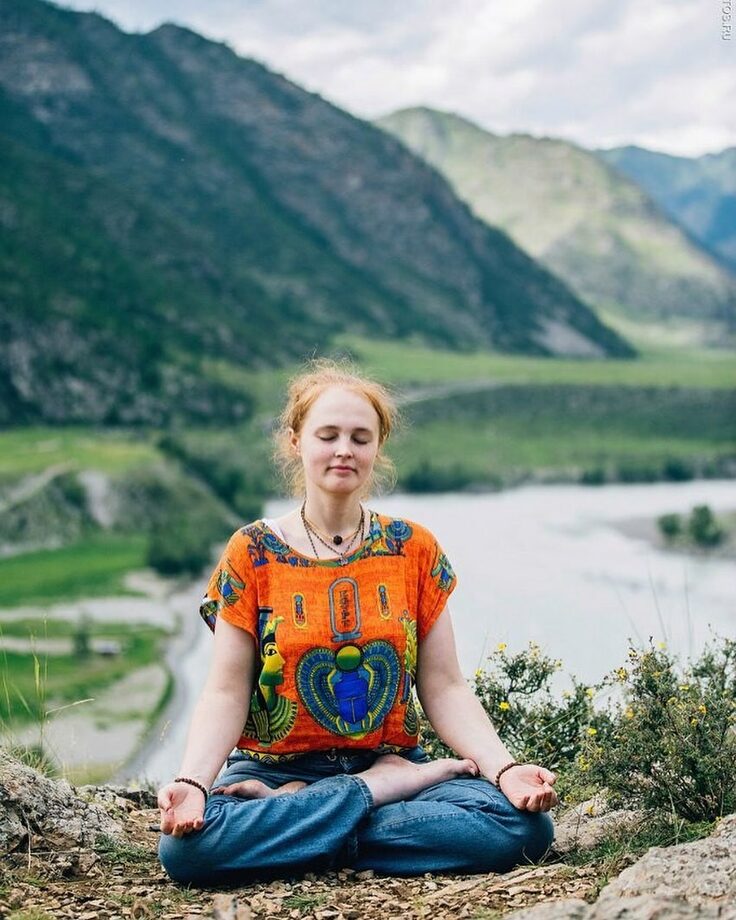
True values are the same for all people, because at heart we are very good people, altruistic and heroic. We are very beautiful beings, but society is arranged in such a way that these best qualities of ours sometimes remain suppressed all our lives. In the noise and bustle we do not hear our inner call, and so a great many people live their lives without real happiness. Everyone sometimes asks themselves: "What do I want?" There are some temporary goals — a car, a trip and so on. But if we begin to reflect deeply on whether a car is the goal of our life, we will understand without a doubt that it is not. Try to realize yourself as a hero, a historic personality.
We must make every effort to change the values in society, and then people's minds will flow along a new bed. Let it be narrow at first, but in time it will widen, because more and more people will accept the new values and become happy. The old bed of the former values will sooner or later dry up, and people will remember it as a nightmare.