Marina Semenikhina, one of the editors of Urokimeditatsii, on how the project began, why she gave up design work and moved to the forest, what the RAWA festival is, and why teaching yoga is above all an intuitive profession.
"I wanted to do something that inspires me and to see meaning in every day."
Many people know Marina Semenikhina from our online yoga classes and from RAWAfest. But few know that she is one of the editors of Urokimeditatsii (Meditation Lessons), and also, as it happens, the honor and conscience of our team. Her work is not always visible from the outside, but her contribution to the project is hard to overestimate. We talked with Marina about how the Urokimeditatsii project began, why she gave up her job as a designer and moved to the forest, what the RAWA festival is, and why being a yoga instructor is first and foremost an intuitive profession.
— What is your role in Urokimeditatsii now? What do you do?
It's not so easy for me to describe what I do in the project, because it's a lot of things and a little of everything (laughs). For a long time I organized all sorts of offline events in different corners of the world: retreats, Dada's programs, lectures. But when the whole quarantine story happened and we effectively could no longer hold live events, I concentrated on other areas of the project.
At the beginning of 2020 we created a small team within Urokimeditatsii whose task was to develop new formats and directions for the project. We called it the "production center." It includes people who have been in the project from the very beginning, understand its format well, and are able to come up with content that will reveal the project from different sides. We generate and carry out new ideas based on subscribers' requests, comments, feedback from the support service and so on. Some things, for example interviews, quick polls and vlogs, are already being done; others we are still thinking over.
— Have you been in the project from the very start?
Only Dada has been in the project from the very start (laughs). But seriously, just recently we decided to put together a timeline of who joined and began helping the project, and when. It turned out I was one of the first. Together with Dada we came up with the first Basic Meditation Course. Though I usually joke about it: "Dada came up with it, I wrote it down." That was roughly the division of roles.
— How did you meet Dada, and the project?
I've known Dada for quite a long time. Originally he recorded his videos himself and gave offline lectures. And the project began to take shape when a group of people, inspired by a big idea, gathered together at a retreat center. In that company new plans and proposals began to form, and gradually all of Dada's content began to be shaped and "packaged" into a project. As a result, the website урокимедитации.рф was launched.
— You trained as an interior designer. How did you end up at Urokimeditatsii?
It's an interesting story. At first I came to the retreat center as a volunteer. At the time I had an intellectual job in the city, and that kind of work, as a rule, doesn't show you immediate results. I wanted concrete work: say, you mow half a field and you see the result; you finish thirty boards and you see the result. And since there was plenty of that kind of work at the retreat center, and the project was close to my heart, I decided to help it develop.
The next time we met as the future team was half a year later. All that time I kept working as a designer in my city. On vacation I went again to see my friends at the retreat center. And they suggested we work together on projects: Urokimeditatsii, the RAWA festival and others. I thought: "Why not?" Although I liked my profession and most of my life had been connected with it, I still couldn't shake the feeling that something was missing. I was an employee and didn't see deep meaning in my work. Yes, there were creative moments in it, but it still wasn't enough. And the idea of doing something truly inspiring, of seeing meaning in every day and every action, sincerely inspired me. And there were the minimal, modest conditions for devoting my time to the project: a roof over my head and food.
— Was it an easy decision? And how did it actually happen? Did you call work and say, "Sorry, I won't be coming back"?
That's exactly how it was (laughs). I lived and worked in another city, and I had only a couple of weeks' worth of things with me. I called work and said: "Sorry, I have another offer." Of course I felt awkward toward my employer, because I knew I was letting him down. And it was strange to start a new life, because I was used to living in the city. At that time the retreat center had no comforts; everything was pretty rough. And I'm a very urban person, and I'm amazed that I agreed to it. But in the end the satisfaction I got from the work outweighed the downsides of the living conditions. That is when I came to understand that the work itself is far more important than the place where you do it.
— And how long did you live there?
About 3 years.
— And what is your overall impression of those three years? What was it like? After all, working in the city is one thing, and creating something as a team in the forest is quite another.
It was inspiring and transforming. After an experience like that, when you start working on your own in the city, it's also very hard to readjust. Working in flow, in synergy, is far more effective and bears much more fruit. When a connection happens between people, it's like magic. There is a continuous process of thinking, and the team members complement each other. That is worth a great deal. And I believe that it was precisely the whole team being in one place at that time that helped us go far in all the projects. You are immersed in the process all the time; you eat, sleep and work with these ideas. And that's why the results are big.
— When people talk about Urokimeditatsii, many mean Dada. Doesn't it hurt that everyone talks only about Dada? After all, it's not only Dada in the project, there are other people too. How do you feel about it?
If you look at it from the point of view of the weight of contribution, Dada is perhaps more powerful than any of us. Let's take, for example, the Urokimeditatsii team and Dada, all together, and subtract Dada. The project would hardly be as successful. Now let's remove some of the people from the team and keep Dada: most likely the project would carry on existing more or less as it is. A great deal depends on Dada's talent, his ability to present information and explain the material well. So I think it's fair that he has such a role in the project. And it doesn't hurt, because you do this not to be recognized on the street, but because you love this work and are inspired by the way the project affects society.
— You mentioned the RAWA festival. As far as I know, you were one of its organizers. What is RAWA? And how did the festival come about?
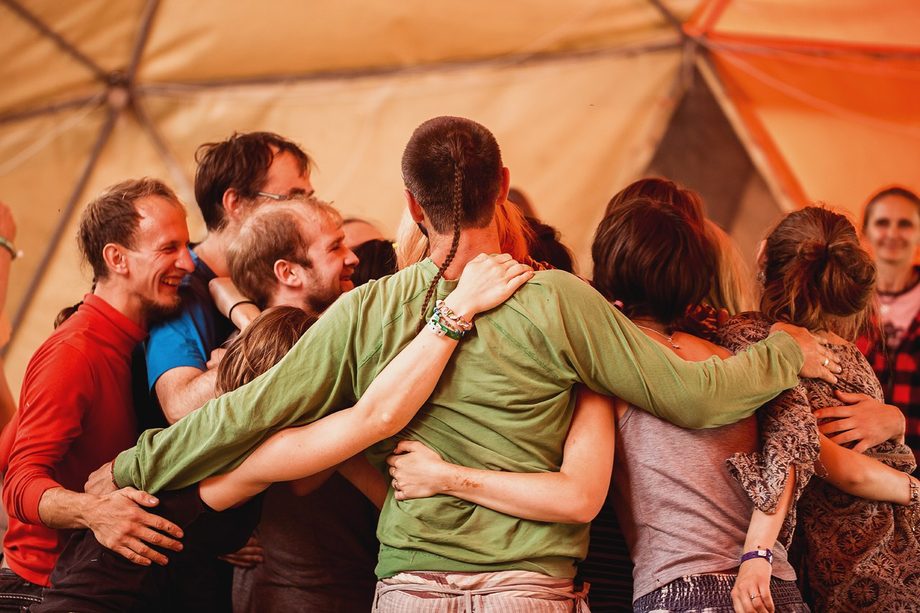
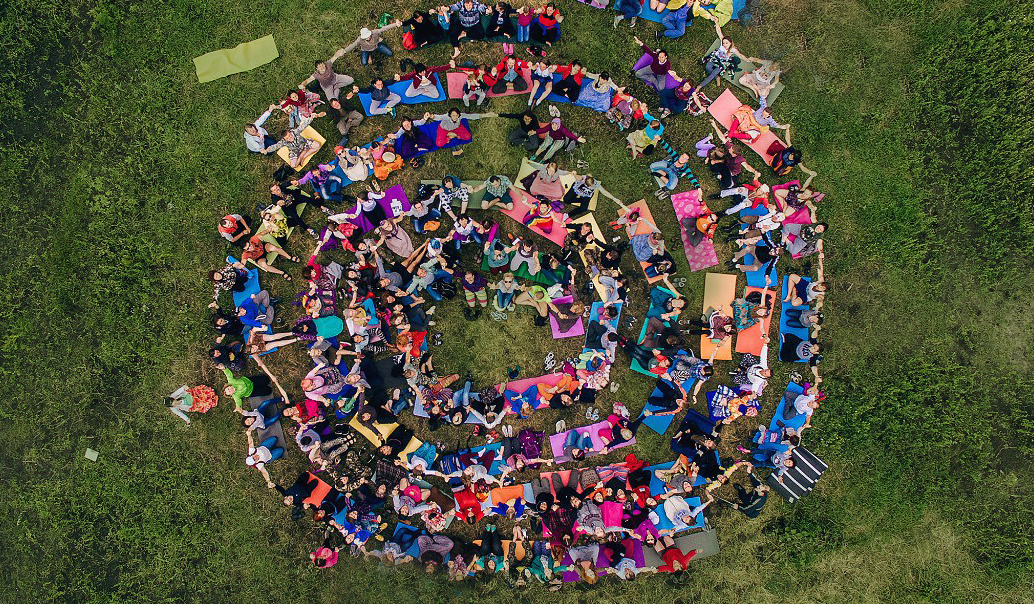
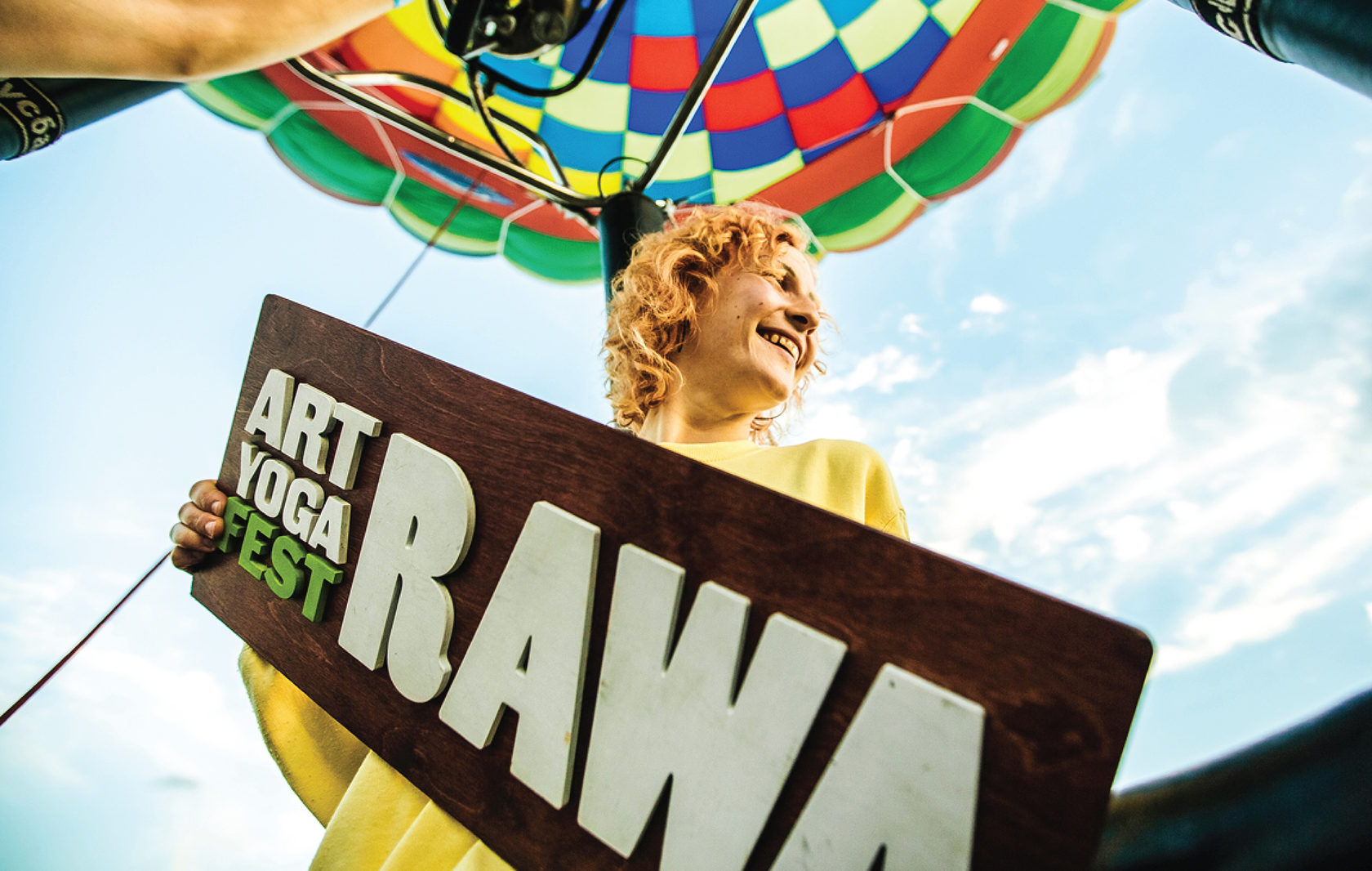
Yes, RAWA is my brainchild. It's a festival of yoga and creativity. It appeared at the same time as Urokimeditatsii, and it's a separate project. The first festival took place in 2015 and drew 350–400 people. And the fifth RAWAfest, held last year, had 1,500 participants.
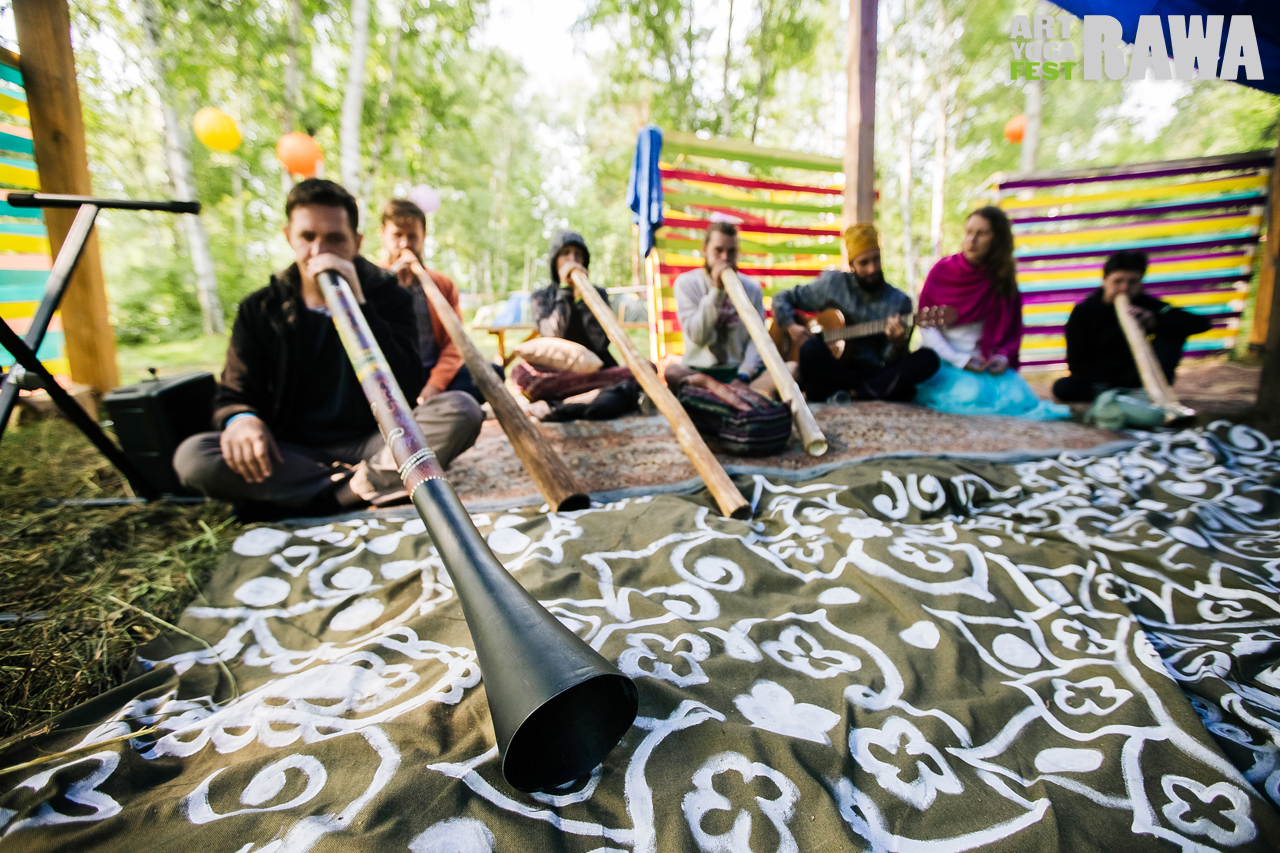
We conceived this project for people interested in yoga, creativity and self-development in everyday life. And we managed to create a space where very different people grow together, rejoice together and simply relax in a yogic style, without alcohol or other intoxicants. In essence we created a precedent for sattvic recreation and a sattvic get-together, without snobbery or pretension, where everyone can choose an activity to their liking. The festival usually has about 15 themed venues running at the same time: psychology, ecology, music, parties and concerts, workshops, children's areas, creativity, yoga and meditation. We came up with a slogan for the festival: "The World of the Future." The festival is in essence a kind of "teaser" showing what relationships in society could be like if we start moving from imperfection to perfection and are interested in developing ourselves and society and making the world a better place to live.
— And how was the idea of the festival born? Where did you start?
It all started with our friends, the band Cosmic Love. They held concerts from time to time and put on small creative events, and the idea of a festival was born with them. But to make it happen, besides their creative ideas and abilities, a very great organizational force was needed as well. And at that time there was such a force, so a global vision appeared.
At the start, two people wanted to become the main organizers: me and Stas Kosarzhevsky. And we realized that we could do something big. Then helpers gradually began to join us, and thanks to them we managed to put on such a large-scale event.
— There's Urokimeditatsii and RAWA; what else do you do besides these projects? I know you teach ásana classes online. Do you also teach classes in person, at a yoga studio?
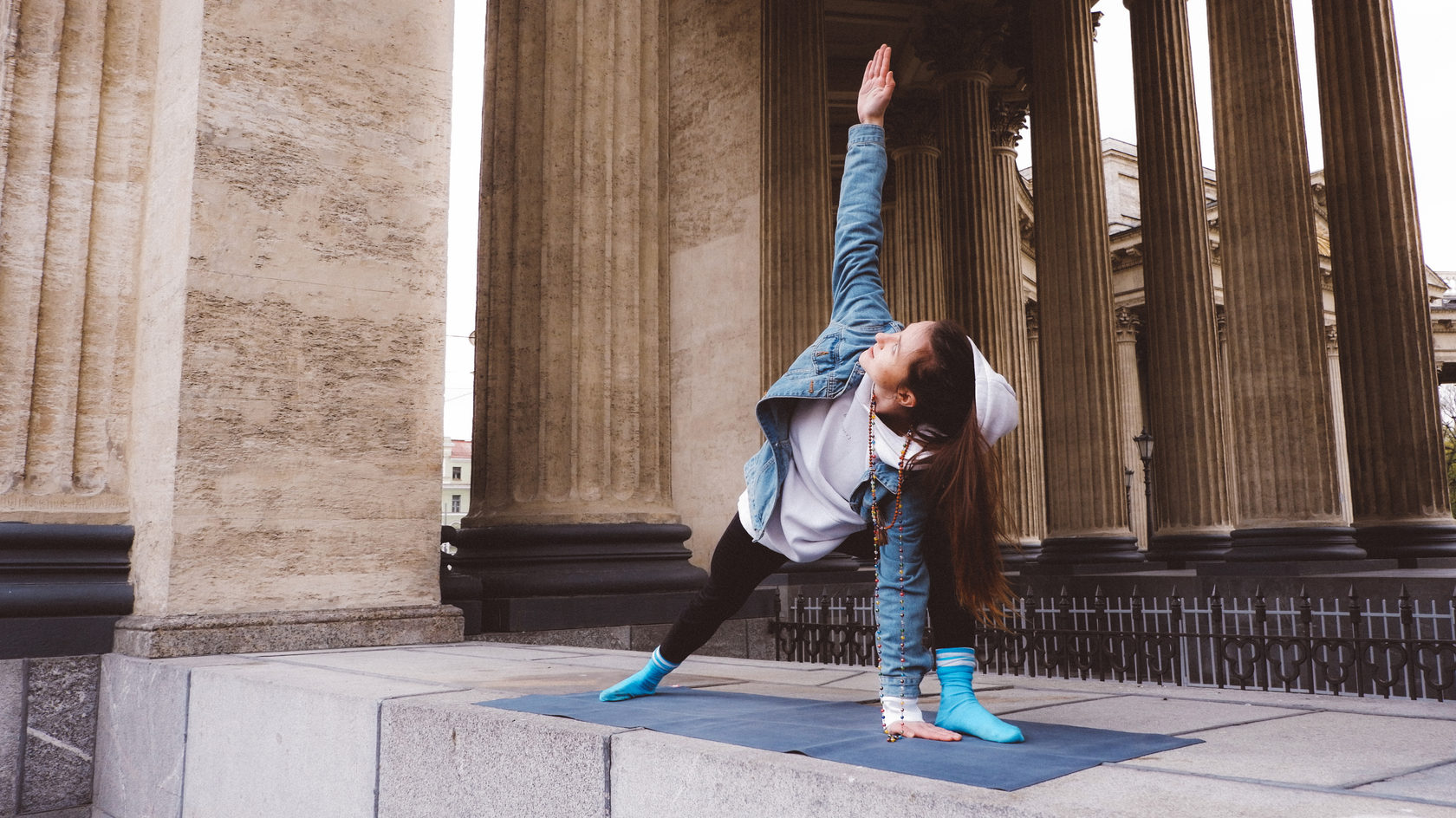
I taught such classes in St. Petersburg and other cities before the quarantine began. When the pandemic hit, we launched an online week with Urokimeditatsii, which gradually grew into an online month. After that we decided to hold regular online A yoga posture held steadily and comfortably; it balances the glands and quiets body and mind for meditation. classes; we thought it would be useful for our audience. The question "What kind of yoga is this?" comes up quite often. People are interested in the ásanas recommended in Urokimeditatsii, but there is very little information about them. And in general it's hard to find a studio in your city where this style is taught.
— When did you start teaching ásana classes? Who did you study with?
I studied with Dada Sadananda back in the days when he ran instructor courses himself. The course consisted of several blocks: alignment of the ásanas, philosophy, structuring a class and so on. There were also other speakers who talked about anatomy and various styles of yoga.
In the city where I lived there was a need for ásana classes. And along the way I discovered that for some reason people liked my classes. That was a discovery for me, and I didn't consider it my own merit. There's a certain element of flow here: you bring your body to the yoga class, and from there everything happens the way it should. You catch the flow and intuitively begin to understand how to build the class, which ásana to give after which, how it affects the body, how it affects the mood in the group. It's very interesting!
Now I'm improving my skills. Recently I began training in yoga therapy with Artem Frolov. I'm very interested in understanding how yoga works and how it affects the human body.
— Do you have any projects outside Urokimeditatsii? Do you still do design?
I have no other projects now, because Urokimeditatsii takes up all my time. Before that, RAWA took half my time, since putting on a festival means half a year of continuous full-time work.
As for design, I used to take on some commissions, but now there's no need, since I use all my skills in Urokimeditatsii. I can do design, lay something out, write a text; in short, I put everything I can do to use.
— And how do you rest? What does your day off or vacation look like? And how often do they happen?
On vacation I usually go to some other country; that helps me switch off well. As for days off… For a very long time I worked without days off. Especially when we were launching the RAWA festival. Back then it was normal for me. But over time I realized it's not the best idea. Rest is necessary so that you can give your work the maximum of your mental fuel. Otherwise at some point you simply start to notice that you can no longer give 100%, or even 60%. So now I've started to make sure I take days off no matter what. How do I rest? I like walking, meeting friends, being active.
— And what role does meditation play in your life now?
Meditation lets me be more emotionally even. I see that from year to year my satisfaction with life becomes less dependent on external factors: you become more stable, and meditation gives a sense of happiness. In general, happiness is always with us, but we often don't realize it, because we are immersed in our problems. I too am prone to unstable states, but with time and practice I have learned to hold on longer to this sense of unconditional, basic happiness and the feeling that everything is going as it should.
— And finally: what would you like to wish or say to the subscribers of the Urokimeditatsii project?
What I like about the Urokimeditatsii project is that it speaks about breadth of perception: you are constantly trying to expand your mind so as to see the world more universally. Constant expansion and growth is one of the most important things in life. And if it sometimes seems that you are practicing but nothing in your life changes, know that the process really is going on. You should always try to keep your mind open to transformation, to question your assumptions, your opinion of yourself, your opinion of your life, and remember that all of this can be much broader. This is what our life is: we are moving from limited perception to universal perception.