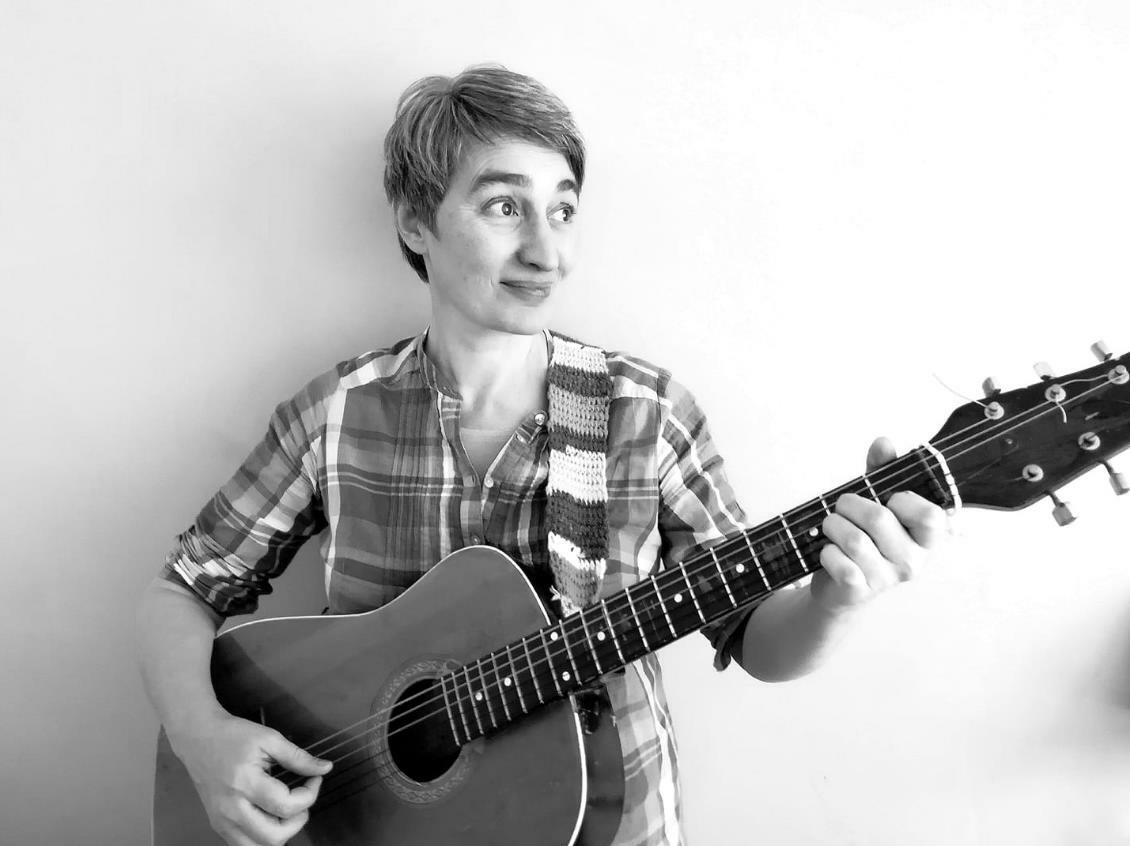
Margarita Kasaeva, who runs fundraising, the Big Team of volunteers and the marathons at Urokimeditatsii, on what fundraising is, why marathons are needed when there are Dada's videos, and why a marketer with 11 years' experience chose a nonprofit project.
"I like helping people and feeling that what I do helps bring about changes in their lives."
The Big Team, the marathons, Sattva.today: all of these are areas of the Urokimeditatsii (Meditation Lessons) project in which today's guest plays, if not the main role, then at least a key one. Margarita Kasaeva is a person who generates ideas. Her ability to come up with something new on the fly is sometimes astonishing, and her cheerfulness and optimism command respect. We talked with Margarita about what fundraising is, why marathons are needed when there are Dada's videos, and why a marketer with 11 years of experience chose Urokimeditatsii.
— Today you are involved in a great many different areas of Urokimeditatsii. And the question arises at once: what is it you do that nothing can happen without you? Describe your work in the project in a few words.
My main area is fundraising.
The thing is, the effectiveness of a nonprofit organization depends on two things: people and finances. Since our project is nonprofit, those are the two paths we follow. Part of my work in the project is aimed at getting people to become volunteers in the project, and the other part at getting them to support it financially.
— "Fundraising" is a strange word, and not an easy one to understand. Explain in more detail what it is.
Literally it means "attracting resources," "finding resources" for the work of a nonprofit organization. Resources can be anything at all: people, goods, services, money, everything a nonprofit needs in order to carry out its tasks and goals.
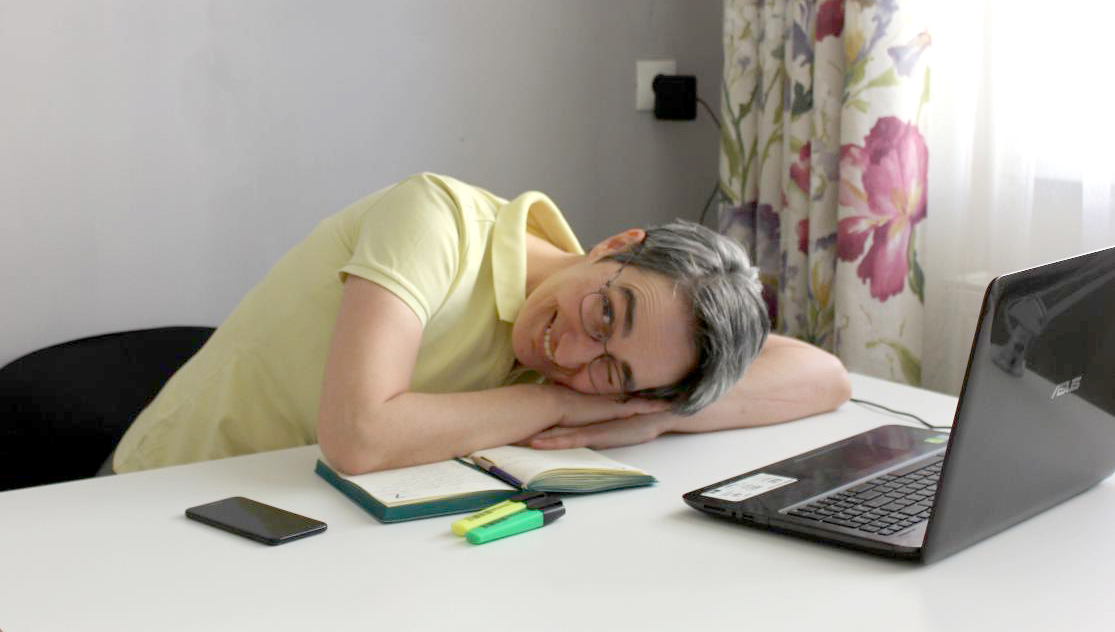
— The first thing you started with when you came to the project was the Urokimeditatsii Big Team. What is the Big Team?
At Urokimeditatsii there was an understanding that a great many people wanted to contribute to the project's development. But there was no understanding of how to build a system for working with them. So the project decided that a separate area had to be set up and a person found who would take care of the work with volunteers. I became that person.
I love our community very much, I love bringing people together around shared interests, and I am very glad that this is where it all began. It was a very right step: today the Big Team is a powerful resource, and we feel such support that we grow wings and want to keep working.
— Was the idea yours, or was it shared with other members of the team?
The idea was born with Dada Sadananda. He discussed it with Vladimir and Alexei, the project's main coordinators. And I took it up and developed it.
— We tell our subscribers about the Big Team quite often. In your view, why should people join the Big Team at all? What do they need it for?
Let me try it on myself. After all, I too began listening to and watching Dada's videos in 2018, and I too was in the position of someone who was simply looking for something on the internet, found this channel and liked it. I began watching regularly, realized that it resonated with me, that every word struck some chord. And in the end the wish to be part of it is born.
I started out helping to make subtitles for Dada's videos. Though, to be honest, I only managed to do the subtitles for one video, and then my coordinator disappeared somewhere (laughs). I wanted to help the project, but I felt as if I were off on the sidelines. It was unclear what structure I was part of or where to get tasks. That is exactly what the Big Team is for. So that you don't have to make a huge effort and invent ways to help the project yourself, but have all the information about how you can do it.
— How did you start watching Dada's videos? Was it spontaneous? And did you have any interest in yoga or meditation at that point?
My first encounter with yoga happened when I was about 15. But back then I was far more interested in running, jumping and swimming in the lake, and certainly not in holding A yoga posture held steadily and comfortably; it balances the glands and quiets body and mind for meditation. for several minutes.
Then I had a second go at around 35. I came across a videotape of yoga classes. I conscientiously tried to do them, and it ended with a sprained knee ligament. Later I tried again, but with a different video. And that is when the "wow" happened. I suddenly, at last, felt my body, felt the effect of the practice.
With meditation, the story was this: I always thought I had a very restless mind and that I would never in my life be able to meditate. But there was no way around it, so I decided: "All right, since yoga worked out, I'll give meditation one more try." I typed "meditation lessons" or "how to meditate" into a search engine and landed on some strange orange person. I remember thinking: "Just another Slav pretending to be a Hindu." But by a lucky chance I simply didn't switch the video off and started doing some housework with it playing in the background. And suddenly I realized that he was saying something that really resonated with some long-standing, very deep longing in me.
In short, I listened to a great deal that day. And then I watched practically all the videos in a very short time. In about three months.
— It was very much the same for me. I listened closely to every word, waiting for some catch, but I didn't find one.
For about two months I was waiting for the catch, digging around and thinking: "Where's the hidden snag? Any moment now he'll say some nonsense, and I'll immediately see that he's in the same category as all those other preachers." But it never happened.
— You said you were invited into the project? How did that happen? You were a volunteer, and at some point they just told you, "Come and join us, let's work together"?
Not quite. I was a volunteer, then I helped organize a retreat. That is when I got to know other members of the Urokimeditatsii team. Then I saw the website, which had job openings. But I didn't respond right away; at first I spent a long time watching how the project was developing.
I watched how the team was doing the advertising, and my heart kept aching. I kept thinking: "Guys, just tweak this a little here, finish that off there, this would be better done like this." And at some point, when openings for marketers appeared, I simply applied. I wasn't planning to devote all my time to it. I was thinking of launching my own business, yoga tours, and doing that.
Back then Vladimir Semenikhin and I had a call, and I explained that I had yoga tours, which kept me busy about 10 days a month, and that the rest of the time I could help somehow. I wasn't even counting on any financial support from the project; my hands were just itching, I wanted to get in there and help so that the project would work better. But it was decided that the project needed a full-time marketer. In the end everything worked out well, and the yoga tours are doing fine without me.
— Marketing is really your field. How long have you been doing it, about 11 years?
Yes, I've been working since 2009. You couldn't say I started straight away with marketing. In 2009 I founded my own project, and like it or not, I had to learn some marketing things. And it's gone on from there ever since.
— Are you self-taught in this?
Yes. I learned in the harshest combat conditions, so to speak. Figuratively, when you're a raw recruit and they throw you straight onto the front line, you either learn quickly enough not to get shot, or you fall right there. Something like that.
— You even have a project called "Righteous Marketing" and a YouTube channel where you help small and micro businesses. Tell us a little about that.
Yes, all of that appeared before the Urokimeditatsii project. I've always liked sharing my knowledge and what I've worked out. All my life I've helped small businesses in particular, the kind that have no resources at all for advertising or sales departments. I shared my practical knowledge on social media, ran webinars and courses for entrepreneurs, ten-day "sprints" to sort out specific problems. I enjoyed that kind of work.
— You have several projects, and you also mention yoga tours. And yet in the end you decided: "No, I'll go to Urokimeditatsii." Why?
There are several reasons. The first: the goals, tasks and mission of the project resonate with me very, very deeply. I did a great deal of community work. We worked mainly with children, running various programs on a volunteer basis. I like helping people and feeling that what I do helps bring about changes in their lives. And in that respect the mission of Urokimeditatsii, and the chance to be part of it, resonate with me very much.
And the second reason, probably, is simply that the work itself is interesting.
— About "sharing your experience." In the Urokimeditatsii team you share your experience too, you run webinars that help the team itself improve and gain skills. Are there perhaps plans to hold webinars like that for subscribers?
Yes, you've hit the nail on the head, there are such plans. We have already scheduled a webinar for March 30: "What really makes us tired." It will be about burnout, fatigue and lack of energy. These things matter to many people, and since I have experience in dealing with such problems, I decided to settle on this topic. The webinar will be free.
— What else can we expect from you in the near future? Or from the marathons team, which you recently began to oversee?
In the marathons team we are now completely rethinking our work. We are trying to respond to feedback, to be in tune with our subscribers, to meet their wishes and needs. We are striving to be more caring. We really like taking care of people.
But we haven't always managed to spot where our care was needed. Urokimeditatsii is a nonprofit project, and we cannot thank all our helpers materially. That is why we would like to become a source of benefit, joy and moral satisfaction for them. And it is for this that we are making changes in all our projects.
— About the marathons. From time to time subscribers ask: "Why are they needed at all?" There are Dada's videos, there is the Basic Meditation Course where Dada explains the practice in detail. Why, for example, take part in a meditation marathon? What new can you learn there?
Yes, there is that misunderstanding. Dada seems to have explained and told us everything, and yet for some reason you hold marathons. And for a pay-what-you-wish fee, too. But meditation instruction is supposed to be free.
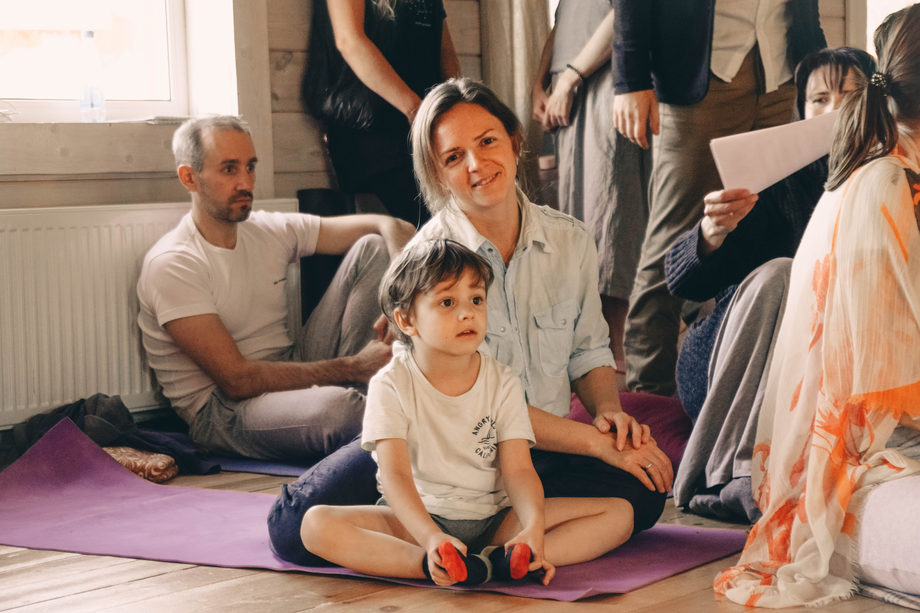
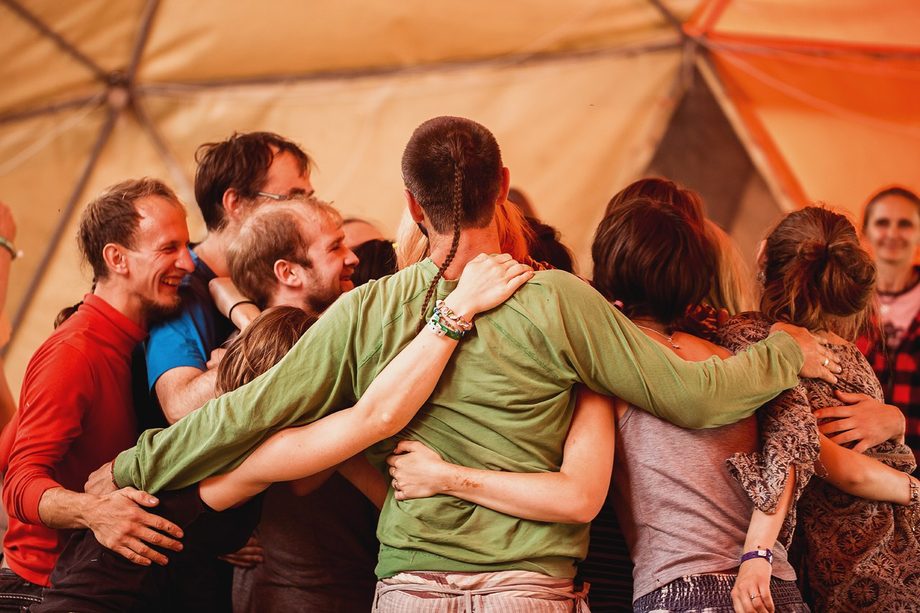
In fact, meditation instruction is free. Dada taught everything for free in the basic course and in his 500 videos on YouTube. A marathon, on the other hand, gives you the chance to find support in a community of people. We all know that when we do something "in company," our motivation is quite different, we feel a different lift inside. As the saying goes, with company even death is not so bad. And in company we are ready to do things that are very hard for us to do on our own.
That is exactly what marathons are about: a stream of people aiming at a goal that is similar for everyone. Each grows individually, but in the same area. The efforts of the people in this stream generate energy, and you can draw on it.
Besides that, a marathon gives you a complete system by which you can improve some skill of yours step by step, communication, for example. You move gradually from point A to point B.
So it turns out there is no contradiction here at all. And Dada himself fully supports the marathons and from time to time takes part in developing them.
— We talk a lot about meditation in the project, but what role does meditation play in your own life? Does it help you in your work, in your personal life?
My relationship with meditation is alternating struggle and friendship (laughs). But once you have tried meditation, you can no longer give it up. At first your back, legs and knees hurt. And you don't know what to do about it: whether to meditate or to fight the pain. But you don't want to quit, because somewhere, evidently on very, very subtle levels, you are getting real pleasure from the process.
After two and a half years of this tug-of-war, I felt that it was over, the struggle with the body had ended. Now I sit well, nothing hurts, nothing bothers me. If you haven't meditated, you feel that the day has shortchanged you somehow. You could say you get hooked on it (laughs).
— Meditation is becoming more and more popular in the world. In light of that, how do you think the Urokimeditatsii project will change? What will it look like in 5–10 years?
I'm glad we live at a time when the news that you meditate is no longer something outlandish. Probably in 5–10 years meditation will become a familiar tool of personal growth for many people. And in the corporate world that will happen even faster.
How will the project change? We have two paths. The first is the one we are on now: developing the mobile app. We want it to be a really, really great app, the best meditation app in the world, installed by billions of people around the globe.
The second path is offline activity. I think we will be able to reach many places, and people trained in our system will be able to meditate together offline and share our ideas with others.
— And finally: what would you like to say to the subscribers of Urokimeditatsii, or wish them?
I would like to wish them what I wish for myself: to reach the very depths of your personality and finally understand who you really are. Not to float on the surface. Our parents and our society are all humane people around us who are trying to adapt us to a safe life in the society we were born into. But beneath this layer of outer success there is also a kind of inner success.
I would like to wish all our subscribers to explore this deep part of the iceberg and find out what is there.