Ananda Marga

Personal practices

Tándava

Táńd́ava

“Táńd́ava – which was not invented by me, but by Sadáshiva some seven thousand years ago – is an all-corporal exercise, an exercise for the entire body, including the brain.”Ánanda Vacanámrtam 6, “The Cosmic Father Has a Special Responsibility”

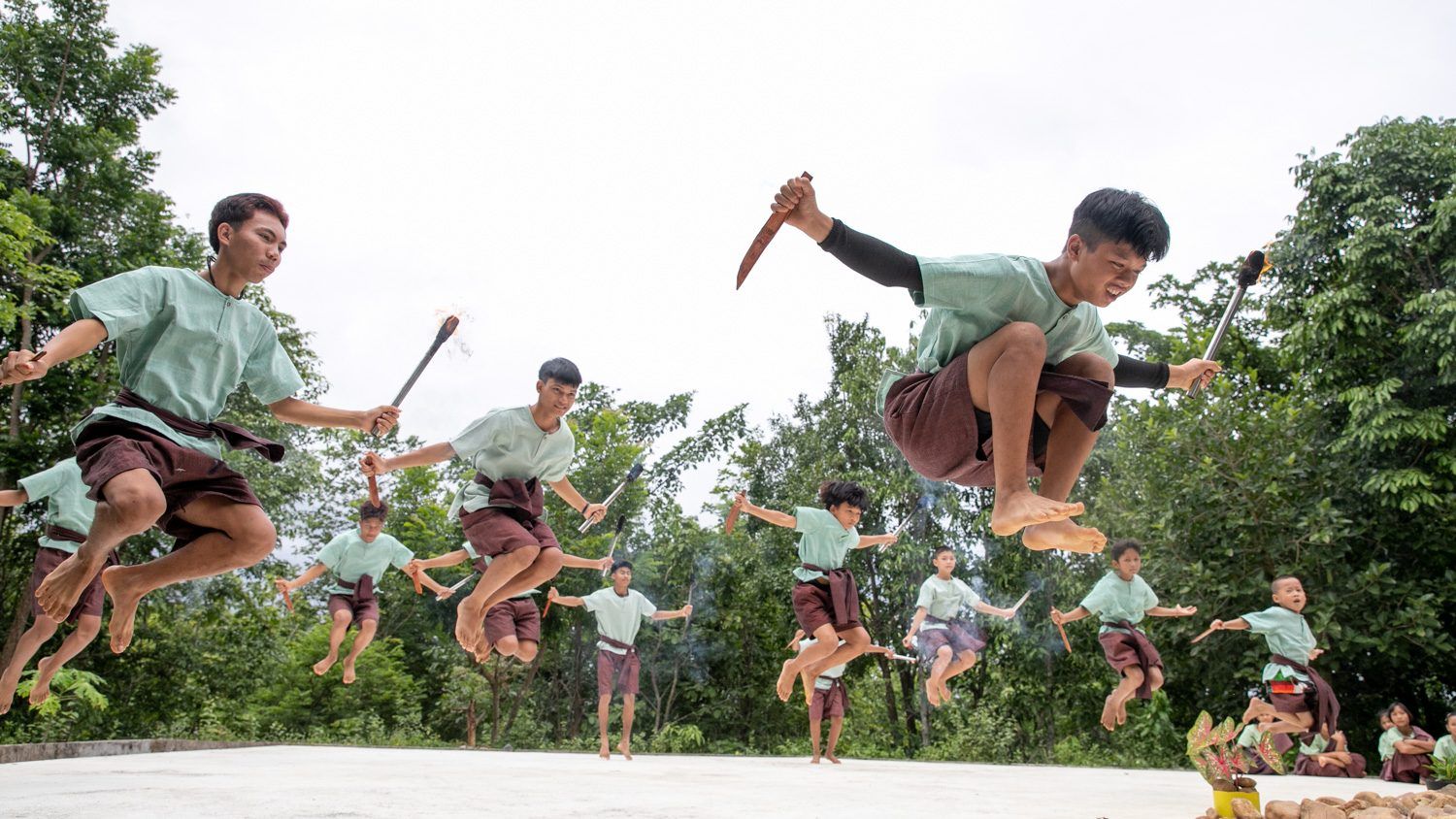
Boys dancing tándava outdoors, leaping high with knees raised and knives held aloft

Why we do it

The aim of yoga is Supreme Consciousness

  1. 1

    The aim is Supreme Consciousness. The goal of yoga is far off, like a distant star system.

  2. 2

    The instrument to reach that goal is the mind. It is the subtlest part of us, so it is the only part fine enough to reach the aim.

  3. 3

    The method is meditation. Seeing a star takes a telescope pointed at it; reaching Supreme Consciousness takes the mind pointed at it. That is meditation.

  4. 4

    The preparation and care. A telescope has to be looked after, cleaned and set right to see the stars. The mind is the same. Every practice does this for the mind, directly or through the body, because the mind is connected with the body.

    See how it leads to the goal ↓

Reaching the goal through Tándava

Táńd́ava brings us to the goal through the body. Its jumps exercise every gland, and the glands nourish not only the body but the mind and the self; the mind keeps its power to think deeply and to remember. With death in one hand and a dagger in the other, the dancer refuses fear and defeat, and fear is an obstacle on the spiritual path. Pure and strong in body, mind and spirit, he stands at the start of Tantra, the path that expands the mind until it is free.

  1. 01

    Every gland exercised

    A dance done with the right breath, rhythm and gesture is a good exercise. When it works on every gland, the glands give the right amount of hormones, and these feed the body, and the mind and the self as well.

    “And if at the same time that dance equally influences each and every gland, then those glands secrete the proper amount of hormones, which brings nourishment not only to the body, but also to the mind and the átman [the self, or soul].”
    Namah Shiváya Shántáya, “Shiva – the Focal Point of Everything (Discourse 3)”
  2. 02

    In the air, then on the ground

    That is why táńd́ava is a dance of jumping. While the dancer is in the air the benefit comes; when he lands, the body takes it in.

    “As long as a dancer remains above the ground, he derives much benefit; when he touches the ground, then those benefits are assimilated by the body.”
    Namah Shiváya Shántáya, “Shiva – the Focal Point of Everything (Discourse 3)”
  3. 03

    The mind keeps its power

    The mind has two main qualities, thinking and remembering. Without exercise of certain glands they fade early and cannot be restored; táńd́ava, an exercise for the brain too, keeps them.

    “The mind has two main qualities – thinking and recollection. Both these qualities deteriorate in the absence of exercise of those glands, and there is no process for restoring them.”
    Namah Shiváya Shántáya, “Shiva – the Focal Point of Everything (Discourse 3)”
  4. 04

    A fight against death

    One hand holds death, the other a dagger. These are images: the dancer imagines them, and carries their spirit, the fight against death, waning and decay.

    “Death is represented by the skull, and the fighting spirit of human beings is represented by a knife.”
    Ánanda Vacanámrtam 5, “Táńd́ava Is a Fight”
  5. 05

    No fear, no defeat

    Surrounded by death, the dancer does not give in to fear or defeatism. Every complex, fear and defeatism among them, stands in the way of spiritual progress; with Parama Puruśa beside us there is nothing to fear.

    “Any sort of complex – superiority complex, inferiority complex, fear complex, defeatist complex, hopelessness – is detrimental to spiritual progress.”
    Ánanda Vacanámrtam 15, “Táńd́ava, Shástra, and the Teachings of Shiva”
  6. 06

    Pure and strong for sádhaná

    Sadáshiva made this dance to keep sádhakas pure in body and mind. Tantra asks for strength of body, mind and spirit, and táńd́ava is its starting phase.

    “Now this dance was invented by Sadáshiva to maintain the physical and psychic purity of sádhakas. That may help them in their spiritual progress.”
    Ánanda Vacanámrtam 6, “The Cosmic Father Has a Special Responsibility”
  7. 07

    Expansion, then liberation

    Tantra means expansion and liberation: the path that expands the mind and so sets it free. This freedom in the Supreme is the goal.

    “so the scientific process that paves the way for the liberation of human beings [by expansion of their minds] is called Tantra.”
    Ánanda Vacanámrtam 15, “Táńd́ava, Shástra, and the Teachings of Shiva”

What it is

Táńd́ava is a dance of jumping: tańd́u means an upward jump. Sadáshiva introduced it some seven thousand years ago, and among all dances it is the best.

In the sources

“Táńd́ava – which was not invented by me, but by Sadáshiva some seven thousand years ago – is an all-corporal exercise, an exercise for the entire body, including the brain. (There are intellectual exercises for the brain, but hardly any physical exercise. In fact, táńd́ava is the only physical exercise for the brain.)”Ánanda Vacanámrtam 6, “The Cosmic Father Has a Special Responsibility”

“Now the fundamentality, or rather the primordial phase of Oriental dance, is táńd́ava. It is not a very easy job either. The knees must cross the navel. When they cross the navel it is called Brahma táńd́ava. When they cross the anáhata [mid-point of the chest] it is called Viśńu táńd́ava. When they cross this portion [indicates the throat], it is called Rudra táńd́ava. It is very difficult to dance Rudra táńd́ava. It requires long practice.”Ánanda Vacanámrtam 12, “Dance, Mudrá and Tantra”

“Considering all this – considering the location of the glands, and the effect of chandas and mudrás – Shiva invented a unique and perfect dance: táńd́ava. As long as a dancer remains above the ground, he derives much benefit; when he touches the ground, then those benefits are assimilated by the body. That is why in táńd́ava there is much jumping, because jumping requires the practitioner to remain off the ground for a fairly long period of time.”Namah Shiváya Shántáya, “Shiva – the Focal Point of Everything (Discourse 3)”

“The inner motivation of táńd́ava is the following: “Destruction is inevitable, but I will continue to fight against destruction through struggle.” So there is a skull in one hand and a dagger in the other. The skull represents destruction, and the dagger represents fight. The underlying feeling is “I will not surrender to destruction or death. I will continue the struggle with this dagger.””A Few Problems Solved 3, “Song, Dance and Instrumental Music”

“The practice of táńd́ava that is prescribed for you [men] is conducive for physical and spiritual progress. In my opinion, as many people as possible should practise táńd́ava. Those who are a bit old should practise it twice a day at the time of their spiritual practices. As far as young people are concerned, they may practise it as much as they can.”Ánanda Vacanámrtam 22, “Táńd́ava and Kaośikii”

“Táńd́ava means where jumping is the main spirit. You know, while preparing rice from paddy, those newly-created rice jump like this. And that’s why in Sanskrit rice is called tańd́ula. Uncooked rice, that is – cooked rice is called odanam. Similarly, táńd́ava means a dance having the spirit of jumping, and it was a creation of Lord Sadáshiva; and it has a healing effect in almost all the limbs of the body and also in the brain; and the lalita mármika dance that you do while chanting kiirtana was invented by Párvatii; and very recently, perhaps on 6th September, I invented kaośikii, because for ladies there was a necessity for a dance similar to táńd́ava, and kaośikii will serve the purpose; and I hope most of you have already learnt it. It will have a very good effect on your physical body, on your mind and on your spirit.”Ánanda Vacanámrtam 5, “Táńd́ava Is a Fight”

Its kinds

By the height of the knees there are three kinds of táńd́ava. When the knees cross the navel, it is Brahma táńd́ava; when they cross the middle of the chest, Viśńu táńd́ava; when they cross the throat, Rudra táńd́ava, which needs long practice.

The dance, part by part

  1. 1

    The feetÁnanda Vacanámrtam 15, “Táńd́ava, Shástra, and the Teachings of Shiva”

    “The heel of the foot is related to the sound tá, the ball of the foot to the sound dhin, and the toes to the sound dhae. In the kaośikii dance all three are utilized to some extent. But in the táńd́ava dance tá is utilized more than dhin [and dhae not utilized at all].”

  2. 2

    Táńd́ava · whoÁnanda Vacanámrtam 6, “The Cosmic Father Has a Special Responsibility”

    “And among all dances it is the best. But it is not for women.”

  3. 3

    Táńd́ava · the handsÁnanda Vacanámrtam 12, “Dances and the Path of Vidyá”

    “One hand, holding a skull or fire or a snake, represents death, while the other hand is holding a dagger, representing the spirit to fight death.”

    In practice: The skull, the snake, the fire and the dagger are images. They do not have to be held in the hands: the dancer imagines them, and what matters is the idea they carry, the spirit of fighting death.

  4. 4

    Táńd́ava · by day and by nightÁnanda Vacanámrtam 6, “The Cosmic Father Has a Special Responsibility”

    “And as per the rule, during the day, if one so desires, one may use a live snake in place of the skull; and at night one may use a fire mashála [torch] or a d́amaru [small drum].”

    In practice: The skull, the snake, the fire and the dagger are images. They do not have to be held in the hands: the dancer imagines them, and what matters is the idea they carry, the spirit of fighting death.

  5. 5

    Táńd́ava · the armsÁnanda Vacanámrtam 12, “Dances and the Path of Vidyá”

    “Hands placed at 90 degrees indicate the strength of the arms of the dancer. Táńd́ava expresses the spirit of strength. Your arms express strength and vigour. They are straight, meaning thereby that they are ready to fight death.”

  6. 6

    Táńd́ava · the jumpÁnanda Vacanámrtam 15, “Táńd́ava, Shástra, and the Teachings of Shiva”

    “The Sanskrit word tańd́u means ‘upward jump’, and hence the dance which involves a lot of jumping is called táńd́ava.”

  7. 7

    Táńd́ava · the ideaÁnanda Vacanámrtam 5, “Táńd́ava Is a Fight”
    “Táńd́ava is a fight. In this fight one is fighting against death, against waning, against decay.”

Take care

  • Before jumping, warm up your legs, knees and joints: you can get injured.
  • Women should not dance táńd́ava.

Táńd́ava: the technique, by commands

Ready. Stand on the toes, the arms out to the sides.

One, two, three, jump. Jump, and in the jump strike the buttocks with the heels; land on the toes in a squat.

Tá-tá-dhin-tá. On “dhin” jump, touching the chest with the knees in the jump; on “tá” land on the toes, standing.

Tá-tá-dhin-tá. On the last “tá” hop on the left foot, at the same time raising the right leg, slightly bent at the knee, toward the left side, as high as you can (the knee should be above the waist).

Tá-tá-dhin-tá. On the first “tá” land on the right foot; on the next “tá” hop, raising the left leg, slightly bent at the knee, toward the right side.

Go on, hopping on the right and the left foot in turn. The dance gets faster as it goes.

Stop! Stop the dance and stand straight, on the toes.

Final position, jump. Jump, and in the jump strike the buttocks with the heels; land on the toes in a squat, then stand up.

By how high the leg rises in the jump there are three kinds of táńd́ava: Brahma táńd́ava, the knee passes the navel; Viśńu táńd́ava, the knee passes the level of the anáhata (the middle of the chest); Rudra táńd́ava, the knee passes the level of the throat.

Dada Sadananda on TandavaOpen on YouTube ↗
Dada Sadananda on Tandava

When to dance it

Every day, preferably twice: after ásanas and after kaośikii. You can dance it even for thirty seconds, but two minutes is better; two to three minutes give a good effect.

Those who are a bit old dance it twice a day at the time of their spiritual practices; young people, as much as they can.

Who should dance it

Táńd́ava is for men. During táńd́ava the body releases a great deal of testosterone, the male hormone. For women this does not suit: their hormonal system would change and they would begin to look like men, with hair growing on the body and so on. Kaośikii was given for them.

It is not easy for everyone, and it is learned properly, in a disciplined way.

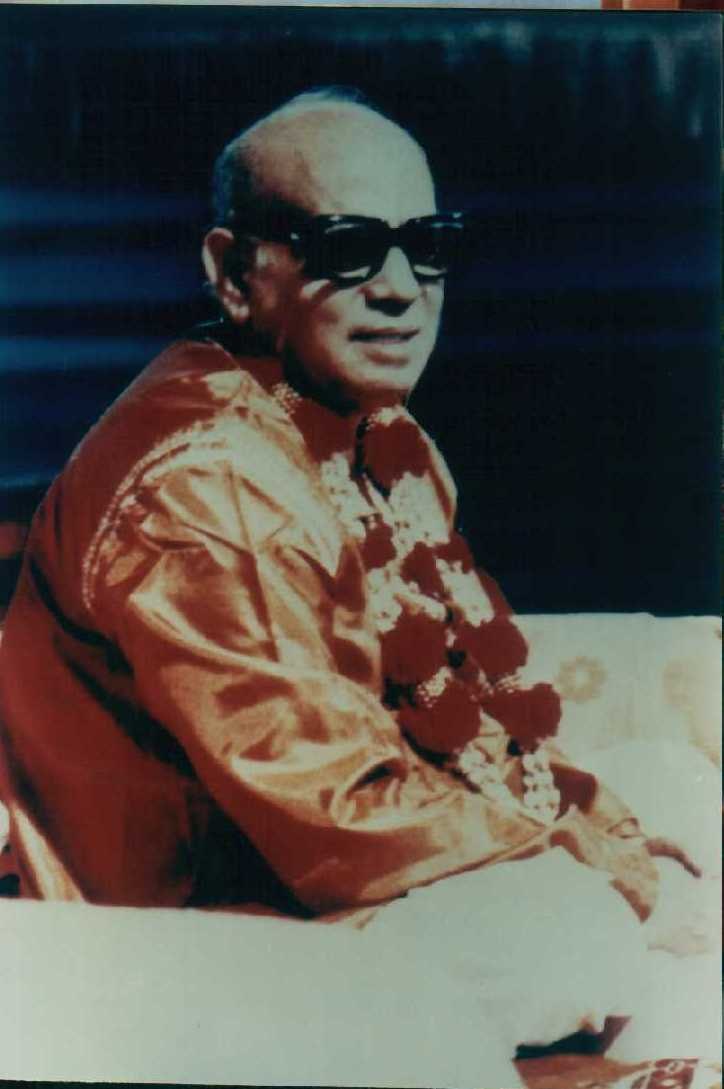
Shrii Shrii Ánandamúrti
“The practice of táńd́ava [spiritual dance] that is prescribed for you [men] is conducive for physical and spiritual progress. In my opinion, as many people as possible should practise táńd́ava.”
Shrii Shrii Ánandamúrti, Ánanda Vacanámrtam 22, “Táńd́ava and Kaośikii”

Stories

  • A courageous thing

    Bábá was giving DMC in many places in India, usually travelling by plane. That night He was going to Bombay from Calcutta. The West Bengal Government had banned táńd́ava but I was determined to conduct it, knowing Bábá would want it. Bábá was sitting on a chair surrounded by devotees doing kiirtan. I secretly organized a táńd́ava demonstration with two other brothers, even though I couldn't get permission from any of the other dádás. The two brothers began doing táńd́ava. I had given them the skulls to use and was conducting them. Suddenly several policemen jumped us; two of them beat me with their rifles. Bábá looked at me, and I looked at Him as all this was going on. I didn't feel anything but love for Him. The police dragged us to the van and took us to jail; we were released the following day. It was in all the newspapers. I saw Mr. R, who had flown with Bábá to Bombay. He told me that as soon as Bábá came out of the plane, the first thing He said was, "S did a very courageous thing today." Mr. R told me Bábá was very glad.Read the story

    — A worker who led a tándava demonstration, Calcutta, Ác. Shamitánanda Avt., “101 Bábá Stories”, no. 54

  • Testing the leg

    In December 1984 Bábá had an abscess on His right leg, so a surgeon was called. The operation was conducted at His residence and a doctor came every day to dress the abscess. Three or four days after Bábá's surgery, the doctor was transferred to a remote hospital in Ulberia. Even then, he was brought by car for Bábá's checkup and dressing, so that He would be able to recover as soon as possible. In this way, eight days had passed. One day, while the doctor was examining the wound, Bábá said, "I feel better now. I didn't feel any discomfort while doing táńd́ava today." The doctor was astonished: "What! You have been doing táńd́ava in this condition? Bábá, kindly don't do that. Wait for a few days more. Allow the wound to heal first and then do táńd́ava." Bábá said, "No, I was just testing if I could do táńd́ava or not," I was also present there, and we laughed, hearing the conversation between Bábá and doctor. Obviously, Bábá was following the Sixteen Points rigidly in His personal life. Whatever He had made mandatory for the Márgiis He would strictly follow ther Himself. …Read the story

    — A worker on duty with Bábá, Calcutta, December 1984, Ácárya Keshavánanda Avadhúta, “Reminiscences of Bábá: Memoirs”, “5.24. Bábá Danced Tándava”

  • Bábá danced it first

    When Bábá taught us Táńd́ava, He said, "I did not introduce the Táńd́ava dance to the world—it was Lord Shiva seven thousand years ago. Although, in such a long time, the practice has degenerated and changed substantially. So, I restored it to the form Lord Shiva originally introduced. Táńd́ava is the only exercise for the brain." Bábá didn't say it was the best; He said it was the only one. I was present when Bábá introduced Kaoshikii in Patna on September 6, 1978. He said, "Táńd́ava is traditionally only practiced by males, but I have been thinking for a while that women can also benefit from it. Therefore, I created Kaoshikii, which allows women to experience the same benefits as Táńd́ava." Then Bábá danced Kaoshikii in front of us. I was the first one to do it after Bábá. I was so skinny at the time. The daily practice of Kaoshikii can cure twenty-two diseases. Men, too, can do Kaoshikii, although they will benefit less. Bábá told us to do at least six rounds daily and that the more we do Kaoshikii, the more it will help us. So I do twelve rounds nowadays.Read the story

    — A worker present when kaoshikii was introduced, Patna, September 1978, Ác. Shamitánanda Avadhúta, “Bábá Unparalleled: 102 Stories”, no. 97

  • When the heart was not in it

    … When Bábá came to Taichung, the darshan was held at the teachers hostel. I was one of the ones who had prepared to do táńd́ava to welcome Bábá. We had also turned a rattan chair into a sedan chair to carry Bábá up and down the stairs and I was one of Bábá's sedan-chair porters. It was such a nice feeling to be carrying Bábá. Once again my guru was so close. How blessed I felt! In my heart, I carried a little secret, just between Bábá and me. I felt Bábá knew everything, even those emotions that I didn't verbalize. Before Bábá's darshans we would do táńd́ava, but before this particular darshan I didn't feel like doing táńd́ava, I didn't know why. I was feeling moody, almost like I wanted to go on strike. Strangely enough, on that day, Bábá didn't tell us to do táńd́ava. Instead we went straight into the next activity. I was shocked. I looked at Bábá and it felt like Bábá was saying, "You don't want to do táńd́ava? Then I don't care to see it either." It was a strange and unique feeling. If you don't want to do it then He won't force you. I believe many people had a similar experience. …Read the story

    — Rajendra, Taichung, Taiwan, August 1979, Avadhutika Ánanda Lalita Ác., “A Garland of Lights: Bábá’s Love for Taiwan”, “9.9. Ganesh”

What Shrii Shrii Ánandamúrti said

  • “The practice of táńd́ava is not suitable for women because of certain physiological constraints. But they need something too.” (Ánanda Vacanámrtam Part 22, “Táńd́ava and Kaośikii”
    1984)
  • “So táńd́ava represents the eternal fight, the fight for survival, the fight to maintain existence, the fight to establish oneself as a man in this world.” (Ánanda Vacanámrtam Part 6, “The Cosmic Father Has a Special Responsibility”
    1978)
  • “Competition in táńd́ava and kaośikii is very good and encouraging. I strongly support it. There should be competitions wherever there are Ananda Margiis.”
    Ánanda Vacanámrtam 22, “Táńd́ava and Kaośikii”

Videos

  • Tandava Dance. All round exercise, affecting brain and masculinityOpen on YouTube ↗

    Tandava Dance. All round exercise, affecting brain and masculinity

  • The Tantric Spirit: Overcoming Fear and Embracing LifeOpen on YouTube ↗

    The Tantric Spirit: Overcoming Fear and Embracing Life

  • Dada Sadananda on TandavaOpen on YouTube ↗

    Dada Sadananda on Tandava

  • Táńd́ava: guidelineOpen on YouTube ↗

    Táńd́ava: guideline

  • Benefits of Kiirttan // Kaoshiki and Tandava // A’ca’rya Shankara’nanda Avt .Open on YouTube ↗

    Benefits of Kiirttan // Kaoshiki and Tandava // A’ca’rya Shankara’nanda Avt .

  • Тандава – мужской танец – таймер и музыкаOpen on YouTube ↗

    Тандава – мужской танец – таймер и музыка

  • Тандава – мужской танец. Музыка и таймер 3 минутыOpen on YouTube ↗

    Тандава – мужской танец. Музыка и таймер 3 минуты

Music

Questions

Ask a question →