
Ananda Marga

Personal practices · On your own · In daily life

15 shiilas (rules of behavior)

Paiṋcadasha Shiila

“Observing Paiṋcadasha Shiila (15 Shiilas) in daily life.”Caryácarya 2, “Conduct Rules for Sádhakas”

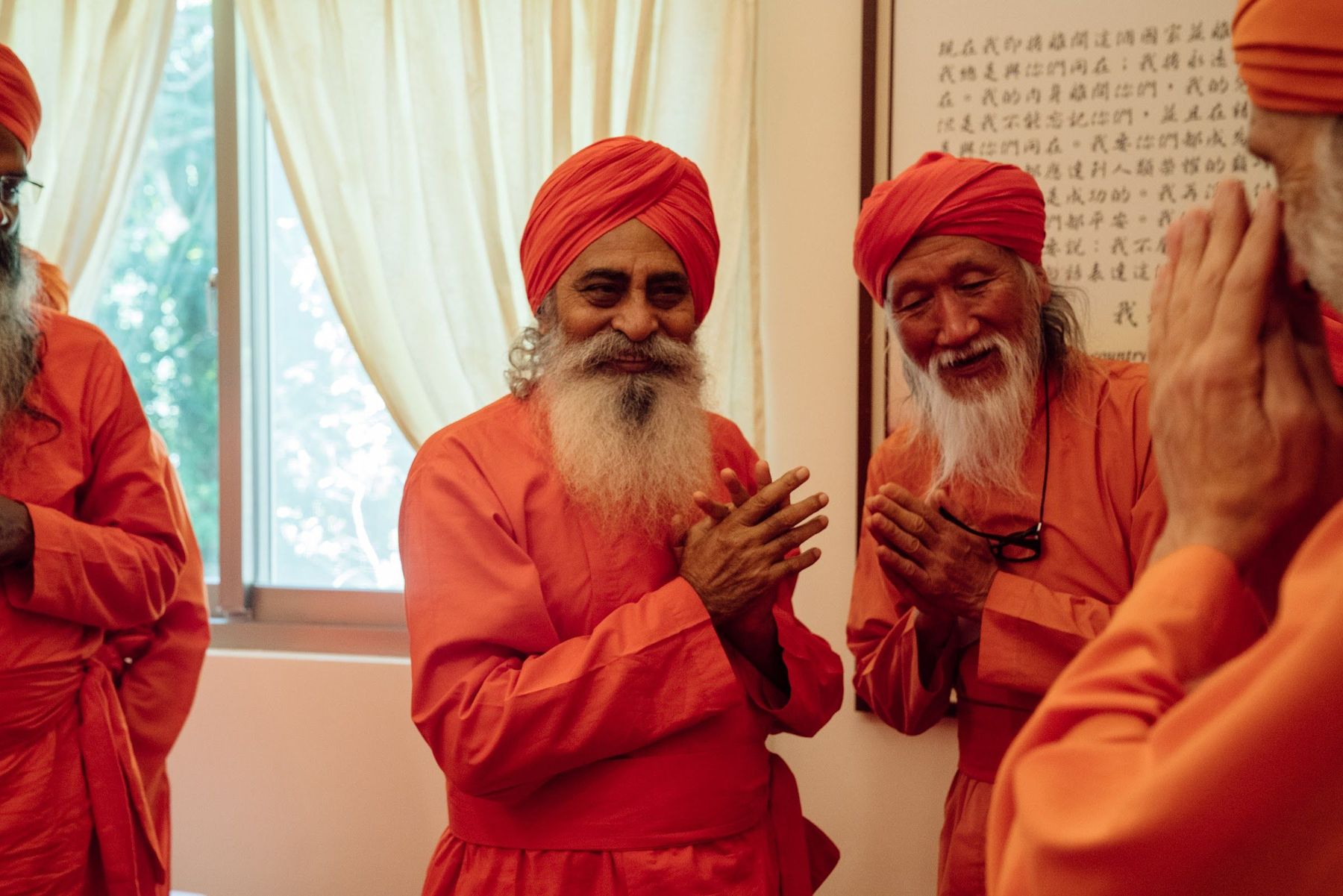
Two ácáryas in orange greeting each other with folded hands, smiling

Why we do it

The aim of yoga is Supreme Consciousness

  1. 1

    The aim is Supreme Consciousness. The goal of yoga is far off, like a distant star system.

  2. 2

    The instrument to reach that goal is the mind. It is the subtlest part of us, so it is the only part fine enough to reach the aim.

  3. 3

    The method is meditation. Seeing a star takes a telescope pointed at it; reaching Supreme Consciousness takes the mind pointed at it. That is meditation.

  4. 4

    The preparation and care. A telescope has to be looked after, cleaned and set right to see the stars. The mind is the same. Every practice does this for the mind, directly or through the body, because the mind is connected with the body.

    See how it leads to the goal ↓

Reaching the goal through 15 shiilas (rules of behavior)

The fifteen shiilas (rules of behavior) bring us to the goal through what we let into the mind about other people. Contempt, jealousy and anger stay in the mind that holds them; the rules turn the mind the opposite way, to friendliness, forgiveness and respect, and the mind grows calm and rises. Seeing in everyone an expression of the one Supreme Consciousness, the mind keeps that Consciousness in view, and a mind that keeps Him in view grows until it is one with Him. That is the goal of yoga.

  1. 01

    What you think of others stays in you

    Belittle someone, and that person's inferiority settles in your own mind.

    “Do not try to assume superiority by belittling others, because the other personʼs inferiority will become lodged in your mind.”
    Caryácarya 2, “Sádhaná (Intuitional Practice)”
  2. 02

    The opposite stance

    So the mind is turned the opposite way: patience against anger, honesty against dishonesty, generosity against greed, truth against falsehood.

    “Hence the policy of taking the opposite stance in battle is the most effective strategy; the mind must be guided in the opposite direction.”
    Subháśita Saḿgraha 10, “Taking the Opposite Stance in Battle”
  3. 03

    Friendliness in place of jealousy

    When someone is happy, the mind takes his happiness as a friend's.

    “Instead of feeling jealous one should think, “So-and-so is my friend – how wonderful! She is so happy!” If the mind thinks thus, then all jealousy will be removed.”
    Subháśita Saḿgraha 10, “Taking the Opposite Stance in Battle”
  4. 04

    Forgiveness

    In one's own life, forgiveness has no limit: the more, the better.

    “in individual life you can extend maximum forgiveness – rather, the more forgiveness, the better.”
    Subháśita Saḿgraha 10, “Taking the Opposite Stance in Battle”
  5. 05

    A balanced mind

    Giving respect to those whom no one respects, the mind becomes balanced and moves on.

    “Rather you must give respect to those who do not receive respect from anyone; in this way your minds will become balanced and you will progress.”
    Subháśita Saḿgraha 10, “Taking the Opposite Stance in Battle”
  6. 06

    Expressions of the One

    The beggar by the road and the minister alike are expressions of the one Supreme Consciousness. Seen so, every person turns the mind toward Him.

    “Are they not dignified human beings, are they not also expressions of the same One Supreme Consciousness?”
    Subháśita Saḿgraha 10, “Taking the Opposite Stance in Battle”
  7. 07

    One with Him

    A mind that keeps the Supreme always in view grows, and in the end becomes one with Him. This is the goal.

    “Thus when a mind constantly ideates on the Supreme Entity, it gradually expands and eventually becomes one with the Cosmic Mind and it automatically becomes composed.”
    Subháśita Saḿgraha 9, “Cognitive Faculty and the Supreme Desideratum”

What it is

Paiṋcadasha shiila are fifteen rules of behavior to be observed in daily life. They begin with forgiveness and magnanimity of mind; among them are restraint on behavior and temper, sweet and smiling behavior, moral courage, and setting an example by one’s own conduct before asking anybody to do the same. All fifteen are listed below.

In the sources

What studies found

Forgiveness, anger and health

15 shiilas (rules of behavior)

The fifteen, as Shrii Shrii Ánandamúrti gave them:

  1. 1

    Forgiveness.

    To remain free from any wish to take revenge on anyone. Forgiveness is a matter of one's own life: a wrong done to me I may forgive as far as possible; a wrong done to society is not mine to forgive.

    Forgiving is also for the one who forgives. Without forgiveness the mind keeps going back to the same thought, it does not let go, and you suffer from it. To forgive is to free yourself.

    Research agrees. People who held grudges in their thoughts showed a higher heart rate and blood pressure than when they imagined forgiving (Witvliet CVO, Ludwig TE, Vander Laan KL, 2001, Psychological Science). Across 103 studies with 26,043 people, forgiveness went with better health, mental health most of all (Rasmussen KR et al., 2019, Psychology & Health). In controlled trials, learning to forgive lowered depression, anger and stress (Akhtar S, Barlow J, 2018, Trauma, Violence & Abuse).

    Ánanda Vacanámrtam Part 4, “The Ten Characteristics of a Dhármika” (1978); Subháśita Saḿgraha Part 10, “Taking the Opposite Stance in Battle” (1970)

  2. 2

    Magnanimity of mind.

    A large heart: to care for others' interest, not one's own small one. Example: you are given two apples, and one of them is worse, rotten. You give the better one to a friend and keep the bad one. You do not think of your own selfish gain, you think of the other person. Courtesy is only a sign; magnanimity is to help the person one has hurt, even at one's own cost.

    Human Society Part 1, “Social Justice” (1959)

  3. 3

    Perpetual restraint on behaviour and temper.

    Not to let anger and excitement rule one's words and actions, at any time. An angry person has already lost his judgement; a calm one can act wisely.

    Subháśita Saḿgraha Part 10, “Taking the Opposite Stance in Battle” (1970)

  4. 4

    Readiness to sacrifice everything of individual life for Ideology.

    The ideology of Ananda Marga is self-realization and service to all: átma mokśártham jagat hitáya ca. Self-realization includes all the rules of conduct and all the spiritual practices; service includes work for the welfare of humanity and of the whole universe. It is the base of life: it decides how a person lives.

    In everyday life one tries to follow the ideology. When there is a choice between following it and doing something that goes against it, one chooses the ideology and gives up other things for it.

    To sacrifice one's life for the ideology means this: if it comes to betraying one's ideals and going against them, even under the threat of death, one must stand by them. One must keep to one's principles strictly, and be ready to follow the ideal so far that one would give one's life for it. It is a readiness, not a daily demand, but it shows what the ideal is: it is what makes a person human. “We say human life is an ideological flow”, and “where there is no ideological flow it is an animal.” One who gives up the ideal gives up that flow and slips down.

    Ánanda Vacanámrtam Part 30, “Ascribe Brahma-hood to All” (1971); A Guide to Human Conduct, “Shaoca” (1957): “one who is dedicated to an ideal must be prepared to gladly and eagerly give up one's all – even one's life – for the collective interest.”

  5. 5

    All-round self-restraint.

    Control in every sphere: food, sleep, speech, desire. Control does not mean killing a desire, it means guiding it.

    A Guide to Human Conduct, “Brahmacarya” (1957)

  6. 6

    Sweet and smiling behaviour.

    To meet people warmly, with a kind word and a smile, so that they feel welcome and at ease.

  7. 7

    Moral courage.

    To do and say what is right even when it is unpopular, risky or against one's own interest; not to keep silent before injustice.

  8. 8

    Setting an example by individual conduct before asking anybody to do the same.

    First do it yourself, then ask others. People follow what they see, not what they hear.

  9. 9

    Keeping aloof from criticizing others, condemning others, mudslinging and all sorts of groupism.

    Not to speak ill of people and not to form cliques. When a few people sit together they start to criticize others, and this degrades the mind; it is better to sing the glories of the Lord.

    Subháśita Saḿgraha Part 10, “Taking the Opposite Stance in Battle” (1970)

  10. 10

    Strict adherence to the principles of Yama and Niyama.

    The ten moral principles are the base of the whole practice; without them sádhaná is not possible. See the Yama and Niyama page.

  11. 11

    Due to carelessness, if any mistake has been committed unknowingly or unconsciously, one must admit it immediately and ask for punishment.

    When we make a mistake, a feeling of guilt can torment us. When we tell someone about it, ask for the punishment and carry it out, the guilt goes. It is as if a stone were lifted from our shoulders.

    Ananda Marga Caryácarya Part 2, “Sádhaná (Intuitional Practice)” (1956): “If there is even a little fault in you, you should keep your mouth closed and accept it all, and you should thank the person for pointing out your fault and ask for punishment.”

  12. 12

    Even while dealing with a person of inimical nature, one must keep oneself free from hatred, anger and vanity.

    Even with an enemy one keeps one's mind clean. Anger and hatred harm the one who holds them first; a calm mind deals with the enemy better.

    Subháśita Saḿgraha Part 10, “Taking the Opposite Stance in Battle” (1970)

  13. 13

    Keeping oneself aloof from talkativeness.

    Not to talk too much or idly. Empty talk wastes energy and often turns into gossip.

  14. 14

    Obedience to the structural code of discipline.

    To follow the rules and the order of the organization one belongs to, not one's own will.

    Why. If everyone acts on his own will, everyone pulls in his own direction, the work does not add up, and the collective is weak. Lack of discipline has often been the main reason a society was destroyed, and the indiscipline of some can make the peaceful life of the others impossible. Discipline is therefore absolutely necessary to keep the collective alive.

    It does not forbid thinking. In the Marga reason comes after obedience: if after obeying one feels a rule is wrong, one has every right to argue and to have it changed; but arguing before obeying leads to indiscipline.

    A Few Problems Solved Part 7, “Social Psychology” (1957)

  15. 15

    Sense of responsibility.

    What a person has taken on, he must see through to the end: do it, answer for it, not drop it half-way, and not pass the responsibility to others. If someone has taken up a task, he is the one answerable for it until it is finished.

Shrii Shrii Ánandamúrti, Caryácarya Part 2, “Paiṋcadasha Shiila”, c. 1975

Download the sheet (PDF)

Stories

  • A very nice man

    At one time, one of the brothers I had initiated was Bábá's cook. He was a simple boy and I loved him very much. But for some reason, the PA was always angry with him and scolded him constantly. I saw this boy crying often, and I became annoyed. I avoided the PA and wouldn't talk to him. One evening I went on Field Walk with Bábá. I sat beside Him in the car, with Dádá T in the front seat. As soon as the car started, Bábá looked at me. "You know," Bábá said, "the PA is a very nice man. He works hard and takes care of many important things. He is a very good man. Is it not?" "Yes Bábá, he is a very nice dádá," I replied. I realized that I should not harbour bad thoughts about Dádá, and I made a concerted effort to befriend him. When we were closer, I requested him not to scold the cook so much, and to give him more love.Read the story

    — An ácárya on a field walk with Bábá, Ác. Shamitánanda Avt., “101 Bábá Stories”, no. 31
  • “He is right”

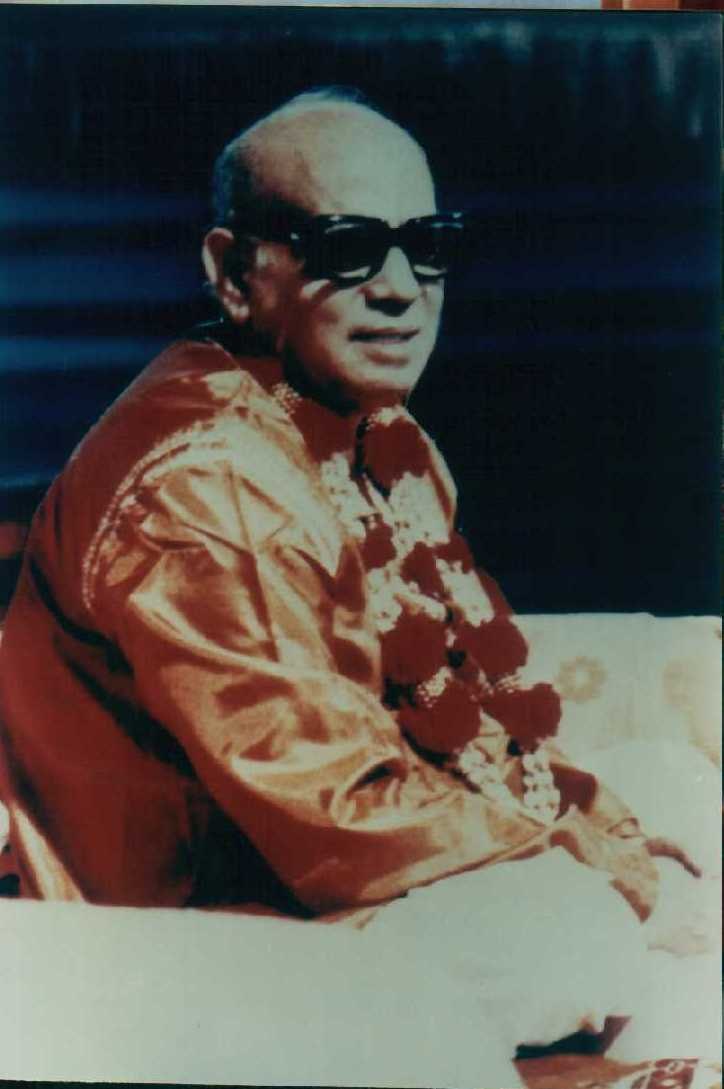
    In May of 1989, I went to Calcutta as the representative of Georgetown sector (GT), to attend global RDS. I was extremely anxious; it was going to be the first time I was to contemporaneously report directly to Bábá. Bábá had a systematic way of receiving Sectorial reports. GT sector was the fifth in order. After listening to the representative of New York sector, the fourth, Bábá declared He would not receive any further reports; He stood up and left the hall. … I was desperate, internally tormented. I burst out into tears. My crying was so loud and the tears so big! Everyone in the hall was surprised, many A’ca’ryas come to console me but it simply amplified my lamentation. My cries became rambunctious, thundering the walls and falling instantaneously into my Bábá’s ears. In His room, on the top floor, Bábá heard me crying. He immediately called Keshavanandji and queried, "Who is crying down there?" Keshavananda: "It should be Pavananda, Bábá." Bábá: "Why is he crying?" Keshavananda: "He said he was so disappointed and mentally broken for not being able to submit his report to You Bábá." Bábá: "He is right; I should have received his report. Tell him not to worry, tell Him to bring garlands tomorrow morning when I go for morning walk." At that time, Bábá didn’t receive garlands due to His health, but we were very happy to receive this news and all came to congratulate me, to praise my resilience through shedding tears. The next morning, Bábá as promised, personally came to the hall and accepted our garlands. …Read the story

    — A worker reporting from the Georgetown sector, Calcutta, May 1989, Ácárya Pavanananda Avadhúta, in “Shrii Shrii Ánandamúrti: Journey of a Mystery through African Experience”, “He Is Right; I Should Have Received His Report”

  • A dream about criticism

    Some days later, I had another dream. This one happened on a day that I had criticized another worker, even though other people were also present. I regretted my behavior and, while falling asleep, I pleaded to Bábá to free me from this sort of nasty psychological tendency. This was my dream: A Márgii sister committed an error. In front of others, I chided her repeatedly for her mistake. Eventually I lifted a stick and, while still reproaching her, softly beat her on the head. She was thoroughly embarrassed. From behind a curtain, I heard Bábá’s voice calling to her to come immediately. She left me and walked over to Bábá. I felt very bad about what I had done. After a few minutes, she returned. I asked her, “What did Bábá say to you?” “He was angry with me,” she said, “because I silently tolerated your public criticism of me.” Before I could ask her anything more, Bábá again called her out of the room. And I woke up.Read the story

    — A monk who had criticized a fellow worker in public, Dada Dharmavedananda, “Travels with the Mystic Master”, “Therapeutic rebuke”

  • Even an opponent

    Bábá said that the conduct of a spiritual aspirant, a Sadhak, should be so perfect and flawless that even Sádhaka's enemy might appreciate him saying, "Although my ideas do not match with his (i.e. spiritual aspirant's) but he is a nice person".Read the story

    — A Márgii at General Darshan, Ranchi, 1960s, Kamal Kumar, “My Experiences with Bábá”, “2.2.4 Conduct of a spiritual aspirant”

  • Do not complain about the rain

    Once again I got an opportunity to accompany Bábá during field walk. It was evening and I was walking by Bábá's side. It had rained that day and the road was wet and filthy. We were walking slowly and cautiously. I said, "The rainy season is bad. All we see around us is mud and filth." Bábá didn't like my comment. Putting His hand to my mouth, Bábá advised me, "Sádhakas should not make such comments. If there were no rain, life would be imperilled. Hence rain is a must."Read the story

    — Ácárya Keshavánanda Avadhúta, on a field walk with Bábá, Ácárya Keshavánanda Avadhúta, “Reminiscences of Bábá”, “1.11. Always Speak Positively”

What Shrii Shrii Ánandamúrti said

  • “Before censuring anyone for some fault, make sure that you do not have the same defect.”
    Caryácarya 2, “Sádhaná (Intuitional Practice)”
  • “Actions and not logic establish one’s superiority.”
    Caryácarya 2, “Sádhaná (Intuitional Practice)”
  • “Overcome censure by praise, darkness by light.”
    Caryácarya 2, “Sádhaná (Intuitional Practice)”
  • “If there is even a little fault in you, you should keep your mouth closed and accept it all, and you should thank the person for pointing out your fault and ask for punishment.”
    Caryácarya 2, “Sádhaná (Intuitional Practice)”
  • “What is forgiveness? It means to remain free from vindictive attitudes towards anyone.”
    Ánanda Vacanámrtam 4, “The Ten Characteristics of a Dhármika”
  • “A dhármik person – and indeed an intelligent person – must be free from anger.”
    Ánanda Vacanámrtam 4, “The Ten Characteristics of a Dhármika”
  • “That is, neither is it proper for me to blindly forgive a wrongdoer, nor is it proper for me to blindly punish a wrongdoer. We should think properly before we act.”
    Ánanda Vacanámrtam 4, “The Ten Characteristics of a Dhármika”

Videos

Questions

Ask a question →