
Ananda Marga

Personal practices

Kaoshikii

Kaośikii

“I invented kaośikii on September 6th [1978]. This dance is both an exercise, and a medicine for twenty-two diseases.”Ánanda Vacanámrtam 6, “The Cosmic Father Has a Special Responsibility”

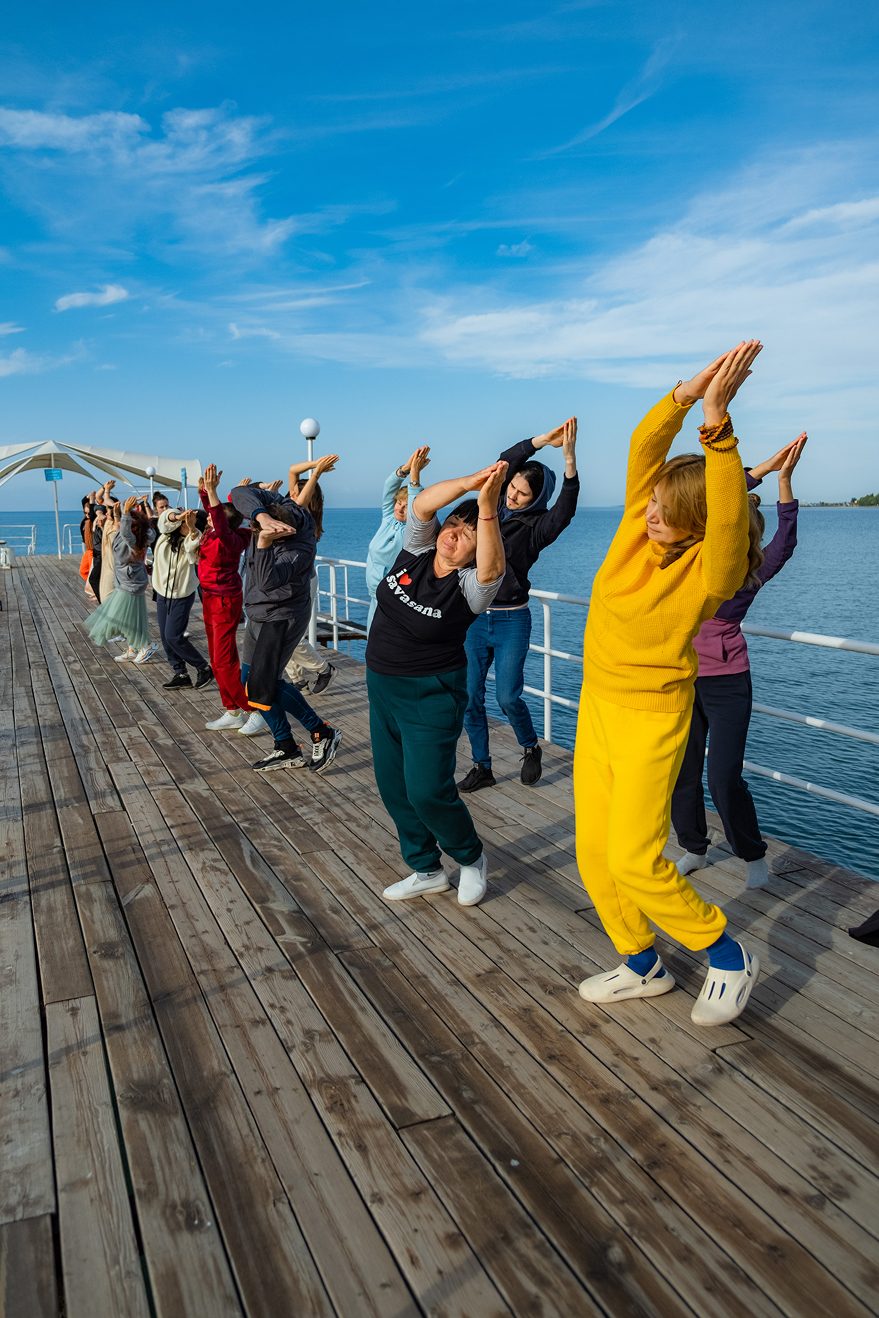
A row of people dancing kaoshikii on a wooden pier above the sea, bending to the side with joined hands raised

Why we do it

The aim of yoga is Supreme Consciousness

  1. 1

    The aim is Supreme Consciousness. The goal of yoga is far off, like a distant star system.

  2. 2

    The instrument to reach that goal is the mind. It is the subtlest part of us, so it is the only part fine enough to reach the aim.

  3. 3

    The method is meditation. Seeing a star takes a telescope pointed at it; reaching Supreme Consciousness takes the mind pointed at it. That is meditation.

  4. 4

    The preparation and care. A telescope has to be looked after, cleaned and set right to see the stars. The mind is the same. Every practice does this for the mind, directly or through the body, because the mind is connected with the body.

    See how it leads to the goal ↓

Reaching the goal through Kaoshikii

Kaośikii brings us to the goal through the body and the mind. As an exercise and a medicine it clears away the small illnesses that trouble sádhaná. It is the dance of the expansion of mind: it opens the kośas, the five layers of the mind, and brings the inner self outward. Every movement is an idea addressed to Parama Puruśa, ending in complete surrender. The dance starts on the level of the mind and ends on the level of the spirit: it gathers the mind at the point where Parama Puruśa resides, just above the subtlest layer.

  1. 01

    A medicine

    Kaośikii is an exercise and also a medicine: an antidote to twenty-two kinds of disease, and a panacea for almost all diseases of women.

    “It is a sort of panacea for almost all female diseases, and for many male diseases in younger boys.”
    Ánanda Vacanámrtam 6, “The Cosmic Father Has a Special Responsibility”
  2. 02

    Hindrances to sádhaná removed

    Small illnesses, liver trouble for instance, cause difficulties in sádhaná from time to time. Kaośikii was made to remove hindrances of this kind.

    “For instance, small diseases like liver trouble, may cause problems from time to time, and to remove these types of hindrances, I invented the kaośikii [“the expansion of mind”] dance on the sixth of September 1978.”
    The Awakening of Women, “The Dance of the Expansion of Mind”
  3. 03

    The layers of the mind open

    Kośa means the inner self, the layers of the mind. Kaośikii, the dance of the expansion of mind, opens these layers and, together with kiirtana, brings the inner self outward.

    “Kośa means “inner self”, and thatʼs why this dance has immense value in the psychic and spiritual strata of human life.”
    Ánanda Vacanámrtam 12, “The Value of Dance”
  4. 04

    Five layers, like petals

    The mind has five layers, one inside another like the petals of a plantain flower: from the crude mind that works through the senses, through the subtle mind that remembers and reflects, to the three layers of the causal mind, the subtlest of them golden.

    “Paiṋcakośátmiká jaeviisattá kadaliipuśpavat. [The living being is the composite of five kośas (layers of mind), like a plantain flower (with its petals).]”
    Ánanda Sútram, 3-1
  5. 05

    Every movement an idea

    It is a devotional dance: each movement is a mudrá, a gesture that says something to Parama Puruśa, from the first link with Him to complete surrender.

    “All three of these dances are devotional dances, and as such are mudraic.”
    Ánanda Vacanámrtam 12, “Dances and the Path of Vidyá”
  6. 06

    From mind to spirit

    Lalita mármika is purely spiritual and táńd́ava physico-psycho-spiritual. Kaośikii begins in the mind and ends in the spirit.

    “kaośikii is a psycho-spiritual dance – it starts on the psychic level and culminates on the spiritual level.”
    Ánanda Vacanámrtam 12, “A Purely Personal Entity”
  7. 07

    Where Parama Puruśa resides

    First the dance sets the body right. Then it moves the stuff of the mind and gathers it at one point, the point of the soul where Parama Puruśa resides. Just above the subtlest layer is His all-blissful stance. This is the goal.

    “All these are primarily meant to first of all ensure objective adjustment: and thereafter, they vibrate the cittáńu [ectoplasmic stuff] which in turn is concentrated at a certain point touching the point of the soul, where Parama Puruśa resides.”
    The Awakening of Women, “The Dance of the Expansion of Mind”

What it is

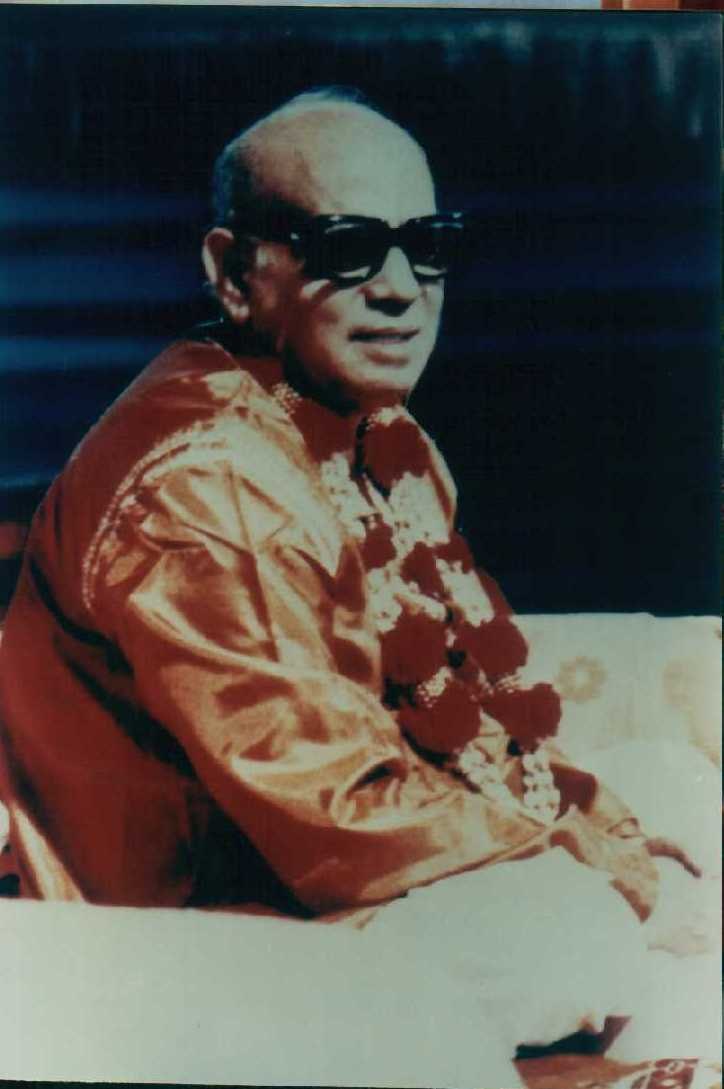
Kaośikii is a dance that Shrii Shrii Ánandamúrti introduced on September 6, 1978. Its name means the expansion of mind.

Green and chocolate brown, two colours pleasing to the eye, have been chosen for those who dance kaośikii.

In the sources

“Dancing is an expression of human life. Kiirtana is an expression of the human mind. There are so many expressions of the human self. The particular nature of expression through dance and through Kiirtana which brings the inner self outward, that is, gives proper expression to the inner self – that particular nature of dance, together with Kiirtana, is called “Kaośikii”. “Kośa” means “inner self”, and that’s why this dance has immense value in the psychic and spiritual strata of human life.”Ánanda Vacanámrtam 12, “The Value of Dance”

“I invented kaośikii on September 6th [1978]. This dance is both an exercise, and a medicine for twenty-two diseases. It is a sort of panacea for almost all female diseases, and for many male diseases in younger boys. It is a medicine for most liver diseases. It assures safe deliveries for women, and also checks the advent of old age. It is a medicine.”Ánanda Vacanámrtam 6, “The Cosmic Father Has a Special Responsibility”

“Furthermore, it is found that human beings are sometimes affected by various diseases; and frequently they are faced with various difficulties with respect to their sádhaná. These impediments many or may not be major. For instance, small diseases like liver trouble may cause problems from time to time, and to remove these types of hindrances, I invented the Kaoshikii dance on the 6th of September 1978. This dance serves as an antidote to twenty-two types of diseases.”A Few Problems Solved 3, “Song, Dance and Instrumental Music”

The five layers of the mind

The mind has five layers, kośas, from the crudest to the subtlest, like the petals of a plantain flower. The physical body, annamaya kośa, is their crude receptacle.

Kámamaya kośa, the crude or conscious mind. It deals with the sense and motor organs and controls the physical longings.

Manomaya kośa, the subtle or subconscious mind. It has the capacity of recollection and contemplation.

Atimánasa kośa, the supramental mind, the first layer of the causal mind.

Vijiṋánamaya kośa, the subliminal mind. In this sphere the saḿskáras exist.

Hirańmaya kośa, the subtle causal mind, the subtlest of all; hirańmaya means golden. Just above this layer is the all-blissful stance of the Supreme Entity.

Kaośikii, the dance of the expansion of mind, is danced to open these layers.

The movements and their meaning

  1. 1

    Kaośikii · 1Ánanda Vacanámrtam 12, “Dances and the Path of Vidyá”

    “The two hands upraised and folded together represent, ‘Now I am trying to establish a link with Parama Puruśa.’”

  2. 2

    Kaośikii · 2Ánanda Vacanámrtam 12, “Dances and the Path of Vidyá”

    “Both hands bending to the right indicate, ‘I know the right way to request You.’ The bending of the body should be at 45-degree angular projection.”

  3. 3

    Kaośikii · 3Ánanda Vacanámrtam 12, “Dances and the Path of Vidyá”

    “The leftward movement represents, ‘I know how to fulfill Your demands.’”

  4. 4

    Kaośikii · 4Ánanda Vacanámrtam 12, “Dances and the Path of Vidyá”

    “The movement of bending in front suggests complete surrender.”

  5. 5

    Kaośikii · 5Ánanda Vacanámrtam 12, “Dances and the Path of Vidyá”

    “The backward bending represents, ‘I am ready to face all troubles that may come.’”

  6. 6

    Kaośikii · 6Ánanda Vacanámrtam 12, “Dances and the Path of Vidyá”

    “The last ‘tá, tá’ represents, ‘O Lord, I repeat Your rhythm.’”

  7. 7

    The feetÁnanda Vacanámrtam 15, “Táńd́ava, Shástra, and the Teachings of Shiva”

    “The heel of the foot is related to the sound tá, the ball of the foot to the sound dhin, and the toes to the sound dhae. In the kaośikii dance all three are utilized to some extent. But in the táńd́ava dance tá is utilized more than dhin [and dhae not utilized at all].”

Given for women, good for men too

Táńd́ava is not suitable for women. During táńd́ava the body releases a great deal of testosterone, the male hormone; a woman's hormonal system would change and she would begin to look like a man, with hair growing on the body and so on. But women need something too, so kaośikii was given.

Shrii Shrii Ánandamúrti
“When in Patna, I invented a new type of dance-exercise for women, which I have called kaośikii nrtya. As for the benefits, kaośikii is as important as táńd́ava. Kaośikii is beneficial for both men and women.”
Shrii Shrii Ánandamúrti, Ánanda Vacanámrtam 22, “Táńd́ava and Kaośikii”

What studies of dance found

Stories

  • The sisters’ dance

    Baba was still in Bankipur jail, when Didis Vanii & Niruttara asked about Táń́dava for sisters, Didi Vanii asked, "Can sisters do Táń́dava"? BABA answered, "You see, biology does not want. I want but biology does not want." Later Baba replied to another sister that when HE comes out, HE will teach a dance for sisters that will have all the good effects of Táń́dava but not its bad effects. It was the night of September 6th,'78 at Baba's quarters. Immediately after HE bid us Namaskar after evening darshan and just as HIS wheel chair was going to be moved, Aincala said, "Baba, when will you teach us the sisters' dance?" I chimed in, "Baba, we really need it." With a wave of HIS hand was HIS chair moved into the house, BABA said, "It is under consideration." We found out next day that as soon as the margiis went home, BABA called some VSS workers on duty at HIS quarters and directed them how to dance it, so that they may teach it to us WTs & LFTs the next day. That morning, BABA sent word that a group of sisters from India and other countries should learn it very well and be prepared to demonstrate it in HIS presence. Needless to say we practised & perspired and practised still more in the sweltering Patna heat. BABA said that its name is 'Kaoshikii Nrtya', the dance of Kaoshikii. BABA asked, "What does Kaoshikii mean? I blurted out, BABA, Shivanii", HE waved HIS hand and said, "No, not philosophy", Kaoshikii means expansion of the mind. Kaoshik is the male and Kaoshikii is female." Kaoshikii Nrtya has all the positive effects of Táń́dava minus its negative effects on the female physique and psyche. BABA said that brothers can also dance Kaoshikii Nrtya but as it benefits women to a greater extent, "It can be called a sisters' dance." He said this with a twinkle in HIS eye and a playful smile.Read the story

    — A sister who asked Bábá for the dance, Patna, September 1978, Brcii Valaka Ác., in “Yoga Dances from Shrii Shrii Anandamurtiiji (Kaośikii)”, “Kaoshikii Nrtya – The Dance of Mind Expansion”

  • Bábá danced it first

    When Bábá taught us Táńd́ava, He said, "I did not introduce the Táńd́ava dance to the world—it was Lord Shiva seven thousand years ago. Although, in such a long time, the practice has degenerated and changed substantially. So, I restored it to the form Lord Shiva originally introduced. Táńd́ava is the only exercise for the brain." Bábá didn't say it was the best; He said it was the only one. I was present when Bábá introduced Kaoshikii in Patna on September 6, 1978. He said, "Táńd́ava is traditionally only practiced by males, but I have been thinking for a while that women can also benefit from it. Therefore, I created Kaoshikii, which allows women to experience the same benefits as Táńd́ava." Then Bábá danced Kaoshikii in front of us. I was the first one to do it after Bábá. I was so skinny at the time. The daily practice of Kaoshikii can cure twenty-two diseases. Men, too, can do Kaoshikii, although they will benefit less. Bábá told us to do at least six rounds daily and that the more we do Kaoshikii, the more it will help us. So I do twelve rounds nowadays.Read the story

    — A worker present when kaoshikii was introduced, Patna, September 1978, Ác. Shamitánanda Avadhúta, “Bábá Unparalleled: 102 Stories”, no. 97

  • “Very good”

    … One of the charming features of Bábá's visits to France and elsewhere was the performance by Márgiis of kaoshikii and táńd́ava. It was performed at the airport and before each darshan. Our Jágrti was not on the ground floor, and the neighbours below were sensitive to loud noise made by dancing in our meditation hall. So, during the performance of kaoshikii and táńd́ava, there were only two or three dancers. Before one of the afternoon discourses there was a very unusual performance of kaoshikii. Dádá Rudreshvarananda (who hails from France) was leading the dance by calling the mantra and two recently initiated boys were trying to perform the dance, which is quite complicated for beginners. So, that day one boy was bending forward while the other was bending sideways, and to make matters worse, Dádá made a mistake in calling the rhythm of the dance. Still, when it was over Bábá said, "Very good," and gave a big smile. Everyone laughed. Then Bábá explained, "The foot movements were not correct, the body movements were not correct, and even the calling was not correct, but still I say, 'Very good.' Why? Because I like to give encouragement." …Read the story

    — An ácárya hosting Bábá, Lyon, 1979, “Divine Love: European Experiences with Shrii Shrii Anandamurti”, “Personal Contact, Kaoshikii, Táńd́ava”

What Shrii Shrii Ánandamúrti said

  • “The practice of táńd́ava is not suitable for women because of certain physiological constraints. But they need something too.” (Ánanda Vacanámrtam Part 22, “Táńd́ava and Kaośikii”
    1984)
  • “Competition in táńd́ava and kaośikii is very good and encouraging. I strongly support it. There should be competitions wherever there are Ananda Margiis.”
    Ánanda Vacanámrtam 22, “Táńd́ava and Kaośikii”

Videos

  • Kaoshikii - Yoga Dance. Tutorial videoOpen on YouTube ↗

    Kaoshikii - Yoga Dance. Tutorial video

  • Kaos'ikii - The dance that brings health and infinite loveOpen on YouTube ↗

    Kaos'ikii - The dance that brings health and infinite love

  • Yoga dance "Kaoshikii"Open on YouTube ↗

    Yoga dance "Kaoshikii"

  • Kaoshikii dance. 21 minutes. Slow tempoOpen on YouTube ↗

    Kaoshikii dance. 21 minutes. Slow tempo

  • Kaoshikii dance. 21 minutes. Fast paceOpen on YouTube ↗

    Kaoshikii dance. 21 minutes. Fast pace

  • Benefits of Kiirttan // Kaoshiki and Tandava // A’ca’rya Shankara’nanda Avt .Open on YouTube ↗

    Benefits of Kiirttan // Kaoshiki and Tandava // A’ca’rya Shankara’nanda Avt .

Music

Questions

Ask a question →