
Ananda Marga

Personal practices · On your own · As a daily duty

Pitr yajiṋa

Remembering the rśis and ancestors

Part of: Bath →

“After finishing your bath, before drying your body, recite the following mantra while performing the prescribed mudrá and looking at any luminous object.”Caryácarya 3

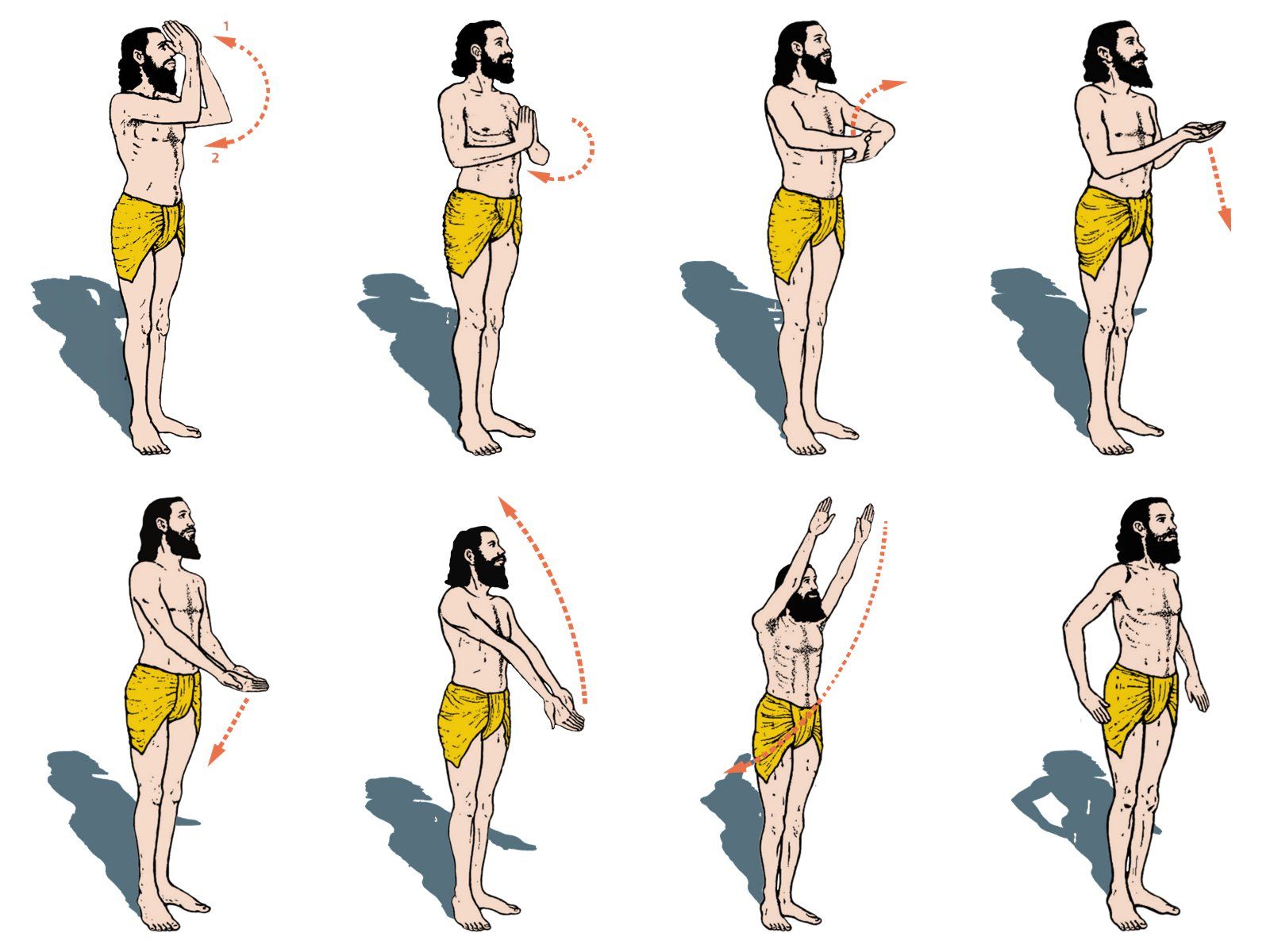
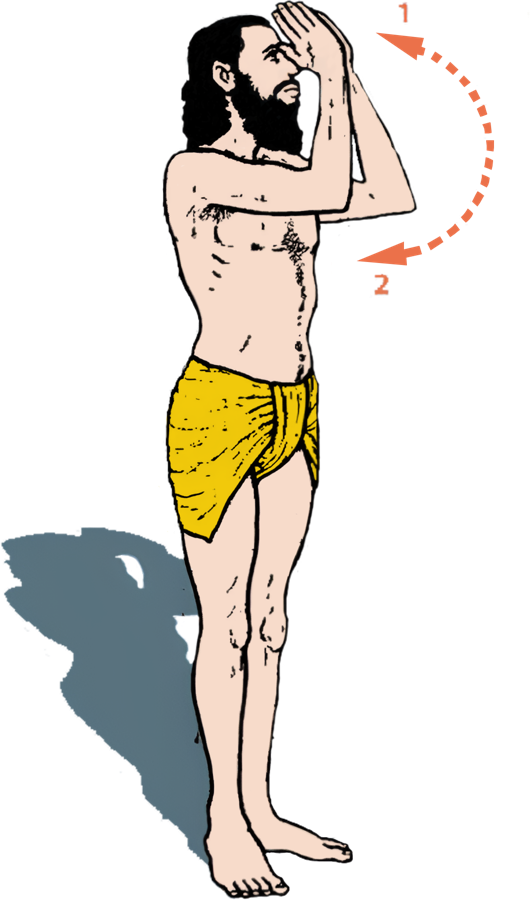
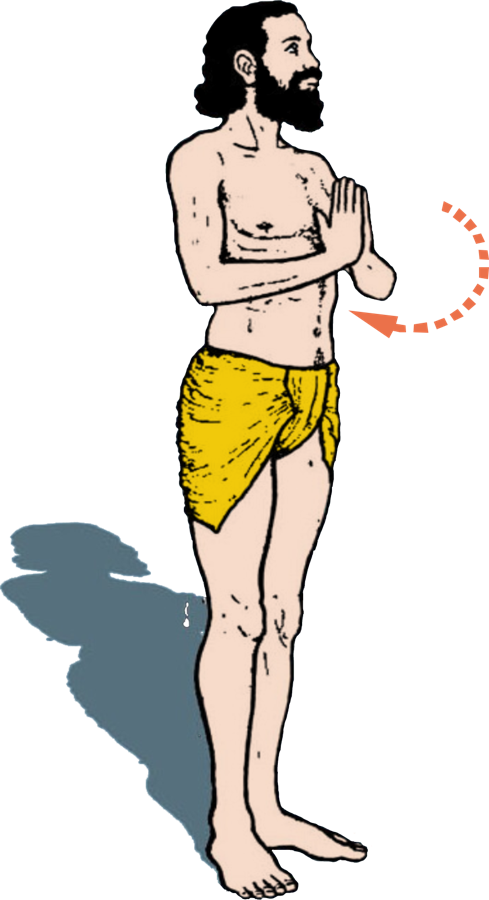
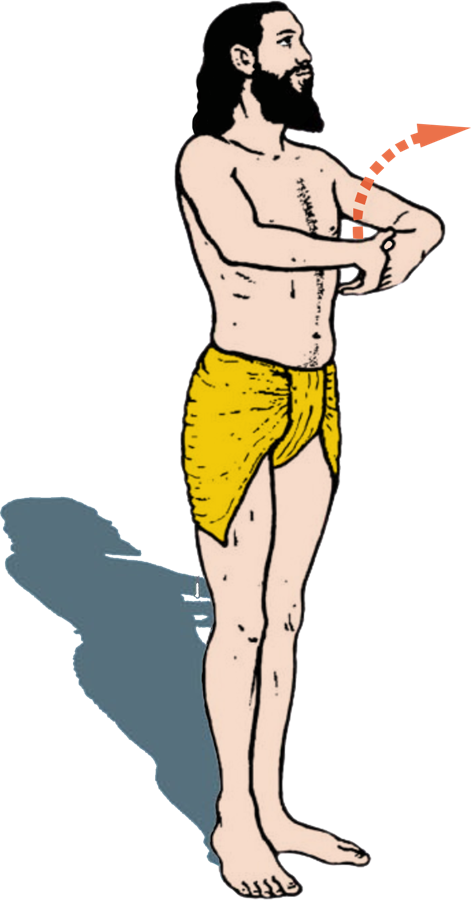
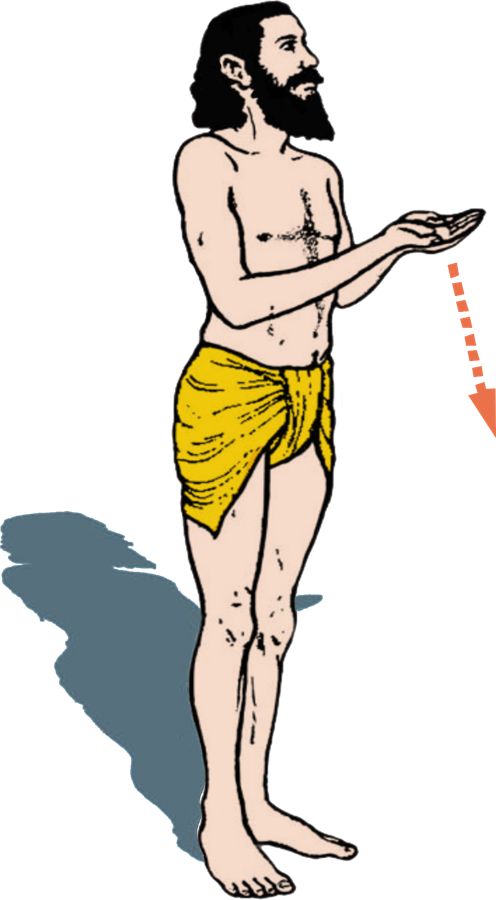
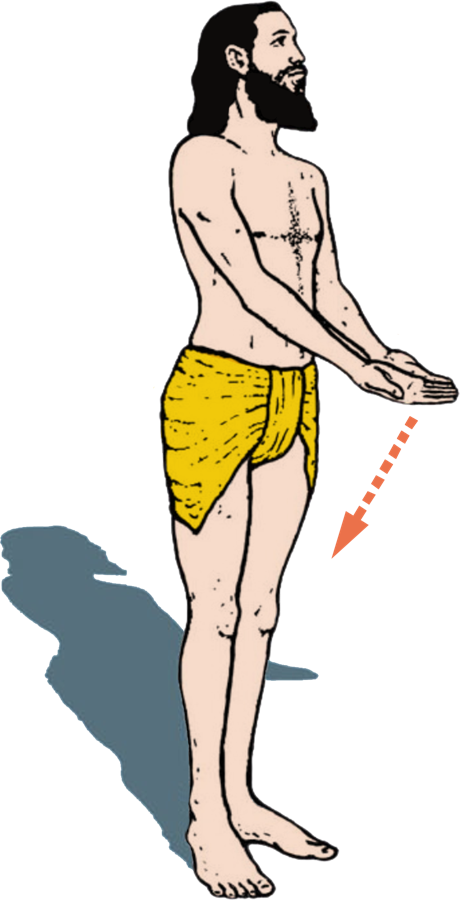
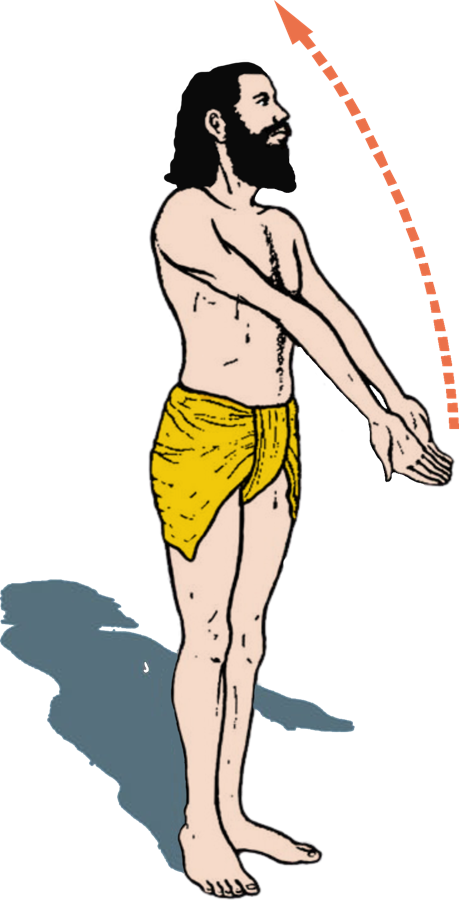
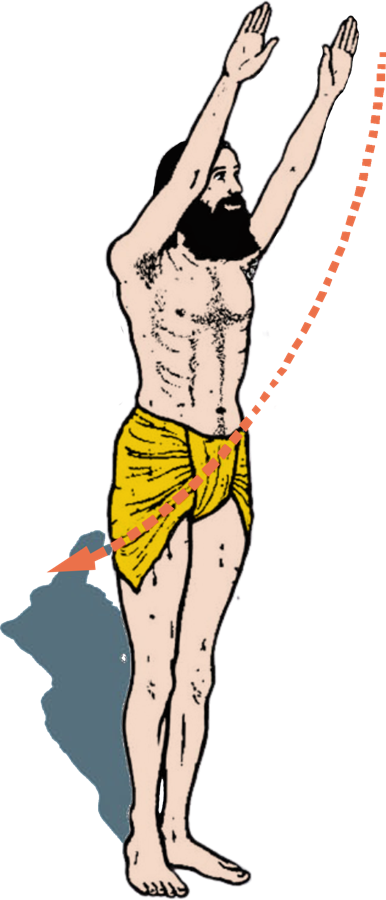
The eight gestures of pitr yajiṋa, drawn one after another

Why we do it

The aim of yoga is Supreme Consciousness

  1. 1

    The aim is Supreme Consciousness. The goal of yoga is far off, like a distant star system.

  2. 2

    The instrument to reach that goal is the mind. It is the subtlest part of us, so it is the only part fine enough to reach the aim.

  3. 3

    The method is meditation. Seeing a star takes a telescope pointed at it; reaching Supreme Consciousness takes the mind pointed at it. That is meditation.

  4. 4

    The preparation and care. A telescope has to be looked after, cleaned and set right to see the stars. The mind is the same. Every practice does this for the mind, directly or through the body, because the mind is connected with the body.

    See how it leads to the goal ↓

Reaching the goal through Pitr yajiṋa

Pitr yajiṋa brings us to the goal by turning a daily act into an offering. After every bath one salutes the ancestors and the rśis, of whom one is a continuation, and offers them reverence and love, seeing Brahma in the offering, in what is offered, in the one who receives it and in oneself. Work done with this idea becomes spiritual practice, and the one who offers, having done the work Brahma gave, becomes one with Brahma. That is the goal of yoga.

  1. 01

    A continuation

    Before us, over about a million years, so many people came into this world and left it. I am their descendant, a continuation of them in the flow of the human race.

    ““I do namah to those people,” because I am a continuity of those people in the flow of the human race.”
    Ánanda Vacanámrtam 30, “Ascribe Brahma-hood to All”
  2. 02

    The rśis

    Among them were great people who invented things: the bullock cart in its age, the aeroplane, penicillin, the knitting we wear. Such people are rśis, and what we live with every day is their work.

    “So, rśidevebhyo namah – “I also do namah to those rśis who invented so many things.” And the collection of their inventions is modern human civilization.”
    Ánanda Vacanámrtam 30, “Ascribe Brahma-hood to All”
  3. 03

    An offering

    To them something is offered, and it is nothing material: it is what the heart has.

    “Now I am offering something for Brahma. What am I offering? My reverence. My respect. My cordiality. My love.”
    Ánanda Vacanámrtam 30, “Ascribe Brahma-hood to All”
  4. 04

    All is Brahma

    Brahma-hood is ascribed to everything in the act: to the offering itself, to what is offered, to the one who receives it, and to the one who offers.

    “Offering; offered; to whom offered; offerer, offering personality – that person is also Brahma.”
    Ánanda Vacanámrtam 30, “Ascribe Brahma-hood to All”
  5. 05

    The mantra and madhuvidyá

    The mantra stands closest to madhuvidyá, the practice of remembering that everything is Brahma: the same ascription of Brahma-hood, here to the work of offering.

    “You should know its meaning. It has closest proximity to this madhuvidyá, that is, this ascription of Brahma-hood to worldly work.”
    Ánanda Vacanámrtam 30, “Ascribe Brahma-hood to All”
  6. 06

    Work becomes practice

    A person is here for spiritual practice, yet has to work to keep the body. Madhuvidyá says: whenever one does any worldly work, ascribe Brahma-hood to it. Worldly work done so is no longer time lost: it too is spiritual practice.

    “And thatʼs why madhuvidyá [the practice of remembering that everything is Brahma] says that whenever one is to do any worldly work, one is to – what? Ascribe Brahma-hood, ascribe Náráyańa-hood, to that worldly duty. So while doing worldly duties, attending to worldly duties, one is not wasting oneʼs time, one is doing spiritual practice. Because spirituality has been imposed on, has been ascribed to, that worldly work.”
    Ánanda Vacanámrtam 30, “Ascribe Brahma-hood to All”
  7. 07

    One with Brahma

    The one who offers has Brahma as the goal, and is in this world to do the work of Brahma. When that work is done, that person becomes one with Brahma. This is the goal.

    “The offering entity is here in this world to do the work of Brahma – “And after completing this work of Brahma that person will become one with Brahma.””
    Ánanda Vacanámrtam 30, “Ascribe Brahma-hood to All”

What it is

Pitr yajiṋa is the remembering of the rśis and the ancestors: a short mantra with its mudrá, done at the end of every bath. It is a daily duty even if one’s father is alive, because the ancestors saluted are all who came into this world before us.

How to do it

After a shower or a bath, before drying the body, turn to the sun or to another source of light.

With the body still wet, recite the mantra, making with each part of it the gesture shown below. Do this three times.

  1. Pitr puruśebhyo namah

    1

    Pitr puruśebhyo namah

    Salutations to the ancestors.

    Join the palms as in namaskára and touch the thumbs to the point between the eyebrows.

  2. Rśi devebhyo namah

    2

    Rśi devebhyo namah

    Salutations to the god-like rśis.

    Bring the joined hands down to the middle of the chest.

  3. Brahmárpanaḿ

    3

    Brahmárpanaḿ

    The act of offering is Brahma.

    Turn the palms away from you, then down and toward you, so that the fingers point at the middle of the chest.

  4. Brahmahavir

    4

    Brahmahavir

    That which is offered is Brahma.

    Turn the palms up, then move them out, away from you.

  5. Brahmágnao

    5

    Brahmágnao

    The One to whom the offering is made is Brahma.

    Lower the open palms, as if offering something.

  6. Brahmańáhutam

    6

    Brahmańáhutam

    The person making the offering is Brahma.

    Straighten the arms fully and lower them.

  7. Brahmaeva tena gantavyaḿ

    7

    Brahmaeva tena gantavyaḿ

    One will merge in Brahma…

    Raise the arms straight up, the palms facing forward.

  8. Brahmakarma samádhiná

    8

    Brahmakarma samádhiná

    …after completing the duty assigned to him/her by Brahma.

    Lower the arms to the sides, the palms facing the body.

Pitr yajiṋaOpen on YouTube ↗

Take care

  • “One must recite each portion of the mantra as shown by the illustrations. The arrows indicate the intended direction of movement of the hands to reach the next position. Remember that this is to be done at the end of the bath.”Caryácarya 3, “Bathing Procedure and Pitr Yajiṋa”

The text

Pitr puruśebhyo namah rśi devebhyo namah. Brahmárpanaḿ Brahmahavir Brahmágnao Brahmańáhutam. Brahmaeva tena gantavyaḿ Brahmakarma samádhiná.

Translation

Salutations to the ancestors, salutations to the god-like rśis. The act of offering is Brahma; that which is offered is Brahma; the One to whom the offering is made is Brahma; and the person making the offering is Brahma. One will merge in Brahma after completing the duty assigned to him/her by Brahma.

Word by word

Pitr puruśebhyo
to the ancestors, all who came into this world before us
namah
salutations
rśi devebhyo
to the god-like rśis, the great people who invented so many things
Brahmárpanaḿ
the act of offering (arpańa) is Brahma
Brahmahavir
what is offered is Brahma
Brahmágnao
the one who receives the offering is Brahma
Brahmańáhutam
the one who offers is Brahma
Brahmaeva tena gantavyaḿ
Brahma alone is the goal of the one who offers
Brahmakarma samádhiná
on completing the work allotted by Brahma

Caryácarya Part 3, “Bathing Procedure and Pitr Yajiṋa”, 1956; word by word: Ánanda Vacanámrtam Part 30, “Ascribe Brahma-hood to All” (1971)

Download PDF

Stories

  • The bathroom after the mantra

    Oulu, Finland. I was staying in the home of a man to whom I had taught meditation only the day before. The following morning, after he took his shower, he approached me and said, “Dádá, I felt an extraordinary vibration in the bathroom just now. Did you cause it? Did you happen to practice any special bathroom-meditation?” “Did you hear anything while I was in the bathroom?” I asked. “No. Should I have heard something?” “I mean, did you hear any sound coming from the bathroom then?” “No. I was in my bedroom while you were bathing. It’s too far away from the bathroom for me to hear anything.” “Then I’m surprised. Yes, I always chant a special mantra when I finish my shower. But I never expected that someone else might notice the after-effects on the bathroom itself.” “It must be a powerful mantra! What is it? Please teach me!” Though I usually only taught this mantra to people who had been meditating for a good while, here was a man who was thirsty for experience, even in the bathroom. So I explained, “Whenever we take a shower, it’s like a fresh start. Incantation of the bath mantra inaugurates our coming day, immerses it in God. I love the feeling. While still wet, we face the sun or any other source of light and chant this mantra together with some special hand gestures.” Then I taught him the bath mantra.Read the story

    — An ácárya staying with a new meditator, Oulu, Finland, Dada Dharmavedananda, “Travels with the Mystic Master”, “Bathroom power”

  • Pitr yajiṋa in chorus

    … Until now He had already given us the bath Mantra and Vidhi of Pitra Yajiṋa [the process of remembering ancestors whose good properties we benefit from after every shower]. … … Later on, Bábá made each one of us sings the Saḿgacchadhvaḿ Mantra. He Himself taught us how to pronounce it correctly. While explaining the inner importance of Pitra Yajiṋa Mantra he also told us of its significance. … I asked, “What about reciting the Pitr Yajiṋa Mantra in chorus, after taking a collective bath on the coming January 1st at Varanasi, as a prelude to the DMC?” Gurudeva said, “It is a fantastic idea and you should lead them.” The DMC was scheduled for January 1st in Varanasi. …Read the story

    — A monk at the Patna office, December 1971, Ácárya Rudránanda Avadhúta, “Sharanágati”, “Chapter 19. The Beginning of 16 Sútras”

Videos

Questions

Ask a question →