
Ananda Marga

Personal practices · On your own

39 social norms

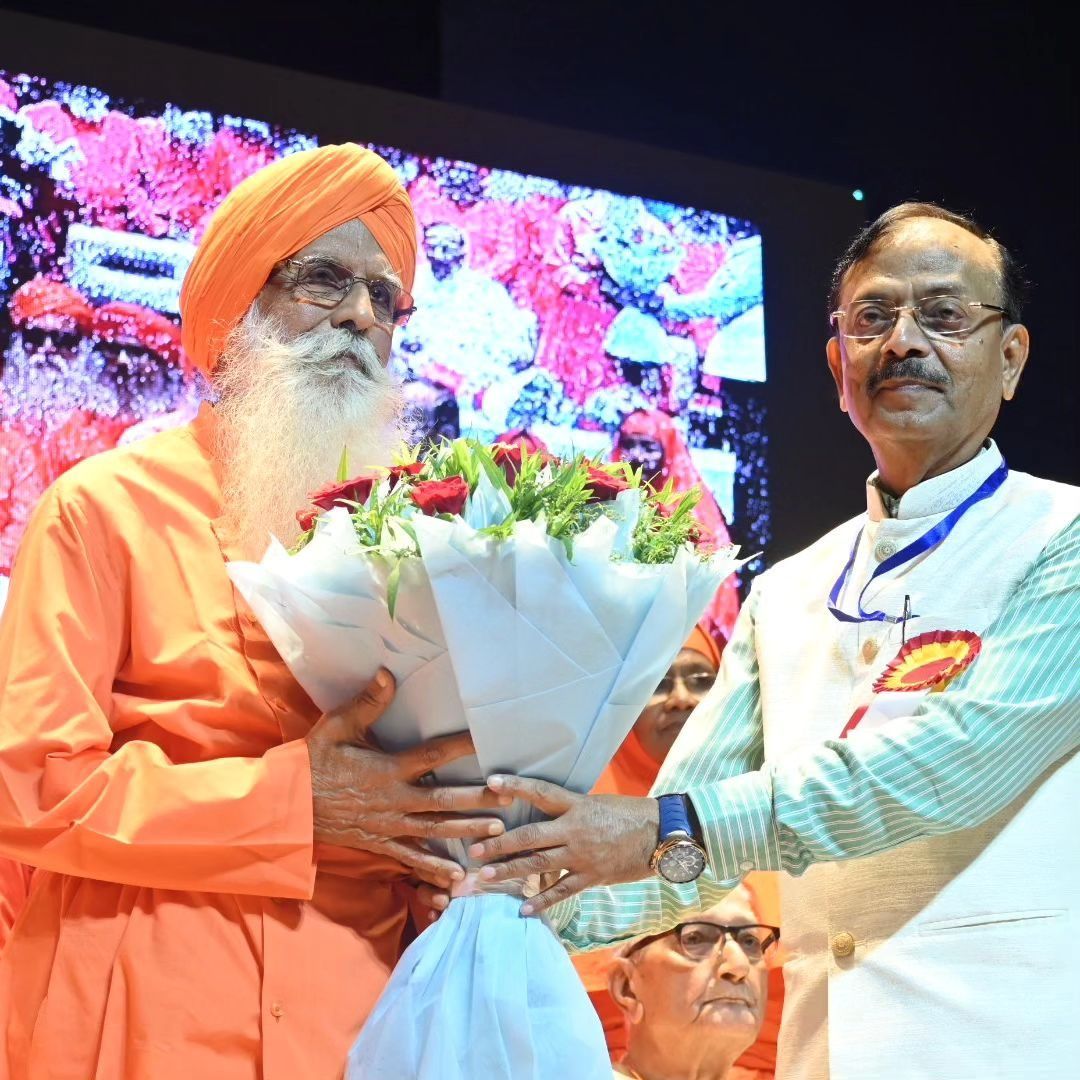
A monk with a white beard and an orange turban receives a bouquet of red roses held out with both hands by a smiling man in a white jacket

Why we do it

The aim of yoga is Supreme Consciousness

  1. 1

    The aim is Supreme Consciousness. The goal of yoga is far off, like a distant star system.

  2. 2

    The instrument to reach that goal is the mind. It is the subtlest part of us, so it is the only part fine enough to reach the aim.

  3. 3

    The method is meditation. Seeing a star takes a telescope pointed at it; reaching Supreme Consciousness takes the mind pointed at it. That is meditation.

  4. 4

    The preparation and care. A telescope has to be looked after, cleaned and set right to see the stars. The mind is the same. Every practice does this for the mind, directly or through the body, because the mind is connected with the body.

    See how it leads to the goal ↓

Reaching the goal through 39 social norms

The social norms bring us to the goal through the way we meet people. Small courtesies refine the expression of our tendencies, and real care goes further than courtesy; behaving so that no one feels higher or lower keeps the mind in balance. A balanced mind can move toward Parama Puruśa, and the mind that takes Him as its idea becomes one with Him. That is the goal of yoga.

  1. 01

    Refinement

    A human being shares the tendencies of every living being, but can refine them and express them more subtly. This refinement is called culture.

    “The difference lies in the fact that the animal in a human body can refine those tendencies and express them in a more subtle manner. This refinement is called culture.”
    A Few Problems Solved 6, “The Spirit of Society”
  2. 02

    In small things

    It shows in small things: “please come in” to a guest instead of “come”.

    “This polite address by adding the word “please” speaks of civilization or a civilized address, for herein the subtle sense of refinement is evident.”
    The Awakening of Women, “Two Wings – Section G”
  3. 03

    More than courtesy

    Courtesy is only a sign. Magnanimity is to ease the trouble of the person one has hurt, even at one's own expense.

    “The personʼs education will only be seen if he or she liberally applies a healing balm to the wound of the injured person – if the offender tries his or her utmost to mitigate the troubles of the injured person, even at his or her own expense.”
    Human Society 1, “Social Justice”
  4. 04

    No one higher, no one lower

    With everyone one behaves so that neither a superiority complex nor an inferiority complex arises, in oneself or in the other.

    “Now, to bring about mental balance you should behave with every created being, every human being, in such a way that neither a superiority complex nor an inferiority complex develops in you or in those with whom you interact.”
    Ánanda Vacanámrtam 30, “Samatábháva”
  5. 05

    A balanced mind

    A mind without these complexes is balanced, and a balanced mind can move toward Parama Puruśa.

    “You must maintain a psychic balance, you must maintain a mental balance. That balanced mind will be able to move towards Parama Puruśa.”
    Ánanda Vacanámrtam 30, “Samatábháva”
  6. 06

    Children of one Father

    The norms rest on one idea: all human beings are of one species, all are children of God.

    “Humans belong to one species, they are all children of God.”
    Ánanda Vacanámrtam 30, “Samatábháva”
  7. 07

    One with Him

    The mind that takes Parama Puruśa as its idea becomes, by its own nature, one with Him. This is the goal.

    “In the course of sádhaná, the unit mind takes the ideation of Parama Puruśa. According to the very nature of the mind, it will one day become converted into Parama Puruśa.”
    Ánanda Vacanámrtam 33, “Savikalpa and Nirvikalpa Samádhi”

What it is

Thirty-nine norms of everyday conduct from Caryácarya: to thank the one who serves you, to answer a namaskára at once, to stand when an elder comes up, to speak respectfully of someone who is absent, to cover the mouth before sneezing. They are small things, and they are listed in full below.

In the sources

What studies found

Thanks and gratitude

39 social norms

Shrii Shrii Ánandamúrti wrote them down in 1978. All thirty-nine, in his own words:

  1. 1

    You should offer thanks to someone from whom you are taking service (by saying, “Thank you”).

    Every service, however small, deserves a “thank you”. It shows respect and keeps the one who serves from being taken for granted.

  2. 2

    You should promptly reply to someone’s namaskára in a similar way.

    A greeting left unanswered hurts. Better still, greet first.

    Subháśita Saḿgraha Part 10, “Taking the Opposite Stance in Battle” (1970)

  3. 3

    One should receive or offer something with the following mudrá: extend the right hand, touching the right elbow with the left hand.

    A gesture of respect: one gives with full attention, with both hands, as it were.

  4. 4

    One should stand up if any respectable elder person comes up to him/her.

    A sign of respect for age and experience.

  5. 5

    When yawning, cover your mouth, and at the same time make a snapping sound with your fingers.

    So as not to show the inside of the mouth to others, and to keep the yawn from spreading tiredness.

  6. 6

    When talking, always use respectful words about someone who is absent.

    What we say of the absent shows who we are; and they cannot answer.

  7. 7

    Before you sneeze, cover your mouth with handkerchief or hand.

    Not only so as not to spread illness: also so that the droplets of saliva that fly out in a sneeze do not land on other people.

  8. 8

    After cleaning the nasal duct, wash your hands. When distributing food, if you sneeze or cough, using your hand, wash your hands immediately.

    Cleanliness for the sake of others' health.

  9. 9

    After passing stool and using water, wash your hands with soap, rubbing the soap in the right hand first, and then cleaning the left hand with the right.

    This way the soap itself stays clean (the soiled left hand never touches it) and others can use it after you.

  10. 10

    Before you come up to people who are engaged in talking, seek their permission.

    Their conversation may be private; one does not interrupt.

  11. 11

    You should not engage in private (organizational) talk in a train, bus or other public transportation.

    Strangers hear everything; organizational matters are not for them.

  12. 12

    Do not take another’s article without his or her prior consent.

    This is asteya, non-stealing, in daily life.

  13. 13

    Do not use anything that belongs to someone else.

    Even without taking it away: what belongs to another is used only with permission.

  14. 14

    When talking, do not hit anyone with harsh or pinching words: say what you want to say indirectly.

    The truth can be told without wounding.

  15. 15

    Do not indulge yourself in criticizing others’ faults and defects.

    First, it is a pointless waste of time. Second, it soils your own mind: when people sit together and criticize, the mind degrades. The rule is not “criticize once you are sure you have no such fault yourself”. First look at yourself: this keeps you from judging; and if the fault has to be spoken of, say it kindly to the person himself, not behind his back.

    Subháśita Saḿgraha Part 10, “Taking the Opposite Stance in Battle” (1970) · Ananda Marga Caryácarya Part 2, “Sádhaná (Intuitional Practice)” (1956): “Before censuring anyone for some fault, make sure that you do not have the same defect.”

  16. 16

    When you are going to a meeting with office personnel, you should seek prior permission, or send your identity card, or get verbal permission.

    Respect for others' time and work.

  17. 17

    You should refrain from reading the personal letters of others.

    Their private life is theirs.

  18. 18

    When in conversation, give scope to others to express their views.

    Listen, do not dominate.

  19. 19

    When you are listening to someone, make a mild sound now and then to indicate that you are listening attentively.

    So the speaker knows he is heard.

  20. 20

    When speaking with someone, do not turn your eyes or face elsewhere.

    Attention to the person shows respect.

  21. 21

    Do not sit in a “zamindary posture” and dance your feet in a silly manner.

    The landlord's lounging pose looks proud and careless before others.

  22. 22

    If someone you are going to speak with is writing at the time, do not look at his or her writing paper.

    It is private until shown.

  23. 23

    Do not put your fingers in your mouth and take them out repeatedly, and never cut your fingernails with your teeth.

    Cleanliness, and a habit that looks bad to others.

  24. 24

    During conversation, if you fail to understand something, humbly say, “Excuse me, please.”

    Better to ask than to pretend.

  25. 25

    When someone is inquiring about your health and welfare, you should offer your cordial thanks to the person.

    Their care deserves an answer.

  26. 26

    One should not go to another’s house or call after 9:00 P.M.

    The evening is the family's time and the time of rest.

  27. 27

    If you must convey something negative to someone, you should use the words “Excuse me” and then start your talk.

    It softens the blow and shows respect.

  28. 28

    Before you take a meal, you should wash your hands and feet.

    In some countries people eat sitting cross-legged on the floor, and then dirty feet should not be where one sits to eat. Where people eat at a table, the feet need not be washed for the meal.

  29. 29

    If you want to take honey, you should take it with water.

    Raw honey is very concentrated: about four fifths of it is sugar. Taken as it is, in a spoon, it is too much for the body, and that is not good for health. Water thins it. The World Health Organization counts the sugar of honey among the sugars to be limited, as it does the sugar in syrups and juices (WHO, Guideline: Sugars intake for adults and children, 2015); and when Shrii Shrii Ánandamúrti advises it to the obese, it is only a little, no more than three spoonfuls a day.

    Yogic Treatments and Natural Remedies, “Obesity” (1958)

  30. 30

    Do not talk standing before someone who is eating.

    It disturbs the meal.

  31. 31

    Do not sneeze or cough when you are at the dining table.

    For the sake of others' food and health.

  32. 32

    Do not offer a food dish to anyone with your left hand.

    The left hand is used for washing after the toilet.

  33. 33

    Do not take a bath or shower, or drink water, from a standing position.

    The bath: sitting, the inner organs are relaxed and take cold water better. Drinking: sitting, a person drinks calmly, and does not get hiccups or discomfort in the throat and stomach.

  34. 34

    Do not pass urine or stool from a standing position.

    Sitting, one empties oneself fully. And those who urinate standing soil themselves: drops fall on their clothes and on the space around. Sitting keeps the body, the clothes and the surroundings clean.

  35. 35

    When your left nostril (id́á nád́ii) is active you should take liquid food, and take solid food when the right nostril (piuṋgalá nád́ii) is predominant.

    When the breath flows through the right nostril the digestive glands secrete enough fluid to digest, so this is the time for solid food, and it is good for the right nostril to stay open for some time after the meal. When the left nostril is active the digestive juices are not at their height, so the food should be light.

    Ananda Marga Caryácarya Part 3, “Procedure for Eating” (1956)

  36. 36

    When your id́á nád́ii is working predominantly, you should utilize the time for your sádhaná.

    Id́á, the left channel, is the channel of the mind; piuṋgalá, the right one, is that of physical force. Sádhaná is work of the mind, so it is done when the mind's channel is working.

    Ánanda Vacanámrtam Part 2, “Love – the Essential Prerequisite” (1978)

  37. 37

    You should offer a drinking glass touching only its lower portion.

    The fingers do not touch the rim others drink from.

  38. 38

    When you are serving drinking water to someone, first wash the glass with the help of your fingers, then without the help of your fingers, then fill it with water.

    Clean inside, and the last rinse without the fingers that touched it.

  39. 39

    If you are sweating profusely at the time of taking food, you should remove the sweat with your handkerchief.

    So that it does not fall into the food, and out of regard for others at the table.

Shrii Shrii Ánandamúrti, Caryácarya Part 2, “Social Norms”, 1978

Download the sheet (PDF)

Stories

  • Hold the glass by the bottom

    At Midnapore DMC, I was taking care of Bábá's food. Bábá sat on His bed and the table was in front. I brought Him a glass of water, and was holding it at the top. Bábá shouted at me, "Don't you know any social norms?" He said. "When offering a drink, hold the glass by the bottom, not the top." I was nervous and brought another glass; Bábá smiled at me and started eating. The next day I was again serving His food. Brother K was a very good devotee there. He cooked for Bábá, and had a desire to see Bábá eating; but there was no scope for him to enter Bábá's room. Bábá started eating; there were many bowls with different kinds of vegetables. One was a little bit dark. Bábá asked me what it was, and I told Him I thought maybe it was eggplant with neem. He said perhaps it was bitter gourd. I disagreed; Bábá said to call the cook. K was waiting outside the door. When I called him, he couldn't believe it. Bábá asked him what it was, saying that it must be bitter gourd. K replied that it was eggplant, cooked in a different way. Bábá said, "See, I don't know anything about food. You know so much about it."Read the story

    — A worker serving Bábá's meals, Midnapore, Ác. Shamitánanda Avt., “101 Bábá Stories”, no. 91
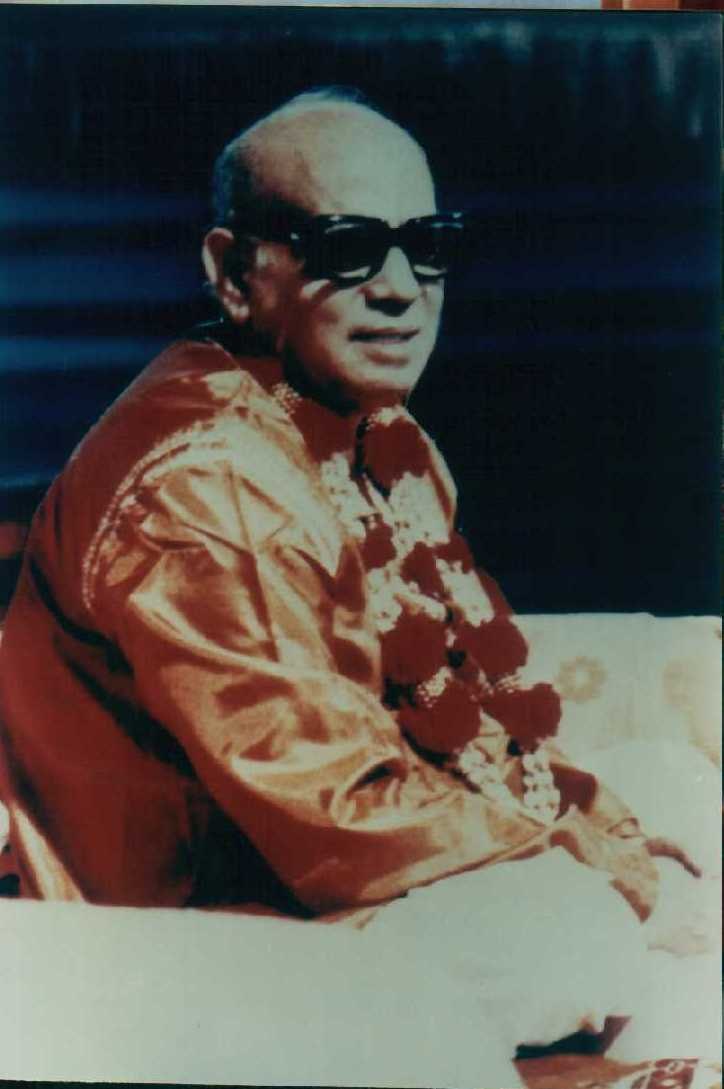
  • Namaskar for namaskar

    After five years as LFT, in 1985 I finally traveled to Calcutta, India to see Bábá with the financial help of Dádá Nityasatyananda. The first time I saw Bábá was at His residence in Lake Gardens, when He was going on His morning field walk. There were many Márgiis and ácáryas waiting for Him. When He entered the car, I said namaskar. Bábá looked at me and smiled very sweetly. He said, "Namaskar, namaskar. I am giving namaskar to you because you are giving namaskar to Me." That simple sentence and His expression made me feel very light and very happy. This sensation lasted a long time. …Read the story

    — A worker from South America, Calcutta, 1985, “Bábá's Love for South America: Mystical Experiences with a Spiritual Master”, “Dádá Dhrtiishananda (continued)”

  • Who cooked this?

    … On the day we were leaving, however, the márgiis brought in a hired cook to prepare Bábá’s lunch. He was a simple man but an excellent cook who had prepared food for the governor and other dignitaries. They didn’t tell Bábá who had cooked—they only told him that they had arranged some special food for his parting meal: alu dhum and other tasty dishes. Bábá ate together with Himanshu and his family, and during the meal he expressed how much he was enjoying the food: “Today I am getting a special taste,” he said. “You were not exaggerating when you said that you were arranging some special food for me. Kalyani’s food is always special but this food is even more special. Who has prepared it?” “Bábá, his name is Etwari. He is a well-known chef of Dhanbad and we wanted you to have a chance to sample his cooking.” “Really? Call him. I want to meet him.” Himanshu brought Etwari from the kitchen and introduced him to Bábá. Bábá was in a jolly mood. … Bábá continued chatting with him for several minutes and repeatedly praised his food. He spoke with him as if he were a favourite nephew and Etwari was thrilled to receive Bábá’s attention. In the years that followed he would always tell people how Bábá had praised his food. I heard from Himanshu that he died a couple of months ago and right up until the end he would reminisce about how Bábá had talked to him and praised his cooking. …Read the story

    — A worker travelling with Bábá, Dhanbad, 1980, Acharya Ramananda Avadhuta, “Ashutosh Bábá: The Memoirs of Acharya Ramananda Avadhuta”, “Etwari”

  • Peanuts and cashews

    Bábá said one day, "Calati means to simply walk. Carati means to walk and eat at the same time. And vrajati means to walk with joy." Then He pointed to one senior dádá in the room and said, "He is doing carati like cows and goats. Cows and goats eat grass while walking." Bábá continued, "Do you know what he does? As he walks, Dádá eats nuts and believes himself to be clever. He carries peanuts in his right pocket and cashews in his left pocket, but when someone asks him to share the nuts, he only offers peanuts from his right pocket, not the cashews." Bábá and all of us started laughing. "Is it not true?" Bábá asked him. "Yes, Bábá, sorry," "From now on, when dádás ask you to share, you must give them cashew nuts and eat them while sitting. You must sit to eat and drink, understand?" Bábá said. …Read the story

    — A monk in Bábá's room, Ác. Shamitánanda Avadhúta, “Bábá Unparalleled: 102 Stories”, no. 27

  • “I learned so much from you”

    … I felt Bábá had a very special power. I saw with my own eyes that everybody who attended His darshan was very devotional and totally engaged. Every time, after talking to those young brothers, Bábá would say, "I learned so much from you young boys." How humble He was! …Read the story

    — Suresh, Tainan, Taiwan, Avadhutika Ánanda Lalita Ác., “A Garland of Lights: Bábá's Love for Taiwan”, “10.3. Suresh”

What Shrii Shrii Ánandamúrti said

  • “Even in private life when a person behaves with you badly or uses harsh words, don’t behave with him in the same manner. You shall explain to him his duties gently.”
    Táttvika Diipiká, “Táttvika Diipiká (Dvitiiya Parva)”
  • “Whatever is done in a refined way, is done with reasoning and propriety, and thus, instead of being a cause of social breakdown, will be a cause of social well-being.”
    A Few Problems Solved 6, “The Spirit of Society”

Videos

  • Qualities of a Disciple - 3. Modesty and HumilityOpen on YouTube ↗

    Qualities of a Disciple - 3. Modesty and Humility

  • How To Balance Your Spiritual And Social LifeOpen on YouTube ↗

    How To Balance Your Spiritual And Social Life

  • Introvert’s Guide to Growing Social SkillsOpen on YouTube ↗

    Introvert’s Guide to Growing Social Skills

Questions

Ask a question →