
Ananda Marga

Personal practices · Day and night

Service

Sevá

“So while one is doing something for one’s own liberation, one is to serve others also.”Ánanda Vacanámrtam 30, “The Four Kinds of Service”

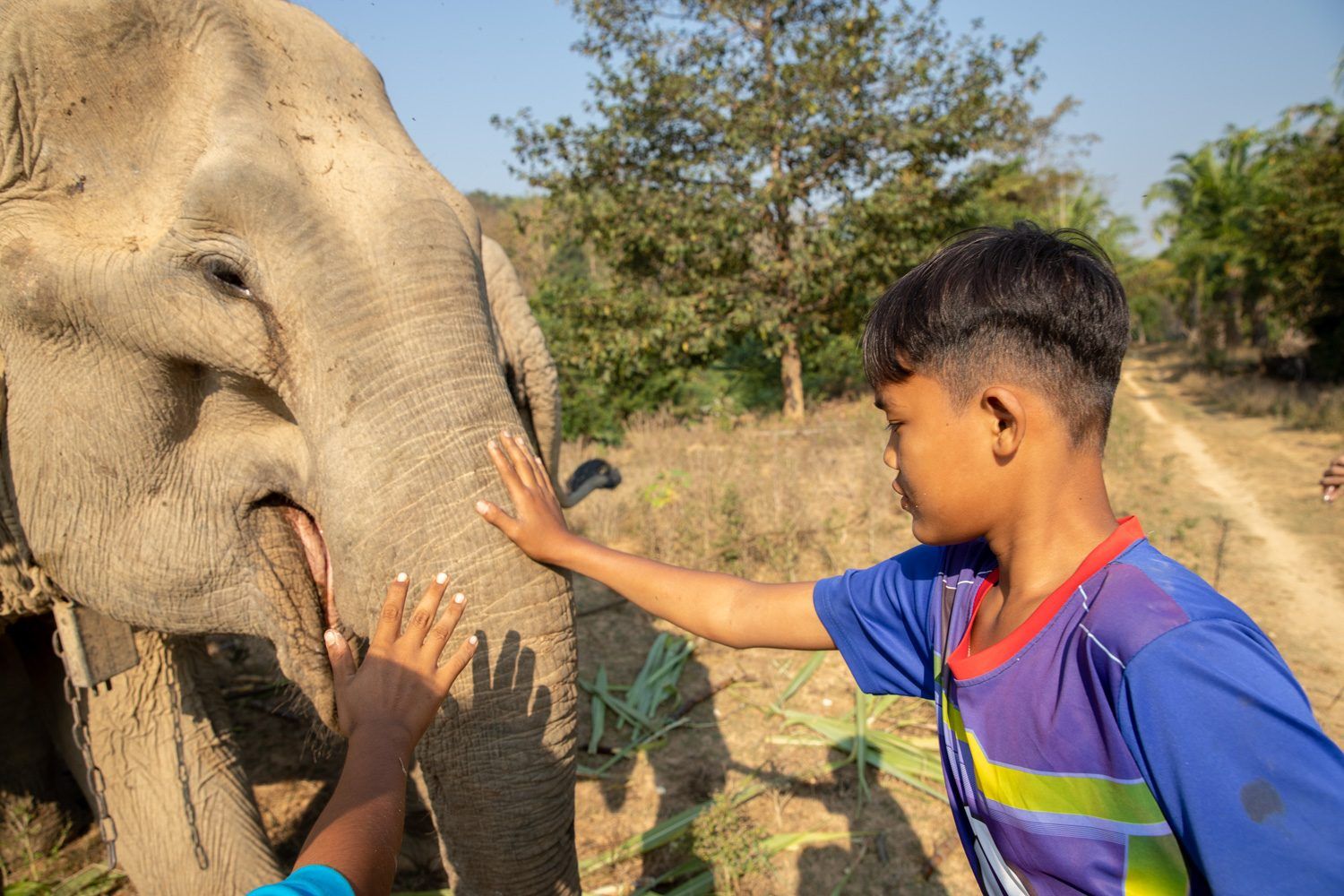
A boy reaching out to touch an elephant

Why we do it

The aim of yoga is Supreme Consciousness

  1. 1

    The aim is Supreme Consciousness. The goal of yoga is far off, like a distant star system.

  2. 2

    The instrument to reach that goal is the mind. It is the subtlest part of us, so it is the only part fine enough to reach the aim.

  3. 3

    The method is meditation. Seeing a star takes a telescope pointed at it; reaching Supreme Consciousness takes the mind pointed at it. That is meditation.

  4. 4

    The preparation and care. A telescope has to be looked after, cleaned and set right to see the stars. The mind is the same. Every practice does this for the mind, directly or through the body, because the mind is connected with the body.

    See how it leads to the goal ↓

Reaching the goal through Service

Service brings us to the goal because the one we serve is Parama Puruśa Himself, come to us as a living being. Given with no wish for anything back, it puts out greed and cleans the mind; the clean mind widens, and seeing Him in the one we serve, love for Him grows in a short time. The little waves of a mind that serves merge into His great wave. The sádhaka who lives by expansion, flow and service comes to the end of the journey: one with Parama Puruśa.

  1. 01

    Serving Him in His children

    We want to serve Parama Puruśa, but we cannot reach Him directly. So we serve His children, human beings, animals and plants, and that pleases Him.

    “They want to serve Parama Puruśa and they do not get the chance directly. So they serve the other children of the Lord, and thereby they please Him.”
    Subháśita Saḿgraha 12, “Where There Is Dharma There Is Iśt́a, and Where There Is Iśt́a There Is Victory”
  2. 02

    Asking nothing back

    Business is an exchange: something given, something taken. Service goes one way only: we give and ask nothing for it.

    “But service is quite different: it is always unilateral. You give something to Parama Puruśa without asking for anything in exchange.”
    Subháśita Saḿgraha 12, “Ádarsha and Iśt́a”
  3. 03

    Giving cleans the mind

    Greed is put out by its opposite, the wish to give with no wish to get. Selfless service removes the dirt of the mind, and a clean mind can serve Him better.

    “External service purifies the mind, and with a pure mind one is more capable of rendering service to oneʼs iśt́a.”
    Subháśita Saḿgraha 8, “Bhágavata Dharma”
  4. 04

    The mind grows wide

    Tapah is to take on the sorrows of others to make them happy. Such service widens the mind, and a wide mind is a great help when it is turned to Parama Puruśa in meditation.

    “As a rule, practice of tapah will lead to mental dilation, and this dilation will certainly help a sádhaka, to a large extent, in practising Iishvara prańidhána.”
    A Guide to Human Conduct, “Tapah”
  5. 05

    Love for the Supreme

    When we see the one we serve as an expression of the Cosmos, love for the Supreme comes quickly. And when love is aroused, what else remains to be achieved?

    “Those who look upon the served only as an expression of the Cosmos and look after their comforts selflessly develop devotion or love for the Supreme in a short time.”
    A Guide to Human Conduct, “Tapah”
  6. 06

    The small wave joins the great one

    Every thought makes a small wave in the mind. In external and internal service these small waves merge into the great wave of the Cosmic Mind.

    “The merger of micropsychic waves into Macropsychic waves is a natural process. This merger is possible for every human being in the rendering of external and internal service.”
    Subháśita Saḿgraha 8, “Bhágavata Dharma”
  7. 07

    One with Him

    Expansion, flow and service together end the journey. The sádhaka becomes one with Parama Puruśa. This is the goal.

    “When sádhakas establish themselves in bhágavata dharma, by virtue of vistára, rasa and sevá, their journey comes to an end. They become one with the Nucleus, one with Parama Puruśa.”
    Subháśita Saḿgraha 8, “Bhágavata Dharma”

What it is

Sevá, service, is half of a person’s mission: whatever one does is for one’s own liberation and for the elevation of the entire world. Everyone can serve in some way: the financially handicapped with their hands, the physically handicapped with their intellect.

Service is of two kinds. External service is done for living beings. Internal service is japa and meditation done with the idea that one is serving Parama Puruśa. Both have equal importance.

Before serving, one makes sure that the person really needs the service, and thinks first of those who are weaker, poorer and less educated.

In the sources

“Átmamokśárthaḿ jagaddhitáya ca – “Whatever one is to do one is to do for átmamokśa – for his or her own liberation – and for the elevation of the entire world, elevation of the entire human society.” One is to do both these things: that is, these two things are one’s mission.”Ánanda Vacanámrtam 30, “The Four Kinds of Service”

“A sádhaka will have to adopt the opposite course to get rid of the burning flames of greed, he/she will have to develop an infinite desire to give to others with no intention at all of obtaining anything from them.”A Guide to Human Conduct, “Shaoca”

“This service can be done in four ways – viprocita sevá (intellectual service), kśatriyocita sevá (service of courage), vaeshyocita sevá (economic service) and shudrocita sevá (manual service). None of these is inferior: we cannot ignore any one of them. People should render service according to their capacity. Those who like intellectual service, can do that; those who like manual service, can do so. But it will be best if all the four types are performed.”Ánanda Vacanámrtam 22, “Serve the Supreme by Kiirtana”

“Therefore, while following the principle of tapah you should ascertain fully well whether the person you are going to serve, really needs your service. Only then should you engage yourself in service.”A Guide to Human Conduct, “Tapah”

The four yajiṋas

Yajiṋa means action. In his discourse of 1955 Shrii Shrii Ánandamúrti says that it is ordinarily of four kinds. The first three are both mental and physical; the fourth is wholly inner. Service to human beings is the second, and it is the one that has four kinds of its own.

  1. Service to every created being

    Bhúta yajiṋa

    “Bhúta Yajiṋa means services rendered to any created entity of the manifested world. For example, watering trees, serving cattle, undertaking scientific explorations and doing anything for the sake of welfare.”

    Bhúta means that which has been created: the whole manifested world, plants and animals as well as people. It does not mean a ghost or a spirit.

    For example: watering trees, serving cattle, undertaking scientific explorations.

  2. Service to human beings

    Nr yajiṋa

    “Nr Yajiṋa is action for human welfare. In fact Nr Yajiṋa is a part of Bhúta Yajiṋa because human beings are also created beings.”

    The action starts as a thought in the mind and then takes shape in the physical world. This is the yajiṋa that has four kinds of its own, shown below.

    For example: giving ten rupees to a person: his own example of nr yajiṋa.

    Its four kinds
  3. Remembering the ancestors and the sages

    Pitr yajiṋa

    “Pitr Yajiṋa means remembering the ancestors and the sages. As long as a person possesses the physical body, he remains indebted to his ancestors.”

    The sages are those who have helped human society in numerous ways, for instance by inventing new subjects. Those who looked to the well-being of humanity deserve our revered memory, and to pay homage to them is pitr yajiṋa. Caryácarya Part 3 calls it a daily duty, to be performed even if one’s father is alive.

    For example: the bullock carts of earlier people gave the incentive for our railways and cars: his own example.

  4. The inner service

    Adhyátma yajiṋa

    “Adhyátma Yajiṋa, on the other hand, originates in the domain of the soul and terminates in the soul.”

    It is one hundred percent internal: the mind performs the sádhaná, and the action ends in the soul. It is a liberating sádhaná, while the other three are both liberating and subjugating, in his words. It needs no money: only bhúta, nr and pitr yajiṋa need things of the crude physical world.

“Along with Adhyátma Yajiṋa, Bhúta, Nr, and Pitr yajiṋa also have to be performed and then the true sacrifice of the self in the fire of Brahma is accomplished.”

Shrii Shrii Ánandamúrti, Subháśita Saḿgraha Part 1, “Yajiṋa and Karmaphala” (1955); Ananda Marga Caryácarya Part 3, “Bathing Procedure and Pitr Yajiṋa” (1956)

Nr yajiṋa: the four kinds of service to people

“Sevá (service) is of four kinds – shúdrocita, vaeshyocita, kśatriyocita and viprocita. This is known as nr yajiṋa.”

  • Physical service

    Shúdrocita sevá

    “Serving the sick, performing the funeral rites of a dead body, helping the suffering and doing all possible developmental work, through physical labour, is known as shúdrocita sevá.”

  • Economic service

    Vaeshyocita sevá

    “Economic service to living beings and the giving of food and water is vaeshyocita sevá.”

  • Service of courage

    Kśatriyocita sevá

    “To rescue a person in distress, or to compel a person moving on the wrong path to come to the right path, by one’s strength, physical capability and courage, is kśatriyocita sevá.”

  • Intellectual service

    Viprocita sevá

    “To help human society in its mental and spiritual development by application of parájiṋána (intuitional knowledge) is viprocita sevá.”

“Remember that the value of each service is the same. Whatever kind of service is most necessary at a given time should be rendered. … The result of viprocita sevá is lasting and that of the rest is short-lived. But even so, under special conditions, kśatriyocita, vaeshyocita or shúdrocita service may be the only recourse – there viprocita sevá may perhaps be completely meaningless.”

“For a hungry man, what will be the best sevá? To feed him.” (Ánanda Vacanámrtam Part 30, “The Four Kinds of Service”, 1971)

Viprocita sevá is joined to the inner yajiṋa: “Viprocita Sevá is to give expression of Adhyátma yajiṋa by imparting the spiritual knowledge you have gained.”

Shrii Shrii Ánandamúrti, Caryácarya Part 2, “Society” (1956), rule 21; Ánanda Vacanámrtam Part 30, “The Four Kinds of Service” (1971). The names of the four in English follow Ánanda Vacanámrtam Part 22, “Serve the Supreme by Kiirtana” (1982).; Shrii Shrii Ánandamúrti, Subháśita Saḿgraha Part 1, “Yajiṋa and Karmaphala” (1955)

The served is Brahma

“The sádhakas of tapah know that the served is Brahma, their cherished goal. They are servants and the service rendered by them is their sádhaná.”A Guide to Human Conduct, “Tapah”

“This entire universe is the expression of the greatness of Parama Puruśa, and therefore, whatever a person does for a particular living being is as good as rendering service to Parama Puruśa.”Subháśita Saḿgraha 8, “Bhágavata Dharma”

“While serving living beings one should never allow a feeling of vanity to develop. One should always remember that one is serving Parama Puruśa and none other.”Subháśita Saḿgraha 8, “Bhágavata Dharma”

“He comes to you as a sick person or as a beggar to solicit your assistance. Naturally you are more grateful than the person you serve because Parama Puruśa has given you the opportunity to serve Him.”Subháśita Saḿgraha 8, “Bhágavata Dharma”

Service in everyday life

  1. 1

    The Ideal HouseholderCaryácarya 1, “The Ideal Householder”

    “An ideal householder should try to provide food for the maximum number of human beings and animals.”

  2. 2

    Disadvantaged persons and guestsCaryácarya 1, “The Ideal Householder”

    “Do not remain indifferent to the service of disadvantaged persons and guests. Do not consider their lineage, culture, or religious beliefs while serving them.”

  3. 3

    BeggarsCaryácarya 1, “The Ideal Householder”

    “The best way to serve beggars is to feed them. If cooked food is not ready in the house, give food items (cereals, pulses, or any vegetables). If necessary, also arrange for their medical treatment, clothing, or accommodation, because as long as the beggar problem persists and the state does not shoulder the responsibility of solving it, the householders will have to bear this responsibility.”

  4. 4

    Service to animalsCaryácarya 1, “The Ideal Householder”

    “Milk-giving animals should be properly respected and looked after like human mothers. Even after an animal loses her ability to give milk, do not harm or kill her.”

  5. 5

    SadávrataCaryácarya 1, “The Ideal Householder”

    “The type of public charity that every sádhaka should undertake as an individual or that sádhakas undertake as a family or as a community will be known as sadávrata.”

  6. 6

    Service and toleranceCaryácarya 2, “Society”

    “Cooperate with all in the field of social service.”

Take care

  • “Just like shaoca sádhaná, in the practice of tapah there must not be even the least bit of commercial mentality.”A Guide to Human Conduct, “Tapah”
  • “Tapah devoid of knowledge is bound to be misused.”A Guide to Human Conduct, “Tapah”
  • “Even in a house where food is not abundant, you should keep something for the residents of the house to appease their hunger, and donate the rest to the needy.”A Guide to Human Conduct, “Shaoca”

Direct and indirect virtue

“Pratyakśa puńya, or direct virtue, is acquired when one performs an action such as feeding the hungry or serving the infirm. Indirect virtue is acquired when one’s service has a recurring effect, such as service to the society, planting trees, etc. If banyan trees are planted beside a hot and dusty road they will continue to give shelter to weary travellers for one thousand to two thousand years. Virtue acquired in this way is indirect virtue.”Ánanda Vacanámrtam 8, “Do Virtuous Deeds Day and Night – 1”

“The financially poor and the physically weak have trouble acquiring direct virtue due to their unfavourable social circumstances. It is a fact that comparatively few people actually acquire direct virtue. But everyone can attain indirect virtue.”Ánanda Vacanámrtam 8, “Do Virtuous Deeds Day and Night – 1”

Sádhaná and service need each other

Those who do only the sádhaná of self-realization and refrain from service cannot make headway in their sádhaná: the two depend on each other. And the other way round: if internal service is not done properly, true external service becomes impossible.

Shrii Shrii Ánandamúrti
“Bear in mind that you have a duty towards – indeed, you owe a debt to – every creature of this universe, but towards you, no one has any duty; from others, nothing is due.”
Shrii Shrii Ánandamúrti, Caryácarya 2, “Sádhaná (Intuitional Practice)”

What a study of giving found

Stories

  • Service without the idea

    This incidence occurred in 1967. Whole of Bihar, eastern UP and south-western MP (chattisgarh) was in state of severe draught. Ananda Marga WTs and family márgiis were busy in relief activities. Ananda Marga was operating free food camps, free cloth distribution and medical camps. A sanyasin who was sincerely involved in relief activities, thought that when he goes back to Ranchi Bábá will call him near and appreciate the good work done by him. After a few months he returned to Ranchi for the darshana of Bábá. When he reached the ásharam, Bábá was just leaving for the field walk. He went near Him and did pranama. But instead of acknowledging him Bábá turned His face. After the field walk Bábá returned to the Jágrti, but did not call this sanyasin. When he was not called he started thinking, if he has committed a mistake. As he was trying to recollect, he found himself overcome with emotions to meet Him. In a state of deep anguish he began crying loudly. After a while Bábá called him in his room. Looking in eyes He said that you did lot of service of the draught stricken people but failed to remember that Bábá was always watching you. That is why I am unhappy with you. Service without the ideation of Náráyana is a waste of time.Read the story

    — A monk back from drought relief, Ranchi, 1967, Ác. Parmeshvaránanda Avadhúta, “My Bábá: English Rendering of Divyánubhúti”, “Serving all with the ideation of Náráyana”

  • Apples for Bábá

    Once a devotee from Kashmir went to Calcutta to see Bábá. He carried apples in two or three boxes. In between, at some station, one beggar came and asked that devotee to give him at least two apples. The devotee refused to part with two apples as all the apples were being carried for Bábá, his Guru, only. That poor beggar asked thrice for two apples saying that the Guru would not get annoyed for giving him two apples as he was hungry since last two days. Thus the beggar gave three chances to the devotee to give him two apples. Every later chance was much more demanding and forceful. logical and pathetic in degree as compared to the former ones, but all in vain. Later on, when that devoted reached Calcutta and those apples were given to Bábá. He refused to accept them saying that when He was actually hungry and demanded them thrice but those apples were not given to Him and so He would not accept those apples anymore.Read the story

    — A devotee from Kashmir, on the way to Calcutta, Kamal Kumar, “My Experiences with Bábá”, “6.5 Apples for Bábá”

  • The joy of feeding

    After Bábá gave the Sadávrata program, every unit distributed food at least once a week. It was Thursday in Calcutta and we had organized the program at Bábá's house in Lake Gardens. We invited the poor people in the neighborhood, and all afternoon there were always at least sixty people inside the gate. I went to Bábá's room. He was very happy. "You see, when the poor are eating, it is so nice. It is not only that they are enjoying the food; those who are serving them are enjoying it even more. It gives us so much happiness to feed the hungry. In this way, it helps spiritually as well. It helps your sádhaná. So I introduced this Sadávrata program. How do you like it?" I said, "Bábá, I feel so much happiness when I give food to others." Bábá was quiet for awhile, then said, "You have to provide food, shelter, medicine, and clothing to every person on this planet, right?" "Yes, Bábá." I returned to the Sadávrata and watched the last group of people eating. I remembered His every word, my heart full of love.Read the story

    — A worker at the food program, Lake Gardens, Calcutta, Ác. Shamitánanda Avt., “101 Bábá Stories”, no. 34

  • What Copenhagen needed

    After the Sadávrata program started, I had stopped in at the Copenhagen office for a few days on my way to Mexico. The LFTs cooked nice vegetarian food and invited people from the street. But they couldn't find anybody who needed food. Finally they convinced one man to come, and we were all satisfied that at least we had fed one person. But when he left, he insisted on paying! After a few months I returned to Calcutta and told Bábá this story. He laughed and said, "You know, there they need psychic and spiritual help much more than physical help."Read the story

    — A worker passing through Copenhagen, Ác. Shamitánanda Avt., “101 Bábá Stories”, no. 57

  • Not a bookworm

    Dádá S likes to read books. He wants to be a great intellectual, and constantly reads. One day Bábá was not satisfied with his report, and said, "By only reading books day and night you cannot do anything constructive for the society. You must work hard to serve the people. Do you want to be a bookworm in the next life?" Bábá went on scolding him right and left. Finally He told Dádá, "Do more social service, more sádhaná, and be happy always." Dádá changed a lot since that day.Read the story

    — A worker at a reporting session, Ác. Shamitánanda Avt., “101 Bábá Stories”, no. 80

  • Eighteen thousand in the flood

    There was heavy flooding when we arrived at our Tiljala headquarters. It had been raining heavily since the previous afternoon. Bábá arrived only that morning—perfect timing. … … Outside of our meetings, Bábá took hourly reports on the progress of our relief programs for the village people. At first we did not even have food for ourselves. Then a small boatload of beaten rice and unrefined sugar arrived. This was our only food. Our relief workers were providing the same food to the flood victims, and also helping them set up temporary shelters on the road. By evening, the number of recipients had increased to 18,000. Government assistance had still not arrived. … … Though our relief department promised the public their minimum necessities, the fact is that our relief teams had almost no money in the beginning. Practically speaking, the guarantees we made to serve the needy public fully depended on Bábá’s grace. That might seem foolish, but we had faith that He would provide what was required. The team leader, Dádá Ramananda, personally approached Márgiis and workers for donations from the first to the last day. I gave him as much as I could, but when he left my room, he said, “It’s still far from enough. I really don’t know how we’ll manage tomorrow.” When I saw him the following day, he smiled at me. “Yesterday, shortly after I met you, I ran into one of the richer villagers, who owns a car which we saved from the flood waters. I expressed our financial problems, and he gave me enough money for an entire day’s supplies.” He added, “In relief work, we are forced to count on at least one or two miracles a day.”Read the story

    — A monk at the headquarters, Tiljala, Calcutta, Dada Dharmavedananda, “Travels with the Mystic Master”, “Serving the masses—a miracle a day”

What Shrii Shrii Ánandamúrti said

  • “All human beings are to be served with the same steadiness in all the three strata – physical, mental and spiritual – and you have to render the service by ascribing Náráyańahood to the served. Remember that your service does not oblige the Supreme, rather you are obliged because you have such a chance to serve the Supreme in the form of living beings.”
    Ánanda Váńii Saḿgraha, “Ánanda Váńii 28”
  • “We can give joy to Parama Puruśa by serving His creations – human beings, animals and plants – and this service will be the best application of Neohumanism.”
    Ánanda Vacanámrtam 22, “Serve the Supreme by Kiirtana”
  • “For a hungry man, what will be the best sevá? To feed him.”
    Ánanda Vacanámrtam 30, “The Four Kinds of Service”

Videos

  • Sadhana of Tapah Kindling the fire withinOpen on YouTube ↗

    Sadhana of Tapah Kindling the fire within

  • The Power of Service and CompassionOpen on YouTube ↗

    The Power of Service and Compassion

  • Serve the Suffering - Baba Video DiscourseOpen on YouTube ↗

    Serve the Suffering - Baba Video Discourse

  • ServiceOpen on YouTube ↗

    Service

  • “Love One( God) serve all” // Yoga and Tantra // Talk given by A’ca’rya Shankara’nanda Avadhu’taOpen on YouTube ↗

    “Love One( God) serve all” // Yoga and Tantra // Talk given by A’ca’rya Shankara’nanda Avadhu’ta

  • Meditation and Social ServiceOpen on YouTube ↗

    Meditation and Social Service

  • Cure the World by ServiceOpen on YouTube ↗

    Cure the World by Service

  • Service and Sacrifice for Social ChangeOpen on YouTube ↗

    Service and Sacrifice for Social Change

  • The Gift of Neohumanism: A Social SadhanaOpen on YouTube ↗

    The Gift of Neohumanism: A Social Sadhana

  • AMURT Burkina FasoOpen on YouTube ↗

    AMURT Burkina Faso

  • AMURT and AMURTEL Ephuenyim Health Center, Ebonyi State, NigeriaOpen on YouTube ↗

    AMURT and AMURTEL Ephuenyim Health Center, Ebonyi State, Nigeria

Questions

Ask a question →