
We often tend to blame and reproach ourselves for what we cannot manage to do. But the spiritual path needs a different approach: choose an ideal and move toward it, and if you stumble, get up and walk on.
We often tend to blame and reproach ourselves for what we cannot manage to do. This comes from culture and upbringing. But the spiritual path needs a different approach: choose an ideal for yourself and move toward it. If you stumble, get up, look at the ideal and walk on toward your ideal.
Some elements of the teaching we are not able to start practicing from our ordinary state. We need to cover a certain distance and come to the moment when we can truly accept and love a practice — not only with the mind but with all our heart — and become established in it.
I can speak about myself. Perhaps someone will think: "Dada Sadananda is certainly doing well. He does all the practices perfectly." Nothing of the kind. I do what I can. But I try. And I have sincerity, faith, and the understanding that I must keep on trying no matter what. Some elements of the practice I sabotaged, you could say, for 20 years in a row; then I tried again to accept them, and again it didn't work. I tried to justify myself, but I never stopped trying. And at some point something happened inside me: I accepted and loved >— Dada Sadananda
For example, a person is quitting smoking. But they are not ready yet, not ripe. They are only trying. They quit — it didn't work: they held out for a week and started again. Again they pull themselves together: "That's it, I have to quit! How long can this go on?!" They are ashamed that they smoke; they understand it is wrong, it is not good, but they cannot help themselves. They quit again, held out for three days, started again. They try again and again, again and again.
And at some point they ripen; something inside them switches over. They say: "I don't need this anymore."
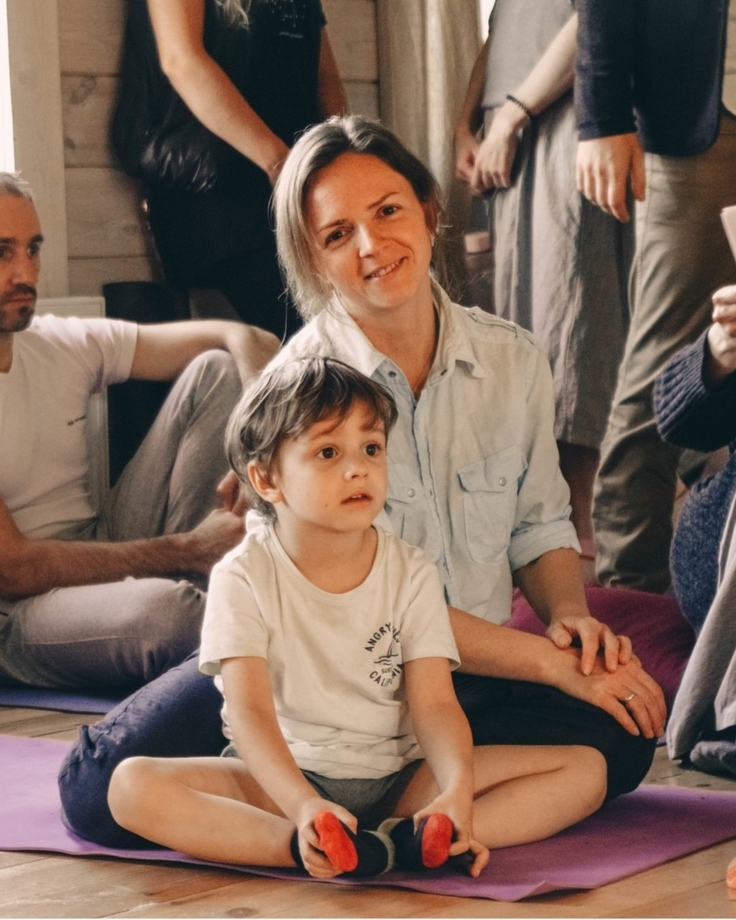
A newborn child needs time to grow up to certain actions. And however much anyone wants it, however much they feed the child milk or swaddle it, the child will not start walking until it has grown. That is, there is a time for everything.
The same thing happens when a child is learning to walk. They take a couple of steps and fall. At that moment the parent does not blame the child, but watches and smiles. The parent does not say: "Oh, you so-and-so, why are you falling? You must walk! Come on, walk! You're a soldier, march!" No, the parent understands that the child's weak, unruly little legs still let them down; the child stumbles again, falls, and then gets up again. And after a while the child will certainly walk.
It is exactly the same with us. Our spiritual muscle of will is very weakly developed when we begin the path. We try something, and then give it up. We try again, and again we slide back. We begin to think that we are not able to stay on the path, and we blame ourselves. But we need to think: "That's not true! You are capable! You will succeed! It just takes time to grow."
The spiritual teaching is our ideal, and you make an attempt to establish one practice or another. It didn't work — you try again. And then again and again! Until you are finally established in the practice. And at some point you will become a perfect person. So our main weapon is never to give up! Forward — back, forward — back…
And this happens not only in spiritual practice.
At school, in shop class, I was taught to cut threads. You put a die on a metal rod — a stud — and turn it to make a thread. But how should you turn it? Two turns forward, one back. Two forward, one back. That way you get a good, beautiful thread. But if you keep turning forward all the time, you will cut a thread, but it will be all torn: you will tear it with those very shavings >— Dada Sadananda
On the spiritual path it is important to feel the golden mean: here I can, and here I can no longer. You need to go into the "I can't" area and then come back to the "I can" area. Again and again. Then the spiritual muscle will grow stronger, and the "I can" area will widen. Remember this.
Do not blame or condemn yourself. There is no spiritual benefit in it. On the contrary, cheer yourself on, encourage yourself! Say: "Today it didn't work, tomorrow it will! And if not tomorrow, then the day after tomorrow it certainly will!"
But do not fall into the other extreme — do not indulge yourself, do not give up, excusing yourself that it will do as it is, that it's fine as it is.
Everyone who walks the spiritual path clearly knows inside: "I need to work," "I need to climb the mountain." And at the same time it is important not to lose inspiration. Because otherwise you can lose the incentive and bring yourself to a state where you want to drop everything. And sometimes pride rules in people, which does not let them admit the fact that they are developing personalities and that their spiritual muscles need to be trained by long-term spiritual practice. The result will certainly be positive, but it takes time. That is all.