
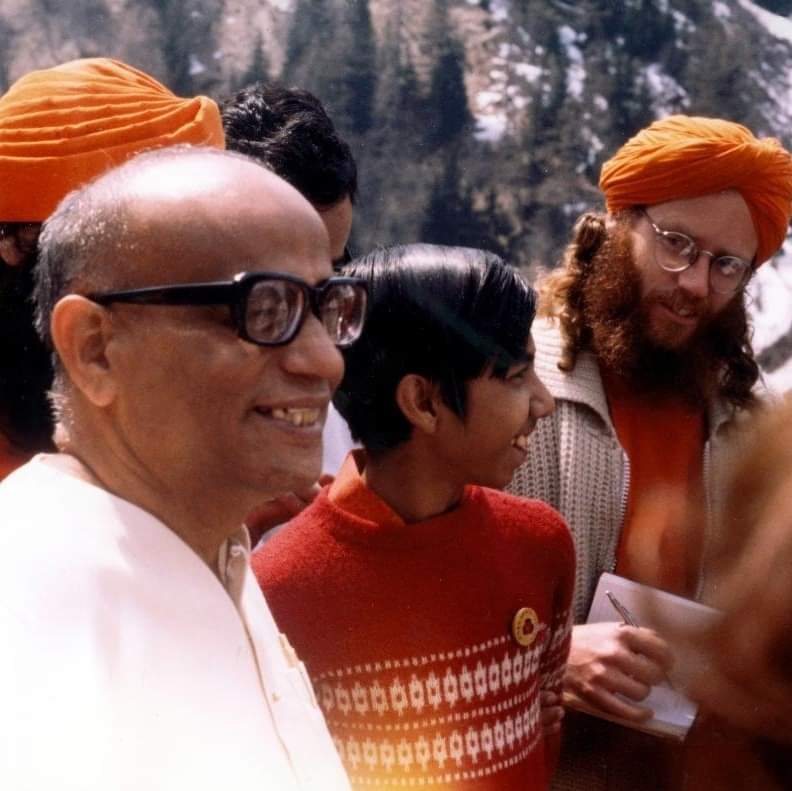
The scholar · 1983
Naranja and the excited elephants
In 1983 a monk brought Shrii Shrii Ánandamúrti an orange seedling from Paraguay. Shrii Shrii Ánandamúrti asked its Spanish name, naranja, and where the word came from. None of the senior workers present knew; he joked that he had thought he was the only fool in the world but now had many friends. Then he explained: Sanskrit naga, elephant, and ranga, excitement, made nagaranga, because elephants rejoice at a tree full of oranges; through Urdu narangi it became Spanish naranja. He went on to link Spanish numbers and family words to Sanskrit.
Then Bábá's mood softened and He began a long explanation. "The Saḿskrta word 'naga' means both 'elephant' and 'snake'. Here it means 'elephant'. Ranga in Saḿskrta means 'excitement'. When elephants see a green orange tree full with brightly-colored oranges, they become excited and go into jubilation. So oranges are called 'nagaranga' in Saḿskrta.
— Dádá Haratmananda, Bábá's Love for South America