
Ananda Marga

Collective and individual practices · At five o’clock every morning

Páiṋcajanya

Páiṋcajanya

“At five o’clock every morning, sádhakas [spiritual aspirants] will assemble at a jágrti, and where there is no jágrti, at a fixed convenient place, and participate in singing five minutes of Prabháta Saḿgiita, in performing fifteen minutes of kiirtana, and lastly in performing ten minutes of collective meditation.”Caryácarya 1, “Páiṋcajanya”

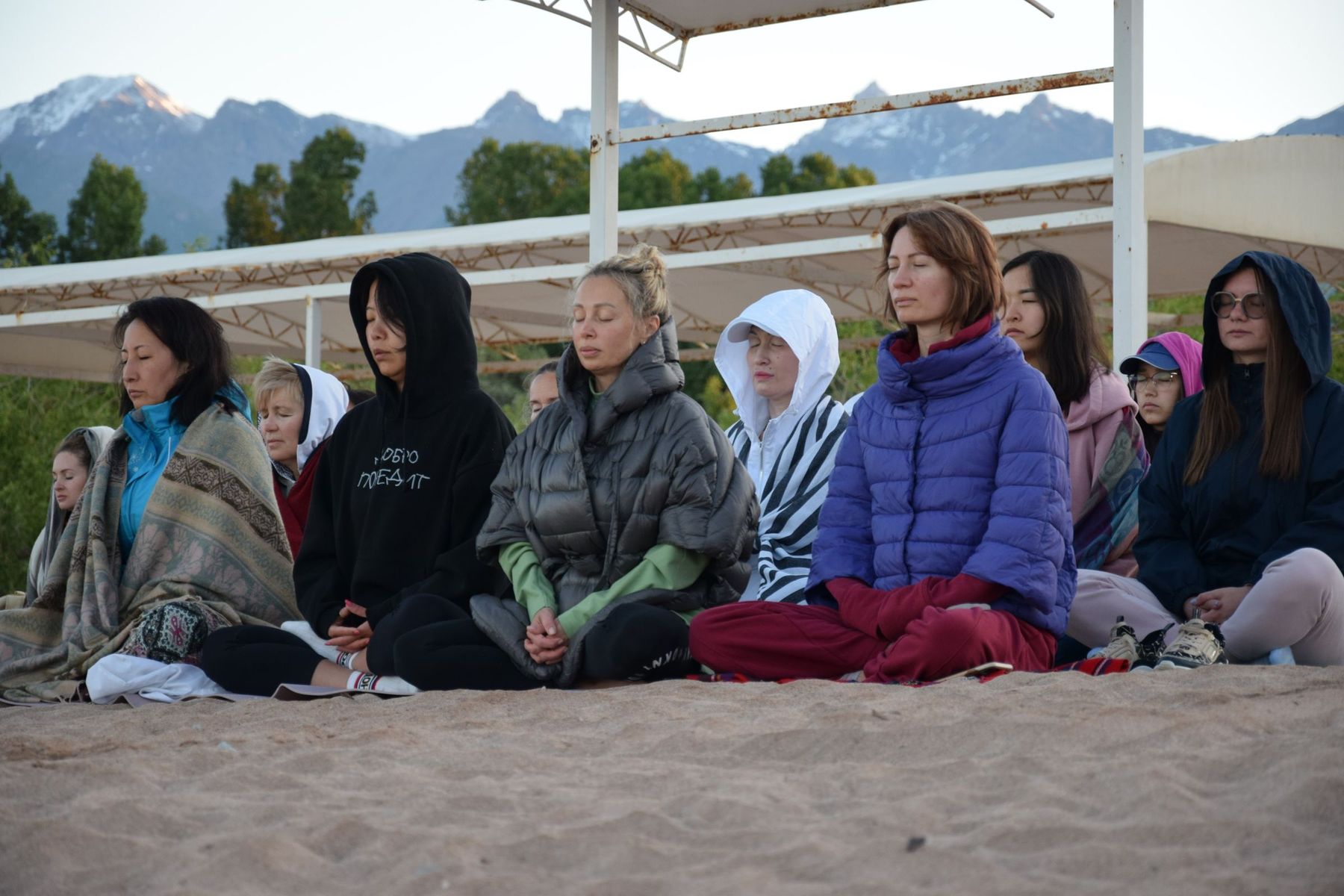
People wrapped in shawls meditating together at first light on a beach, mountains behind them

Why we do it

The aim of yoga is Supreme Consciousness

  1. 1

    The aim is Supreme Consciousness. The goal of yoga is far off, like a distant star system.

  2. 2

    The instrument to reach that goal is the mind. It is the subtlest part of us, so it is the only part fine enough to reach the aim.

  3. 3

    The method is meditation. Seeing a star takes a telescope pointed at it; reaching Supreme Consciousness takes the mind pointed at it. That is meditation.

  4. 4

    The preparation and care. A telescope has to be looked after, cleaned and set right to see the stars. The mind is the same. Every practice does this for the mind, directly or through the body, because the mind is connected with the body.

    See how it leads to the goal ↓

Reaching the goal through Páiṋcajanya

Páiṋcajanya brings us to the goal by setting the mind in order at the start of the day, in the order the mind needs. A song straightens the waves of the mind; kiirtana keeps every organ on the divine and lifts the mind; meditation begun then is full of bliss. In meditation the mind moves toward the Supreme, and together, many minds move faster. A mind that comes to one point becomes one with Him. That is the goal of yoga.

  1. 01

    A song straightens the mind

    The day begins with Prabháta Saḿgiita. A song works on the subtle layers of the mind: its wave makes the waves of the mind straight, and straight waves reach the point of the soul.

    “Songs produce a vibrational wave which makes our mental waves straight, and these straightened mental waves in turn ultimately touch the point of the soul.”
    Saḿgiita: Song, Dance and Instrumental Music, “Song, Dance and Instrumental Music”
  2. 02

    Every organ on the divine

    Then kiirtana. The voice sings, the ears hear, the hands and feet dance: no organ is left free to lead the mind astray.

    “Kiirtana is therefore most beneficial as it keeps all the organs fully engaged in a spiritual pursuit.”
    Ánanda Vacanámrtam 8, “Sádhaná, Abhidhyána and Kiirtana”
  3. 03

    The mind lifted

    During kiirtana the mind is lifted, and a particular peace comes.

    “During kiirtana what happens? The mind gets lifted, exalted, and as a result you will enjoy a particular nature of peace.”
    Ánanda Vacanámrtam 12, “The Chance to Be One with Him”
  4. 04

    Meditation right after

    That is why meditation comes straight after kiirtana: a mind lifted by kiirtana finds great bliss in meditation.

    “In kiirtana the mind becomes very elevated. One gets bliss. One gets the wave of Hari, and if a person sits for meditation immediately thereafter then they will also experience great bliss in their meditation.”
    Saḿgiita: Song, Dance and Instrumental Music, “Wherever My Devotees Sing”
  5. 05

    The mind toward the Supreme

    In meditation the mind is not stopped but given a direction: toward Parama Puruśa, remembering Him.

    “Dhyána means to direct the mind towards the Supreme One. Remembering Parama Puruśa is dhyána.”
    Ánanda Vacanámrtam 8, “Sádhaná, Abhidhyána and Kiirtana”
  6. 06

    Together, faster

    Páiṋcajanya is done together. When many minds move toward Him at once, their efforts work together and the higher signs come in a very short time.

    “In collective Iishvara prańidhána the combined mental efforts work together, and so give rise to the expression of the higher signs in a very short time.”
    A Guide to Human Conduct, “Iishvara Prańidhána”
  7. 07

    One with Him

    Morning by morning the mind moves toward Him and slowly becomes one with Him; when it comes fully to one point, it is completely one with Him. This is the goal.

    “And when your mind gets completely apexed, you will be completely one with Him.”
    Ánanda Vacanámrtam 12, “The Value of Dance”

What it is

Páiṋcajanya is the program with which sádhakas begin the day: at five o’clock in the morning, together at the jágrti, or where there is none, at a fixed convenient place. It is done every day of the week; on Sundays the singing is longer.

In the sources

“This should be the practice on all days of the week except Sundays. On Sundays, there should be singing of ten minutes of Prabháta Saḿgiita, performance of fifteen minutes of kiirtana, and performance of at least ten minutes of collective meditation. This programme is known as páiṋcajanya.”Caryácarya 1, “Páiṋcajanya”

How to do it

  1. 1

    Prabhát Saḿgiita5 minutes · Sundays 10

  2. 2

    Kiirtan15 minutes

  3. 3

    Collective meditation10 minutes · Sundays at least 10

Take care

  • “Twice daily before your regular meditation, and before any other time of meditation, bath or vyápaka shaoca (thorough cleanliness, half bath) must be done.”Caryácarya 2, “The Body”

Bráhma muhúrtta, the hour before sunrise

Bráhma muhúrtta is the time before sunrise. The span from forty-five minutes before to forty-five minutes after sunrise is dawn, the first of the four sandhyás of the day: sunrise, noon, sunset and midnight.

A worker who travelled with Shrii Shrii Ánandamúrti recalls his explanation: every sádhaka should be up forty-five minutes before sunrise. At that time the sun gives out a wave that is good for sádhakas, and through it negative vibrations are taken out of the mind and positive ones put in their place. To make this a fixed part of sádhaná, páiṋcajanya was set at five o’clock.

To get up at that hour, one goes to bed early.

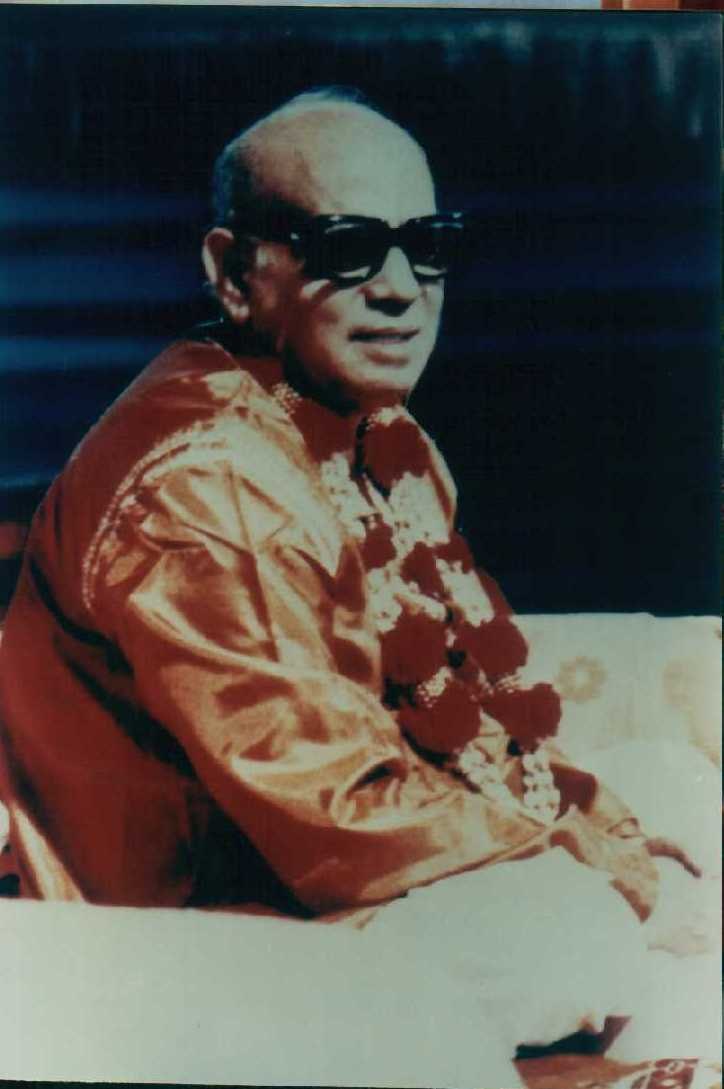
Shrii Shrii Ánandamúrti
“The periods of sunrise, sunset, noon and midnight (the sandhyás) bring about a sentient transparency in the Citta.”
Shrii Shrii Ánandamúrti, Subháśita Saḿgraha 3, “Vibration, Form and Colour”

What a study of sleep timing found

  • A genetic (mendelian randomization) study drawing on data from about 700,000 people found that a natural tendency to sleep and wake earlier, equal to a one-hour earlier midpoint of sleep, was associated with a 23% lower risk of major depression.

    Daghlas I et al., 2021, JAMA Psychiatry

Stories

  • Before the sun rises

    Bábá introduced páiṋcajanya as an integral part of our spiritual practices to accelerate the speed of our progress. He instructed all Márgiis to perform páiṋcajanya at 5.00 a.m. sharp, based on local time. Once in 1979, when I was traveling with Bábá to different countries of Europe, several Márgiis from the Ananda Marga units there requested me to ask Bábá if páiṋcajanya could be done later than 5:00 a.m. It was very difficult to awaken that early in the morning in Europe, especially during winter. The European Márgiis wanted to know if they could do páiṋcajanya at whatever time they awoke. … I started by saying, “Páiṋcajanya…” I could not even complete the sentence. He glared at me in a very angry mood and scolded me for nearly an hour, which seemed like eternity. … He remarked that as He had already introduced the system, it was my duty to implement it. … Bábá then softened His mood a little and clarified that when He first introduced the practice of páiṋcajanya, He deliberately did not explain the reasons for following this practice. He wanted Márgiis to do the practice first before He explained the reasons. He clarified that every sádhaka should get up from bed before a certain time, which is 45 minutes before sunrise. At that time the sun emits a particular wave beneficial for sádhakas, and it is through this wave that He removes all negative vibrations from the human mind and injects positive ones in their place. In order to make this a formal system within the framework of our spiritual practice, He instructed all His devotees to start páiṋcajanya at 5.00 a.m. sharp. Bábá informed me that He had taken a saḿkalpa or firm determination that for those who performed páiṋcajanya according to the prescribed system, He would take responsibility for their spiritual development. …Read the story

    — A worker who travelled with Bábá, Europe and Mumbai, 1979, “Living With Bábá”, “Páiṋcajanya”

  • Go to bed early

    I was touring in Mexico, when I was called to Calcutta for RDS. I went to Bábá's room, and he asked about New York Sector. … While we were talking, I said, "Bábá, it is very hard for family Márgiis to get up at 5 a.m. to do Páiṋcajanya." "The family Márgiis should go to bed early," He said. "Then it will be very easy for them to do Páiṋcajanya. I introduced Páiṋcajanya so that everyone can enjoy more spiritual bliss. Understand?"Read the story

    — A worker reporting from overseas, Calcutta, Ác. Shamitánanda Avt., “101 Bábá Stories”, no. 94

  • The last morning

    … Bábá's early daily routine was going on in a rhythmic and undisturbed way. On 21 October, as usual, He got up at 3.30 a.m. and gave the first bell to call P.A. inside the room. He used to ask every day how P.A. was and how everybody and everything was, and the P.A. would reply one question after another in a positive way, like: "Bábá, everything is fine." After this sweet conversation, P.A. would prepare lukewarm water and go out of the room. After a short bath Bábá sat in meditation. Here a question comes: what meditation Bábá — Táraka Brahma, who is the meeting point between Nirguńa Brahma, "unqualified" Brahma, and Saguńa Brahma, "qualified" Brahma — was doing, was well known to Him only. Once a devotee asked Him: "Bábá, we, all your disciples, do Your meditation, and You also sit in meditation; so please tell us, what sort of meditation do You do?" Bábá replied in a deeply mystical way: "We do His meditation and He does our meditation — meaning, we meditate on Him and He meditates upon us." This was really a very sweet reply. Bábá said: "I remember my every disciple in my mind and see if anybody has not done meditation properly due to organizational pressure of work; then" — Bábá said — "I meditate on behalf of them to complete their unfinished lessons." Bábá, the most loving master, was the abode of love and the embodiment of sacrifice. …Read the story

    — An ácárya’s account of what he was told; Calcutta, 21 October 1990, Ácárya Tadbhavánanda Avadhúta, “Stories of Bábá — Shraddháiṋjali”, “3. Bábá Declared Some Sort of Emergency in His Working System”

Videos

  • Morning meditation | How to Successfully Start Your DayOpen on YouTube ↗

    Morning meditation | How to Successfully Start Your Day

  • How to Sleep Less and Meditate MoreOpen on YouTube ↗

    How to Sleep Less and Meditate More

  • Lecture "Introduction to Spiritual Songs for Meditation" by Dada DiiptimananandaOpen on YouTube ↗

    Lecture "Introduction to Spiritual Songs for Meditation" by Dada Diiptimanananda

  • Mysticism, Chanting and the Kiirtan hourOpen on YouTube ↗

    Mysticism, Chanting and the Kiirtan hour

  • Step 6. Use of sound. Meditation's most significant improvement.Open on YouTube ↗

    Step 6. Use of sound. Meditation's most significant improvement.

Music

Questions

Ask a question →