
Ananda Marga

Personal practices

Guru pújá

Guru Pújá

Guru pújá is done right after meditation. It is one of the key practices: it lets you give yourself up to the will of the Supreme.

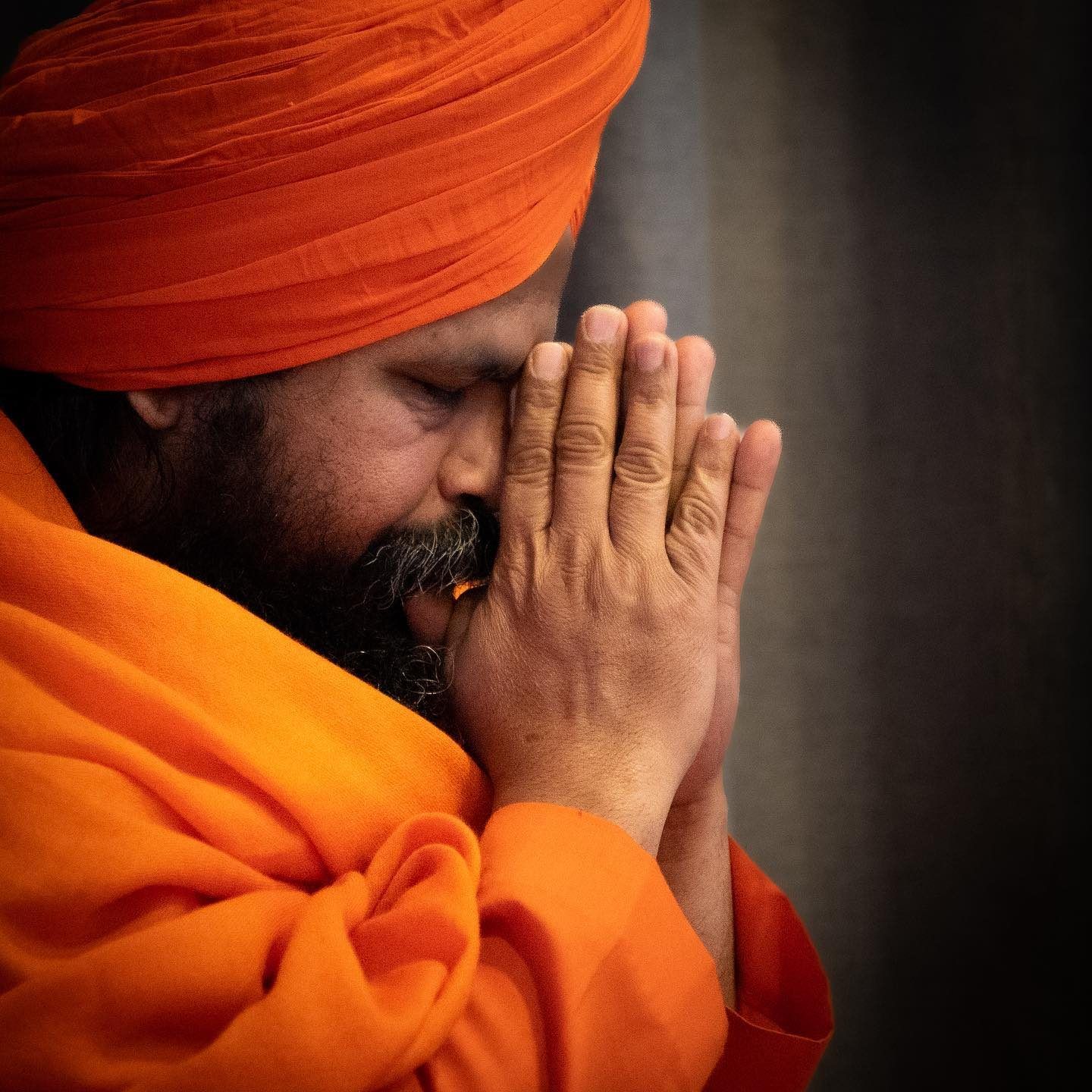
A monk in orange with eyes closed, his folded hands raised to his forehead

Why we do it

The aim of yoga is Supreme Consciousness

  1. 1

    The aim is Supreme Consciousness. The goal of yoga is far off, like a distant star system.

  2. 2

    The instrument to reach that goal is the mind. It is the subtlest part of us, so it is the only part fine enough to reach the aim.

  3. 3

    The method is meditation. Seeing a star takes a telescope pointed at it; reaching Supreme Consciousness takes the mind pointed at it. That is meditation.

  4. 4

    The preparation and care. A telescope has to be looked after, cleaned and set right to see the stars. The mind is the same. Every practice does this for the mind, directly or through the body, because the mind is connected with the body.

    See how it leads to the goal ↓

Reaching the goal through Guru pújá

Guru pújá brings us to the goal by taking away what holds the mind back. Whatever the mind is drawn to colours it, and the colours slow its way to the Supreme; in Guru pújá they are offered to the Guru, and with them, in the end, the “I” itself. A mind that has given away its colours becomes colourless, and the unit “I” becomes one with the Cosmic “I”. That is the goal of yoga.

  1. 01

    Every object has a colour

    The mind always takes something as its object, and every object has its own colour.

    “The mind always takes something as its object, each object having its specific colour.”
    Namámi Krśńasundaram, “Vraja Krśńa and Dvaetadvaetaváda”
  2. 02

    The mind takes the colour

    As soon as we are drawn to something, the mind is coloured with its colour. The colours stay as impressions in the mind, and they slow its movement toward the Supreme.

    “All people have a particular attraction for one or another object or activity and as soon as they become attracted to an object, then their minds become coloured with the colour of that object.”
    Subháśita Saḿgraha 3, “Vibration, Form and Colour”
  3. 03

    The colours are offered

    In Guru pújá these colours are offered to the Guru. The mind is drawn back from the objects that coloured it and takes His colour instead: this is pratyáhára, withdrawal.

    “You can withdraw your mind from the colour of that object and dye yourself in His colour by offering Him the captivating colour of the object that has attracted you: this is the real Pratyáhára Yoga.”
    Subháśita Saḿgraha 3, “Vibration, Form and Colour”
  4. 04

    Colourless, toward Him

    With each offering one asks to be made colourless, so as to move toward Him without hesitation.

    ““O Lord, make me colourless so that I may move towards You without any hesitation.””
    The Liberation of Intellect: Neohumanism, “Inner Asset”
  5. 05

    Something of one’s own

    Body, name, wealth: all we have came from Him, and to offer it is only to give Him back His own. What is truly ours is the “I”, and that is the offering that completes the surrender.

    “So far you were only giving Godʼs own things back to Him. What you must give Him now is something of your own.”
    Subháśita Saḿgraha 10, “Mantra Caetanya”
  6. 06

    One with Him

    When offering one’s colours becomes natural and easy, the mind is colourless, beyond the reach of any colour, and merges in Him. This is the goal.

    “When this practice of offering your own colours – your own attachments, becomes natural and easy, you will then merge in Him. Then you will have no need for any colour, for you will become colourless – you will go beyond the reach of any colour. Your unit-ego will become one with the Cosmic Ego.”
    Subháśita Saḿgraha 3, “Vibration, Form and Colour”

What it is

Guru pújá is done right after meditation: the colours of the mind are offered to the Guru, with a shloka of salutation. It is one of the most important practices: in it one gives oneself up to the will of the Guru. It is called varńárghyadána, the offering of colours, and it is the simplest means of pratyáhára, withdrawal.

Guru means the one who dispels darkness: gu is darkness, ru is the one who dispels it. The form is not the Guru. Brahma alone is the Guru, expressing through a form.

In the sources

“And, regarding the import of the term, Guru, I said that “gu” means “darkness”, the spiritual darkness, the micropsychic darkness, and “ru” means “dispelling personality”. So Guru means “the personality who dispels darkness from the minds of spiritual aspirants”.”Ánanda Vacanámrtam 3, “Guru Pújá”

“The secrets of Brahma, His macropsychic and cognitive secrets, are known only to Him, and unless and until He expresses Himself through some physical form, how can His secrets be known to others? And that is why it is said, “Brahmaeva Gurureka náparah”. That is, Brahma Himself is the Guru. There cannot be any second Guru. His secret is known to Him only, and He expresses Himself through a framework, a form.”Ánanda Vacanámrtam 3, “Guru Pújá”

“That Guru, that expression of Parama Brahma that dispels all your spiritual darkness is Parama Brahma. That is, Parama Brahma exhibits Himself in the form of Guru just to dispel your clouds of ignorance and spiritual slumber.”Ánanda Vacanámrtam 3, “Guru Pújá”

When it is done

After the practice of meditation.

How to do it

  1. 1

    Right after meditation, kneel.

  2. 2

    Hold the hands at the level of the chest and imagine a lotus flower in the palms.

  3. 3

    Recite the shloka three times, and each time offer a lotus flower to the Guru. The flower has the color that first comes to your mind.

  4. 4

    After the three offerings, imagine a dazzling white, thousand-petalled lotus, and offer it.

  5. 5

    Then do prańáma: men, sáśt́áuṋga prańáma (prostration); women, diirgha prańáma (the long bowing posture).

Take care

  • “Sáśt́áuṋga prańáma is a symbol of simplicity. It is to be done only to Márga Guru. It signifies surrender to the ideology. Women can do salutation by touching the ground with the forehead instead of full prostration.”Caryácarya 1, “Methods of Salutation”
  • Diirgha prańáma: “Kneel down, and holding the palms together, extend the arms upward, keeping them close to the ears. Then bend forward in a posture of bowing down, touching the floor with the tip of the nose and the forehead. The buttocks must continue to touch the heels. While bending down breathe out and stay in a state of complete exhalation for eight seconds. Then rise up, breathing in. Practise eight times.” (Caryácarya Part 3, “Ásanas”)

The text

Akhańd́amańd́alákáraḿ vyáptaḿ yena carácaram; Tatpadaḿ darshitaḿ yena tasmae Shrii Gurave namah. Ajiṋána timirándhasya jiṋánáiṋjana shalákayá; Cakśurunmiilitaḿ yena tasmae Shrii Gurave namah. Gurur Brahmá Gurur Viśńu Gurur Devo Maheshvarah; Gurureva Paramah Brahma tasmae Shrii Gurave namah.

Translation

Salutations to that respected Guru having the form of an unbroken, undivided circle, by whom the movable and immovable worlds are pervaded, by whom the supreme stance of salvation is shown. Salutations to that respected Guru by whom the eyes of one blinded by the darkness of ignorance are opened with a stick that applies the ointment of spiritual knowledge. The Guru as Supreme Progenitor, the Guru as Guardian, the Guru as the one who has the withdrawing power, the Guru who alone is the Supreme Subject: salutations to that respected Guru.

Word by word

Guru
“gu” means darkness and “ru” the dispelling personality: the one who dispels darkness from the minds of spiritual aspirants
mańd́alákáraḿ
the partless expression of Parama Puruśa
vyáptaḿ
pervaded: Parama Puruśa is all-pervading
tasmae Shrii Gurave namah
I surrender myself at your altar
ajiṋána timira
the darkness of ignorance
jiṋánáiṋjana
the ointment of spiritual knowledge
shalákayá
with a stick (shaláká means stick)
cakśurunmiilitaḿ
the eyes are opened
Gurur Brahmá
the Guru as the creative faculty
Gurur Viśńu
the Guru as the all-pervading
Gurur Devo Maheshvarah
the Guru as Maheshvara, who has the withdrawing power
Gurureva Paramah Brahma
that Guru is Parama Brahma, the Supreme of all
namah
to surrender, with all one’s capabilities brought to a point

Word meanings: Ánanda Vacanámrtam Part 3, “Guru Pújá” (1978)

Download PDF

Guru Vandaná

“Microcosms cannot come into contact with this Entity without the help of Guru, who is the link between jiiva and Shiva. This link is also a part of Shiva, that is to say, Shiva is Guru.”Ánanda Vacanámrtam 3, “Guru Pújá”

“Now, all the microcosms are parts of that Noumenal Entity, all are actually parts and particles of that Supreme Entity, but due to ignorance, due to the darkness of ignorance, they cannot see what is what and which is which. That is why they require the ointment of spiritual knowledge. Guru (with a stick) applies the ointment of spiritual knowledge to their eyes.”Ánanda Vacanámrtam 3, “Guru Pújá”

“There are three main functional expressions of Parama Puruśa. He is the Supreme Progenitor, all are His progeny; as the Creator He creates everything; as the Guardian He retains and nourishes everything.”Ánanda Vacanámrtam 3, “Guru Pújá”

Stories

  • Only by Guru pújá

    Dádá Tapeshvaranandaji has a unique story to narrate; Once in the pre-jail days, Dádá was on a train. He started doing pracar with the people there. Then one person turned to him and slowly and powerfully said to him, “Are you seriously trying to tell me that by doing this sádhaná I will get mukti?” Instead of trying to give a glib answer, dádá realised that he did not know the answer and hence kept quiet. Then when he came to see Bábá and was blessed with the chance for Bábá’s Darshan, he asked Bábá the same question — whether we can attain mukti by our sádhaná. Bábá replied, “No.” Bábá explained that it is only by doing GuruPújá that one can get mukti. All the sádhaná — 1 lesson, 5 lessons, 6 lessons, 16 lessons — all of them are to be done only to prepare the sádhaka to fully, totally surrender in Guru Pújá. So Guru Pújá is the most important thing in our life. Most people are unable to surrender in Guru Pújá and for this reason all the different sadhanas were created. …Read the story

    — Dada Tapeshvarananda, in the years before Bábá’s imprisonment, “Shrii Shrii Ánandamúrti: Journey of a Mystery through African Experience”, “Divya Murti, Congo Brazzaville”
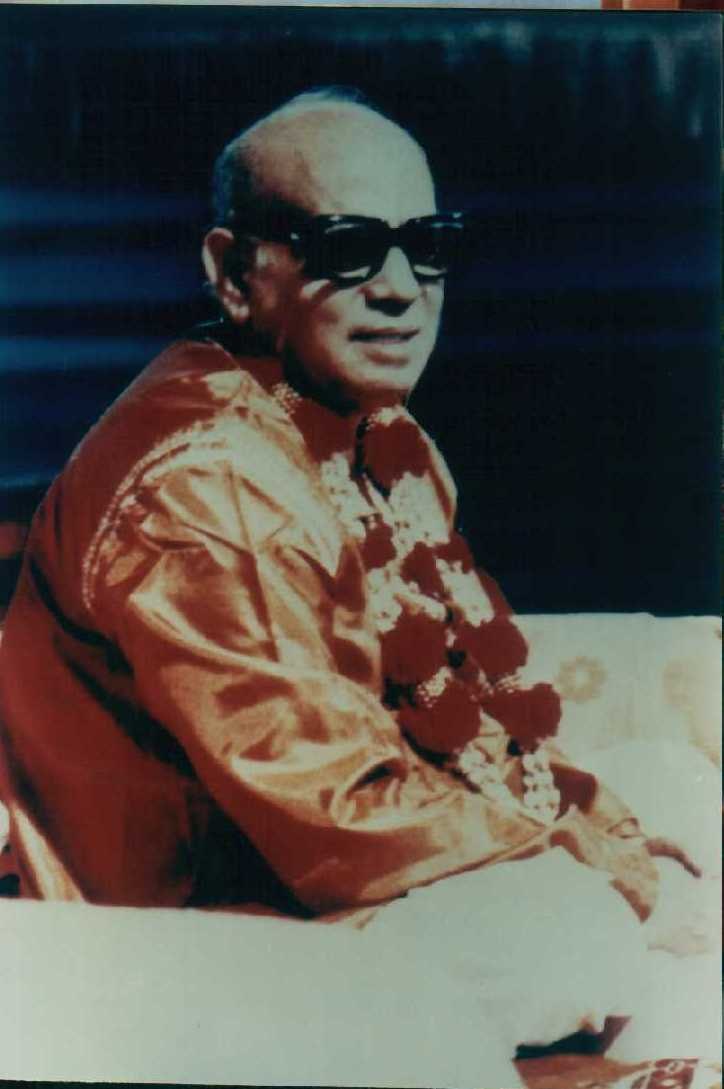
  • The first Guru pújá

    … Pranay led all the disciples in performing guru pújá for the first time. Earlier, Pranay saw that some of the initiates had brought fruit and flowers to offer to the guru, as was the tradition in Hindu society. He explained to them that Bábá did not approve of physical offerings. … After guru pújá everyone went to Bábá one by one and received his blessing. As he stood in line waiting for Bábá's blessing, Dipanarayan felt a powerful surge of devotion well up inside him and tears started to trickle down his face. When his turn came, Bábá asked, "Dipanarayan, what spiritual experience do you want? Do you want savikalpa samádhi, nirvikalpa samádhi or any of the mahábháva samádhis? Say, what you want. I will give it to you." Dipanarayan's eyes filled with tears of devotion but he remained mute, unable to utter a single word. Later Dipanarayan explained how in that extremely blissful state, the only desire he had was to surrender to Bábá. He did not feel like asking anything from him, not even nirvikalpa samádhi, which is the highest spiritual state. …Read the story

    — The first disciples, Jamalpur, 9 January 1955, Ác. Pranavátmakánanda Avadhúta, “Advent of a Mystery”, “15.4. The Gathering of 9th January”

  • The fruit of your actions

    … After some talk on my meditation I asked Bábá, "Bábá today, before coming here I wanted to buy some fruits for you, but my sádhaka brother stopped me and said that you would not like it, and would prohibit me coming to your house again. Bábá, it is our tradition that one does not go empty handed before one's guru, God and the king. If nothing else, one should take some green leaves, flowers or fresh water." Bábá listened to me with a smile, and in very loving words said, "Your sádhaka brother is perfectly right. I have asked all my disciples not to bring anything for me, whether fruits or anything else. It is true that in the olden days, the guru wanted the disciple to offer him fruit. But which fruit? The guru used to tell the disciples that whenever you come to me offer me the fruits of all your actions. The disciples acted accordingly. But in the course of time the guru's lost their greatness and gradually instead of 'karma fruit' — they began to accept big sweet and juicy fruits. Now this has become customary. You are also free to offer the fruits of your actions whenever you like". Bábá then added, "Some of your sádhaka brothers are not well off economically. If I accept fruits offered by you, your poverty-stricken brothers will also make an attempt to do so. Certainly this will put them into difficulty and they will cut their necessities in every way to bring a few fruits for me. If I do not accept their fruits, this will mean discrimination between disciples, and if knowing fully well their economic difficulties I accept the fruits, this would amount to blood-sucking. Would you like Bábá to discriminate between His disciples?" I was unable to reply. There was nothing I could say. Bábá Went on, "Nagina, what can a disciple offer his guru? He should only ask that the guru's desires be fulfilled." I told Bábá, "Sometimes when I see good things, I feel that I should bring that thing for You. What should I do in such a situation?" Bábá replied, "In that case, you should offer me that thing mentally then and there. I shall have received it and then you can take it by way of prasád." …Read the story

    — Ácárya Nagina, at Bábá's house in Jamalpur, one winter Sunday, Ácárya Nagina, “Ananda Katha”, “Bábá Treats All Equally”

  • The last offering

    … I sat in the room and pondered and mentally prayed to Bábá, "Bábá at any cost to me, kindly change this mood of Yours. I did not come to Your shelter to see You in this mood." After this I mentally offered to Him one by one all the things and relations which I held dear in this world and at each offering continued to pray, "Bábá, may You take all these and be pleased with me." During this process I remembered that I had adamantly requested Bábá for the protection of my official position. I was so attached to my official position that I had even discarded Bábá's own recommendation to accept a demotion. Now I said mentally "Bábá You may take away this also if it please You; I shall feel gratified if you somehow feel pleased with me again." This was my last offering. Meanwhile the elder brother of Bindeshwariji came and enquired what I was doing sitting alone in that dark room? What is the time? I looked at my watch and told him that it was five o'clock. … In the evening at seven I reached the railway quarter again. … Bábá came to the quarter and sat for a long time. Not to speak of talking to me, He did not even look at me. … Summoning some courage I asked, "Bábá, have I committed any mistake that has made you angry with me?" Bábá said, "At that time in the house I was upset. Now since five o'clock I am no longer angry with you. …"Read the story

    — Ácárya Nagina, Jamalpur, one December, Ácárya Nagina, “Ananda Katha”, “I Surrender Everything to Bábá and He Becomes Pleased with Me”

What Shrii Shrii Ánandamúrti said

  • “It is natural for human beings to become soiled with dust in the course of their journey in the physical world. But this is not to continue forever. They should make their minds completely unblemished by offering all their mental colours to the Supreme.”
    The Liberation of Intellect: Neohumanism, “Inner Asset”

Videos

Questions

Ask a question →