
Where to read it
Shrii Shrii Ánandamúrti, also known as Prabhat Ranjan Sarkar, set out a whole philosophy, from the nature of consciousness to the running of an economy, in hundreds of discourses gathered into many books. This guide follows it in eight steps. At each step it asks the main questions, answers each in a few lines, and tells you exactly where the full explanation is: the book, and the discourse inside it.
How to use this guide
Begin with Ananda Marga: Elementary Philosophy. It is short, it was written as an introduction, and its nine chapters ask the questions in the order a newcomer would: what is dharma, what is the Supreme, what is this world, who am I, and how should I live.
Then take the steps below in order, because each one rests on the one before it. The answers on this page are only a doorway. The reasons behind them are in the books, and the references point to the exact discourse, so you can read the argument instead of taking the conclusion on trust.
Most of these books are spoken discourses of a few pages each. Read one at a time, and slowly. The study the philosophy asks for, svádhyáya, is described in A Guide to Human Conduct as understanding the idea behind a text, not only reading or hearing it.
Sanskrit terms are explained where they first appear, and most editions end with a glossary. They are spelled here as the editions print them (Ánanda Sútram, sádhaná, saḿskára), so you can find them in the books.
The same discourse often appears in more than one book, because the “in a Nutshell” series reprint the discourses grouped by subject. Any edition will do. The personal lessons of meditation are in no book: they are learned from an ácárya.
First steps
The questions anyone asks first: what am I looking for, what am I, and what should I do about it. Shrii Shrii Ánandamúrti answers them in a few short books that state the whole philosophy in plain terms.
On this site: What is the purpose of human life? →What is every person looking for?
Happiness, and never only a little of it. Shrii Shrii Ánandamúrti starts here because no one needs to be persuaded of it: everyone wants to be happy, and no amount of money, power or pleasure is ever enough. A longing that no limited thing can satisfy points to something unlimited, and the search for it is what the philosophy calls dharma, the defining nature of a human being.
Read
- Ananda Marga: Elementary Philosophy · “What Is Dharma?”
- Ánanda Sútram · “Chapter 2” (sútras 2-1 to 2-7, with their purports)
What, then, is the aim of human life?
To become one with the Supreme, beyond every limit. Elementary Philosophy separates two kinds of liberation: mukti, merging in the Supreme with qualities, from which a being can return into creation, and mokśa, merging in the Supreme beyond all qualities, from which there is no return. The aim is the second, because only it ends the journey for good.
Read
- Ananda Marga: Elementary Philosophy · “What Is the Aim of Humanity?”
- Ánanda Sútram · “Chapter 1” (sútras 1-21 to 1-24, on the two kinds of absorption)
- Subháśita Saḿgraha, Part 11 · “The Supreme Desideratum of the Microcosms”
Who am I?
Not the body, and not even the feeling of “I”. Whatever a person can call “mine”, the body or the mind, cannot be the one who owns it; the feeling of “I” is itself a part of the mind, and it rests on the átman, unit consciousness, which only witnesses. That witness is a reflection of the Supreme Consciousness, which is why the search for the Infinite is a search for one’s own root.
Read
- Ananda Marga: Elementary Philosophy · “Who Am I and What Am I?”
- Ananda Marga: Elementary Philosophy · “What Is My Relation with the Universe and the Cosmic Entity?”
- Idea and Ideology · “Átman, Paramátman and Sádhaná”
How should a person live in the world?
By a code of conduct that protects both the person and everyone around them. Yama is five principles for dealing with others: not harming, truthfulness that serves others’ welfare, not stealing even in thought, seeing the Supreme in everything, and not keeping more than life needs. Niyama is five for oneself: purity, contentment, accepting hardship to relieve others, study, and keeping the Supreme in mind. A Guide to Human Conduct explains each one, and why reading them rigidly and literally does harm.
Read
- A Guide to Human Conduct (one short chapter for each principle)
- Ananda Marga: Elementary Philosophy · “How Should Human Beings Live In This World?”
- Idea and Ideology · “The Place of Sadvipras in the Samája Cakra” (all ten principles on one page)
Do I have to leave the world to practice?
No. Elementary Philosophy weighs the only two advantages of renunciation, solitude and distance from temptation, and argues that neither requires leaving home: a person can practice in the middle of an ordinary life. Spiritual practice is called the fundamental duty of everyone, so it cannot depend on a way of life only a few can choose.
Read
- Ananda Marga: Elementary Philosophy · “Why Are People Afraid of Intuitional Practice?”
- Ananda Marga: Elementary Philosophy · “Intuitional Practice and Its Necessity”
The Supreme and the universe
Where everything came from and where it is going. This is the hardest part of the philosophy and the one everything else rests on, so read it slowly and come back to it.
On this site: Does Supreme Consciousness exist? →What is the Supreme?
Brahma, the Cosmic Entity, is one reality with two aspects: Shiva or Puruśa, consciousness that witnesses, and Shakti or Prakrti, the force that acts and shapes. Ánanda Sútram opens with this because it removes the old split between spirit and matter: both have one source, and nothing exists outside it.
Read
- Ánanda Sútram · “Chapter 1” (sútras 1-1 to 1-4)
- Ananda Marga: Elementary Philosophy · “What Is the Cosmic Entity?”
- Namah Shiváya Shántáya · “Shiva in the Light of Philosophy (Discourse 17 (continued))”
How did the universe come about?
Through saiṋcara, an outward movement in which the binding force of Prakrti grows stronger and consciousness becomes, step by step, mind, energy and finally solid matter. The universe is the thought-projection of the Cosmic Mind, so nothing is made out of nothing, and no part of it stands outside the Supreme.
Read
- Idea and Ideology · “Saiṋcara and Práńáh”
- Idea and Ideology · “The Creation of the Universe”
- Ananda Marga: Elementary Philosophy · “What Is This World?” (the longest chapter of the book)
Is the world real, or an illusion?
Real, but relative. Ánanda Sútram says Brahma is absolute truth and the universe is truth too, but relative, because it keeps changing with time, place and person. That is why the world cannot be dismissed as illusion, and also why it cannot be the last thing a person leans on.
Read
- Ánanda Sútram · “Chapter 2” (sútra 2-14)
- Subháśita Saḿgraha, Part 1 · “The Base and the Relative Truth (Ádhára and Ápekśika Satya)”
- Tattva Kaomudii, Part 1 · “Questions and Answers on Ananda Marga Philosophy” (including why the world is not an illusion)
How do life and mind come out of matter?
Through pratisaiṋcara, the way back. Under extreme pressure part of matter is broken down into mind-stuff; life appears, and mind grows from plants to animals to human beings, in whom it can at last know its own source. That is why a human life matters: it is the stage at which the return can be made consciously.
Read
- Idea and Ideology · “Pratisaiṋcara and Manah”
- Ánanda Sútram · “Chapter 1” (sútras 1-5 to 1-20)
Can the Supreme be loved, or only understood?
Both. Shrii Shrii Ánandamúrti speaks of Táraka Brahma, the liberating aspect that bridges the Supreme beyond qualities and the Supreme in the world, and of Parama Puruśa, who holds every being’s hand whether or not it looks. Both are kept because a purely abstract God can be studied but not loved, and it is love that turns the mind toward its goal.
Read
- Ánanda Sútram · “Chapter 1” (sútra 1-25)
- Discourses on Tantra, Volume One · “Táraka Brahma”
- Subháśita Saḿgraha, Part 12 · “To Whom Do You Belong? Where Do You Come From?”
The mind, action and death
What the mind is made of, why it acts as it does, and what happens to it at death. Here the philosophy becomes a psychology, so it can be checked against one’s own experience.
On this site: How can a person reach Supreme Consciousness? →What is the mind made of?
Of one feeling of “I” in three forms: mahat, the bare sense “I exist”; aham, the doer, “I do”; and citta, the “done I”, which takes the shape of whatever it perceives. Behind them is the átman, which only witnesses. Knowing this structure is what lets a person work on the mind instead of being driven by it.
Read
- Idea and Ideology · “Mind, Práńendriya and Vrtti”
- Idea and Ideology · “Life, Death and Saḿskára” (the first half, on how the mind perceives)
- Ánanda Sútram · “Chapter 1” (sútras 1-12 to 1-20)
Why speak of layers of the mind?
Because the mind is not one flat thing. Ánanda Sútram compares a living being to the flower of a plantain: five kośas, layers of mind, wrapped one inside another, from the crude mind that runs the senses to the subtlest, close to the witness. Each layer is developed in its own way, which is why the body, conduct, study and meditation all have a place.
Read
- Idea and Ideology · “Kośa”
- Ánanda Sútram · “Chapter 3” (sútras 3-1 and 3-2)
Why does a person act as they do?
Because the mind is moved by vrttis, propensities, and these are tied to the body: to the glands, their secretions and the cells the body is built from. Shrii Shrii Ánandamúrti treats them as something to be understood and regulated, not condemned, so a propensity can be changed by changing what feeds it, from food to the ideas a person holds. That is the ground of yoga psychology.
Read
- Yoga Psychology · “Glands and Sub-Glands”
- Yoga Psychology · “The Human Body Is a Biological Machine”
- Subháśita Saḿgraha, Part 18 · “Physical Propulsion, Psychic Propensities and Spiritual Attainment”
- Subháśita Saḿgraha, Part 18 · “Knowledge and Human Progress”
What is karma, and why do actions come back?
Every action leaves a distortion in the mind, a saḿskára: a reaction waiting to be expressed. The mind regains its original state only by living through those reactions, which is why Ánanda Sútram says there is neither heaven nor hell: the results are worked out in the mind itself, not in a place.
Read
- Ánanda Sútram · “Chapter 2” (sútras 2-17 to 2-20)
- Ánanda Sútram · “Chapter 3” (sútra 3-4)
- Subháśita Saḿgraha, Part 1 · “Actions and Their Results (Karma and Karmaphala)”
What happens at death?
Death is the loss of parallelism between the waves of the mind and the waves of the body. The mind, still carrying its unexpressed saḿskáras, is drawn to a new body whose waves fit it; that is rebirth, and it is why the direction a mind takes in this life shapes the next.
Read
- Idea and Ideology · “Life, Death and Saḿskára”
- Ánanda Sútram · “Chapter 3” (sútras 3-3 to 3-5)
- Ánanda Vacanámrtam, Part 3 · “Superstitions about Death”
Practice and devotion
In this philosophy the ideas are a map for practice, not a substitute for it. These books explain what spiritual practice is and why it works. The practice itself is learned in person.
On this site: How can a person reach Supreme Consciousness? →What is sádhaná?
Sádhaná means sustained effort: the daily work of turning the mind from limited objects toward the Infinite. Its method is ideation, holding the Supreme in mind, rather than belief or ritual, because a mind takes the shape of what it dwells on.
Read
- Subháśita Saḿgraha, Part 1 · “The Form of Sádhaná”
- Ánanda Vacanámrtam, Part 3 · “The Requirements for Sádhaná”
- Discourses on Tantra, Volume Two · “Sádhaná”
What is Tantra, and why is it called a science?
Tantra is the practice that frees a person from the bondage of crudeness, and in Shrii Shrii Ánandamúrti’s use it means spiritual practice itself. It is called an intuitional science because its claims are meant to be tested in one’s own practice, not taken on authority; the books separate it carefully from the magic and excess that have borne its name.
Read
- Ánanda Vacanámrtam, Part 4 · “Tantra Is Sádhaná, Sádhaná Is Tantra”
- Subháśita Saḿgraha, Part 11 · “The Intuitional Science of Tantra”
- Discourses on Tantra, Volume Two · “Vidyá Tantra and Avidyá Tantra”
What is devotion?
Devotion is ideation on the Supreme, the mind’s love turned toward the Infinite, as the sútra quoted below puts it. Shrii Shrii Ánandamúrti calls it the best path because love carries the mind where argument cannot; knowledge and action are needed, but they find their end in it.
Read
- Ánanda Vacanámrtam, Part 6 · “Bhakti Is the Best”
- Subháśita Saḿgraha, Part 18 · “Bhakti-Rúpa Setu (Devotion Acts Like a Bridge)”
- Subháśita Saḿgraha, Part 1 · “Bhaktitattva”
- Namámi Krśńasundaram · “Vrajagopála and Bhaktitattva (Discourse 21)”
What is the role of the guru?
Ánanda Sútram says that only Brahma is the guru, so a teacher’s worth lies in pointing beyond the teacher. A sincere longing for liberation is what brings a person to a true guide, and the books give clear criteria for telling one from a pretender.
Read
- Ánanda Sútram · “Chapter 3” (sútras 3-8 and 3-9)
- Discourses on Tantra, Volume Two · “The Criteria of a Guru”
- Yoga Psychology · “Under the Shelter of the Guru”
Why is meditation learned in person?
Because it is fitted to the person. The personal lessons are given by an ácárya, a qualified teacher, who explains them individually and helps with the practice as it develops. The books explain why initiation matters; the techniques themselves are not in them.
Read
- Ánanda Vacanámrtam, Part 6 · “Diikśá and Initiation”
- Discourses on Tantra, Volume Two · “The Importance of Diikśá”
Who were Shiva and Krśńa, and why read about them now?
Shrii Shrii Ánandamúrti treats both as historical figures in whom the Supreme came to guide: Shiva, about seven thousand years ago, who gave Tantra as a system of practice, the first theory of music and dance, and the institution of marriage, and Krśńa, who drew people by love in Vraja and guided them through action in the Mahábhárata. The two books read their lives as philosophy, which is why Caryácarya counts them among the dharma scriptures.
Read
- Namah Shiváya Shántáya · “An Introduction to Shiva (Discourse 1)”
- Namámi Krśńasundaram · “Vraja Krśńa and Párthasárathi Krśńa – 1 (Discourse 1)”
- Discourses on the Mahábhárata · “Lord Krśńa's Unique Approach”
How society moves
From the person to society. Shrii Shrii Ánandamúrti’s social writing starts from one observation, that a society is people moving together, and asks why societies rise, decay and change, and who can keep them from turning into exploitation.
On this site: Sadvipras: the people a society leans on →What makes a group of people a society?
Moving together. Shrii Shrii Ánandamúrti argues that there is a society only when people bind themselves to one another and go forward together, waiting for and helping those who fall behind. A crowd in which each pursues only their own gain is not a society, however rich it is.
Read
- A Few Problems Solved, Part 6 · “The Spirit of Society”
- Subháśita Saḿgraha, Part 1 · “The Evolution of Society”
- Problems of the Day
Why do societies rise and fall?
Because power passes in a cycle between four mentalities: the shúdra, who lives by labor; the kśatriya, who rules by strength; the vipra, by intellect; and the vaeshya, by capital. Each age begins by serving society and ends by exploiting it, until the exploited majority overturns it. The cycle cannot be stopped, only sped up or slowed down.
Read
- Human Society, Part 2 (one long chapter for each age)
- Idea and Ideology · “The Place of Sadvipras in the Samája Cakra”
- Ánanda Sútram · “Chapter 5” (sútras 5-1 to 5-7)
Who can keep the cycle from turning into exploitation?
Sadvipras: people established in yama, niyama and spiritual practice, who belong to no class and work to see that no class exploits the rest. Their means change with the age, from physical resistance to a revolution in ideas to contesting elections, because each class draws its power from a different source.
Read
- Idea and Ideology · “The Place of Sadvipras in the Samája Cakra”
- Human Society, Part 2 · “Shúdra Revolution and Sadvipra Society”
- Ánanda Sútram · “Chapter 5” (sútra 5-2)
Where do morality, education and justice come in?
They are the base of any social order. Shrii Shrii Ánandamúrti holds that morality is unstable unless a goal beyond the limited stands behind it; that education is what liberates, developing body, mind and spirit together; and that justice should correct, not punish, because its purpose is a better person, not revenge.
Read
- Human Society, Part 1 · “Moralism”
- Human Society, Part 1 · “Education”
- Human Society, Part 1 · “Justice”
- Discourses on Neohumanist Education · “Talks on Education – Section F”
Prout: an economy for everyone
Prout, the Progressive Utilization Theory, is Shrii Shrii Ánandamúrti’s answer to the economic question: what a society owes every person, and how its wealth should be used. It begins in the last chapter of Ánanda Sútram.
On this site: How can humanity reach the goal together? →What does Prout say, in brief?
That the minimum necessities of the age, food, clothing, housing, education and medical care, must be guaranteed to all; that surplus goes to those who contribute more; that no one may pile up wealth without society’s consent; and that every physical, mental and spiritual resource must be used to the full and in balance, in a way that changes with time, place and person.
Read
- Ánanda Sútram · “Chapter 5” (sútras 5-9 to 5-16)
- Discourses on Prout
- Problems of the Day
Why not capitalism, or communism?
Shrii Shrii Ánandamúrti faults capitalism for concentrating wealth until most people become wage-earners with no say, and communism, which these discourses call state capitalism, for taking away individual incentive and centralizing control in the state. Both, the argument runs, treat human beings as only economic creatures, while their needs are physical, mental and spiritual at once.
Read
- Proutist Economics · “Capitalism in Three Spheres”
- Proutist Economics · “Defects of Communism – Section C”
- A Few Problems Solved, Part 2 · “Dialectical Materialism and Democracy”
What is economic democracy?
Economic power in the hands of local people: the minimum guaranteed to all, rising purchasing power as the measure of progress, and decisions about local resources made by those who live there. Shrii Shrii Ánandamúrti argues that without it, political democracy leaves real power with whoever controls the economy.
Read
- Proutist Economics · “Economic Democracy”
- Proutist Economics · “Decentralized Economy – 1”
- Proutist Economics · “Block-Level Planning”
How would such an economy be organized?
In three tiers: small private enterprises for what is too small to share, cooperatives for most production and distribution, and public bodies for key industries too large for cooperatives. Cooperatives are the center because they give the people who work in an enterprise its ownership and its returns.
Read
- Discourses on Prout
- Proutist Economics · “Cooperatives”
- Proutist Economics · “Minimum Requirements and Maximum Amenities”
Neohumanism: love without borders
Neohumanism carries love past every boundary: of country, of group, of species. It is the spiritual root of the social philosophy, and the book that sets it out is short.
On this site: How can humanity reach the goal together? →What is Neohumanism?
Humanism extended to every living being and to the inanimate world as well, because all of it is an expression of one consciousness. Shrii Shrii Ánandamúrti grounds it in devotion: love for the Supreme, once it is real, cannot stop at the human species.
Read
- The Liberation of Intellect: Neohumanism · “Devotional Sentiment and Neohumanism (Discourse 1)”
- The Liberation of Intellect: Neohumanism · “Neohumanism Is the Ultimate Shelter (Discourse 11)”
- Neohumanism in a Nutshell, Part 1 · “The Neohumanism of Sadvipras”
What narrows love?
Two sentiments above all. Geo-sentiment ties a person to a piece of land and grows into narrow patriotism and regional economics; socio-sentiment ties a person to one group and sets it against others. Both feel natural, which is why the book follows each one to its harm and gives a remedy for it.
Read
- The Liberation of Intellect: Neohumanism · “Bondages and Solutions (Discourse 2)”
- The Liberation of Intellect: Neohumanism · “Geo-Sentiment (Discourse 3)”
What is dogma, and how is the mind freed from it?
Dogma is an idea with a rigid boundary that one is not allowed to think beyond. Shrii Shrii Ánandamúrti treats it as the main tool of psychic exploitation, because a mind that may not ask why can be led anywhere; the remedy is rationality, a readiness to test every claim, spiritual claims included.
Read
- A Few Problems Solved, Part 5 · “What Is Dogma?”
- A Few Problems Solved, Part 4 · “Dogma – No More”
- Ánanda Vacanámrtam, Part 30 · “Beware of Dogma”
- A Few Problems Solved, Part 4 · “The Liberation of Intellect”
Do animals and plants have rights?
Yes, above all the right to live. Shrii Shrii Ánandamúrti argues that their worth is not only their usefulness to people but their own existence, so human use of them must not destroy them without need. A society that guarantees its people the means to live but treats other species as raw material has finished only half the work.
Read
- A Few Problems Solved, Part 5 · “Humanity Is at the Threshold of a New Era”
- The Liberation of Intellect: Neohumanism · “Living Beings and Their Mentality (Discourse 5)”
- A Few Problems Solved, Part 4 · “Plants, Animals and Human Beings”
Culture, language, history and science
Shrii Shrii Ánandamúrti wrote as much on language, history, art and the natural world as on philosophy, for one reason: a philosophy that is true has to hold in every field. These books show the ideas at work.
What is culture, and how does it differ from civilization?
Culture is the sum of all the expressions of human life, and Shrii Shrii Ánandamúrti holds that it is one for the whole human race: people eat with their hands, with spoons or with sticks, but everyone eats. Civilization is the sense of refinement in those expressions. The distinction removes the ground for talk of rival cultures and puts the work where it belongs, in refining how people live.
Read
- A Few Problems Solved, Part 6 · “Civilization, Science and Spiritual Progress”
- A Few Problems Solved, Part 6 · “The Interplay of Culture and Civilization”
- A Few Problems Solved, Part 6 · “Universality in Race, Language, Religion and Culture”
Why study language and words?
Because a language carries the culture of the people who speak it, and suppressing it is one way of exploiting them. Varńa Vijinána studies sounds, dialects and how words are formed and change; Shabda Cayaniká follows single words through their meanings and histories.
Read
- Varńa Vijinána · “Language and Dialect – 1 (Discourse 7)”
- A Few Problems Solved, Part 4 · “The Fundamentals of Language”
- Shabda Cayaniká, Part 1 · “A to Ac/ap/al (Discourse 1)”
How should history be written?
As the history of ordinary people, not of kings: which communities brought what progress, what hardships they met and how they overcame them. Ráŕh applies this to one region of eastern India, from its land and peoples to its language, temples and the exploitation it suffered.
Read
- A Few Problems Solved, Part 4 · “Let History Be Rewritten”
- A Few Problems Solved, Part 4 · “What Should History Be Like?”
- Ráŕh: The Cradle of Civilization · “Ráŕh – 1.”
What is art for?
For service and blessedness, not for its own sake. Shrii Shrii Ánandamúrti argues that literature and art move together with society and can lead it toward fulfillment, so an artist carries a responsibility that mere entertainment does not.
Read
- A Few Problems Solved, Part 1 · “The Practice of Art and Literature”
- A Few Problems Solved, Part 4 · “Art and Science”
- A Few Problems Solved, Part 4 · “Supra-Aesthetic Science and Music”
What are microvita?
Shrii Shrii Ánandamúrti’s name for the subtlest carriers of life, finer than matter, some positive and some negative in their effect on body and mind. The theory was offered as a field for research: the books include guidelines for scientists to begin testing it, not a doctrine to accept.
Read
- Microvitum in a Nutshell · “Microvitum, the Mysterious Emanation of Cosmic Factor”
- Microvitum in a Nutshell · “Questions and Answers on Microvita – Section A”
- Microvitum in a Nutshell · “Some Guidelines for Commencing Microvita Research – Section A”
The great series
Most of the philosophy was given as spoken discourses and later gathered into numbered series. Caryácarya names two of them, Subháśita Saḿgraha and Ánanda Vacanámrtam, together with Namámi Krśńasundaram and Namah Shiváya Shántáya, as the dharma scriptures of Ananda Marga; it calls Ánanda Sútram the philosophical treatise and Caryácarya itself the social treatise. The “in a Nutshell” series reprint the same discourses grouped by subject, so one discourse may be found in more than one book.
Subháśita Saḿgraha
More than twenty parts
Longer discourses, each on one theme, many given at the large gatherings called Dharma Mahácakra: creation, karma, devotion, Tantra, the Vedas, yoga and the goal of life.
Ánanda Vacanámrtam
More than thirty parts
Shorter discourses, often only a few pages, on the Supreme, devotion, the mind and daily life. The easiest way into the spiritual side of the philosophy, one talk at a time.
Discourses on Tantra
Volumes One and Two
Discourses on Tantra gathered from many books: its history, its practice, the guru and initiation, and the line between liberating and binding Tantra.
Namah Shiváya Shántáya
20 discourses
Shiva as a historical figure, as a teacher, and in the light of philosophy.
Namámi Krśńasundaram
27 discourses
Krśńa of Vraja and Krśńa of the Mahábhárata, read through the schools of Indian philosophy, devotion and aesthetic science.
Discourses on Krśńa and the Giitá
Discourses on Krśńa and on the lessons of the Giitá, gathered from the Ánanda Vacanámrtam series.
Ananda Marga Philosophy in a Nutshell
Parts 1–8
The philosophical books reprinted as one series: Elementary Philosophy, Idea and Ideology, the question-and-answer books, Namámi Krśńasundaram and others.
Ananda Marga Ideology and Way of Life in a Nutshell
Parts 1–11
The later chapters of Elementary Philosophy and the first nine parts of Subháśita Saḿgraha, reprinted in order.
Prout in a Nutshell
Parts 1–21
Shrii Shrii Ánandamúrti’s social and economic writing as one series: Human Society, Problems of the Day, Discourses on Prout and many shorter discourses.
A Few Problems Solved
Parts 1–9
Discourses on single problems, spiritual and social: dogma, history, language, culture, art, Neohumanism and microvita.
Neohumanism in a Nutshell
Parts 1–2
Shorter discourses on Neohumanism, dogma and the liberation of the intellect.
Microvitum in a Nutshell
The discourses on microvita, with questions and answers and guidelines for research.
Tattva Kaomudii
Parts 1–3
Questions and answers on the philosophy.
Shabda Cayaniká
Discourses on words, in alphabetical order, each followed through its meanings and history.
Prabháta Saḿgiita
5018 songs
Songs composed by Shrii Shrii Ánandamúrti, most of them in Bengali, on devotion, nature and the human struggle. They carry the same philosophy in another form, and they are sung before collective meditation.
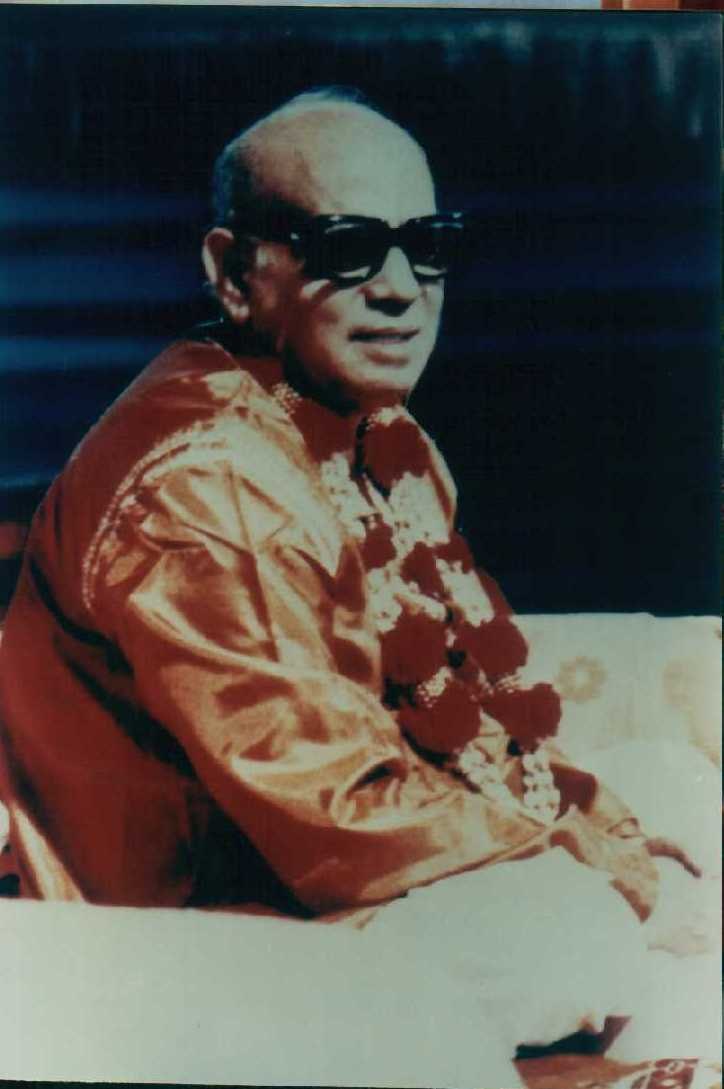
“A theory which follows practice will be successful.”
Start reading
This philosophy was meant to be lived, not only read: its ideas come out of practice and are proved in it. Start with the first step, read a little each day, and come back to this guide when you want the next book. The books are in our Library.