
The world we want to build
It is easy to list what is wrong with the world. It is harder, and more useful, to say what should take its place. Shrii Shrii Ánandamúrti did both, in detail: an economy that guarantees every person the means to live and grow, a society with no room for exploitation of any kind, and a humanity that thinks of itself as one family. This page sets out the problems we work against, the reason each one is wrong, and what Shrii Shrii Ánandamúrti proposed instead. None of it asks for perfect people. It asks for fair rules, and for people honest enough to keep them.
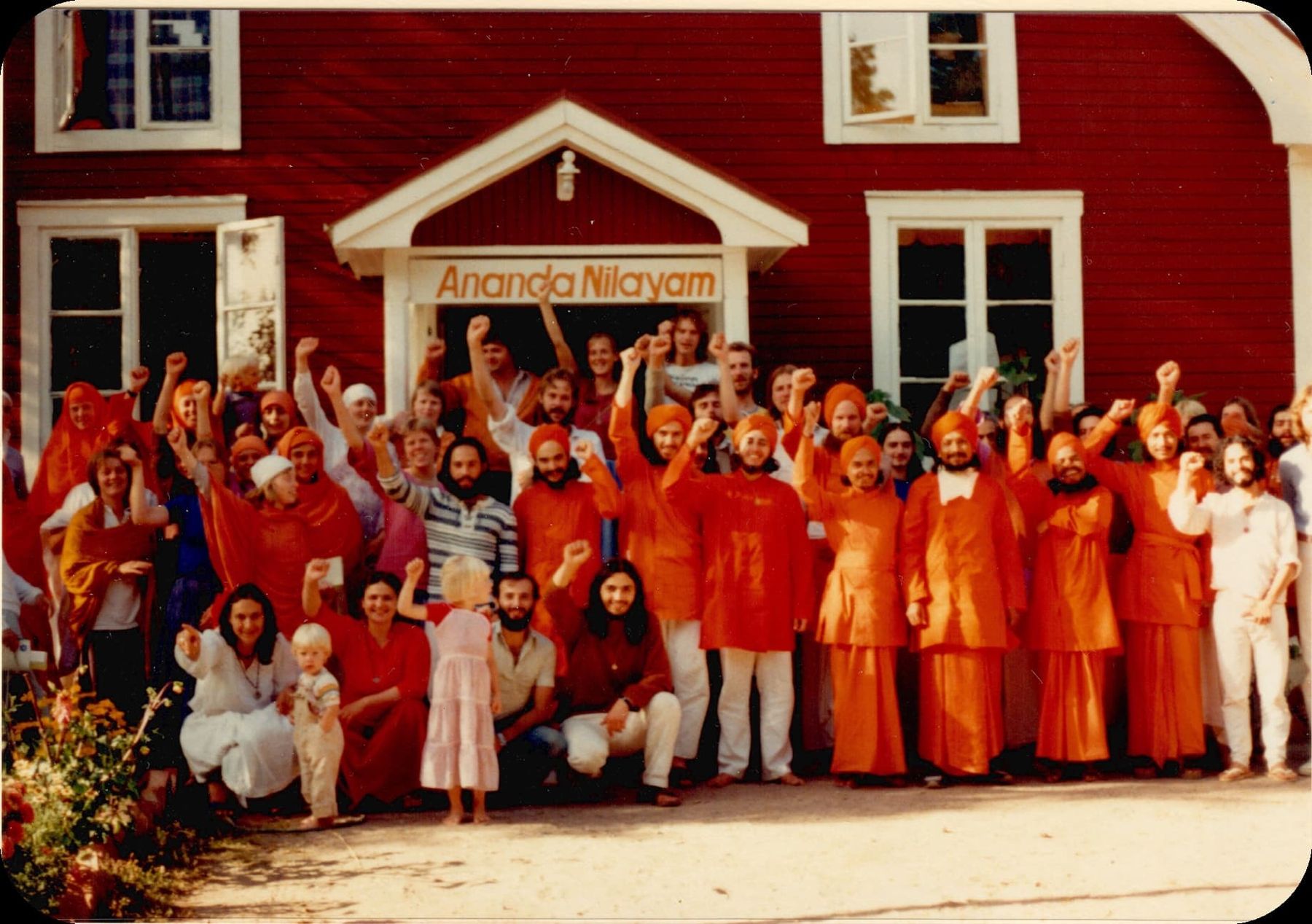
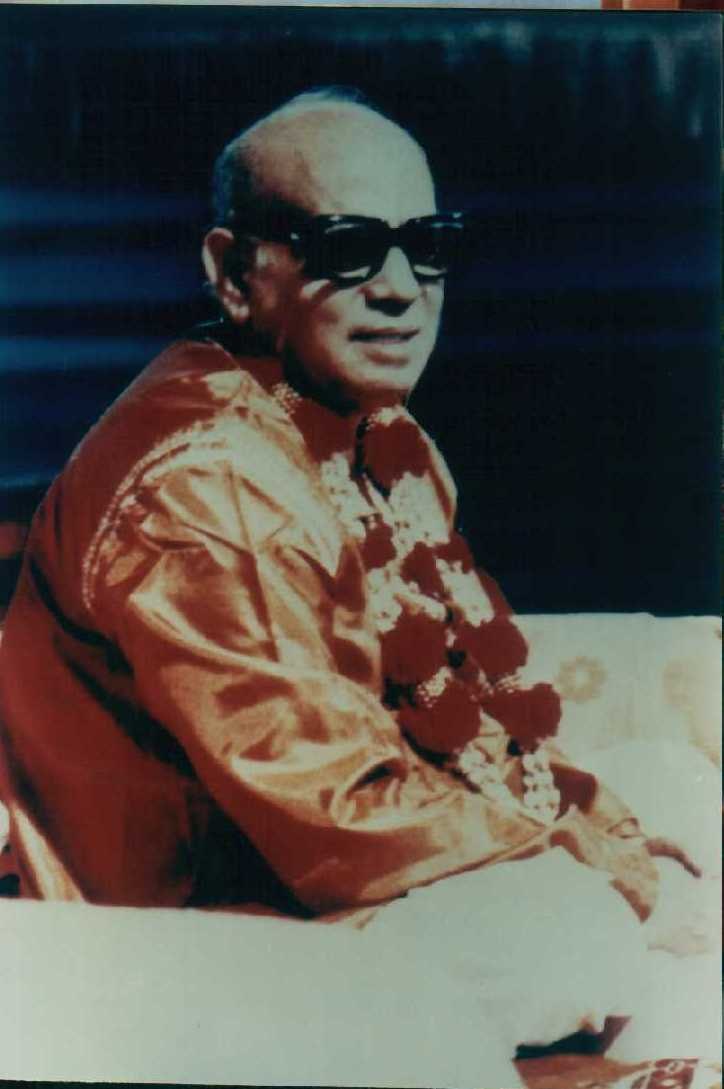
“All human beings must attach themselves to others by the common bond of love, and march forward hand in hand, then only will I proclaim it a society.”
What we stand against
Exploitation takes many forms: economic, social, psychic, of women, of one caste, race or nation by another, of the living world itself. Nine of them are below. For each, the reason it is wrong, and the answer Shrii Shrii Ánandamúrti gave.
- 01
Hunger beside plenty
The world produces enough food, cloth and building material for everyone, yet hundreds of millions go without a meal, a home or a doctor. That is a failure of distribution, not of nature, so it can be fixed. And it matters beyond the body: a person who spends every hour on survival has nothing left for the growth of mind and spirit that makes a life human.
What takes its place
Guarantee the minimum necessities to every person: food, clothing, housing, education and medical care. Shrii Shrii Ánandamúrti wants the guarantee met through work and rising purchasing power, not charity, so that it frees people instead of making them dependent.
“The first requirement for economic democracy is that the minimum requirements of a particular age – including food, clothing, housing, education and medical treatment – must be guaranteed to all. Not only is this an individual right, it is also a collective necessity, because the easy availability of the minimum requirements will increase the all-round welfare of society.”
Shrii Shrii Ánandamúrti, Proutist Economics, “Economic Democracy” (1986) - 02
Wealth piled up in a few hands
The physical resources of the earth are limited. Knowledge, art and love can grow without limit, and one person’s share takes nothing from anyone else. Money and land cannot: what one person hoards, others go without. That is why unlimited accumulation is not a private matter.
What takes its place
No one may accumulate wealth without the approval of society. This is the first principle of PROUT. Reward for skill and service remains, so that talent is encouraged, but the gap between the highest income and the guaranteed minimum is narrowed step by step.
“But the supply in the physical sphere is limited, and hence any effort for disproportionate or unrestricted acquisition of physical objects has every possibility of creating a vast majority of have-not’s, and thus hampering the spiritual, mental and physical growth of the larger majority.”
Shrii Shrii Ánandamúrti, Idea and Ideology, “The Cosmic Brotherhood” (1959) - 03
Decisions made far away
The future of a village or a valley is decided in distant capitals and boardrooms, and its raw materials are carried off to be processed elsewhere. Those who make the plans do not live with the results, and the profit leaves the places that produce it. Whole regions stay poor, and their young people have to leave to find work.
What takes its place
Economic decentralization. Plan from the bottom up, starting at the level of the block, with the local people who know the land and its needs. Process local raw materials locally, and keep economic power in the hands of those who live there.
“Successful planning can never be done by sitting in an air conditioned office thousands of miles away from the place where planning is to be undertaken.”
Shrii Shrii Ánandamúrti, Prout in a Nutshell Part 21, “Decentralized Economy – 1” (1982) - 04
Walls between people
People are raised to love their own nation, caste, race or religion and to distrust the rest. These walls have no ground in reality: every being comes from the same source. In practice they serve those who exploit, because a divided people is easier to frighten, to rule and to rob.
What takes its place
A universal outlook, which Shrii Shrii Ánandamúrti later named Neohumanism. Differences of language, dress and custom are welcomed and protected. Only the divisions drawn against people are rejected.
“For a better social structure, humanity is sure to give up all filthy ideas of caste, [religious] community, nationality, etc.”
Shrii Shrii Ánandamúrti, Discourses on Prout (1959) - 05
Women held back
In many places women are still kept dependent, out of school, and outside public and religious life, often in the name of tradition or scripture. Half of humanity cannot be held back without slowing the whole of it, and a relationship of master and servant degrades both sides.
What takes its place
Equal dignity and opportunity: free education for women, economic and social security, and no discrimination in social, educational or religious life. Women and men work side by side as equals, not as master and servant.
“Human beings are not lifeless matter, so not only should all of their collective structures be based on cooperation, but that cooperation must be of a special type. It should not be based on the relation of master and servant, but on mutual cordiality. It should be a coordinated cooperation and not a subordinated one.”
Shrii Shrii Ánandamúrti, Human Society Part 1, “Social Justice” (1959) - 06
Minds kept small
People are told that poverty is their fate, that some are born lower than others, that questions are a sin. Propaganda and advertising do the same work in newer clothes. This exploitation of the mind is harder to see than hunger, and it lasts longer, because people who believe they deserve their lot will not resist it.
What takes its place
Education that liberates, and a scientific, questioning outlook. Schools free of charge and free of political interference, teaching morality, reason and a universal outlook along with knowledge, so that no superstition or slogan can take hold of a trained mind.
“But because of this psychic characteristic human beings exploit others on the psychic level as well as on the physical level, and this exploitation on the psychic level is even more dangerous than on the physical one.”
Shrii Shrii Ánandamúrti, A Few Problems Solved Part 5, “Education and Neohumanism” (1985) - 07
Nature treated as raw material
Forests, rivers, animals and plants are valued only for what they can be turned into. But every creature has a value of its own, apart from its use to us, because it comes from the same source as we do. A habit of treating life as raw material does not stop at animals and plants.
What takes its place
Care that reaches every living being. Use the world’s resources fully but never waste or misuse them, leave wild animals in peace in their own habitats, and build sanctuaries for endangered animals and plants.
“The universe does not consist only of humans; other animals, other creatures, other plants, also have the right to live.”
Shrii Shrii Ánandamúrti, A Few Problems Solved Part 5, “Humanity Is at the Threshold of a New Era” (1984) - 08
Justice as revenge
Courts and prisons mostly punish, and people often leave them harder than they came in. Meanwhile the poor are punished for crimes that poverty pushed them into, and the rich who profit escape. No court is free of error, and punishment breeds vindictiveness in those who hand it out.
What takes its place
Justice that corrects rather than punishes. A correction helps the guilty to change, and if the judgment was wrong it does the least harm. Laws rest on human values: what helps people grow in body, mind and spirit is virtue, and what holds them back is vice, the same for everyone everywhere.
“I therefore think that the term “penal system” should be deleted from social terminology. If and when somebody, whether a judge or an ordinary person, takes any type of action against another, it should be corrective, not punitive.”
Shrii Shrii Ánandamúrti, Human Society Part 1, “Justice” (1959) - 09
Nations armed against nations
National sentiment has already given humanity two world wars, and the problems that matter most now cross every border. Communication brings distant places closer every year. A world that small cannot be run safely as a set of rival fortresses, each with its own army.
What takes its place
One world, with a common constitution, a common penal code and a world government with a single world militia. Under it, autonomous units drawn around shared needs such as food, education and flood control, not around flags; every local language encouraged, alongside one common language for the world.
“A world government is also very essential for exercising full control in certain spheres; for example, there should be only one world militia.”
Shrii Shrii Ánandamúrti, Idea and Ideology, “The Cosmic Brotherhood” (1959)
The pillars of a new world
Behind the answers stand a few principles. Each one is a reason, not a rule handed down: it follows from the idea that every being is an expression of one Consciousness, and that each person should have the chance to grow in body, mind and spirit.
- 01
One human family
If all beings come from one source, then humanity is one family and every line drawn against people is false. This is the root of everything else on this page. It does not mean one uniform for everybody: local cultures, languages and customs are to be protected and encouraged. It means that no one is a stranger.
“I have been saying for a long time that human society is a singular entity, that human society is indivisible.”
Shrii Shrii Ánandamúrti, A Few Problems Solved Part 3, “Human Society Is One and Indivisible – 3” (1979) - 02
A floor that rises
Equal wealth for all is impossible, and trying to force it has failed wherever it was tried. What is possible is a floor under everyone, raised as society grows richer. Above the floor, extra amenities reward those whose skill serves others, so that talent is not wasted. The distance between the two keeps shrinking.
“As the income of people increases, the radius of their minimum requirements should also increase.”
Shrii Shrii Ánandamúrti, Prout in a Nutshell Part 17, “Minimum Requirements and Maximum Amenities” (1989) - 03
Economic power close to home
In PROUT much of the economy is run by cooperatives owned by those who work in them. Small businesses stay private, and the few key industries too large for a cooperative are run by local government, not a distant capital. Cooperatives are chosen because they let people work together as equals, with no one living off another’s labor.
“Where this cooperation is between free human beings, each with equal rights and mutual respect for each other, and each working for the welfare of the other, it is called “coordinated cooperation”.”
Shrii Shrii Ánandamúrti, Prout in a Nutshell Part 14, “Cooperatives” (1988) - 04
Education for the whole person
Schools should develop body, mind and spirit together, with morality and a universal outlook at the center, and teachers chosen for character as well as knowledge. Shrii Shrii Ánandamúrti wanted education free of charge at every level and run by educators, not by whichever party holds power, because a school that serves a government will teach its slogans.
- 05
Spirituality without dogma
Spiritual practice is meant to widen the mind until it includes everyone, and that is the source of the energy and the morality this whole project needs. Dogma does the opposite: it asks for belief without reason and divides people into camps. So the spirituality we stand for is a practice to be tested in experience, with no rituals and no one standing between a person and the Supreme.
“Where there is no logic and reason, dogma arises, whatever form it may take.”
Shrii Shrii Ánandamúrti, Prout in a Nutshell Part 16, “Religious Dogma – Section B” (1988) - 06
Leaders with character
Good laws are only as good as the people who keep them. Shrii Shrii Ánandamúrti notes that cooperatives fail when their directors steal, and that dishonest ministers let them. So the new society needs people at its center who are moral, spiritual and unafraid to stand against exploitation, and who want nothing for themselves from power: the people Shrii Shrii Ánandamúrti called sadvipras.
How we get there
Start with your own mind
A society cannot be more honest than the people who run it. Daily meditation widens the mind beyond its own interests, and the ten principles of yama and niyama turn that wider mind into conduct: not harming, truthfulness, not stealing, simple living and the rest. This is where the energy for everything else comes from.
Serve where the need is
Feed the hungry, teach, care for the sick, help after a disaster. Service relieves suffering now, without waiting for the new society. It also keeps ideals honest, because it costs time and effort, and it builds the trust that every later step depends on.
Build the economy from below
Join or start cooperatives, buy what your own region produces, and press for planning that starts with local people. Each cooperative that works shows what the larger system could look like, and each one moves a little economic power back to those who live where the wealth is made.
Stand together against exploitation
Name injustice where you see it, and act on it with others, not alone. Refuse the sentiments that divide people by nation, caste, race or religion, and build on the ones that unite them. Change needs a shared will, and that is built one conversation at a time.
Raise sadvipras, and let them lead
The new society will be only as good as the people at its center. Shrii Shrii Ánandamúrti’s answer is to form people who are moral, spiritual and fearless, and to give responsibility to those whose conduct shows they can carry it, so that no class can turn power into exploitation again.
“The Supreme Spirit within humanity, neglected for ages, has awakened today. This awakening will initiate a new chapter in human history. You will all be the pioneers of the new trend.”
Go further
Read about the people who will build this world, the economic theory behind it, and the road from here to there. Or begin now, with practice and with service.