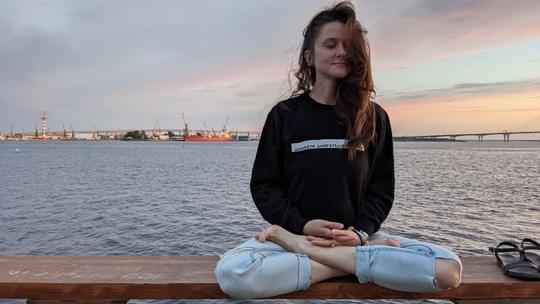
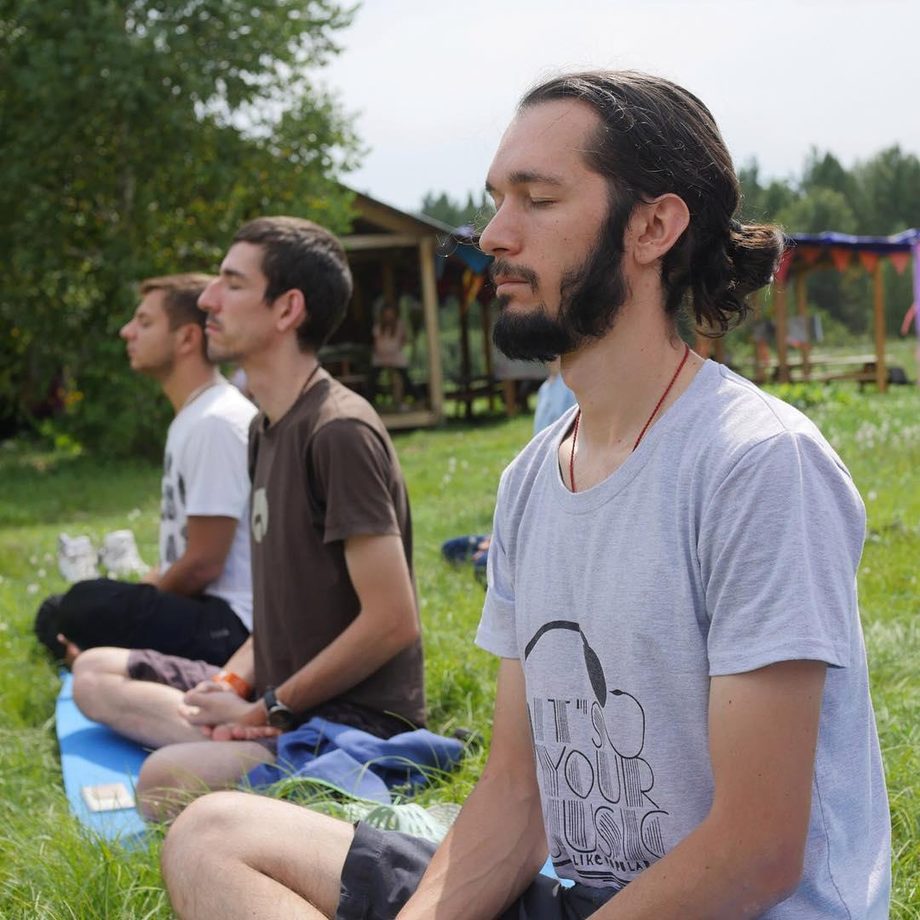
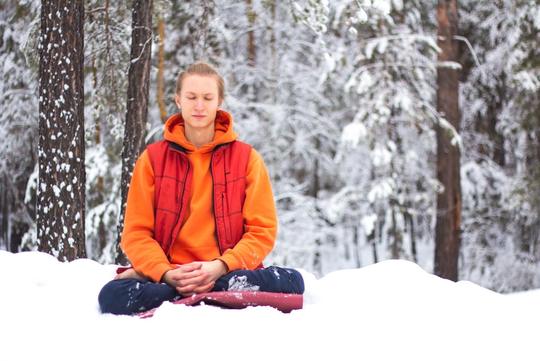
명상이나 키르탄 중에 눈물을 흘리는 사람이 있습니다. 깊은 지복의 느낌이 찾아와 눈물이 저절로 흐릅니다. 왜 그런 일이 생기는지, 그리고 이를 어떻게 바라보아야 하는지.
It happens that a person cries during meditation. A deep feeling of bliss comes, and tears flow involuntarily. In this article we look at why this happens and how to regard it.
Two kinds of tears are distinguished: shoka shru and ananda shru. Shoka shru are tears of pain; they roll from the inner corner of the eye. Ananda shru are tears of bliss, which roll from the outer corner of the eye.
When the feeling comes of realizing the deep meaning of everything that happens in the universe, tears of bliss begin to roll of their own accord.
Tears during 지고의 존재의 이름을 함께 부르는 노래이며, 흔히 간단한 춤이 곁들여집니다. 아난다 마르가에서는 바바 남 케발람을 부릅니다.
This sometimes happens during kiirtan, the collective or individual singing of a 소리 또는 소리의 짝으로, 그 뜻을 새기며 되풀이하면 마음을 무한으로 이끕니다..
During individual kiirtan you are alone with your highest spiritual goal.
During collective kiirtan you move in one rhythm with everyone, you float on one emotional wave. The wave can be crude and psycho-physical, or it can be subtle and psycho-spiritual.
*In deep concentration there comes a moment when the supreme Consciousness suddenly comes to do kiirtan and sing the mantra together with you. Then you feel the presence of Divinity pervading everything around.* Tears of bliss are the most fitting response at such moments.
The causes of "special effects" in meditation

From time to time various symptoms arise in meditation. Sometimes tears are accompanied by laughter. All of this is the nervous system's reaction to contact with spiritual energy. When the nervous system cannot withstand the intensity of this energy, it releases the tension.
Often this tension comes out through the sound "hum" or through involuntary bouncing in the lotus posture.
A discharge of energy takes place; a force is at work that could not be held. When you sit silent and motionless for a long time, the tension in the nervous system can increase. *At such moments you need to relax while continuing to concentrate, going ever deeper from the psycho-physical level to the psycho-spiritual.*
When energy bursts out (for example, as a loud "hum"), concentration is lost. Such symptoms may appear after about three years of steady practice and continue for about three years. All this time the person disturbs their own meditation and that of others, without wishing to.
Meditators who have such special effects may give the impression from the outside of being super-advanced yogis who have attained something special. However, if a person really is an experienced practitioner, outwardly they do not differ from newcomers. Their body has already adapted to spiritual energy. *At this level the nervous system grows stronger and gets used to the presence of strong spiritual energy, and meditation becomes deeper and passes without symptoms. But in some cases, when you penetrate the deep layers of the mind, *ananda shru begin to roll from your eyes. The tears are pleasant, and this is a good sign.