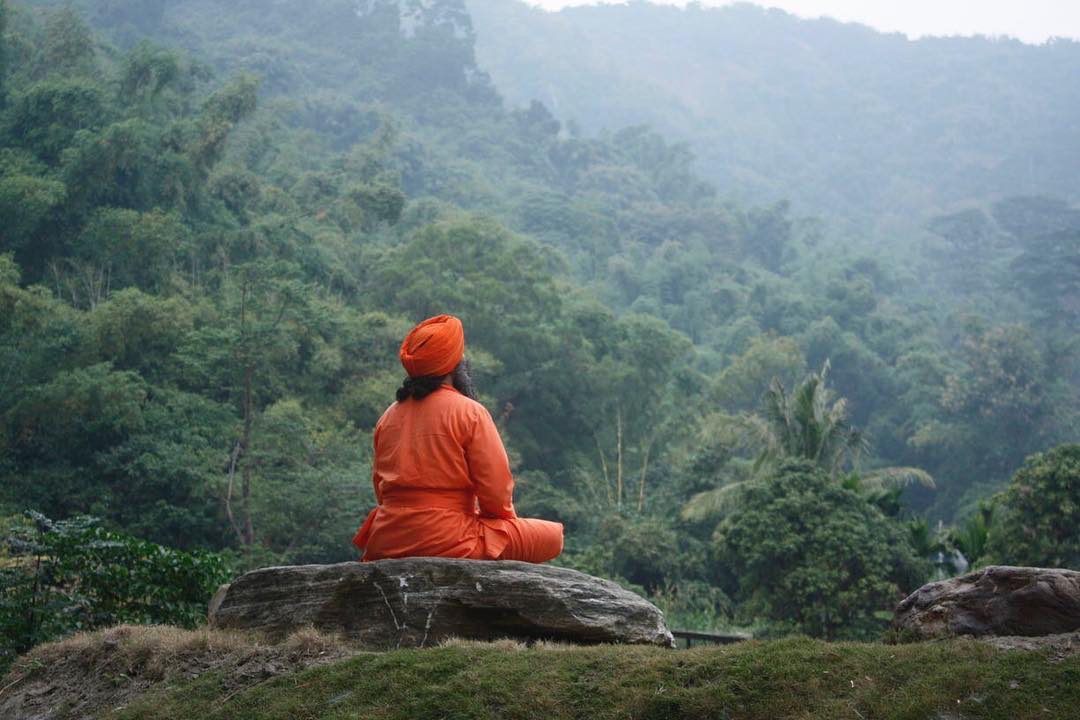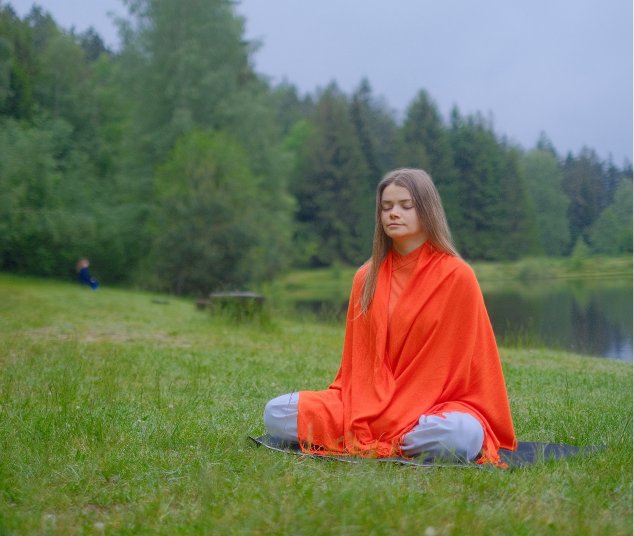
阿南達瑪迦(Ananda Marga)所說的靜坐是什麼,薩哈賈瑜伽(Sahaja Yoga)的六堂課如何層層遞進,以及為什麼體位法、飲食和行為屬於同一個靈修。
Ananda Marga teaches a system of meditation known as Sahaja Yoga, "intuitional" or natural yoga, aimed at the all-round development of body, mind, and spirit. At its center is 靈性修持:每天的努力,尤其是靜坐,讓心靈朝向無限。: sustained inner practice through which the limited self gradually expands toward the Infinite. The deepest goal is the union of the individual mind with Cosmic Consciousness. Everything else in the system, the postures, the chanting, the diet, the ethical code, exists to make that practice possible and to keep it honest.
What meditation is
In ordinary use, "meditation" can mean almost anything: relaxing, watching the breath, listening to a recording. In Ananda Marga the word has a precise sense. The mind normally runs outward, toward objects, memories, plans. Meditation reverses that flow. The practitioner withdraws attention from the environment and the body, and then directs it, with the help of a 一個聲音或一組聲音;心裡想著它的含義反覆唸誦,就會把心靈帶向無限。, toward a single ideal that is vaster than any object: the Cosmic "I" that is the same in every being.
A mantra is not a slogan or a wish. It is a sound with a meaning, chosen for the individual and given personally at initiation. Repeated with its meaning held in mind, it does two things at once: it gives the restless mind a single thread to follow, and it steadily reshapes the practitioner's sense of who they are.
The six lessons
The meditation of Ananda Marga is taught in six lessons. They are given one at a time, in person, by an 受過培訓、能給予個人指導的靜坐老師;出家的男女和有家庭的人都可以成為阿查里亞。, a trained teacher, and always free of charge. Each lesson is a distinct technique; together they form one practice.
- Iishvara Pranidhana, withdrawal and focus. The foundational lesson. The mind is drawn inward, brought to a specific center of the body, and merged, through the personal mantra, with the Cosmic Consciousness.
- Madhuvidyá, the universal outlook. A short practice used throughout the day before any action, reminding the practitioner that the task, the doer, and the surrounding universe are expressions of one reality. It dissolves the ego of "doership."
- Tattva Dháraná, control of the elements. Concentration on the centers that govern the five fundamental factors: solid, liquid, luminous, aerial, and ethereal.
- Práńáyáma, regulation of the breath. Because breath and mind are linked, a regulated breath calms the mind and deepens concentration.
- 身體裡的一個心靈能量中心;七個主要的脈輪沿脊柱分布。 Shodhana, purification of the propensities. The centers of the body that govern emotions and tendencies are vibrated rhythmically with the mantra, bringing them under control.
- Dhyána, absorption. The final stage, in which meditation is no longer an effort but a natural flow of the mind toward its goal, ending in the total absorption of the individual identity in the Cosmic Mind.
Nobody is asked to master all six before beginning. The first lesson alone is a complete practice, and many people keep it for years before asking for the next.
Why yoga postures belong here
The body is the instrument. 瑜伽體位法:穩定而舒適地保持的一種姿勢;它平衡腺體,讓身體和心靈在靜坐前安靜下來。, the yoga postures, are practiced not for their own sake but because they balance the glands, steady the nervous system, and give the mind a calm body to sit in. The postures taught in Ananda Marga are gentle and held with the breath; they are chosen for their effect on the endocrine system rather than for flexibility or display. A person who has done twenty minutes of postures will find meditation easier that day. That is the whole reason for them.
The same logic applies to diet. Food affects the mind. A light, mostly plant-based diet, taken with attention, keeps the mind clear enough to go inward. Fasting on certain days of the lunar month gives the digestive system rest and the mind a chance to notice how much of its noise comes from the body.
大家一起唱誦至上本體的名號,常常配上簡單的舞蹈;在阿南達瑪迦,唱的是 Bábá Nám Kevalam。 and the heart
Meditation trains the mind; kiirtan lifts the heart. Before sitting to meditate, practitioners sing a universal mantra, 「只有至上意識的名號」,或「只有至上意識存在」:在聖名唱誦中唱誦的梵咒,對所有人開放。, together, often with a simple dance. The singing loosens the grip of the day's concerns and brings the mind into a devotional mood, and meditation that follows kiirtan tends to go deeper. Kiirtan has its own article in the library; here it is enough to say that the two practices are inseparable in daily life.
Ethics as a foundation
五條原則,關於我們如何對待世界:不傷害、誠實、不偷盜、讓心靈安住於至上本體、不過度佔有。 and 五條原則,關於如何塑造自己:潔淨、知足、克服困難去服務、提升心靈的學習、以至上本體為人生的目標。, ten principles of conduct, give the practice a harmonious foundation. They are not commands from outside but tools that bring harmony to one's own being and to one's relations with others: not harming, truthfulness in the service of welfare, not taking what is not one's own, seeing the divine in all, simplicity, cleanliness, contentment, service and sacrifice, study, and surrender to the Supreme.
The reason ethics come first is practical. A mind that lies, harms, or hoards is a divided mind, and a divided mind cannot concentrate. The principles clear the ground so the technique can work.
What to expect
Meditation is taught one to one, at no cost, by a trained teacher, and the invitation is open to anyone, whatever their background or belief. The techniques are simple to describe and take a lifetime to deepen. Most people notice, within weeks, a quieter mind and a longer fuse; the deeper changes come more slowly and are harder to name.
"Meditation is trying to make the 'I' feeling coincide with the subjectivated form. Because it is a coincidence of 'I' feeling, it is concentrated thinking. In other words, the endeavour to make the controlling point of the 'I' feeling coincide with some other subjectivated form is called meditation." — Shrii Shrii Anandamurti