명상과 요가 철학 과정 3회차에 오신 것을 환영합니다.
Welcome to Session 3 of the Meditation and Yoga Philosophy course.
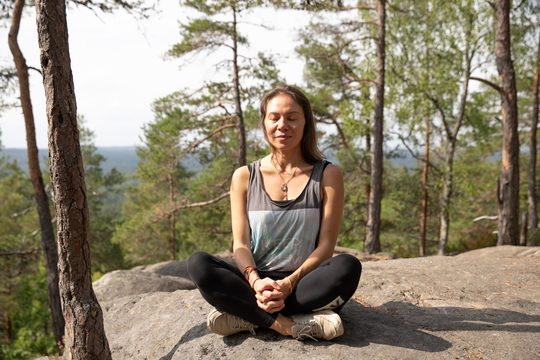
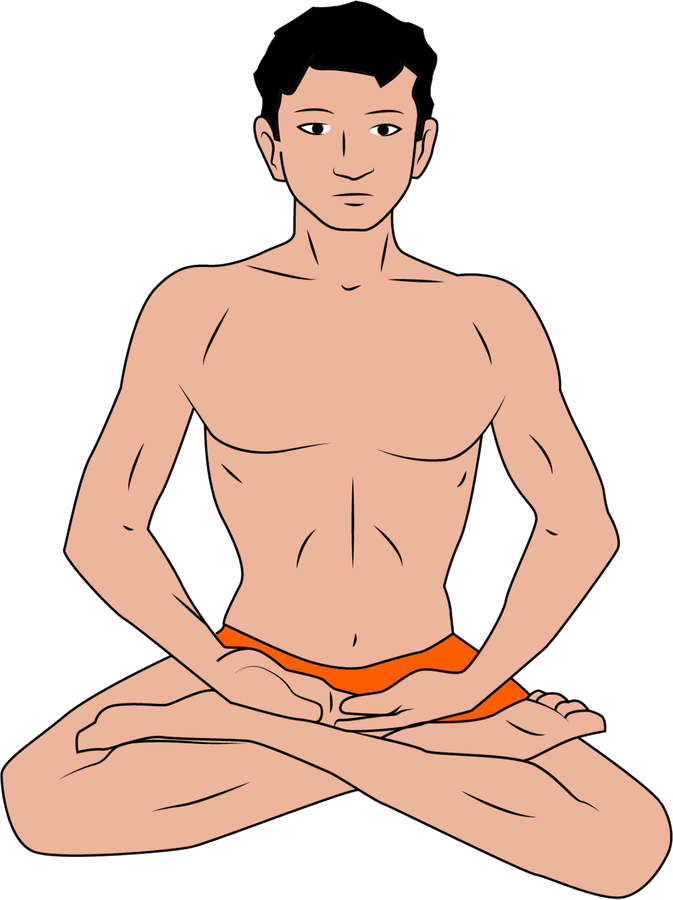
Before we do meditation, 안정되고 편안하게 유지하는 요가 자세. 분비샘의 균형을 잡고, 명상을 앞두고 몸과 마음을 고요하게 합니다., eat or sleep, we do what’s called a “half-bath.”
That doesn’t mean you wash only one side of your body!
The half-bath is the yogic way of balancing the body temperature and calming and refreshing the mind. It works by cooling the body, especially the organs, which usually get heated in daily activity.
The half-bath also stimulates what’s known as the “dive reflex” (the same one that enables dolphins and other marine mammals to conserve oxygen when they dive), lowering the heart rate, respiration and blood pressure.
It also cools the brain directly through the optic nerves when you splash water in your eyes, and it strengthens the eyes too.
Here’s how to do it:
- Use cold water, or lukewarm water in cold weather.
- First go to the toilet, then pour some cold water over the urinary organ.
- Then pour water on your arms up to the elbows, and your legs up to the knees.
- Take a mouthful of water, and while holding the water in your mouth, splash water in your eyes and on your face at least 12 times. It’s best to keep your eyes open, so the water hitting the surface can directly cool the retina and optic nerve.
- Wet the ears and the back of the neck.
- Flush the nose with water (but only if your stomach is empty): let water flow into each nostril and spit it out through the mouth. You can swallow the water, but it’s better to spit it out. If you can’t get it through to the mouth, blow it out the opposite nostril. If you can’t do that, then blow it out the same nostril.
Now do meditation, asanas, massage and deep relaxation.
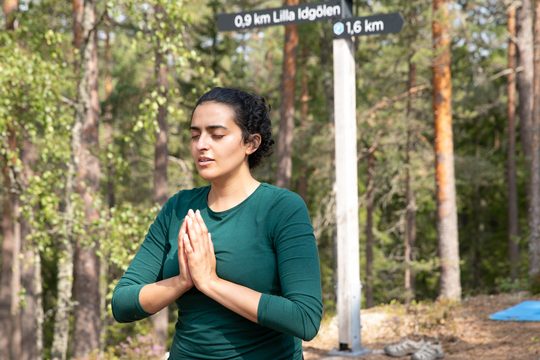
Remember: it’s a matter of practice to be able to concentrate on the feeling of the 소리 또는 소리의 짝으로, 그 뜻을 새기며 되풀이하면 마음을 무한으로 이끕니다.. Keep practicing. Every time you realize your mind has wandered away from the mantra, concentrate on it again — it will get easier the more you do it.
Biopsychology is the science of the relationship between the glands, hormones and the mind. The glands are the link between the body and mind. They secrete the hormones that affect the way we feel. So they determine the emotions, based on signals from the mind. For example, we all know that we feel a fright in the gut. That’s because the mind gives the “fright” signal to the adrenal glands at the level of the stomach. It can also work the other way as well: the glands also affect the mind.
Here are some examples:
- Did you know that when the genital glands develop, we get the sense of duty and responsibility? That’s why children don’t have such a good sense of responsibility. The genital glands also give rationality and intelligence.
- The prostate and other glands in the navel area develop around the age of five. That gives the feeling of shyness. Of course you’ve noticed that children under five are not ashamed to run around without any clothes on. If there’s an over-secretion of hormones from this area, it causes melancholy. An undersecretion causes increased fear.
- We feel love in the heart through subtle glands in the chest. Normally that love is for our close family and friends, especially children, but it can be expanded to universal love.
- The thyroid gland (at the throat) controls the metabolism of the whole body. It also gives the feeling of self-reliance. The parathyroids (around the thyroid) cause intellectuality and rationality.
- The pituitary gland (in the center of the brain) controls all the lower glands. It’s also the seat of the mind. Through it, it’s possible to know everything — past, present and future!
- The pineal gland — at the top of the brain — is the master gland. It controls the mind as well as the body. It’s this gland that’s activated when we meditate. The hormone melatonin, which it secretes, gives the feeling of bliss — infinite happiness.
Continue your meditation to feel that bliss.